Natural Gas Condensing Boiler Guide for Maine
Editor's note (August 2026): The federal 25C tax credits referenced in this article expired December 31, 2025 and are only available for qualifying work completed before that date. Efficiency Maine rebates remain available for qualifying insulation and heat pump upgrades. Boiler installations do not currently qualify for a comparable state rebate.
Natural gas is available in parts of Greater Portland, and many homes on the gas grid are still running floor-standing cast iron boilers installed in the 1990's. We see them regularly: the unit runs constantly during cold snaps, the basement is noticeably warm, and the second-floor bedrooms never quite reach the thermostat setting. A $340 monthly gas bill in a 1,800-square-foot colonial is not unusual for that equipment. It is also about $120 more per month than it needs to be.
Those boilers still work. They waste a significant portion of the fuel they burn. A condensing boiler does not.
This guide covers how natural gas condensing boilers work, why they perform so much better than older units, what sizing and installation involve, and what a project like this costs in Maine.
How Condensing Technology Works
Every boiler burns fuel to heat water. The difference between an old boiler and a condensing boiler comes down to what happens to the exhaust gases after combustion.
In a conventional natural gas boiler operating at 80-82% AFUE (Annual Fuel Utilization Efficiency), the exhaust gases exit through a metal or masonry chimney at 300-500 degrees Fahrenheit. That hot exhaust carries energy with it - energy you paid for but never used to heat your home.
A condensing boiler adds a secondary heat exchanger that captures heat from those exhaust gases before they leave the building. The exhaust cools so much that the water vapor in it condenses into liquid. This phase change releases additional heat energy - called latent heat - that older boilers simply vent outdoors.
The result is exhaust temperatures of 100-130 degrees instead of 300-500 degrees. The boiler captures 95-98% of the energy in the natural gas instead of 80-82%. On a $3,000 annual gas bill, that 15-18 percentage point improvement translates to roughly $450-$540 per year in reduced fuel consumption.
Why Wall-Hung Matters
Modern condensing boilers are wall-mounted units, roughly the size of a small suitcase. This is a significant change from the floor-standing cast iron boilers they replace.
Wall-hung units free up floor space in your basement or utility room. They are lighter (typically 75-100 pounds versus 300-500 pounds for cast iron), which simplifies installation. They modulate their output - meaning they adjust the flame size to match the actual heating demand at any given moment rather than cycling on and off at full capacity.
This modulation is important for comfort. Instead of blasting heat for ten minutes and then shutting off for fifteen, a modulating boiler runs at a lower output for longer periods, delivering consistent water temperature to your baseboard or radiant system. Rooms stay at more even temperatures, and the boiler operates at its most efficient point.
Sizing: Why Getting It Right Matters
One of the most common problems we find in Maine homes is an oversized boiler. When the original boiler was installed, the installer often selected a unit based on the square footage of the house without accounting for the home's actual heating load. The result was a boiler with far more capacity than the home needs.
An oversized boiler short-cycles. It fires up, heats the water quickly, reaches the high limit, shuts off, and repeats. This cycling wastes fuel, creates uneven temperatures, and accelerates wear on the boiler's components.
When we size a condensing boiler, we calculate the actual heating load based on:
- Square footage and layout of the home
- Insulation levels in walls, attic, and basement
- Air sealing condition of the building envelope
- Window type and quantity throughout the house
- Design temperature for your area of Maine (typically -5 to -10 degrees Fahrenheit)
- Distribution system - baseboard, radiant floor, or a combination
In many cases, the properly sized condensing boiler is significantly smaller than the old unit it replaces. A home that had a 150,000 BTU cast iron boiler may only need an 80,000 BTU condensing unit - especially if insulation and air sealing work has been done or is planned.
This is one reason we recommend thinking about insulation and boiler replacement together. Improving the building envelope reduces the heating load, which means the new boiler can be smaller, run more efficiently, and last longer.
The Installation Process Step by Step
A natural gas condensing boiler installation in a Maine home typically takes one to two days. Here is what each phase involves.
Step 1: Pre-Installation Assessment
We walk through your home to evaluate the existing heating system, distribution, and building envelope. We document the current boiler's age, condition, and output. We check gas line sizing, electrical connections, and venting requirements. We note the location of the existing boiler and plan the mounting location for the new wall-hung unit.
Step 2: Removal of the Old Boiler
The existing boiler is disconnected from gas, water, and electrical connections. The unit is drained and removed. If the old boiler vented through a masonry chimney, that chimney flue is no longer needed for the boiler (though it may still be used by a gas water heater or fireplace). We cap any unused chimney connections.
Step 3: Mounting and Piping
The new wall-hung boiler is mounted on the wall at an accessible height. We connect it to the existing hydronic distribution piping. In some cases, piping modifications are needed - particularly if the old system used large-diameter pipes and the new boiler has different connection sizes. We install isolation valves, a fill valve, an expansion tank, and a condensate drain.
Step 4: Venting
Condensing boilers vent through PVC or polypropylene pipe rather than a traditional chimney. The exhaust is cool enough (100-130 degrees) that plastic pipe handles it safely. We route the vent pipe through an exterior wall - no chimney required. This is one of the simpler aspects of installation, but the location and termination of the vent must meet code requirements for clearance from windows, doors, and property lines.
Step 5: Gas Line and Electrical
We verify that the gas line size is adequate for the new boiler's input. In most cases, existing gas lines work without modification. The boiler requires a standard 120V electrical connection. We install a dedicated disconnect switch near the unit per code requirements.
Step 6: Condensate Drain
Because the boiler condenses water from exhaust gases, it produces condensate - typically 1-3 gallons per day during heating season. This condensate is slightly acidic (pH of about 3-4) and needs to drain to an approved location. In most installations, we route it to a floor drain, laundry sink, or condensate neutralizer that feeds into the home's drain system.
Step 7: Commissioning
Once everything is connected, we fire up the boiler and run through a complete commissioning sequence. We verify gas pressure, check combustion readings, set water temperature curves, program the outdoor reset function (if applicable), test all safety controls, and bleed any air from the distribution system. We walk you through the controls and thermostat operation.
Cost and Financing
A natural gas condensing boiler installation in Maine typically costs between $6,000 and $12,000 depending on the complexity of the job. The main variables that affect price:
- Boiler size and brand - different capacity ranges and manufacturers have different price points
- Piping modifications - straightforward replacements cost less than jobs requiring significant piping changes
- Venting route - shorter, more direct venting paths cost less than longer runs through finished spaces
- Controls and thermostats - basic thermostat replacement versus zone control upgrades
- Condensate management - proximity to an existing drain affects labor and materials
Important Note on Rebates
Efficiency Maine does not currently offer rebates for natural gas or propane boiler installations. This is a common question we get, and we want to be upfront about it. The rebate programs focus on heat pumps, insulation, air sealing, and heat pump water heaters.
However, financing is available through the Efficiency Maine Green Bank for energy improvements. Terms range from 0% interest for one year to 7.99% for ten-year loans, with amounts up to $25,000. If you are combining a boiler replacement with insulation or heat pump work (which does qualify for rebates), the financing can cover the entire project.
The federal 25C tax credit may apply to high-efficiency boilers. This provides 30% of the cost up to $2,000 per year for qualifying equipment. Consult your tax advisor for specifics on your situation.
When Natural Gas Condensing Makes Sense
A natural gas condensing boiler is a strong choice if:
- Your home has natural gas service. This sounds obvious, but it is worth confirming. Not all areas of Greater Portland have gas lines
- You have existing hydronic distribution. Baseboard radiators, radiant floors, or a combination. The boiler heats water that flows through these systems
- Your current boiler is 20+ years old. Boilers from the 1990's and early 2000's typically operate at 78-82% AFUE. The efficiency jump to 95-98% is significant
- You want to keep your hydronic system. Some homeowners love their baseboard heat and radiant floors. A condensing boiler upgrade keeps that distribution while dramatically improving efficiency
When to Consider Alternatives
If your home does not have natural gas service, a propane condensing boiler is the equivalent option for LP fuel. If you are considering moving away from fossil fuel heating entirely, a cold-climate heat pump system may be the better long-term investment - though many homeowners choose to pair a condensing boiler with heat pumps in a hybrid setup.
About Horizon Homes
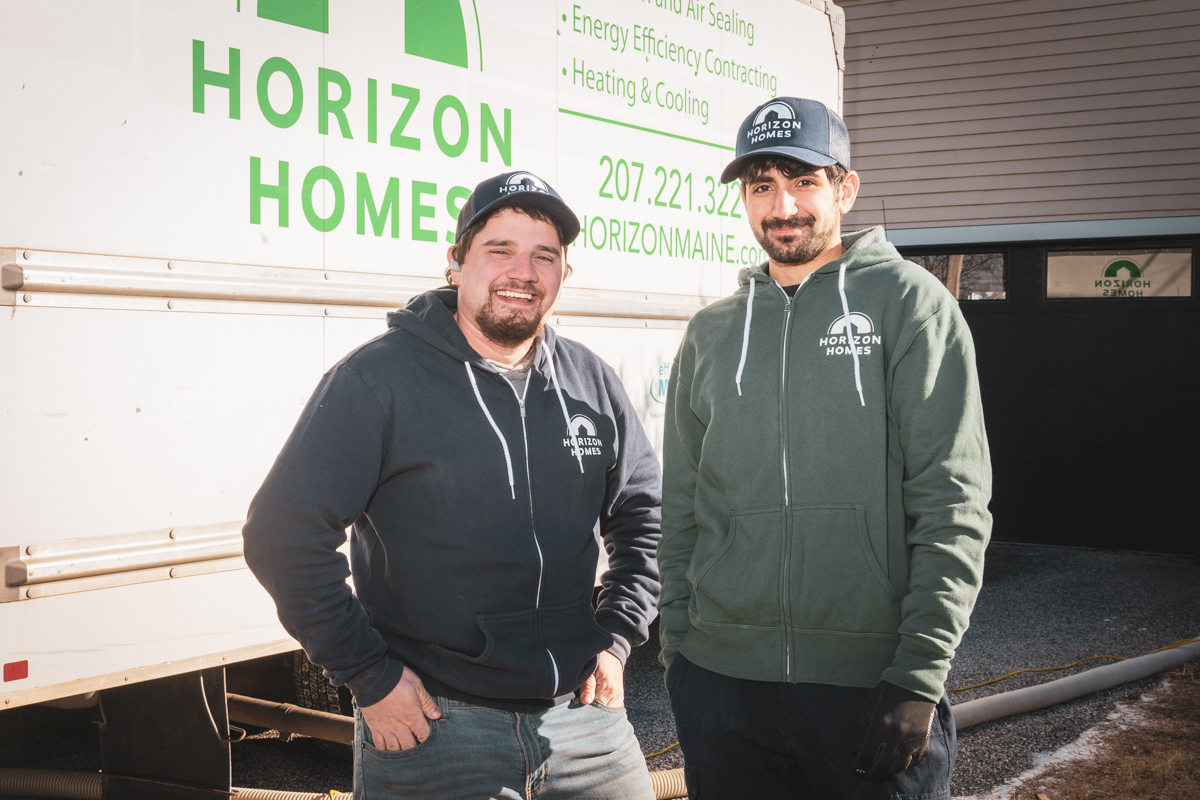
Horizon Homes has been helping Greater Portland homeowners improve their homes since 2006. We install both high-efficiency boilers and cold-climate heat pumps, which gives us a perspective that most contractors lack - we can recommend the right system (or combination of systems) for your specific home without being limited to one technology.
We are an Efficiency Maine Top Contractor with 20+ years of experience and 4.9 stars across 70+ reviews.
Ready to talk about your boiler? Schedule a free home energy assessment or call us at (207) 221-3221. We will evaluate your current system, your home's heating needs, and give you a clear recommendation - no pressure, no obligation.
Related Guides
Find our guides faster: add Horizon Homes as a preferred source on Google.
Free Home Energy Assessment
Ready to Lower Your Energy Bills?
We identify the improvements that will have the biggest impact on your home's energy use, with clear pricing and rebate estimates.
- Free walkthrough, no equipment, no disruption
- Efficiency Maine rebates identified for you
- Written improvement plan with pricing
Schedule Your Free Assessment
We call within 1 business day.