Phasing Your Home Energy Upgrade Over Time
About a third of the homeowners we assess are looking at a complete project, attic insulation, basement insulation, air sealing, and a cold-climate heat pump system, and the total cost stops them cold. The work makes sense as a whole-home project and the long-term savings justify it. But $18,000 is $18,000, even after rebates.
So we break it into phases.
The work starts with attic air sealing and insulation. The following season, the basement. The heat pump comes after that. Each phase delivers immediate savings that help fund the next one, and the rebates apply to each phase independently.
This is not a compromise. It is a strategy. For many homeowners, it is the smartest way to approach a whole-home energy upgrade.
Why Phasing Works
The logic behind phasing is straightforward: not all improvements deliver equal value, and doing the highest-impact work first maximizes your return at every step.
Air sealing and attic insulation almost always deliver the biggest bang for the dollar. The attic is where the most heat escapes in a typical Maine home, warm air rises and exits through gaps in the attic floor and through insufficient insulation. Addressing this first creates an immediate, noticeable improvement in comfort and heating costs.
The savings from Phase 1 offset a portion of the cost of Phase 2. And by the time you get to the heating system upgrade in Phase 3, the building envelope improvements you have already made mean you can install a smaller, less expensive heat pump because the home's heating load has been reduced.
Each phase builds on the one before it. Nothing is wasted. Nothing has to be redone. The sequence is designed so that every dollar you spend delivers the best possible result at that stage.
The Three-Phase Framework
This is the general framework we recommend for most Maine homes. Your specific plan may vary, some homes need basement work before walls, some already have decent attic insulation but terrible air sealing, and some are ready for a heat pump right away. The assessment tells us where your house stands and what the right sequence looks like.
Phase 1: Air Sealing and Attic Insulation
What it includes: Sealing air leaks in the attic floor (around wiring, plumbing, duct penetrations, the attic hatch, recessed lights, and top plates of interior walls), then adding blown-in cellulose insulation to bring the attic to R-49.
Why it comes first: The attic is typically the largest source of heat loss in a Maine home. Hot air rises, finds gaps in the ceiling plane, and escapes into the attic. In winter, this costs you money every hour of every day. It also causes ice dams by warming the roof deck from below.
Air sealing before insulating is critical. Insulation slows heat transfer, but it does not stop air movement. If you add insulation on top of unsealed gaps, warm air still flows through and around the insulation, dramatically reducing its effectiveness. Seal first, then insulate, in that order.
Typical results: 15-25% reduction in heating costs. Noticeable improvement in comfort within days. Reduced or eliminated ice dams. More consistent temperatures between floors.
Typical cost: $3,000-$8,000 before rebates, depending on home size and existing conditions.
Efficiency Maine rebates: Up to $8,000 for insulation and air sealing (40-80% of project cost, income-dependent). Most homeowners receive meaningful rebate coverage that significantly reduces out-of-pocket cost.
Timeline to feel the difference: Most homeowners notice the change within the first week, especially if the work is done before or during heating season.
Phase 2: Basement and Wall Insulation
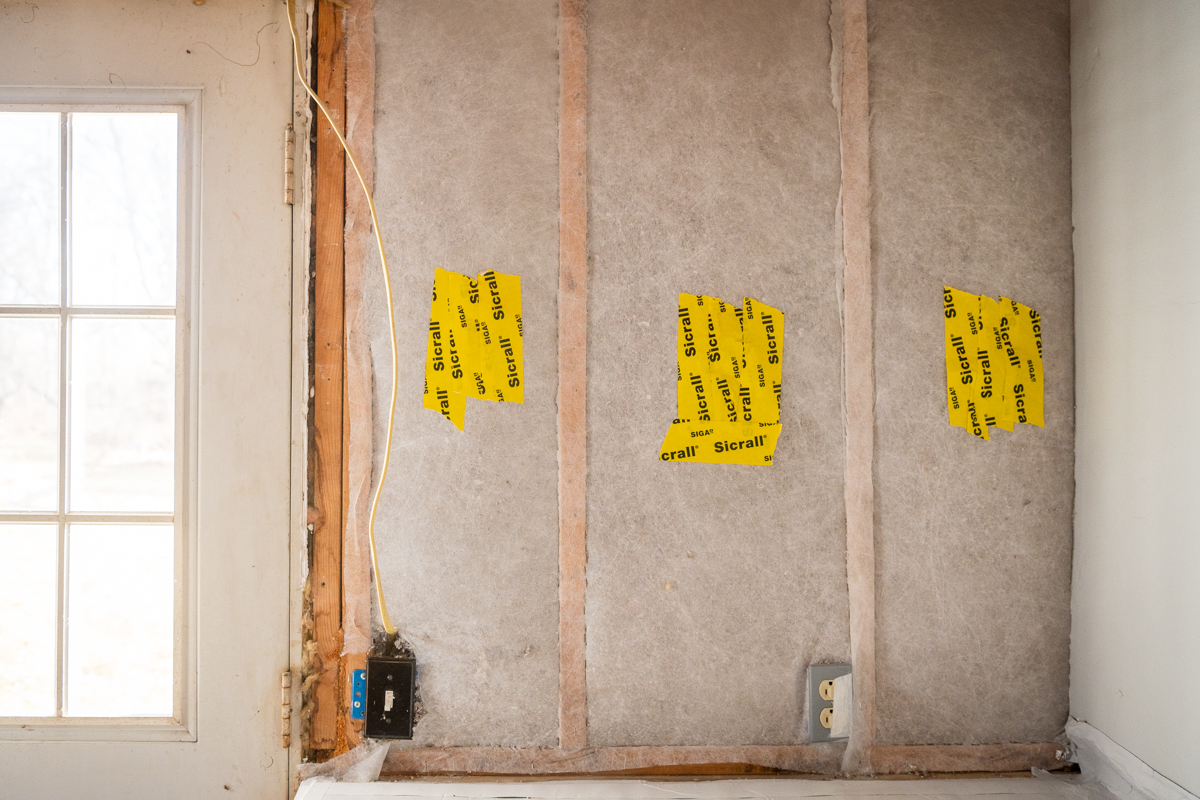
What it includes: Insulating basement walls with rigid foam board, addressing rim joists (the framing where the first floor meets the foundation), and dense-packing cellulose into exterior wall cavities if they are uninsulated or under-insulated.
Why it comes second: After the attic, the basement and walls are the next-largest sources of heat loss. Uninsulated basement walls and rim joists lose heat directly to the ground and outdoor air. Uninsulated walls, common in Maine homes built before the mid-1970's, bleed heat through the entire exterior surface of the house.
Basement insulation also improves comfort on the first floor. Cold basement air migrates up through the floor framing and makes first-floor rooms feel colder, especially over uninsulated basement sections.
Typical results: An additional 10-20% reduction in heating costs on top of Phase 1 improvements. Warmer first-floor rooms. Reduced drafts from below. A drier, more usable basement space.
Typical cost: $4,000-$10,000 before rebates, depending on basement size, wall type (poured concrete vs. stone), and whether wall insulation is included.
Efficiency Maine rebates: Same program as Phase 1, up to $8,000 total for insulation and air sealing work. If you did not use the full rebate allocation in Phase 1, the remaining amount carries over to Phase 2.
Phase 3: Heating System Upgrade
What it includes: Installing a cold-climate heat pump system sized for the home's improved building envelope, or upgrading to a high-efficiency condensing boiler for homes with existing hydronic distribution.
Why it comes last: This is where the phased approach delivers its biggest payoff. By insulating and air sealing the home first, you have reduced the total heating load. A home that needed 60,000 BTU of heating capacity before envelope improvements might only need 36,000 BTU afterward. That means a smaller heat pump system, which costs less to purchase and less to operate.
Contractors who install heat pumps without evaluating or improving the building envelope often oversize the equipment. An oversized system costs more upfront, short-cycles (reducing efficiency and equipment life), and delivers inconsistent comfort. Doing the envelope work first lets us right-size the heat pump for the home as it actually performs, not as it performed with zero insulation in the attic.
Typical results: An additional 20-40% reduction in heating costs on top of envelope improvements. Heating and cooling from one system. Zone-by-zone temperature control with mini-splits. Elimination or dramatic reduction of fossil fuel use.
Typical cost: $4,000-$15,000 before rebates, depending on the number of zones and system size.
Efficiency Maine rebates: Up to $9,000 for cold-climate heat pumps (income-dependent). This is a separate rebate category from insulation, so it applies on top of whatever you received for envelope work.
A Real Example: Three Phases Over Two Years
The following is a representative project, a 1,800-square-foot 1976 colonial in Scarborough heated with oil. Annual heating cost before improvements: approximately $4,500.
Phase 1 (Fall 2024): Attic air sealing and insulation.
- Cost: $5,800
- Rebate: $2,900
- Out of pocket: $2,900
- First-winter savings: approximately $800-$1,000
Phase 2 (Spring 2025): Basement walls and rim joists.
- Cost: $4,200
- Rebate: $2,100
- Out of pocket: $2,100
- Additional annual savings: approximately $400-$600
Phase 3 (Planned summer 2026): Two-zone Mitsubishi cold-climate heat pump.
- Estimated cost: $8,500
- Estimated rebate: $4,000-$6,000 (income-dependent)
- Estimated out of pocket: $2,500-$4,500
- Expected additional savings: $800-$1,200/year in heating costs, plus summer cooling
Total out-of-pocket across all three phases: approximately $7,500-$9,500 after rebates. Projected annual savings once complete: $2,000-$2,800 per year. That is a payback period of roughly 3-5 years on the net investment, and the improvements last decades.
Timing Your Phases Around Rebates
One practical advantage of phasing is that Efficiency Maine rebates are available for each phase independently. You do not need to commit to the entire project to access rebate funding. Each phase qualifies on its own merits.
This also means you can take advantage of rebate availability as it exists today without waiting to accumulate savings for a larger project. Rebate programs are funded by the Regional Greenhouse Gas Initiative and other state mechanisms. While current funding levels are strong, rebate amounts and income thresholds can change. Completing each phase as your budget allows locks in the rebates that are available now.
Financing through the Efficiency Maine Green Bank is also available for individual phases, with terms from 0% for one year to 7.99% for ten years, up to $25,000.
Ready to figure out the right phasing plan for your home? Schedule a free energy assessment or call (207) 221-3221). We will walk through your home, identify what it needs, and build a prioritized plan that works with your budget and timeline.
How Long Between Phases?
There is no required timeline. Some customers complete all three phases within a year. Others spread it over two to three years. We have customers who started with us over a decade ago and are still working through their improvement list, adding a project every year or two as their budget allows.
The most common spacing we see is 6 to 12 months between phases. This gives homeowners time to see the savings from one phase before committing to the next, and it spreads the financial impact across budget cycles.
A few practical timing considerations:
Attic work is best done in spring or fall. Attics in Maine are extremely hot in summer and cold in winter. Spring and fall offer the best working conditions and the fastest scheduling.
Basement work can happen any time of year. Basement temperatures are relatively stable, so this phase is flexible in terms of scheduling.
Heat pump installation is busiest in spring and summer. If you want a heat pump installed before the next heating season, scheduling in late spring or early summer gives the best availability. Fall installations are possible but the schedule fills up quickly as homeowners rush to get systems in before winter.
What If I Can Only Afford One Phase?
Start with Phase 1. Air sealing and attic insulation deliver the highest return on investment of any single home energy improvement. If Phase 1 is all you can do this year, or this decade, it is still worth doing. Your home will be warmer, your heating bills will drop, and the improvement lasts 30+ years.
We never pressure anyone to do more than makes sense for their situation. The assessment gives you the full picture, the estimate breaks out each component, and you decide what to do and when. That is how it should work.
The Assessment: Your Starting Point
Every phased plan starts with the same step, a free home energy assessment. We walk through your home, look at the insulation, identify air leakage pathways, evaluate the heating system, and give you a prioritized list of improvements with clear cost estimates and projected savings for each phase.
The assessment is free, takes about an hour, and there is no obligation. You get a written estimate with line-item pricing, rebate estimates, and our recommendation for sequencing. Some customers move forward immediately. Others put the estimate in a drawer and call us two years later when the timing is right. Either way, having the information gives you the ability to plan.
We have been helping Greater Portland homeowners plan and execute energy improvements since 2006. In 20+ years, we have worked with every kind of home, every kind of budget, and every kind of timeline. The phased approach is not a fallback plan, for many homeowners, it is the best plan.
Schedule your free energy assessment or call (207) 221-3221. We will help you figure out where to start and how to get there at whatever pace works for you.
Find our guides faster: add Horizon Homes as a preferred source on Google.
Free Home Energy Assessment
Ready to Lower Your Energy Bills?
We identify the improvements that will have the biggest impact on your home's energy use, with clear pricing and rebate estimates.
- Free walkthrough, no equipment, no disruption
- Rebates up to $18,650 identified for you
- Written improvement plan with pricing
Schedule Your Free Assessment
We call within 1 business day.