ERV and HRV Systems: Fresh Air for Tight Homes
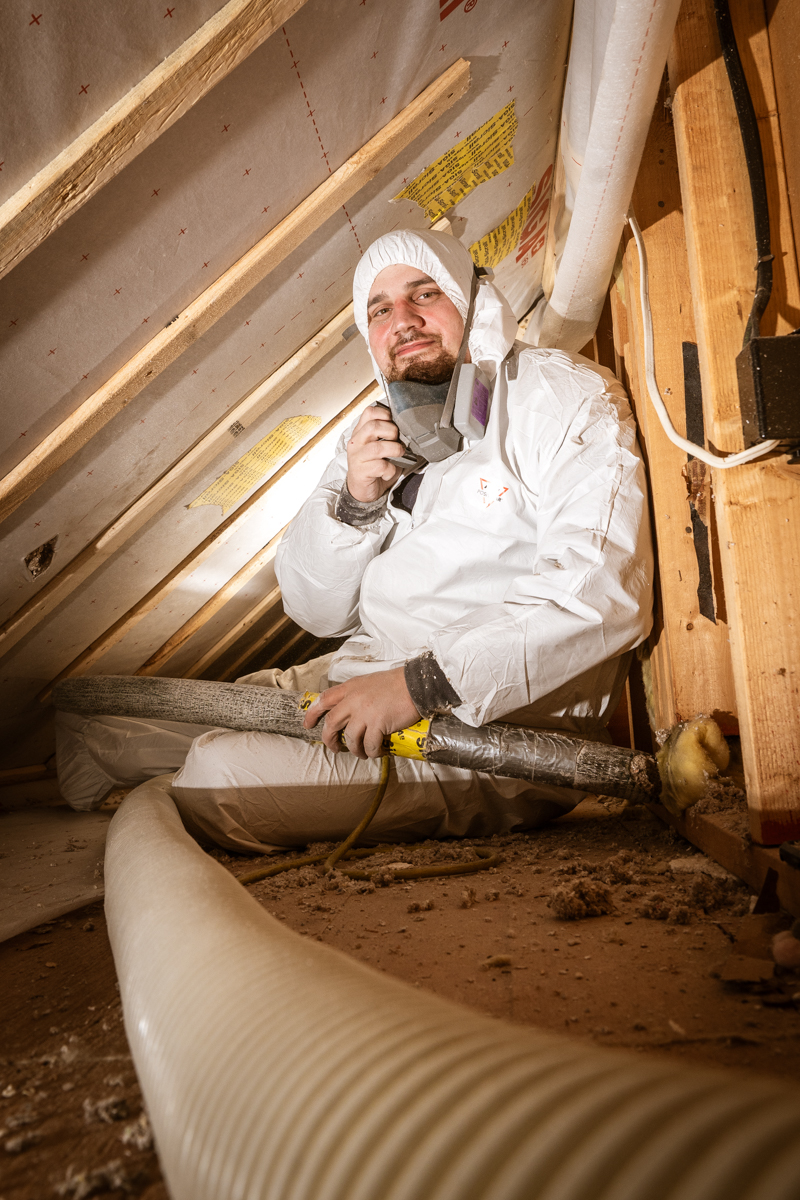
After a successful attic air sealing and insulation project, some homes develop a new symptom: the air feels heavier. Bathrooms take longer to clear after a shower. Cooking odors linger into the next morning. The house is doing exactly what it was supposed to do, holding conditioned air inside instead of letting it leak out. But the uncontrolled air exchange that the old, leaky envelope had provided is gone, and nothing has replaced it yet.
This is where mechanical ventilation comes in. Specifically, this is where ERV and HRV systems earn their place in a weatherized Maine home.
Why Mechanical Ventilation Matters After Air Sealing
Every home needs fresh air. The question is how it gets in.
In an older, unweathered home, fresh air enters through hundreds of gaps, cracks, and holes in the building envelope. Around windows. Through recessed lights. Along the band joist. Through the attic hatch. This uncontrolled leakage costs a tremendous amount of energy, but it does provide air exchange.
When we air seal a home, we close those pathways. The energy savings are real - typically 20-40% reduction in heating and cooling costs. But if the home reaches a certain level of tightness, it needs a deliberate ventilation strategy to maintain healthy indoor air quality.
The building science principle is straightforward: build tight, ventilate right. Seal the envelope to stop wasting energy, then install a system that provides exactly the amount of fresh air the home needs - filtered, controlled, and with minimal energy penalty.
What ERVs and HRVs Do
Both ERVs (Energy Recovery Ventilators) and HRVs (Heat Recovery Ventilators) are balanced ventilation systems. That means they simultaneously exhaust stale indoor air and bring in fresh outdoor air, using separate duct pathways so the two airstreams never mix directly.
The key feature of both systems is heat exchange. As the stale outgoing air passes through the unit's core, it transfers heat to the incoming fresh air. In winter, this means the cold outdoor air gets pre-warmed by the exhaust stream before it enters your living space. In summer, it works in reverse - the cooler indoor exhaust stream absorbs heat from the hot incoming air.
The result is fresh air without the energy penalty. A well-installed system recovers 70-85% of the heat that would otherwise be lost through ventilation.
The Difference Between ERV and HRV
The distinction between the two systems comes down to moisture transfer.
HRV (Heat Recovery Ventilator) transfers heat only. The incoming and outgoing airstreams exchange thermal energy but not moisture. The fresh air that enters your home arrives at whatever humidity level exists outdoors.
ERV (Energy Recovery Ventilator) transfers both heat and moisture. The core allows some water vapor to pass between the two airstreams, which means it partially balances indoor and outdoor humidity levels.
This difference sounds subtle, but it has real implications for Maine homeowners.
Which System Works Better in Maine
Maine's climate creates two distinct challenges for home ventilation:
Winter: Outdoor air is cold and extremely dry. Indoor air tends to be warmer and more humid (from cooking, showers, breathing, and everyday activities). If you bring large volumes of cold, dry outdoor air into the home without any moisture recovery, the indoor humidity drops. Low indoor humidity in winter leads to dry skin, static electricity, cracking wood floors, and general discomfort.
Summer: Outdoor air can be warm and humid. Bringing in humid outdoor air without any moisture management adds to the cooling load and can make the home feel clammy.
For most Maine homes, an ERV is the better choice. Here is why:
- In winter, the ERV retains some of the indoor moisture that would otherwise be exhausted outdoors. This keeps indoor humidity at a more comfortable level without needing a separate humidifier.
- In summer, the ERV transfers some of the incoming humidity to the outgoing exhaust stream, reducing the moisture load on your cooling system (whether that is a cold-climate heat pump running in cooling mode or a traditional AC system).
- Maine does not have the extreme, sustained high humidity of southeastern states where HRVs might be preferred for maximum moisture removal.
There are exceptions. If a home has persistent moisture problems - chronic high humidity, condensation on windows, or active moisture sources that have not been resolved - an HRV might be more appropriate because it removes moisture more aggressively in winter. But for the typical Maine home that has been properly weatherized and does not have unusual moisture conditions, the ERV is generally the right fit.
How These Systems Are Installed
ERVs and HRVs are typically installed in a central location - basement, utility room, or mechanical closet. The unit connects to four duct runs:
- Fresh air intake - A duct from an exterior wall cap to the unit, bringing in outdoor air
- Supply to living spaces - Distributes the tempered fresh air to bedrooms, living rooms, and other occupied spaces
- Return from stale areas - Pulls air from bathrooms, laundry rooms, and kitchen areas where moisture and odors concentrate
- Exhaust to outdoors - Sends the stale air (after heat recovery) outside through a separate exterior wall cap
In a home with existing ductwork (forced-air heating system), the ERV or HRV can sometimes tie into the existing duct system. In homes without ductwork - which is common in Maine homes heated by boilers, radiators, or cold-climate heat pumps - dedicated ventilation ductwork is installed.
The dedicated duct approach is actually preferable from a performance standpoint. It ensures the ventilation system operates independently of the heating and cooling system and delivers fresh air directly where it is needed.
Sizing the System
ERVs and HRVs are rated by airflow capacity in cubic feet per minute (CFM). The right size depends on home square footage, number of bedrooms, how tight the home is after air sealing, and occupancy. ASHRAE 62.2 (the residential ventilation standard) provides the calculation framework.
For most single-family homes in the Greater Portland area, a unit rated between 100 and 200 CFM handles the ventilation needs. The system runs continuously at a low speed and can boost higher for situations like extended showers or high occupancy.
What It Costs
An ERV or HRV system, including the unit, ductwork, and installation, typically runs between $3,000 and $6,000 for a standard Maine home. The range depends on the size of the home, the complexity of the duct routing, and the specific unit selected.
Operating costs are modest. These systems use a small fan motor that draws 50-150 watts - comparable to a light bulb. Annual electricity cost for running an ERV or HRV continuously is typically $50 to $150.
The energy recovered by the heat exchanger far exceeds the energy consumed by the fan. In a Maine winter, an HRV or ERV recovering 80% of the heat from exhaust air saves significantly more in heating energy than it consumes in electricity.
Rebate Considerations
Efficiency Maine does not currently offer a standalone ERV or HRV rebate. However, ventilation is often included in a comprehensive weatherization project that qualifies for insulation and air sealing rebates. We can walk through the specifics during your assessment.
How ERV/HRV Fits Into the Whole-Home Approach
At Horizon Homes, we think about ventilation as the third step in the whole-home performance sequence:
- Air seal the building envelope - Stop uncontrolled air leakage
- Insulate - Reduce heat transfer through walls, attics, and basements
- Ventilate - Replace the accidental air exchange with a controlled, filtered system
- Right-size the heating/cooling - With a tighter, better-insulated home, a cold-climate heat pump or high-efficiency boiler can be smaller and more efficient
Skipping step 3 is where problems can develop. A home that has been air sealed and insulated but lacks adequate ventilation may develop moisture issues, stuffy conditions, or lingering odors. These problems are not caused by the weatherization work itself - they are caused by incomplete weatherization that addressed the envelope but not the ventilation.
This is why we discuss ventilation during every energy assessment. Not every home needs a dedicated ERV or HRV - some homes retain enough natural air infiltration after air sealing to maintain adequate ventilation with just a good-quality bathroom exhaust fan running continuously. But for homes that achieve significant tightness improvements, a dedicated system is worth the investment.
Maintenance
ERV and HRV systems need minimal attention: clean or replace filters every 3-6 months (most are washable), remove and wash the heat exchange core annually, check exterior caps seasonally for ice or debris, and keep the condensate drain clear. Total time is about 30 minutes, two to three times per year. Most homeowners handle it themselves after a brief walkthrough during installation.
The Practical Result
When an ERV is added to a properly sealed and insulated home, the change is noticeable within days. Bathrooms clear after showers in a normal timeframe, cooking odors dissipate by morning, and the air throughout the house feels fresher without drafts or cold spots.
Heating costs do not increase meaningfully - the ERV recovers roughly 80% of the heat from the exhaust air, so the energy penalty for ventilation is minimal.
The outcome is the best of both: the energy savings from a tight, well-insulated envelope, plus the fresh air quality that the old, leaky house had provided accidentally and expensively.
Getting Started
If your home has recently been air sealed and insulated - or if you are planning weatherization work and want to understand the full picture - ventilation should be part of the conversation.
During a free energy assessment, we evaluate your home's current air sealing, insulation, and ventilation conditions. If the project plan involves significant air sealing, we will discuss whether mechanical ventilation should be included in the scope and help you understand the options.
Call us at (207) 221-3221 or schedule your free assessment online. Since 2006, we have been helping Greater Portland homeowners get the complete picture - envelope, insulation, ventilation, and heating - designed as one system.
Find our guides faster: add Horizon Homes as a preferred source on Google.
Free Home Energy Assessment
Ready to Lower Your Energy Bills?
We identify the improvements that will have the biggest impact on your home's energy use, with clear pricing and rebate estimates.
- Free walkthrough, no equipment, no disruption
- Efficiency Maine rebates identified for you
- Written improvement plan with pricing
Schedule Your Free Assessment
We call within 1 business day.