Propane Boiler vs Oil Boiler in Maine
Editor's note (August 2026): The federal 25C tax credits referenced in this article expired December 31, 2025 and are only available for qualifying work completed before that date. Efficiency Maine rebates remain available for qualifying insulation and heat pump upgrades. Boiler installations do not currently qualify for a comparable state rebate.
Heating oil in Maine has been running near $5 per gallon. If you filled your tank recently and felt the sting, you are not alone. Plenty of Maine homeowners are asking the same question: is there a better option?
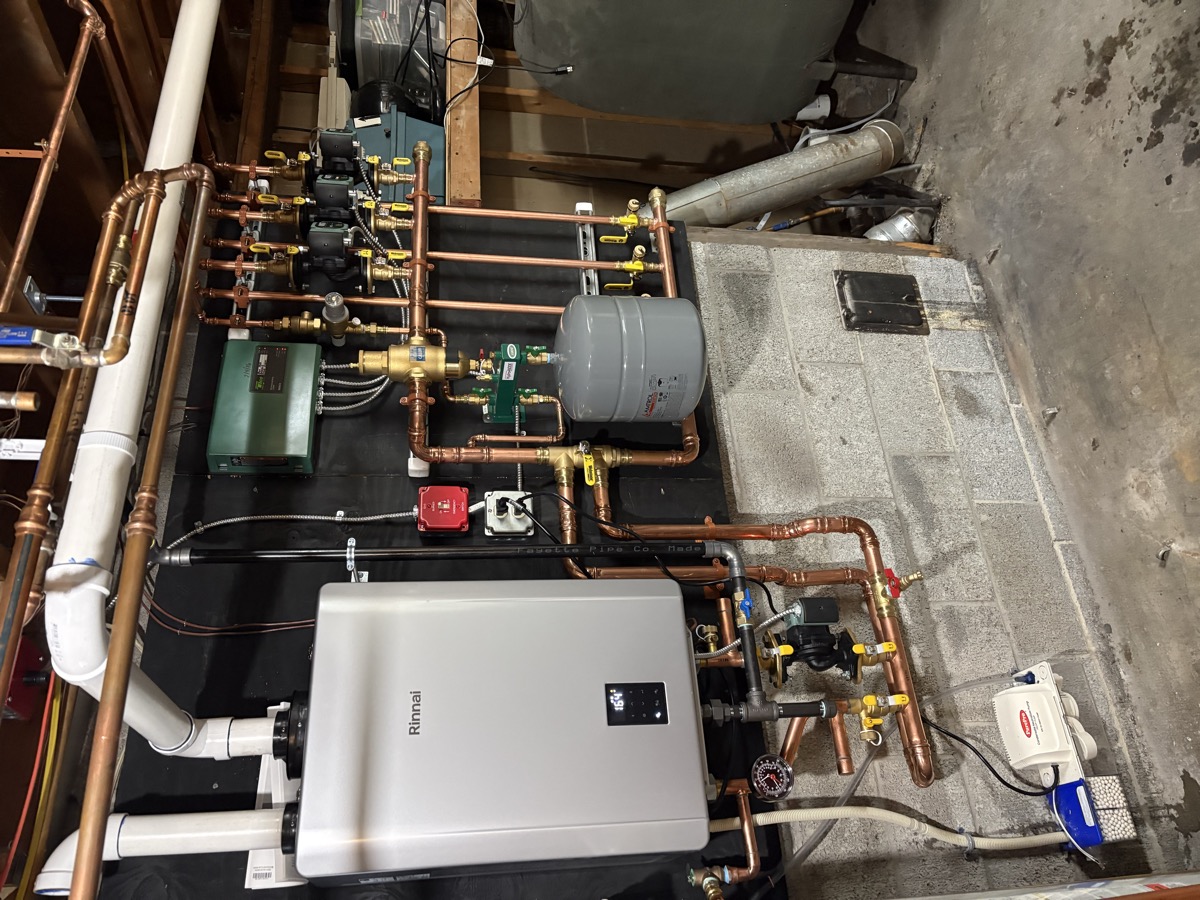
For homes with hydronic heating systems - baseboard radiators, radiant floors, or a combination - the answer often comes down to two fuels: the oil you are already burning, or propane. The equipment matters just as much as the fuel, though. A modern wall-hung condensing propane boiler operates at a fundamentally different efficiency level than a conventional oil boiler, and that gap changes the math in ways many homeowners don't expect.
At Horizon Homes, we install both high-efficiency boilers and cold-climate heat pumps. We are not locked into one fuel or one technology. That means we can give you a straight comparison based on your home, your heating distribution, and your goals. Here is the information you need to start that conversation.
Considering a boiler replacement in Greater Portland? Explore our high-efficiency natural gas and propane heating systems, then request a free energy assessment to discuss your existing radiators, fuel supply, and project priorities. The visit is a visual walkthrough only, with no diagnostic testing or obligation.
Understanding Boiler Efficiency: AFUE Ratings
Before comparing fuels, you need to understand AFUE - Annual Fuel Utilization Efficiency. This number tells you how much of the energy in the fuel actually becomes heat in your home.
- Conventional oil boilers (the type most Maine homes have) operate at 80-87% AFUE. The typical unit installed in the 1990's or 2000's runs around 83-85%. That means 15-17 cents of every dollar you spend on oil goes up the chimney as waste heat.
- Standard propane boilers operate at similar efficiencies to oil, around 80-85% AFUE. If you simply swap fuel without upgrading the equipment, the savings are minimal.
- Condensing propane boilers are a different category entirely. These wall-hung units operate at 95-98% AFUE. They extract so much heat from combustion gases that the exhaust is cool enough to vent through PVC pipe. The "condensing" part means they capture heat from water vapor in the exhaust that a conventional boiler would waste.
This 10-15 point efficiency gap between a conventional oil boiler and a condensing propane boiler is where the real savings come from. It is not just about the price per gallon. It is about how much of each gallon actually heats your home.
Fuel Cost Comparison: Running the Numbers
Here are the current prices from the weekly Maine Governor's Energy Office survey for the Greater Portland region. This table updates itself each week, so it does not go stale between guide revisions.
| Fuel | Price | Cost per million BTU delivered |
|---|---|---|
| Heating oil | $4.87/gallon | $41.37 Oil boiler (85%) |
| Propane | $3.56/gallon | $40.95 Condensing propane boiler (95%) |
Prices as of August 10, 2026, Southeast / Greater Portland region. Source: Maine Governor's Energy Office weekly survey and EIA residential averages. Updated automatically each week.
Price per gallon is what the delivery ticket says. Cost per million BTU delivered is what decides your heating bill, because it accounts for how much energy is in the fuel and how much of it your boiler actually turns into heat inside the house.
Working it through at the August 2026 survey prices (oil $4.87, propane $3.56):
For an oil boiler at 85% AFUE:
- $4.87 per gallon divided by 138,500 BTU = $35.16 per million BTU raw
- At 85% efficiency: $35.16 / 0.85 = $41.37 per million BTU delivered
For a condensing propane boiler at 95% AFUE, the conservative end of the condensing range:
- $3.56 per gallon divided by 91,500 BTU = $38.91 per million BTU raw
- At 95% efficiency: $38.91 / 0.95 = $40.95 per million BTU delivered
Read that carefully, because it does not say what people expect. Propane costs more per BTU in the tank than oil does. The condensing boiler's efficiency closes that gap, but only just. Against a healthy 85% oil boiler at these prices, condensing propane is roughly a wash.
The picture changes against the boiler most people are actually replacing. An oil boiler at 72% AFUE, typical for a unit 25 years or older, delivers heat at $48.83 per million BTU. Condensing propane at $40.95 is about 16% cheaper per unit of useful heat.
For a Maine home burning 800 gallons of oil per year:
- Annual oil cost at $4.87 per gallon: approximately $3,900
- If the old boiler runs at 72%, the same delivered heat from condensing propane costs roughly $3,250
- Annual fuel savings: around $650
- If your oil boiler is already running near 85%, most of that saving disappears
That is the honest shape of it. The savings come from the efficiency jump, not from the fuel switch. If your oil boiler is in good condition and burning efficiently, changing fuels alone will not pay for itself, and a modern condensing oil boiler or cold-climate heat pumps may serve you better.
Prices also move. Through the 2026 season, oil has run $4.87 to $5.34 per gallon and propane $3.36 to $3.68 in this survey. A swing at either end shifts the comparison, which is why the table above is live rather than typed in.
Beyond Fuel Cost: The Full Picture
Fuel price is the number most people focus on, but several other factors affect the total cost of ownership.
Maintenance
Oil boilers require annual cleaning and maintenance. The combustion process creates soot and residue that builds up on heat exchangers, and the oil filter and nozzle need regular replacement. Annual service typically runs $250-$400, and skipping it leads to efficiency losses and eventual breakdowns.
Propane burns much cleaner than oil. A condensing propane boiler still needs annual service, but the cleaning is less intensive, and there is no soot buildup. Annual service typically runs $150-$250.
Over a 20-year boiler lifespan, that maintenance difference adds up to $2,000-$3,000 in savings.
Equipment Lifespan
Cast iron oil boilers have a long lifespan, often 25-30 years, though efficiency degrades over time. Condensing propane boilers typically last 15-20 years. However, the higher efficiency and lower fuel costs over that period generally more than offset the shorter equipment life.
Space and Installation
This is one of the most underappreciated advantages of modern condensing boilers. A wall-hung unit is about the size of a small suitcase. It mounts on the wall and frees up valuable floor space in your basement or utility room. Compare that to a 400-pound cast iron oil boiler taking up a significant footprint, plus the oil tank (which itself takes up 15-20 square feet).
Removing the oil tank also eliminates the risk of tank leaks. Underground oil tank leaks in Maine can cost $10,000-$50,000 or more in remediation. Even above-ground tanks occasionally develop problems. With propane, the tank sits outside, and any leak dissipates into the air rather than soaking into your foundation or soil.
Propane Tank Logistics
If your home doesn't currently have propane service, you will need a propane tank installed. In Maine, most propane suppliers will install the tank at no cost if you sign a fuel supply agreement. Above-ground tanks for residential use typically range from 120 to 500 gallons. Underground tanks are also an option, though they cost more to install.
One thing to be aware of: propane delivery schedules in Maine's rural areas can sometimes be less frequent than oil delivery. Make sure your tank size gives you adequate reserve capacity for your usage, and ask potential suppliers about automatic delivery options.
When Propane Condensing Makes the Most Sense
This comparison is not one-size-fits-all. Here are the situations where upgrading to a condensing propane boiler is most compelling.
Strong candidates:
- Your oil boiler is 20+ years old and approaching the end of its useful life
- You already have propane service (for a stove, dryer, or other appliance)
- Natural gas is not available on your street (true for most of Maine outside Portland, South Portland, and Westbrook)
- Your home has a good hydronic distribution system that you want to keep
- You are spending $3,500+ per year on heating oil
Less compelling situations:
- Your oil boiler is relatively new (under 10 years) and running well
- You are considering a full transition to cold-climate heat pumps, which would eliminate the boiler entirely
- Natural gas is available on your street. Natural gas condensing boilers offer the same efficiency benefits at a lower fuel cost than propane
The Heat Pump Question
We would be doing you a disservice if we didn't mention heat pumps in this conversation. Cold-climate heat pumps can deliver 2-3 times more heat energy than the electricity they consume, making them the most efficient heating option available. Efficiency Maine rebates of up to $9,000 (income-dependent) make them even more attractive.
For many Maine homes, a combination approach fits well: a condensing boiler for primary heat through the hydronic system, with cold-climate heat pumps for cooling and supplemental heat. This gives you two heat sources and zone control.
The right answer depends on your home's heating distribution, your budget, your comfort priorities, and how much disruption you are willing to manage during the transition. That's exactly what we evaluate during a free energy assessment. For a full look at operating costs, see our propane vs. heat pump cost comparison.
What About Natural Gas?
If your home has access to natural gas, the comparison shifts significantly in favor of gas over oil. Natural gas condensing boilers offer the same 95-98% AFUE as propane units, but natural gas is considerably cheaper per BTU than propane in Maine. At August 2026 prices, a condensing gas boiler delivers heat at roughly $21 per million BTU against about $41 for condensing propane, close to half the running cost.
For homes in Portland, South Portland, Westbrook, and other areas served by Northern Utilities, a natural gas condensing boiler is often the most cost-effective hydronic heating option.
If your street has a gas main and your home is not connected, the gas company will often extend service to your property at no cost or low cost, depending on the estimated annual usage.
Rebates and Tax Credits
Upgrading to a high-efficiency condensing boiler used to qualify for a federal tax credit under Section 25C, worth 30% of the installed cost up to $600 per year for boilers at 95% AFUE or higher. That credit ended December 31, 2025. Work completed before that date may still be claimable.
Efficiency Maine rebates for boilers are more limited than for heat pumps or insulation, but it is worth checking current program offerings. Rebate amounts and eligibility change periodically.
If you combine a boiler upgrade with insulation and air sealing, the combined project may qualify for additional rebates and the Efficiency Maine Whole Home Bonus. Insulating and air sealing first also means your new boiler can be sized smaller, which reduces the equipment cost.
Getting Started
If you are burning 800+ gallons of oil per year, spending $3,500 or more on heating, and your boiler is approaching the end of its useful life, a condensing boiler upgrade deserves a close look. Whether propane or natural gas is the right fuel depends on what's available at your property and your long-term energy goals.
The best first step is a free energy assessment. We will look at your current heating system, your home's insulation and air sealing, and your energy usage to give you a clear picture of your options, including costs, savings projections, and available rebates.
Horizon Homes has been helping Greater Portland homeowners make smart energy decisions since 2006. As an Efficiency Maine Top Contractor for 10+ years, we install both high-efficiency boilers and cold-climate heat pumps, and we will recommend the option that fits your home. No pressure, just information.
Schedule your free energy assessment. Call us at (207) 221-3221 or book online.
Find our guides faster: add Horizon Homes as a preferred source on Google.
Free Home Energy Assessment
Ready to Lower Your Energy Bills?
We identify the improvements that will have the biggest impact on your home's energy use, with clear pricing and rebate estimates.
- Free walkthrough, no equipment, no disruption
- Efficiency Maine rebates identified for you
- Written improvement plan with pricing
Schedule Your Free Assessment
We call within 1 business day.