Building Science Basics: How Your Maine Home Works
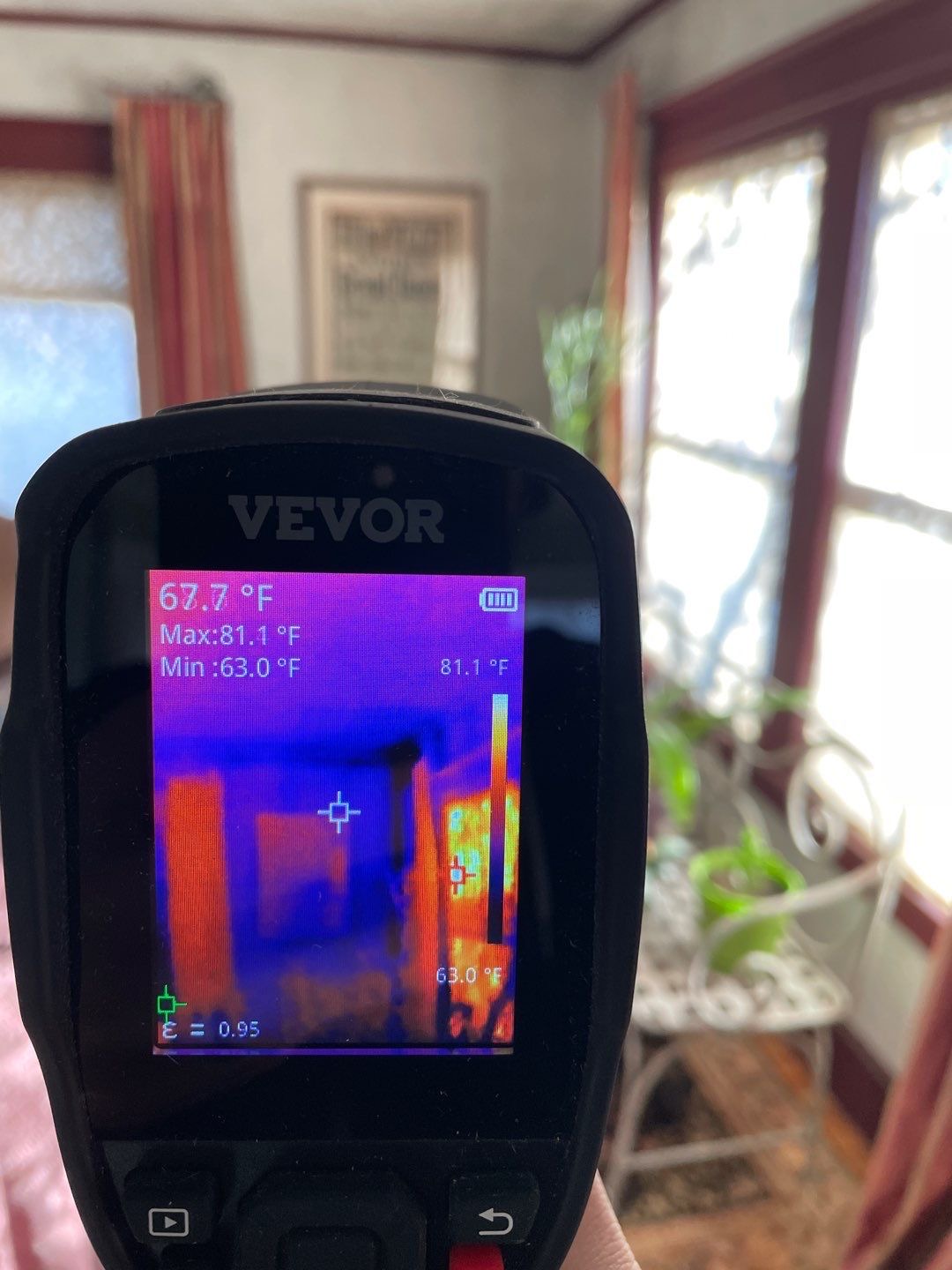
We get asked all the time why one room is cold while another is fine, or why ice forms on the roof but not the garage. The answer is almost always the same: your house is a system, and something in that system is out of balance.
Building science is just the study of how homes actually work. Not how we wish they worked or how the builder intended them to work, but what is physically happening with heat, air, and moisture inside your walls, attic, and basement right now. Once you understand the basics, every home comfort problem starts to make more sense.
Heat Moves in Three Ways
Heat always moves from warm areas to cold areas. In a Maine winter, that means heat is constantly trying to escape your home. It does this three ways:
Conduction is heat moving through solid materials. Touch a cold window pane in January and you feel it immediately. Heat from your hand transfers through the glass to the cold air outside. The same thing happens through your walls, ceiling, and floor. Insulation slows conduction by trapping air in tiny pockets that resist heat transfer.
Convection is heat moving through air. Warm air rises. Cold air sinks. Inside your home, this creates loops of moving air. Warm air rises to the second floor and attic while cold air settles in the basement. This natural circulation is one reason upstairs rooms are often too warm while basements stay cold.
Radiation is heat moving in waves through space. Stand near a cold window on a winter night and you feel a chill, even if no air is leaking. That is radiant heat leaving your body and heading toward the colder surface. It is also why standing in a sunbeam on a cold day feels warm, even though the air temperature has not changed.
Every energy improvement we make targets one or more of these mechanisms. Insulation reduces conduction. Air sealing reduces convection losses. Radiant barriers and high-performance windows address radiation.
The Stack Effect: Why Your Attic Matters So Much
The single most important concept for Maine homeowners to understand is the stack effect. Here is how it works:
Warm air inside your home rises. It collects in the upper floors and attic. Because warm air is less dense than cold air, it creates pressure at the top of the house, pushing outward. That pressure forces warm air out through every gap, crack, and hole in your attic floor, around light fixtures, through plumbing and wiring penetrations, and past the attic hatch.
As warm air escapes from the top, it creates a vacuum at the bottom. Cold outdoor air gets pulled in through the basement and lower floors, through rim joists, sill plates, foundation cracks, and basement windows.
The taller your house, the stronger the stack effect. A two-story colonial with an attic has a much more powerful stack effect than a single-story ranch. This is why ice dams form on the roof (warm air melting snow from below), why basements feel cold even with the heat on, and why second floors are often uncomfortable.
Schedule a free energy assessment and we will show you exactly where the stack effect is pulling heat out of your home.
Your Home's Thermal Envelope
The thermal envelope is the boundary between conditioned space (where you live) and unconditioned space (outside, the attic, an unheated garage). Think of it as your home's coat.
In most Maine homes, the thermal envelope includes:
- The attic floor (or roof line if the attic is finished)
- Exterior walls
- The basement ceiling or walls (depending on whether the basement is heated)
- Windows and doors
A good thermal envelope has two layers working together: insulation to slow heat transfer and air sealing to stop air movement. One without the other is like wearing a windbreaker with no lining, or a down jacket full of holes. You need both.
We see this constantly in Maine homes built before 1990. The builder may have stuffed fiberglass batts in the walls, but nobody sealed the gaps around wires, pipes, and junction boxes. The insulation is there, but warm air flows right past it.
Moisture: The Hidden Player
Heat and air get most of the attention, but moisture is the one that causes real damage. In building science, moisture problems follow a simple rule: warm air holds more moisture than cold air. When warm, humid indoor air hits a cold surface, the moisture condenses. That is why windows fog up in winter.
The same thing can happen inside your walls. If warm, moist air from your living space leaks into a wall cavity and hits the cold exterior sheathing, condensation forms. Over months and years, that moisture leads to mold, wood rot, and failed paint.
This is why air sealing matters for more than just energy savings. Sealing the gaps in your thermal envelope keeps moist indoor air from reaching cold surfaces where it does not belong.
In a Maine home, the most common moisture trouble spots are:
- Attic bypasses (warm air carrying moisture into a cold attic)
- Bathroom and kitchen exhaust venting into the attic instead of outside
- Uninsulated rim joists in the basement
- Cathedral ceilings without proper vapor management
Why "Your House Is a System" Is Not Just a Slogan
Every part of your home's energy performance connects to every other part. Change one thing and it affects everything else.
Example: You install a cold-climate heat pump without addressing insulation first. The heat pump works harder than it needs to because heat escapes through the attic and walls as fast as the system produces it. You end up with higher electricity bills than expected and the heat pump runs in backup mode more often during cold snaps.
Example: You insulate the attic without air sealing first. The insulation helps, but warm air still rises through the gaps, carrying heat and moisture into the attic. You may even develop moisture problems that were not there before.
Example: You air seal and insulate thoroughly but skip ventilation planning. The house gets tight, which is good. But without controlled fresh air exchange, indoor humidity rises, cooking odors linger, and CO2 levels climb.
This is why we take a whole-home approach. We look at all the systems together, identify what is out of balance, and recommend improvements in the order that makes the biggest difference.
What Building Science Means for Your Next Project
Understanding these basics does not mean you need to become a building scientist. But it helps you ask better questions and make better decisions when planning home improvements.
If a contractor suggests insulating your attic without mentioning air sealing, that is a red flag. If someone recommends a heating system without asking about your insulation, they are sizing for a leaky house. If you are told your only option for cold rooms is new windows, it is worth asking about the stack effect and air sealing first.
The Building Performance Association offers a free Building Science Principles course for anyone who wants to go deeper. For homeowners who just want their house to be comfortable and efficient, a conversation with our team is the fastest path.
See How Your Home Performs
Every home is different, and every Maine home has its own set of strengths and weaknesses. The best way to understand yours is to have someone who understands building science walk through it with you.
Schedule your free energy assessment and we will explain what is happening in your home, what to fix first, and how to get the most from every improvement. Or call us at (207) 221-3221.
Find our guides faster: add Horizon Homes as a preferred source on Google.
Free Home Energy Assessment
Ready to Lower Your Energy Bills?
We identify the improvements that will have the biggest impact on your home's energy use, with clear pricing and rebate estimates.
- Free walkthrough, no equipment, no disruption
- Efficiency Maine rebates identified for you
- Written improvement plan with pricing
Schedule Your Free Assessment
We call within 1 business day.