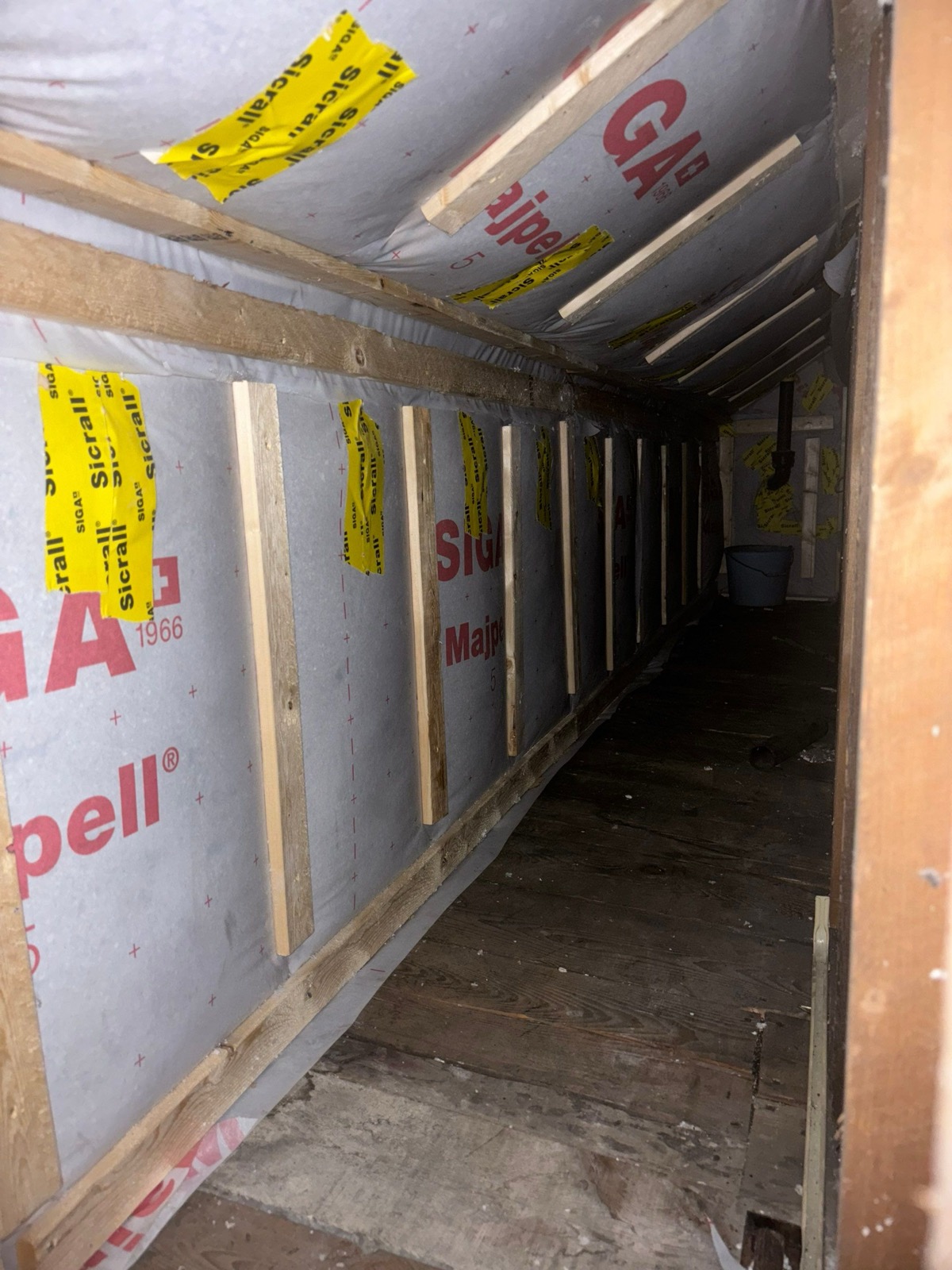
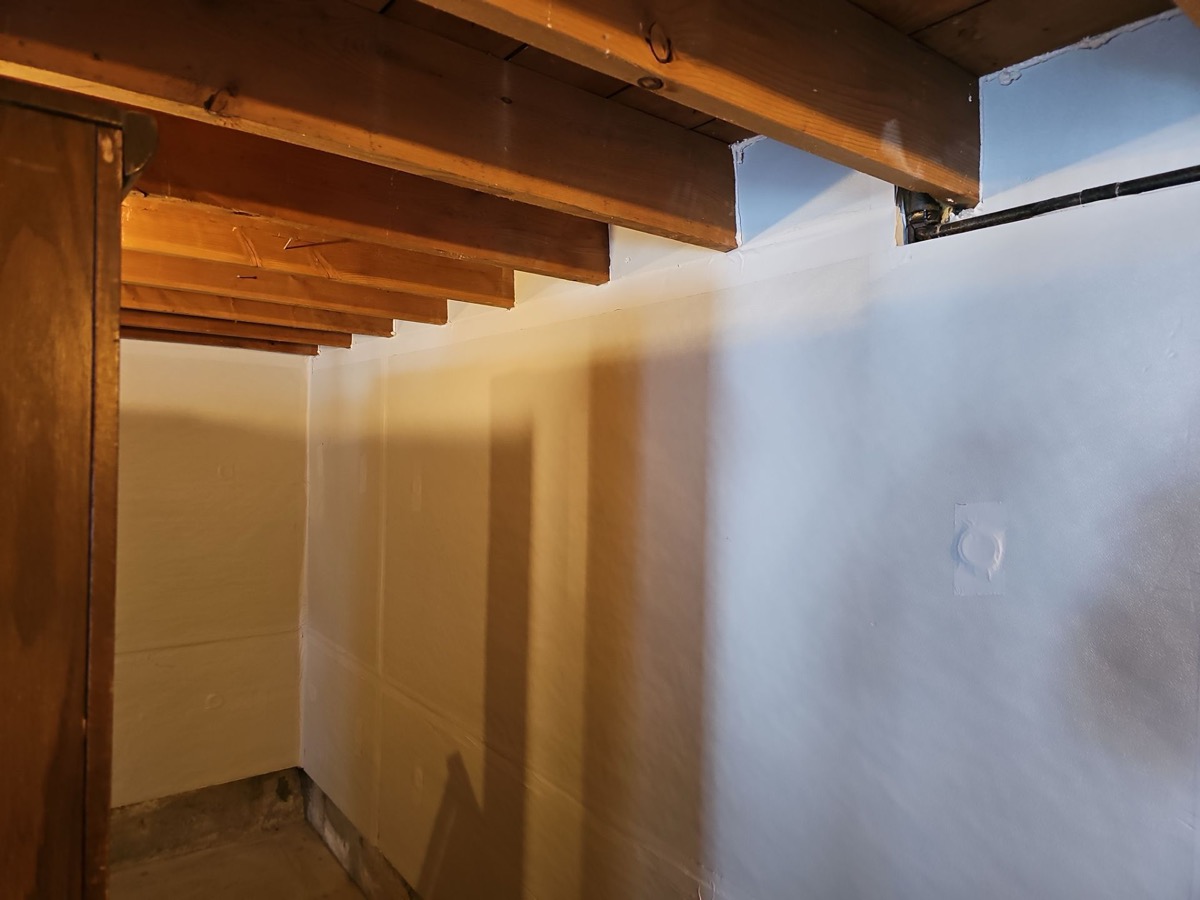
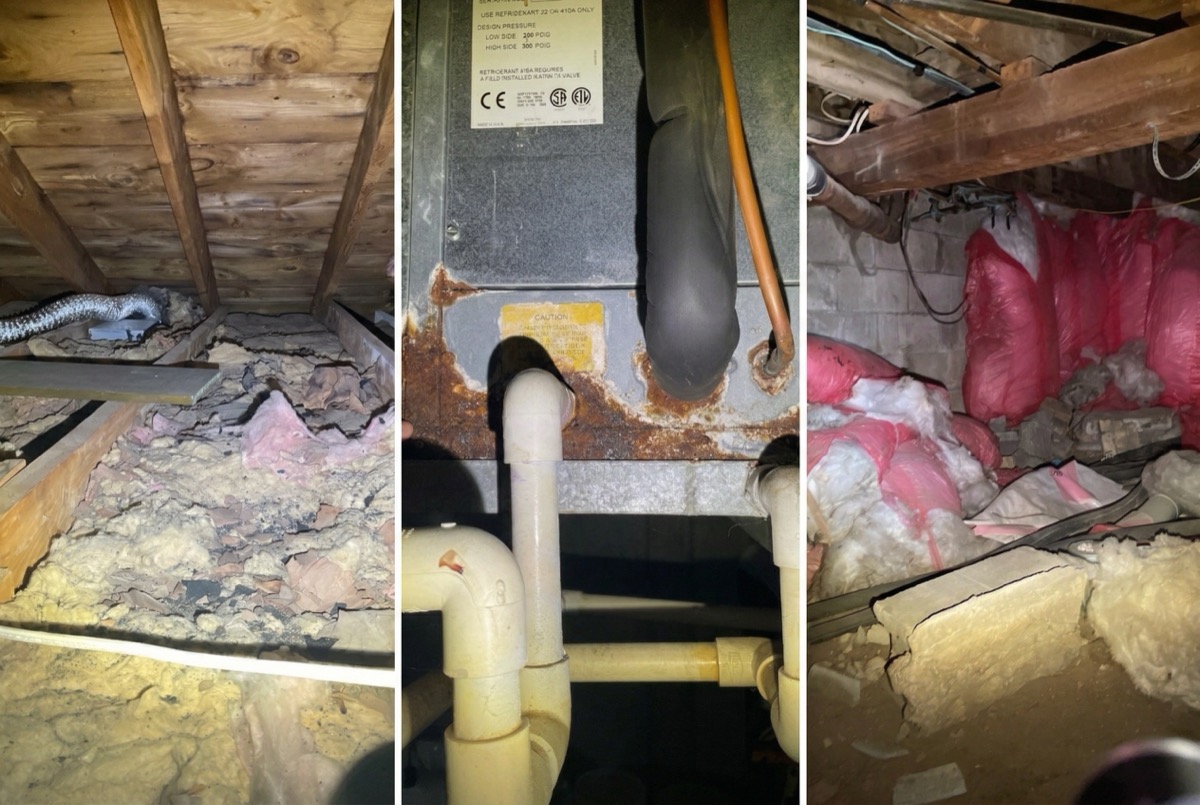
Drafty Windows vs. Drafty Walls: Where You Are Losing Heat
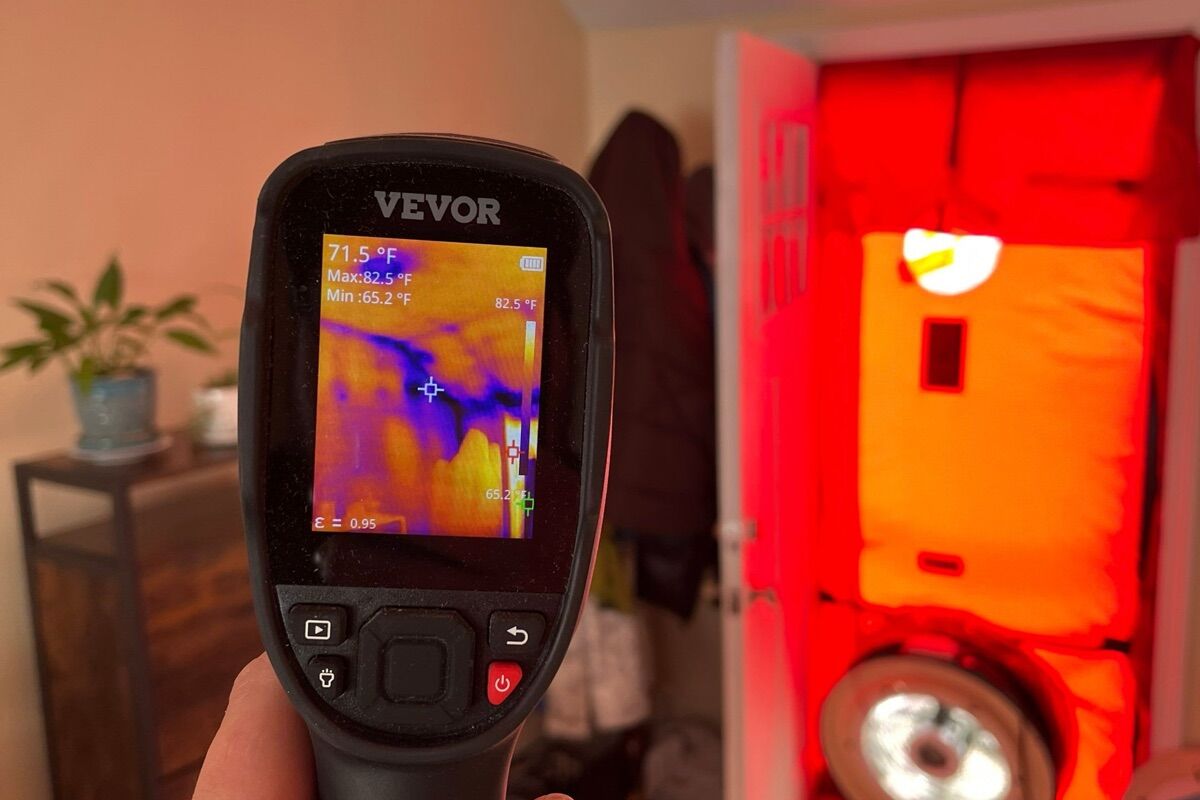
You know that cold draft you feel sitting on the couch near the living room window? The one that makes you pull a blanket over your legs from November through April? Your first instinct is probably to blame the windows. Most homeowners in Greater Portland do.
But here is what 20+ years of air sealing work in Maine homes has taught us: the draft you feel at the window usually is not coming from the window.
The Stack Effect: Why Windows Get Blamed
In building science, there is a concept called the stack effect. Warm air rises. In a typical Maine home, heated air escapes through gaps in the attic - around the attic hatch, plumbing stacks, electrical wiring penetrations, recessed lights, and chimney chases. As that warm air leaks out the top of the house, cold outside air gets pulled in at the bottom to replace it.
That cold air enters through basement rim joists, sill plate gaps, foundation cracks, and yes, around window and door frames. You feel the cold at the windows because they are at the building's exterior, right in the path of that incoming air. But the root cause is the attic and basement, not the windows themselves.
This is why spending $15,000 on replacement windows often does not fix the problem. You seal the windows, but the stack effect continues because the attic and basement leaks are still there. The air just finds a different path.
How to Tell the Difference
Before you call a window company, try this simple test on the next cold day:
Hold your hand near the window glass. If you feel radiant cold (the glass itself is cold but there is no moving air), your window is doing its job. Single-pane windows will feel colder than double-pane, but that is radiant heat loss, not an air leak.
Hold your hand near the window frame, trim, and sill. If you feel moving air, there is a gap somewhere around the installation. This is solvable with caulk and weatherstripping, not a new window.
Check the top of the window. Air leaking down from the wall cavity above the window is a common pattern in balloon-frame homes (common in pre-1950's Maine houses). The wall cavity connects to the attic, and conditioned air travels straight up and out. Cold air drops down to fill the space. The window is just in the way.
Look at the baseboard under the window. In many homes, the drafts people feel at knee level are coming up from the basement through gaps in the floor framing, not through the window. Pull back the carpet or feel along the baseboard trim on an exterior wall.
Where the Real Leaks Are
In a typical Greater Portland home, the major air leaks break down roughly like this:
- Attic bypasses (30-40% of total air leakage): Penetrations for wiring, plumbing, ductwork, chimney chases, attic hatches, and recessed lights. These are invisible from inside the house but account for the largest share of heat loss.
- Basement and crawlspace (20-30%): Rim joists, sill plates, foundation-to-framing connections, and pipe/wire penetrations through the floor.
- Walls (15-20%): Electrical outlet boxes on exterior walls, gaps around window and door rough openings (behind the trim), and balloon-frame wall cavities that connect to the attic.
- Windows and doors themselves (10-15%): Actual window seal failures, deteriorated weatherstripping, and gaps in door thresholds.
Notice that windows and doors account for a fraction of the total. The attic alone typically loses twice as much air as all the windows combined.
Schedule a free energy assessment and we will walk through your home to identify where the real leaks are, not just where you feel them.
The $15,000 Window Mistake
We have this conversation with homeowners at least once a week. Someone calls about drafty windows, and during the assessment we find:
- The attic has 4 inches of compressed fiberglass insulation (R-11 where it should be R-50)
- The attic hatch has no weatherstripping and no insulation on top
- The rim joists in the basement are completely uninsulated
- There is a 3-inch gap around the plumbing stack where it passes through the attic floor
The windows? They are 15-year-old double-pane vinyl replacements that are working fine. The cold the homeowner feels near them is air being pulled through the house by the stack effect, entering at the basement and flowing past the windows on its way up to the attic.
Fixing the attic and basement air leaks and adding insulation to R-50 in the attic typically costs $4,000-$8,000 before Efficiency Maine rebates. That is a fraction of what new windows cost, and it addresses the root problem instead of a symptom.
When Windows Are the Problem
Windows are not always innocent. Here are the cases where replacement makes sense:
- Single-pane windows with no storm windows. These lose heat through conduction and offer minimal insulation value.
- Failed seals on double-pane windows (you see fog or condensation between the panes). The insulating gas has leaked out and the window is performing like a single pane.
- Rotted frames where the window is structurally compromised and air passes through the frame itself.
- Basement windows that are single-pane, rusted, or non-operable. We replace basement windows as part of basement insulation projects.
If your windows fall into one of these categories, replacement is justified. But even then, insulating and air sealing the attic and basement first will do more for your comfort and energy bills than the windows alone.
What to Do Instead
If you are feeling drafts and considering a major window project, start here:
Get a free energy assessment. We will check your attic insulation depth and condition, inspect the basement for air leaks, and identify the actual sources of the draft you are feeling.
Address the attic and basement first. Air sealing the attic bypasses and rim joists, then adding blown-in cellulose insulation to R-50, eliminates the stack effect that causes most window-area drafts.
Weatherstrip what you have. If the window frames have gaps, adhesive-backed weatherstripping and caulk can fix 80% of window-related air leaks for under $50.
Reassess windows after insulation. Many homeowners find that after insulation and air sealing work, the window drafts disappear. The ones that remain are genuine window problems worth addressing on their own timeline.
Fix the Cause, Not the Symptom
The cold you feel near your windows this winter might not be a window problem at all. Before you invest in replacements, it is worth 45 minutes of your time to find out where the air is entering your home and where it is leaving.
Schedule your free energy assessment and we will show you exactly where your home is losing heat. Or call us at (207) 221-3221.
Find our guides faster: add Horizon Homes as a preferred source on Google.
Free Home Energy Assessment
Dealing With This in Your Home?
Most comfort problems trace back to insulation, air sealing, or heating system issues. A free walkthrough identifies the root cause.
- Free walkthrough, no equipment, no disruption
- Efficiency Maine rebates identified for you
- Written improvement plan with pricing
Schedule Your Free Assessment
We call within 1 business day.