How to Stack Efficiency Maine Rebates for Maximum Savings
Editor's note (October 2026): This guide was updated for Efficiency Maine's October 1, 2026 rebate schedule. Insulation and air sealing rebates are now a fixed amount per zone of the house, not a percentage of project cost. Rebates are income-dependent and can change. See current rebates.
One of the most common questions we hear during energy assessments is, "Can I get rebates for both insulation and a heat pump?" The answer is yes. And if you plan it right, you can combine four separate Efficiency Maine incentives into one project.
Here is how the stacking works, what each program covers, and how to get the most out of it.
The Four Rebates You Can Combine
Efficiency Maine runs separate rebate programs for different types of improvements. Each has its own funding, its own application process, and its own eligibility rules. But they are designed to work together, and completing all of them as a single project unlocks the best total value.
1. Insulation and Air Sealing Rebate
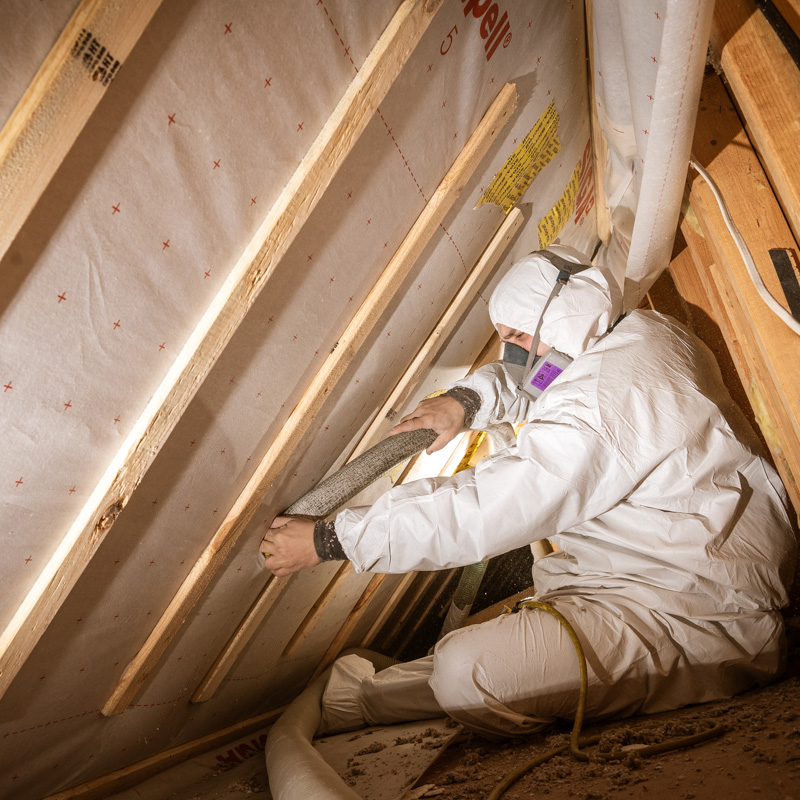
This covers blown-in cellulose insulation, rigid foam board, and air sealing. As of October 1, 2026, the rebate is a fixed dollar amount for each zone of the house (attic, walls, basement), set by income tier and zone size. Each zone can earn one insulation rebate and one air sealing rebate:
| Zone | Low Income | Moderate Income | Any Income |
|---|---|---|---|
| Insulation, small zone (250-499 sq ft) | $2,000 | $1,500 | $1,000 |
| Insulation, large zone (500+ sq ft) | $4,000 | $3,000 | $2,000 |
| Air sealing, attic | $300 | $225 | $150 |
| Air sealing, basement | $200 | $150 | $100 |
| Air sealing, living space | $100 | $75 | $50 |
| Lifetime limit per building | $8,600, all income tiers |
Income tiers:
- Any income: no verification needed.
- Moderate: adjusted gross income up to $70,000 for individual filers, or $100,000 for joint filers.
- Low: verified participation in HEAP, SNAP, TANF, or MaineCare.
Mobile homes follow different zone rules and a $5,600 lifetime limit. See the full rebate table.
2. Heat Pump Rebate
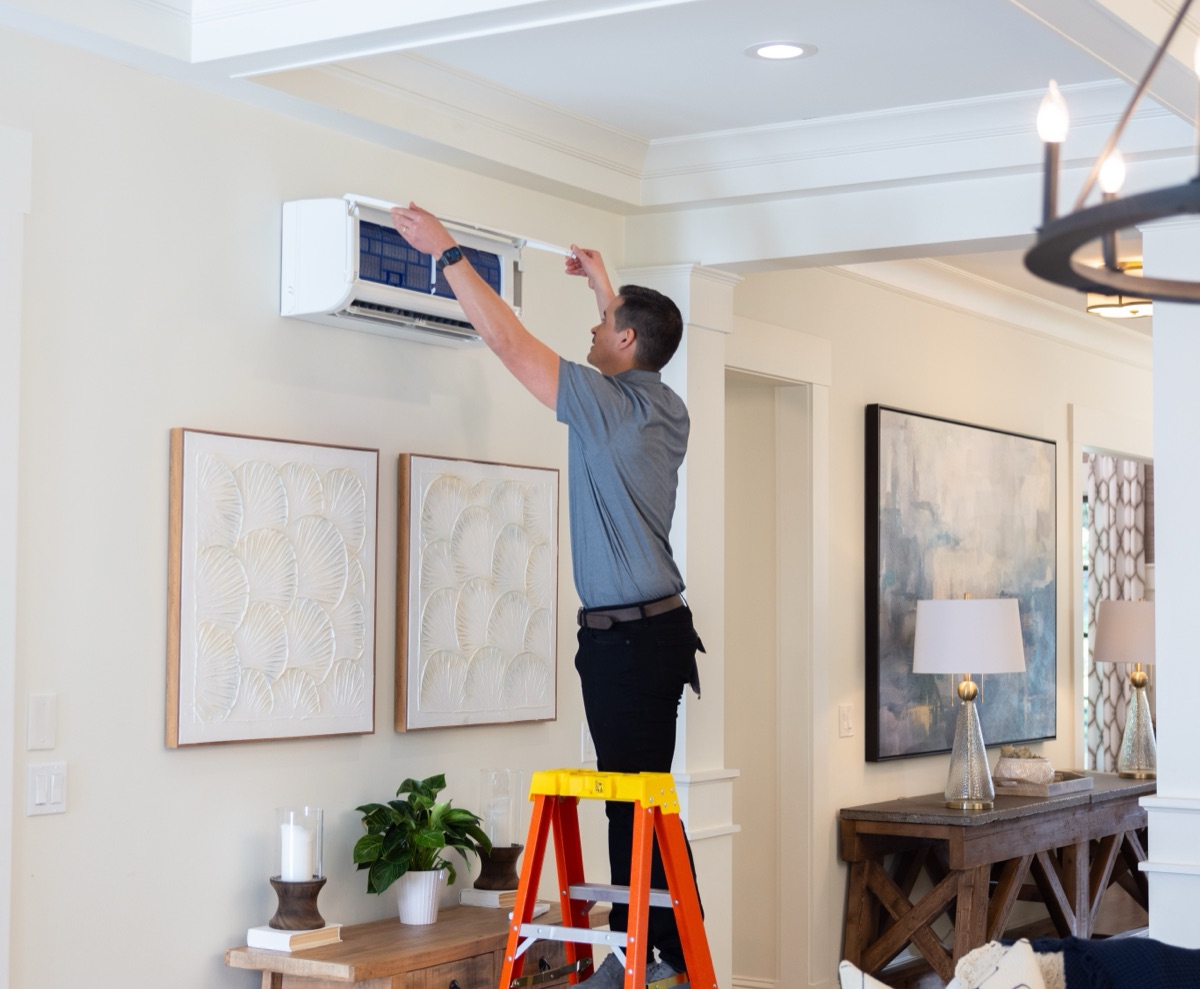
Cold-climate heat pump rebates are per-unit, with a maximum of three indoor units per household:
| Income Tier | Per Unit | 2 Units | 3 Units |
|---|---|---|---|
| Any income | $1,000 | $2,000 | $3,000 |
| Moderate | $2,000 | $4,000 | $6,000 |
| Low | $3,000 | $6,000 | $9,000 |
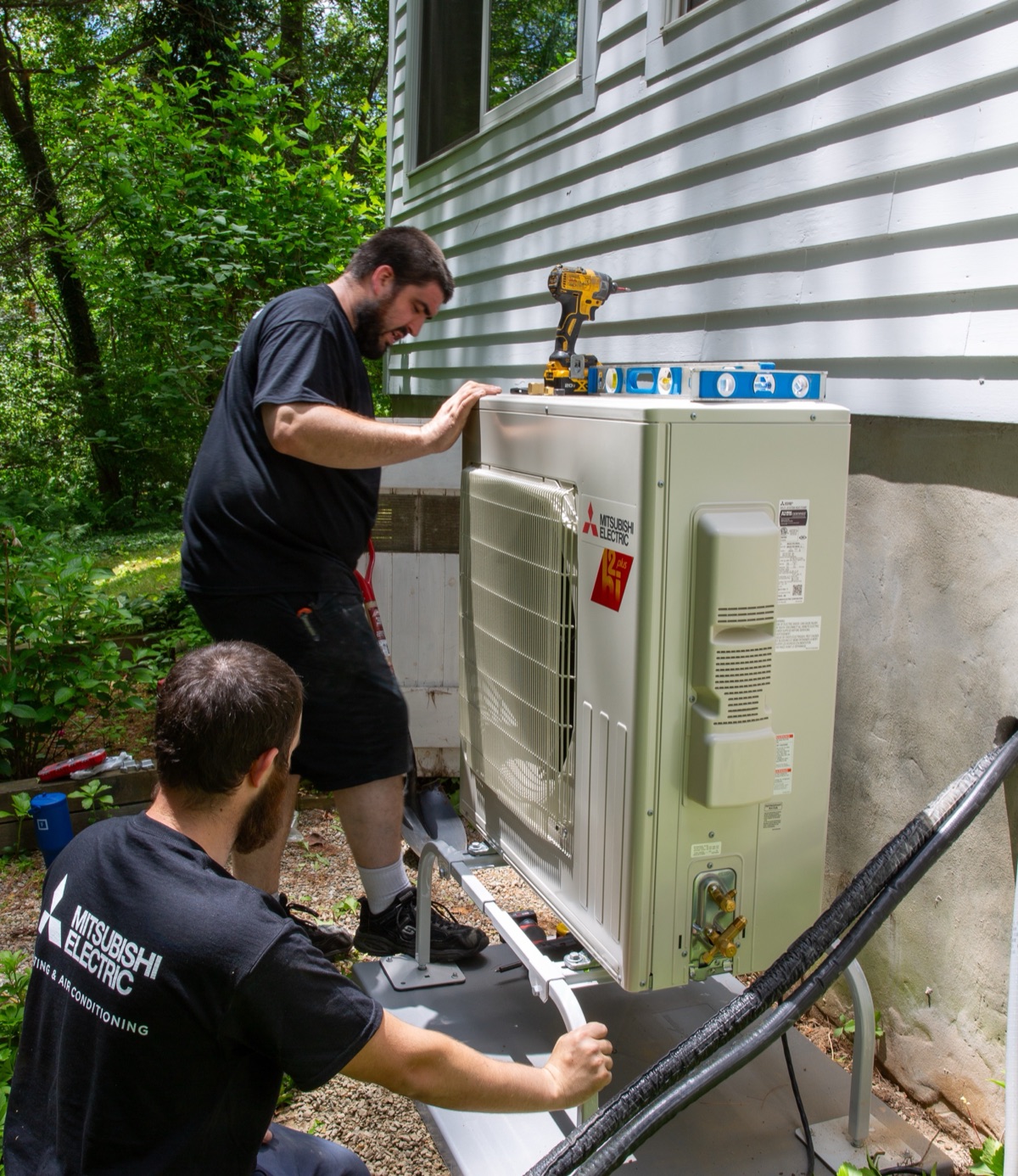
Most homes in our service area need two to three indoor units. The system must be a qualifying cold-climate model (Mitsubishi Hyper-Heat or equivalent) installed by an Efficiency Maine Residential Registered Vendor.
3. Heat Pump Water Heater Rebate
A flat $1,150 rebate for a qualifying heat pump water heater. No income qualification required. This is one of the simplest incentives to capture and often gets added to projects that already include heat pumps, since the electrical work overlaps.
Through October 30, 2026, Efficiency Maine also offers a $1,200 instant discount at participating retailers and distributors. It cannot be combined with the $1,150 mail-in rebate.
4. Heat Pump Bonus ($500)
This is the one most people miss. Efficiency Maine offers an additional $500 per housing unit for eligible whole-home heat pump upgrades completed, and rebate claims emailed or postmarked, between March 1 and December 31, 2026.
The bonus applies to the heat pump upgrade. Insulation is not required to qualify. But when you do both together (which we recommend), the $500 stacks on top of all your other rebates.
Stacking Example: A Real Project Scenario
Let's walk through the math for a typical Greater Portland home.
The house: A 1,900-square-foot Cape Cod in Windham. Oil heat, original insulation, two floors plus an unfinished basement.
Recommended work:
- Attic: air sealing and blown cellulose to R-50 over 500+ sq ft of attic floor
- Walls: dense-pack cellulose in 500+ sq ft of exterior walls, plus air sealing in the living space (drafts around doors and windows)
- Basement: insulation over 500+ sq ft of basement walls and ceiling, rim joists included, plus basement air sealing
- Two single-zone Mitsubishi cold-climate heat pumps, each with its own outdoor unit (main floor + primary bedroom), sized as a whole-home system
- Heat pump water heater
Cost breakdown before rebates:
| Improvement | Estimated Cost |
|---|---|
| Insulation + air sealing | $11,000 |
| Two single-zone cold-climate heat pumps | $16,000 |
| Heat pump water heater | $3,500 |
| Total before rebates | $30,500 |
Stacked rebates (any-income tier, assuming the attic, walls, and basement are each 500+ sq ft):
| Rebate | Amount |
|---|---|
| Insulation: 3 large zones x $2,000 | $6,000 |
| Air sealing: attic $150 + living space $50 + basement $100 | $300 |
| Heat pumps (2 outdoor units x $1,000) | $2,000 |
| Heat pump water heater | $1,150 |
| Heat pump bonus | $500 |
Rebate totals vary by home, income tier, how many zones you insulate, and how many outdoor units you install, so we do not add these lines into one number here. Moderate and low income tiers receive higher per-zone and per-unit amounts, and insulation and air sealing together are capped at $8,600 per home. Your estimate shows the rebates that apply to your home and the cost after rebates.
And we apply all of these directly to your invoice. You never pay $30,500 and wait for a reimbursement check. Your bill shows the discounted price from day one.
Schedule a free energy assessment and we will give you a personalized estimate showing exactly which rebates apply to your home and income tier.
The Financing Layer
After rebates, many homeowners use the Efficiency Maine Green Bank to finance the remaining balance:
- 0% APR bridge loan for 1 year ($500 origination fee). Pay off the balance within 12 months at zero interest.
- 5.99% APR for 5 years with no origination fee. On a $23,000 balance, that is roughly $445/month.
- 7.99% APR for 10 years. Longer term, lower monthly payment (roughly $280/month on $23,000).
All Green Bank loans are unsecured, meaning no lien on your home. And for larger projects, the NEIF Energy Plus program covers up to $50,000 at 9.99% APR with no prepayment penalties.
The combination of rebates plus low-interest financing means a $23,000 balance after rebates can become $445/month for 5 years, or $280/month over 10 years. For many homeowners, those monthly payments are offset significantly by energy savings.
How to Maximize Your Rebates
A few practical tips from processing hundreds of these applications:
1. Get assessed before committing to scope. Your free energy assessment identifies which improvements qualify for rebates and estimates your costs. Do not start shopping for equipment before you know what the house needs.
2. Do the insulation and heat pump in one project. This maximizes your total savings and simplifies the rebate paperwork. The $500 heat pump bonus applies to the heat pump upgrade on its own, but doing both together means the heat pump is sized correctly and runs more efficiently. We handle the documentation for all four rebates as part of the project.
3. Check your income tier. The difference between the any-income and moderate-income tiers is substantial. Moderate income covers adjusted gross income up to $70,000 for individual filers or $100,000 for joint filers. It is worth checking because many homeowners who assume they do not qualify for the higher tier turn out to be eligible.
4. Do not wait for funding to run out. Efficiency Maine programs have been well-funded in recent years, but the budgets are annual. Projects completed earlier in the year have more certainty that full funding is available.
5. Keep the federal credits on your radar. The 25C tax credit expired December 31, 2025. Congress may reinstate or replace it. If that happens, it would stack on top of the state rebates. We will update this article if the situation changes.
Why One Contractor Matters for Stacking
When you hire separate companies for insulation and heat pumps, the rebate applications are separate, the timelines are separate, and nobody is coordinating the scope to maximize your total incentive.
Working with one contractor who handles the full scope means:
- The project is designed as a system, not separate installations
- One set of rebate paperwork, one timeline, one point of contact
- The whole-home heat pump bonus is captured automatically
- Equipment is sized based on the insulated home, not the leaky one
Get Your Stacking Plan
Every home qualifies for a different combination of rebates. The fastest way to find out what is available for your situation is a free energy assessment. We will walk through your home, estimate the scope and cost, and show you a line-by-line breakdown of every rebate that applies.
Schedule your free energy assessment and see how the incentives stack up for your home. Or call us at (207) 221-3221.
Find our guides faster: add Horizon Homes as a preferred source on Google.
Free Home Energy Assessment
Find Out Which Rebates Apply to Your Home
Efficiency Maine rebates can cover a significant portion of the cost. We identify every incentive you qualify for during a free walkthrough.
- Free walkthrough, no equipment, no disruption
- Efficiency Maine rebates identified for you
- Written improvement plan with pricing
Schedule Your Free Assessment
We call within 1 business day.