Heat Pump Installation in Portland, Maine
Editor's note (September 2026): The federal 25C tax credits referenced in this article expired December 31, 2025 and are only available for qualifying work completed before that date. The credit amounts and cost examples below reflect the period when the credit was available. Efficiency Maine rebates remain available and are now the primary incentive for heat pump projects. Learn more about what has changed.
We got a call last week from a homeowner on Munjoy Hill. It was 8 degrees outside, wind coming off the harbor, and her oil boiler had just failed. She had been thinking about heat pumps for two years but kept putting it off. Now she needed a solution, and she needed it fast.
Her situation is more common than you might think. Portland homeowners know heat pumps make sense. They see the Efficiency Maine rebates, they hear from neighbors who made the switch, and they understand the long-term savings. But Portland's housing stock presents unique challenges that make proper planning essential. A heat pump installation in a 1920's triple-decker on the West End is a very different project than one in a 1990's colonial in Falmouth.
At Horizon Homes, we have been installing cold-climate heat pumps in Portland homes since the technology became viable for Maine winters. Here is what Portland homeowners need to know before making the switch.
Why "Cold-Climate" Matters in Portland
Not all heat pumps are created equal. Standard heat pumps, the kind you see in North Carolina or Virginia, start losing capacity below 30 degrees and become essentially useless below zero. Portland's average January temperature is 22 degrees, with regular stretches in the single digits and below zero.
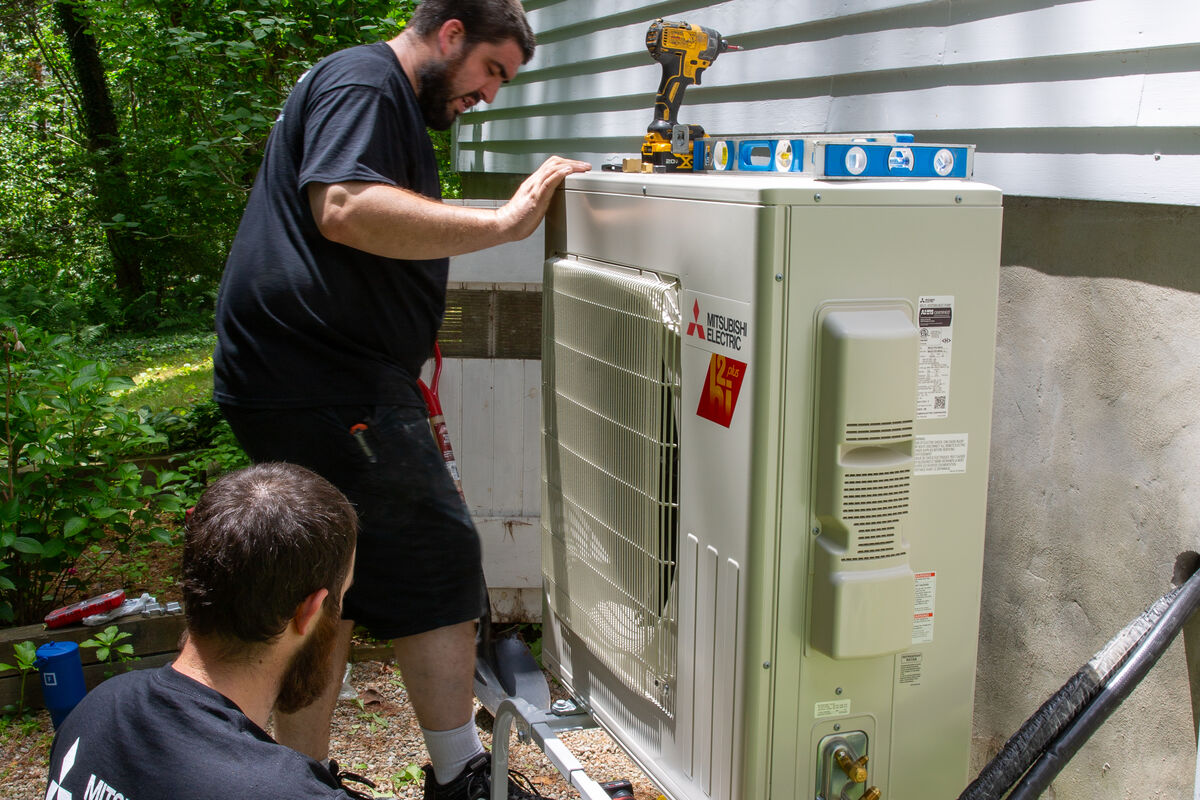
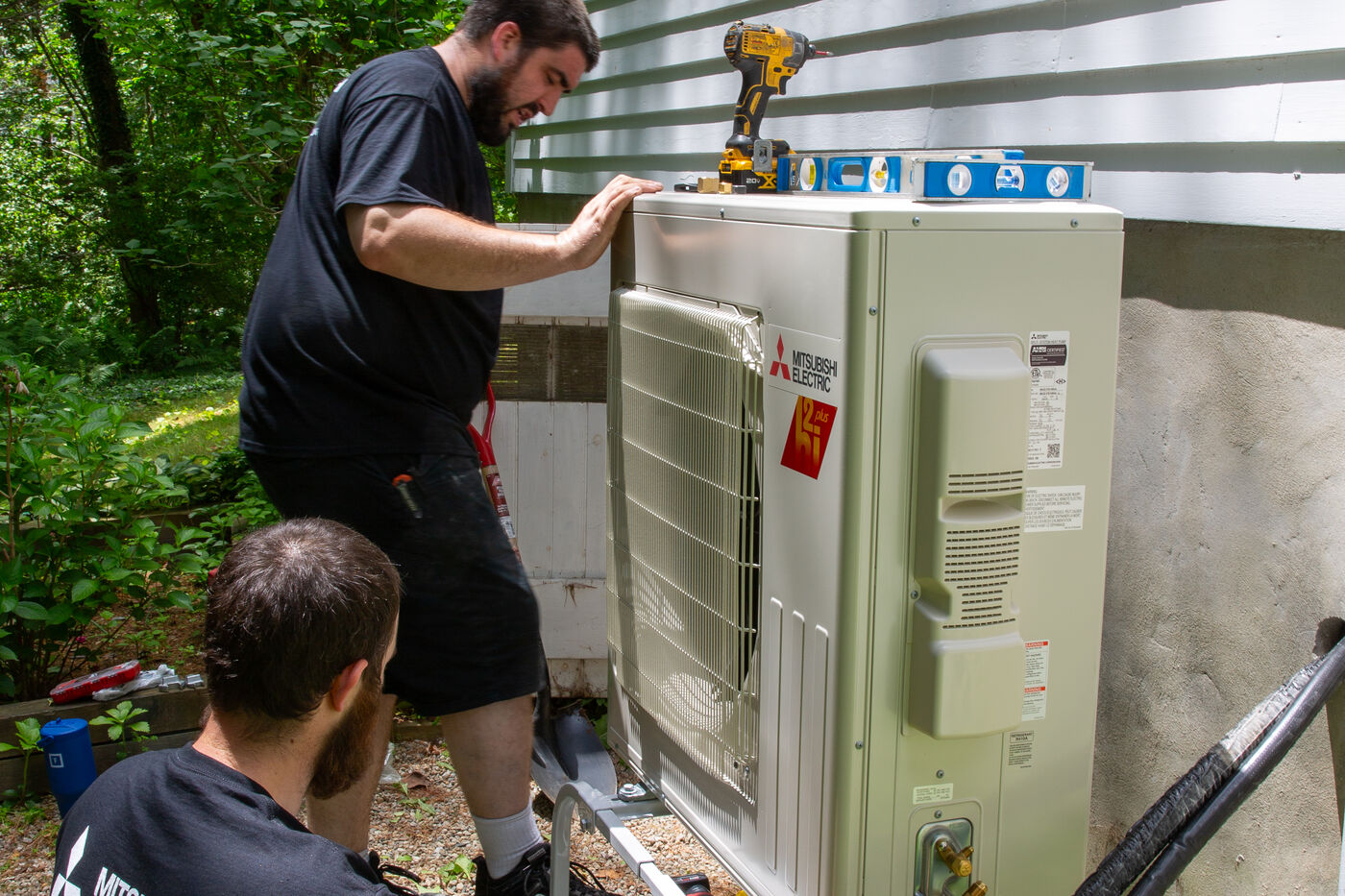
Cold-climate heat pumps, primarily Mitsubishi Hyper-Heating systems, are engineered to maintain their rated output down to -15F. At that temperature, they still produce meaningful heat. This is not theoretical performance - we have customers running their Mitsubishi systems as their primary heat source through Portland's coldest nights.
The key specifications to understand:
- Rated heating capacity at 47F - this is the number you see in marketing materials, but it is not the number that matters in Maine
- Rated heating capacity at 5F - this is the number that determines whether the system can keep your home comfortable in January
- Minimum operating temperature - cold-climate units operate to -15F or lower, while standard units shut off around 0-10F
When we size a system for a Portland home, we use the 5F capacity rating, not the 47F number. This is a critical difference that some installers overlook.
Portland's Housing Stock: Challenges by Home Type
Portland's architectural diversity is part of what makes it a special place to live. It also means every heat pump installation requires careful planning.
Triple-Deckers (West End, Munjoy Hill, East Bayside)
Portland's triple-deckers are three-unit buildings with stacked flats, typically built between 1890 and 1930. They present several unique challenges:
Shared walls and floors. Heat loss patterns differ from unit to unit. The top floor loses the most heat (through the roof), the bottom floor loses heat through the foundation, and the middle unit benefits from the heating of its neighbors. Each unit needs independent sizing.
Limited outdoor space. Triple-deckers often have minimal yard space, and the outdoor units need to go somewhere. Wall-mounted brackets on the building exterior are common, but placement matters for noise, aesthetics, and airflow clearance.
Balloon framing. Many triple-deckers have balloon-frame construction, where the wall cavities run continuously from the basement to the attic. This creates massive air leakage pathways. We strongly recommend air sealing and insulation before or alongside heat pump installation in these buildings. A well-sealed triple-decker needs a significantly smaller heat pump system, which saves money on both installation and operating costs.
Victorians (West End, Deering, Woodfords)
Portland's Victorian-era homes are beautiful, but they were built long before energy efficiency was a consideration. Common issues include:
High ceilings and large rooms. A 12-foot ceiling in a Victorian parlor contains 50% more air volume than an 8-foot ceiling in the same footprint. The heat pump system needs to be sized accordingly.
Complex layouts. Victorians often have irregular room shapes, multiple levels, turrets, and additions. A single outdoor unit with multiple indoor heads (a multi-zone system) can often serve the entire home, but the placement of indoor units needs to account for air circulation patterns through these complex floor plans.
Historic considerations. Many Portland Victorians are in historic districts. Outdoor unit placement may need to consider visibility from the street. Side and rear locations are typically acceptable under Portland's historic preservation guidelines.
Coastal Homes (Eastern Waterfront, East End, Islands)
Homes near Portland's waterfront face an additional factor: salt air. The outdoor unit's coil and components are exposed to salt-laden air, which accelerates corrosion. Mitsubishi's coastal-rated units include corrosion-resistant coatings, and we recommend them for any installation within a half mile of the ocean.
The coastal microclimate also means slightly milder winter temperatures (the ocean moderates extremes) but higher humidity. This actually works in the heat pump's favor, as the system operates more efficiently when temperatures stay above zero more consistently.
Sizing: Getting It Right
Oversizing is the most common mistake in heat pump installation. An oversized system costs more to install, short-cycles (turns on and off frequently instead of running steadily), and delivers less comfortable results than a properly sized system.
We use Manual J load calculations for every Portland installation. This accounts for:
- Your home's insulation levels and air leakage rate
- Window area, type, and orientation
- Ceiling height and room volume
- The number of occupants and internal heat sources
- Portland's specific design temperature (-4F for heating)
For a typical 1,500 square foot Portland home with moderate insulation, a properly sized cold-climate heat pump system usually consists of one outdoor unit and two to three indoor heads. The exact configuration depends on the home's layout and which rooms need individual temperature control.
A critical point about insulation and sizing: If your home is poorly insulated, the heat pump needs to be larger to compensate. That larger system costs more to install and more to run. Insulating and air sealing first reduces the required heat pump size, often by 25-40%. We plan both stages together during our energy assessment, even if you decide to phase the work over time.
Keeping Your Boiler as Primary Heat
A hybrid setup keeps the existing boiler or furnace as the primary heat source and adds cold-climate heat pumps for cooling and supplemental heat.
A common configuration:
- Cold-climate heat pumps provide cooling and supplemental heat in selected rooms or zones
- The existing boiler or furnace provides primary heat through the existing distribution system
- Both systems need maintenance and coordinated controls
This approach preserves familiar heat distribution while adding cooling and room-by-room comfort control.
Efficiency Maine Rebates for Portland Homeowners
Efficiency Maine offers substantial rebates for cold-climate heat pump installations. The current program provides up to $9,000 in rebates, depending on household income and the number of units installed.
All Maine homeowners qualify for baseline rebates regardless of income. Income-qualifying households receive significantly higher rebate amounts. We handle the entire Efficiency Maine rebate process and apply the amounts directly to your invoice. You don't file paperwork or wait for reimbursement.
Federal tax credits under Section 25C provide an additional benefit of up to $2,000 per year for heat pump installations (30% of installed cost).
Between Efficiency Maine rebates and federal tax credits, many Portland homeowners offset 40-60% of their total installation cost.
The Installation Process
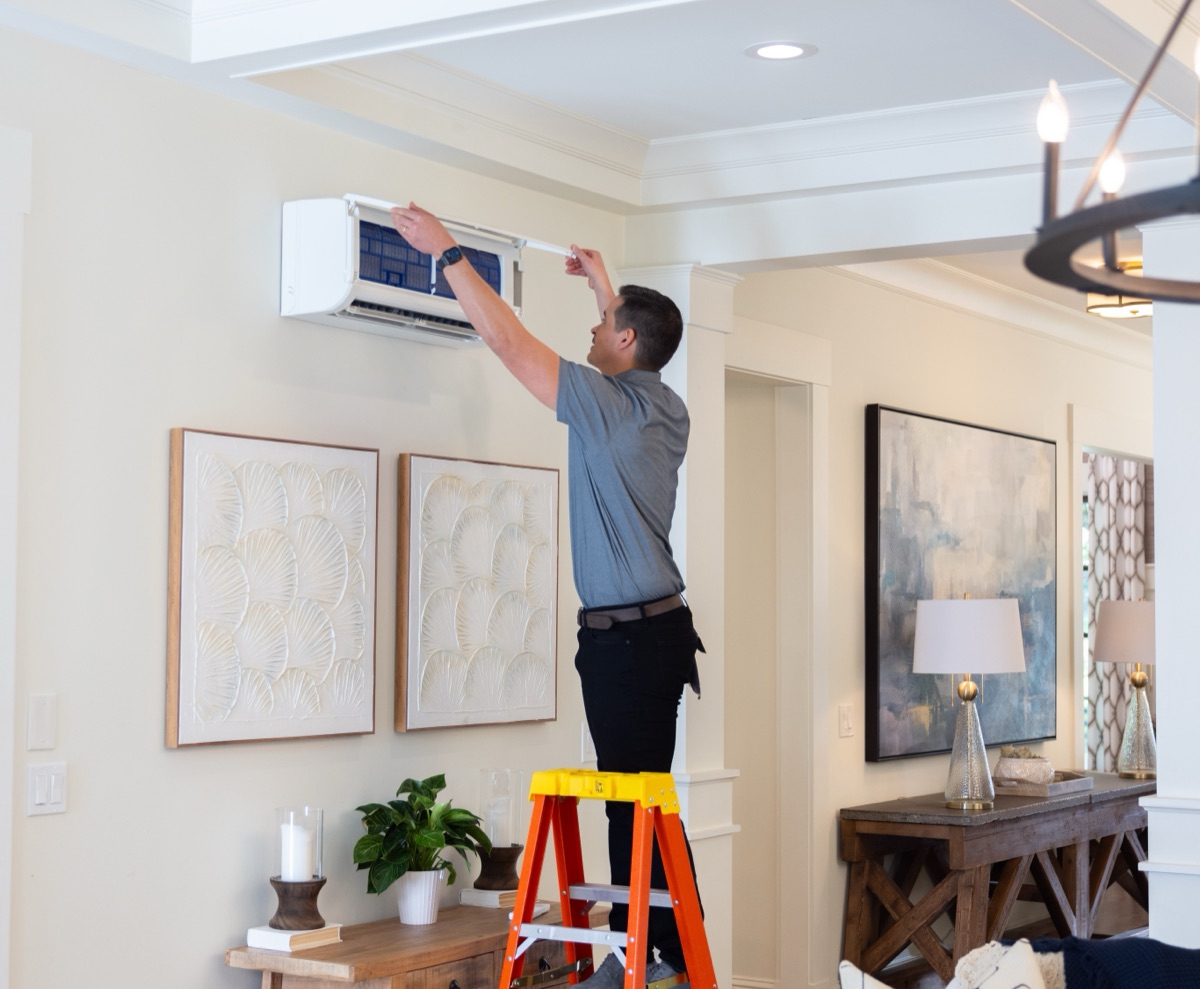
A typical cold-climate heat pump installation in a Portland home takes one to two days, depending on the number of indoor units and the complexity of the refrigerant line routing.
Day one: Mount the outdoor unit, install indoor heads, run refrigerant lines and electrical connections, and connect the system.
Day two (if needed): Complete multi-zone configurations, test all units, program thermostats, and walk through system operation with the homeowner.
The most common question we get from Portland homeowners: "Will you need to cut holes in my walls?" Yes, small penetrations are needed for refrigerant lines, typically 3 inches in diameter. We route lines to minimize visibility, often along the side or rear of the home, and seal all penetrations against air and water infiltration.
For Portland homes in historic districts, we work with homeowners to find line routing solutions that respect the building's character.
Maintenance
Cold-climate heat pumps require minimal maintenance compared to oil or gas systems. The primary maintenance tasks:
- Clean or replace filters in the indoor units every 1-3 months
- Keep the outdoor unit clear of snow, ice, and debris
- Annual professional service to check refrigerant levels, clean coils, and verify system performance
We offer maintenance plans for all systems we install. Keeping the system maintained ensures it operates at peak efficiency and extends the equipment's lifespan.
Getting Started
If you are a Portland homeowner considering heat pumps, the best first step is a free energy assessment. We will evaluate your home's current heating system, insulation levels, and air sealing to determine the right heat pump configuration and identify any envelope improvements that should happen first.
Horizon Homes has been serving Portland and Greater Portland since 2006. We are an Efficiency Maine Top Contractor for 10+ years, and we install both cold-climate heat pumps and insulation. That whole-home perspective means you get a plan designed as an integrated system, not a piecemeal approach.
Schedule your free energy assessment today. Call (207) 221-3221 or book online. We serve Portland, South Portland, Westbrook, Scarborough, Cape Elizabeth, Falmouth, and the surrounding Greater Portland area.
Find our guides faster: add Horizon Homes as a preferred source on Google.
Free Home Energy Assessment
Considering Heat Pumps for Your Home?
We evaluate your home's insulation, heating system, and electrical capacity, then give you a clear recommendation with pricing and rebate estimates.
- Free walkthrough, no equipment, no disruption
- Efficiency Maine rebates identified for you
- Written improvement plan with pricing
Schedule Your Free Assessment
We call within 1 business day.