New Federal Energy Tax Credits for Maine Homeowners

Editor's note (March 2026): The federal energy tax credits referenced in this article expired December 31, 2025. For current rebate and incentive information, see our rebates page.
The timing has never been better to invest in your home's energy performance. As of January 1, 2023, the Inflation Reduction Act (IRA) expanded and extended federal energy tax credits in ways that make heat pumps, insulation, and air sealing more affordable for Maine homeowners.
These are not small numbers. Homeowners can now claim up to $2,000 per year for cold-climate heat pump installations and up to $1,200 per year for insulation and air sealing. Combined with Efficiency Maine rebates, these credits can cover a substantial portion of a whole-home energy improvement project.
Here is what is available, how to claim it, and how to stack these federal credits with state rebates for maximum savings.
What Changed With the IRA
Before 2023, the federal energy tax credit for home improvements was capped at a lifetime limit of $500. That meant if you claimed $500 in credits at any point in the past, you were done. The credit had not been meaningful for most homeowners in years.
The IRA replaced that system with new annual limits, higher credit amounts, and an expanded list of qualifying improvements. The old lifetime cap is gone. These new credits reset every tax year through December 31, 2032, meaning you can claim them year after year as you make improvements.
This is a fundamental shift. Instead of a one-time $500 benefit, homeowners can now claim thousands of dollars across multiple years of phased improvements. For homeowners who want to tackle their home's energy performance in stages - insulation one year, heat pump the next - the annual reset is designed exactly for that approach.
The 25C Energy Efficient Home Improvement Credit
This is the primary credit for most home energy work. It covers 30% of the cost of qualifying improvements, up to specific annual limits.
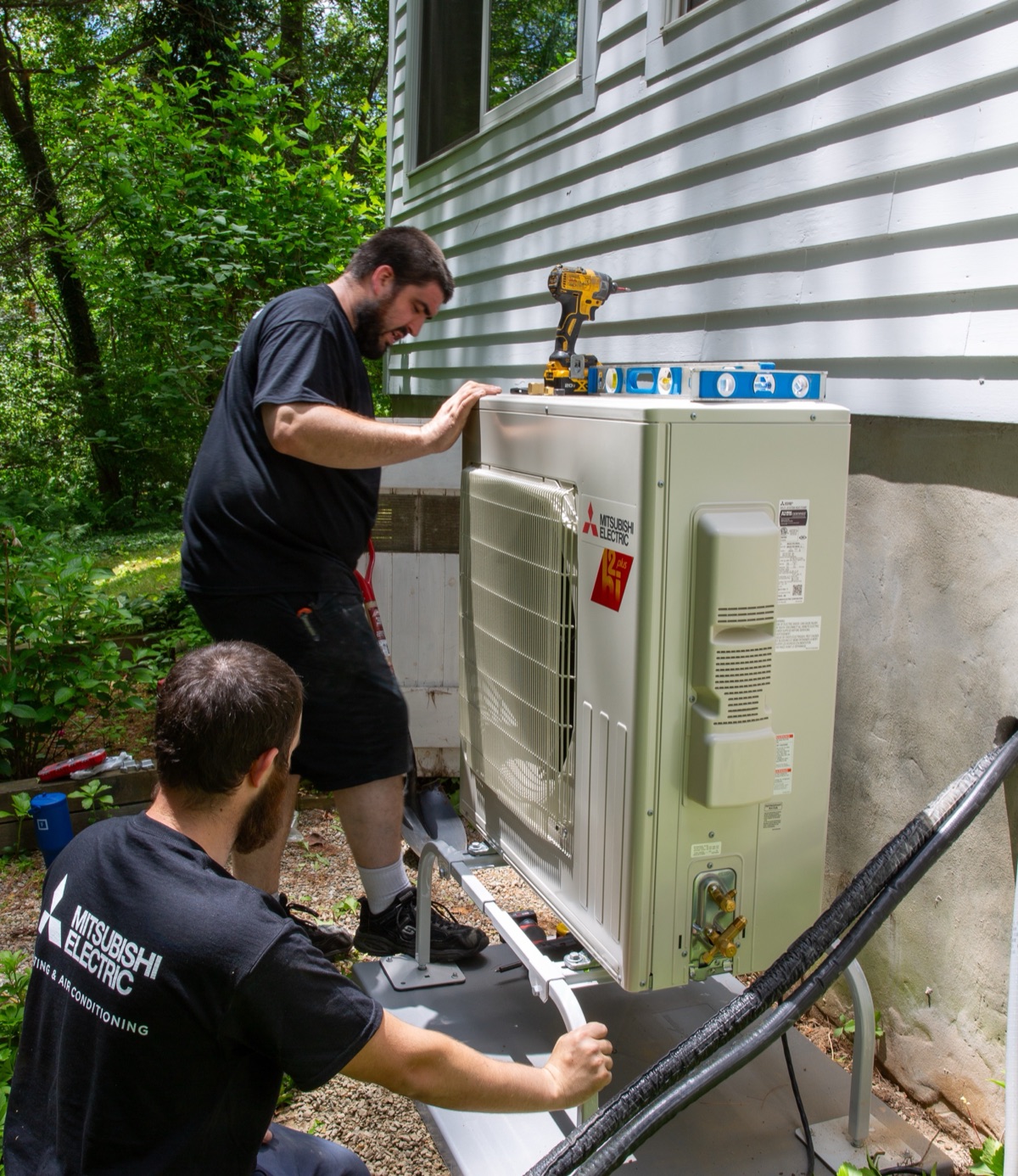
Heat Pumps and Heat Pump Water Heaters: Up to $2,000/Year
Cold-climate heat pumps qualify for a credit of 30% of the total installed cost, up to $2,000 per year. Heat pump water heaters qualify under the same $2,000 cap.
For a typical cold-climate heat pump installation in the Greater Portland area, the $2,000 credit represents a meaningful reduction in out-of-pocket cost. If your installation costs $8,000, the credit covers $2,000. If it costs $15,000 for a multi-zone system, the credit still covers $2,000 (the cap applies regardless of the 30% calculation).
Heat pump water heaters, which are 2-3 times more efficient than conventional electric water heaters, qualify separately. If you install both a heat pump system and a heat pump water heater in the same year, you can claim up to $2,000 for the combined total.
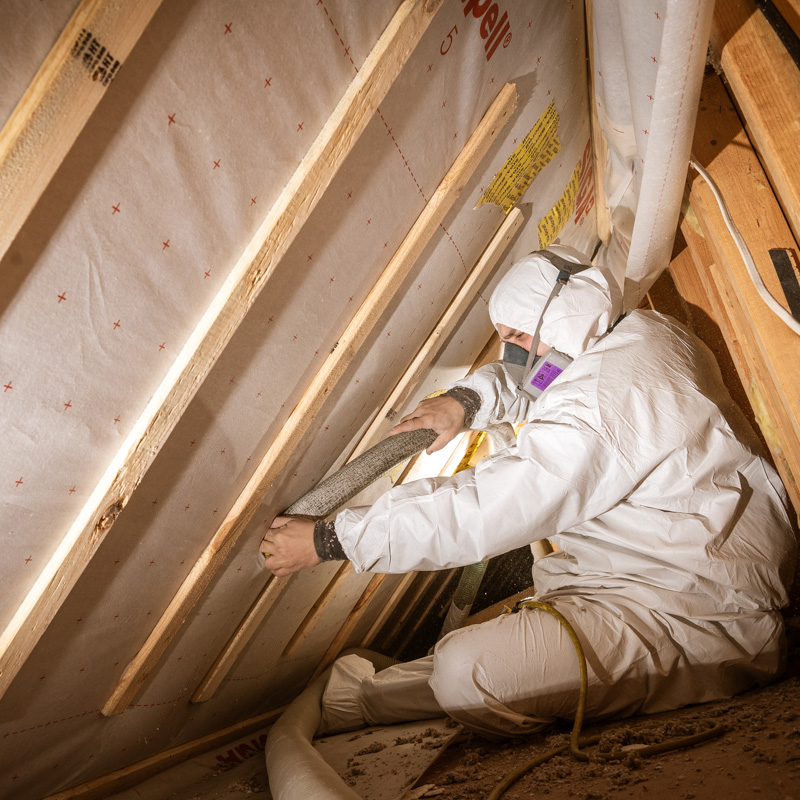
Insulation and Air Sealing: Up to $1,200/Year
Insulation and air sealing materials and installation costs qualify for a credit of 30% of cost, up to $1,200 per year. This falls under a broader "building envelope" category that also includes exterior windows and doors (with their own sub-limits).
For a typical insulation and air sealing project costing $8,000-$12,000 after Efficiency Maine rebates, the $1,200 credit provides additional savings on top of the rebate.
Energy Audits: Up to $150/Year
Professional home energy audits qualify for a $150 credit. At Horizon Homes, we offer free energy assessments, so this credit is more relevant if you are paying another provider for a formal audit with diagnostic testing.
The Annual Limit Structure
The total 25C credit is capped at $3,200 per year, broken down as follows:
- $2,000 for heat pumps and heat pump water heaters
- $1,200 for insulation, air sealing, windows, doors, and electrical panel upgrades
- $150 for energy audits (within the $1,200 sub-limit)
These limits are per tax year, per household. They reset on January 1 each year. A married couple filing jointly shares one set of limits. Homeowners with multiple properties can claim credits on each qualifying property.
Schedule a free energy assessment and we will help you identify which improvements qualify for both federal credits and Efficiency Maine rebates.
How to Claim the Credit
The 25C credit is claimed on your federal tax return using IRS Form 5695 (Residential Energy Credits). Here is the process:
- Complete the qualifying improvement. The work must be done on your primary residence (not rentals or second homes for the 25C credit).
- Get documentation from your contractor. You need the manufacturer's certification statement for the products installed and a detailed invoice showing what was installed and the cost.
- File Form 5695 with your tax return. Your tax preparer can handle this, or you can complete it yourself if you file your own return.
- Claim the credit. The credit reduces your tax liability dollar-for-dollar. If you owe $3,000 in federal taxes and claim a $2,000 credit, you owe $1,000.
One important detail: this is a nonrefundable credit. It can reduce your tax liability to zero, but it cannot generate a refund. If your tax liability is less than the credit amount, you lose the difference. You cannot carry unused credits forward to future years.
This means timing matters. If your federal tax liability is only $1,500 in a given year, claiming a $2,000 heat pump credit means you lose $500 of the benefit. In that situation, it may make sense to phase your improvements across two tax years to capture the full credit.
Stacking Federal Credits With Efficiency Maine Rebates
Here is where it gets interesting for Maine homeowners. The federal tax credit and Efficiency Maine rebates are separate programs that can be combined on the same project.
How Stacking Works
Efficiency Maine rebates reduce the project cost before you pay. The federal tax credit reduces your taxes after you pay. They apply to different parts of the financial equation, so they do not conflict with each other.
Here is a simplified example:
| Item | Amount |
|---|---|
| Project cost (insulation + air sealing) | $10,000 |
| Efficiency Maine rebate (40% for this example) | -$4,000 |
| Your cost after rebate | $6,000 |
| Federal tax credit (30% of $10,000, capped at $1,200) | -$1,200 |
| Effective out-of-pocket cost | $4,800 |
The tax credit is calculated on the full project cost, not the after-rebate amount. This is a common source of confusion, but IRS guidance indicates the credit is based on total expenditure for qualifying improvements.
For a whole-home project that includes both insulation and a cold-climate heat pump, the combined savings can be substantial:
| Item | Amount |
|---|---|
| Insulation + air sealing | $10,000 |
| Cold-climate heat pump (2-zone) | $12,000 |
| Total project cost | $22,000 |
| Efficiency Maine rebates (example) | -$7,000 |
| Your cost after rebates | $15,000 |
| Federal tax credit (insulation: $1,200 + heat pump: $2,000) | -$3,200 |
| Effective out-of-pocket cost | $11,800 |
That is $10,200 in combined rebates and credits on a $22,000 project. And the annual energy savings from the improvements start reducing your costs immediately.
Note that Efficiency Maine rebate amounts are income-dependent. The percentages above are examples. Your specific rebate will be determined during the assessment and application process.
Phasing for Maximum Benefit
Because the federal credits reset annually, homeowners who plan to make improvements over multiple years can maximize their total credits.
Year 1: Insulation and air sealing. Claim $1,200 federal credit plus Efficiency Maine rebate.
Year 2: Cold-climate heat pump installation. Claim $2,000 federal credit plus Efficiency Maine rebate.
Year 3: Heat pump water heater. Claim up to $2,000 federal credit plus any available rebate.
This phased approach also follows the right technical sequence - insulate first, then size and install the heat pump for the improved home. It is better building science and better financial planning.
At Horizon Homes, we regularly help homeowners develop multi-year improvement plans that align with both the technical sequence and the credit structure. We have been helping Maine homeowners navigate energy incentive programs as an Efficiency Maine Top Contractor for 10+ years.
What Qualifies: A Quick Reference
| Improvement | Credit | Annual Cap | Key Requirement |
|---|---|---|---|
| Cold-climate heat pump | 30% of cost | $2,000 | Must meet ENERGY STAR requirements |
| Heat pump water heater | 30% of cost | $2,000 (shared with heat pump) | Must meet ENERGY STAR requirements |
| Insulation (all types) | 30% of cost | $1,200 | Must meet IECC prescriptive criteria |
| Air sealing materials + labor | 30% of cost | $1,200 (shared with insulation) | Part of building envelope improvements |
| Exterior windows | 30% of cost | $600 (within $1,200 limit) | Must meet ENERGY STAR requirements |
| Exterior doors | 30% of cost | $500 (within $1,200 limit) | Must meet ENERGY STAR requirements |
| Electrical panel upgrade | 30% of cost | $600 (within $1,200 limit) | 200-amp service for electrification |
| Energy audit | 30% of cost | $150 (within $1,200 limit) | Certified auditor |
For detailed product requirements, visit the ENERGY STAR tax credit page or the IRS guidance on energy credits.
Act While These Credits Are Available
The IRA energy credits are authorized through December 31, 2032. That is a ten-year window, which provides time to plan and phase improvements. But rebate programs can change, and contractor schedules fill up as awareness grows.
Summer and early fall are excellent times to complete insulation and heat pump work. You get the improvements done before heating season, and the credits apply to the tax year when the work is completed.
Get a Plan That Maximizes Your Savings
Every home is different, and the optimal combination of improvements, rebates, and credits depends on your specific situation. A walkthrough of your home is the best starting point for building a plan that makes financial and technical sense.
Schedule your free energy assessment or call us at (207) 221-3221. We will identify the improvements that deliver the biggest impact for your home and help you understand exactly what rebates and credits you qualify for. Since 2006, we have helped hundreds of Maine homeowners take full advantage of available incentives.
Find our guides faster: add Horizon Homes as a preferred source on Google.
Free Home Energy Assessment
Find Out Which Rebates Apply to Your Home
Efficiency Maine rebates can cover a significant portion of the cost. We identify every incentive you qualify for during a free walkthrough.
- Free walkthrough, no equipment, no disruption
- Rebates up to $18,650 identified for you
- Written improvement plan with pricing
Schedule Your Free Assessment
We call within 1 business day.