Air Sealing Services in Portland, Maine
Editor's note (October 2026): Efficiency Maine changed its insulation and air sealing rebates for work completed on or after October 1, 2026. They are now a fixed amount per zone of the house (attic, walls, basement) instead of a percentage of project cost, and the Efficiency Maine rebate figures in this article are current as of October 2026. Amounts depend on household income and project scope. See current Efficiency Maine rebates.
It might be a cold draft near the baseboards in the living room, or a persistent chill by the windows that no amount of caulk seems to fix. Upstairs bedrooms run 10 degrees colder than the thermostat setting, no matter how high you turn it up. These are common complaints from Portland homeowners, and they share a common cause.
Portland's older housing stock leaks enormous amounts of heated air through gaps, cracks, and openings in the building envelope. The city's dense neighborhoods - the West End, Deering, Woodfords Corner, Oakdale - are filled with Victorians, triple-deckers, and Colonial Revivals that were never built to modern airtightness standards. Most of those leaks are not where you think they are.
Working with a professional air sealing contractor is the single most cost-effective energy improvement for most Portland homes. It reduces drafts, lowers heating bills, improves comfort on every floor, and makes your insulation and heating system work more efficiently. Here is how it works and why Portland homes need it.
The Hidden Problem: Where Your Heat Actually Goes
Most homeowners assume their drafts come from windows and doors. That makes sense - you can feel cold air near windows, so you assume that is where the problem is. In reality, windows and doors account for only about 10-15% of total air leakage in a typical home.
The biggest leaks are in places you rarely see or think about:
Attic floor penetrations (30-40% of total leakage). Every wire, pipe, duct, chimney, plumbing vent, and recessed light fixture that passes through the attic floor creates an opening. In Portland's older homes, these openings were never sealed. Warm air rises through them 24 hours a day, every day of heating season.
Basement and rim joist area (20-30% of total leakage). The rim joist is the band of framing where the first floor sits on top of the foundation. In most Portland homes built before 1980, this area is completely unsealed. Cold air infiltrates through gaps between the foundation and the framing, through old mortar joints, and around utility penetrations.
Wall-to-floor junctions, soffits, and chases (15-25% of total leakage). Older homes have numerous hidden pathways where interior walls, dropped ceilings, and plumbing or duct chases create channels for air to move between floors and between conditioned and unconditioned spaces.
Windows and doors (10-15% of total leakage). These are the leaks you notice, but they are actually the smallest piece of the puzzle.
This is why replacing windows often doesn't solve the comfort problem. If 85-90% of your air leakage is coming from the attic, basement, and hidden pathways in the walls, new windows address only a fraction of the issue.
The Stack Effect: Why Portland Homes Are Draft Machines
Portland's older housing stock is particularly vulnerable to air leakage because of something called the stack effect. Understanding it explains why so many attempted fixes - new windows, door sweeps, weatherstripping - fail to solve the comfort problem.
Here is how it works. Warm air is lighter than cold air, so it naturally rises. In winter, the warm air inside your home pushes upward and escapes through every available opening in the upper levels and attic. As that warm air exits through the top of the house, it creates a slight negative pressure at the lower levels, which pulls cold outside air in through gaps in the basement, rim joists, and first-floor walls.
The taller the house, the stronger the stack effect. Portland's three-story Victorians, triple-deckers, and Colonial Revivals experience this more intensely than single-story ranch homes. A two-and-a-half story house on Brighton Avenue or Deering Avenue can cycle through an enormous volume of air on a cold January night.
The result is a continuous loop: warm air leaks out the top, cold air gets sucked in at the bottom, and your heating system runs constantly trying to keep up. You feel the cold air at the first-floor windows, but the actual cause is air escaping through the attic two or three stories above.
This is why air sealing the attic floor is almost always the first priority. Stopping the warm air from escaping through the top breaks the cycle and reduces cold air infiltration at the bottom. It is also why window replacement alone rarely solves a comfort problem in Portland's taller homes.
How We Air Seal Portland Homes
Air sealing is methodical work. It requires identifying every leakage pathway and sealing each one with the appropriate material. Here is our process.
Step 1: Assessment
Every project starts with a free energy assessment - a visual walkthrough of your home from attic to basement. Our energy advisor identifies the major air leakage pathways and develops a prioritized plan for addressing them. The walkthrough takes about an hour and covers the attic, basement, and main living areas. No diagnostic equipment, no disruption to your day.
Step 2: Blower Door Testing (Baseline)
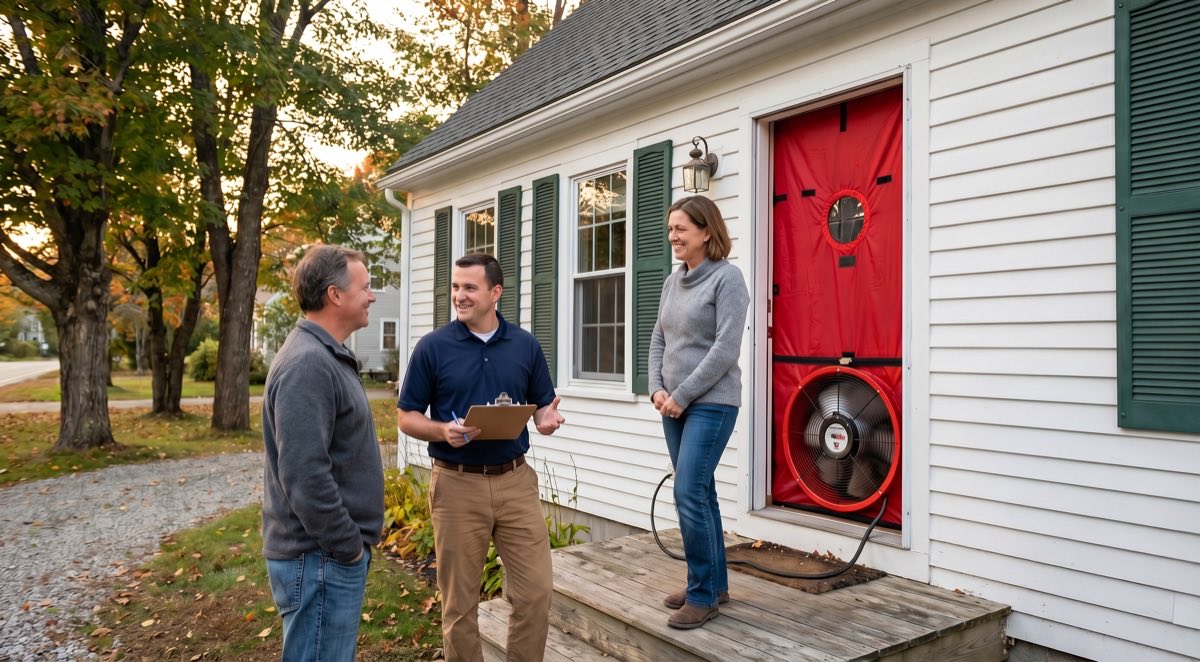
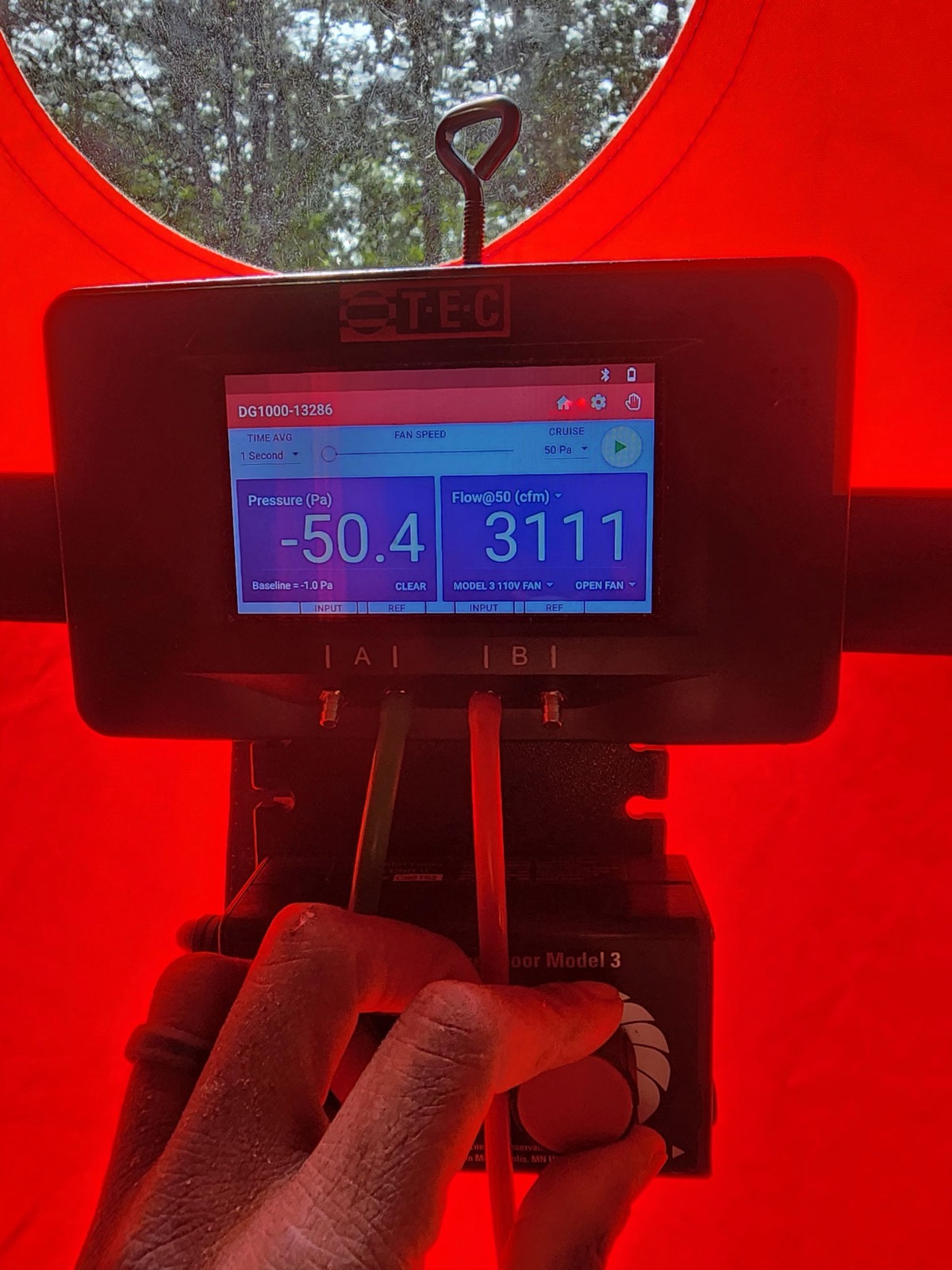
At the start of the work, we install a blower door - a calibrated fan that fits in an exterior doorway and depressurizes the house. This test measures exactly how much air your home leaks, expressed as air changes per hour at 50 pascals of pressure (ACH50).
For reference, a new code-built home in Maine targets around 3.0 ACH50. We commonly find older Portland homes testing at 8-15 ACH50 or higher. That means the entire volume of air in your home is being exchanged with outside air 8-15 times per hour under test conditions. In real-world conditions, the leakage is less dramatic but still substantial.
The blower door also helps us locate leaks. With the house depressurized, we can feel air moving through gaps that are invisible to the eye, and pinpoint which areas need the most attention.
Step 3: Thermal Imaging
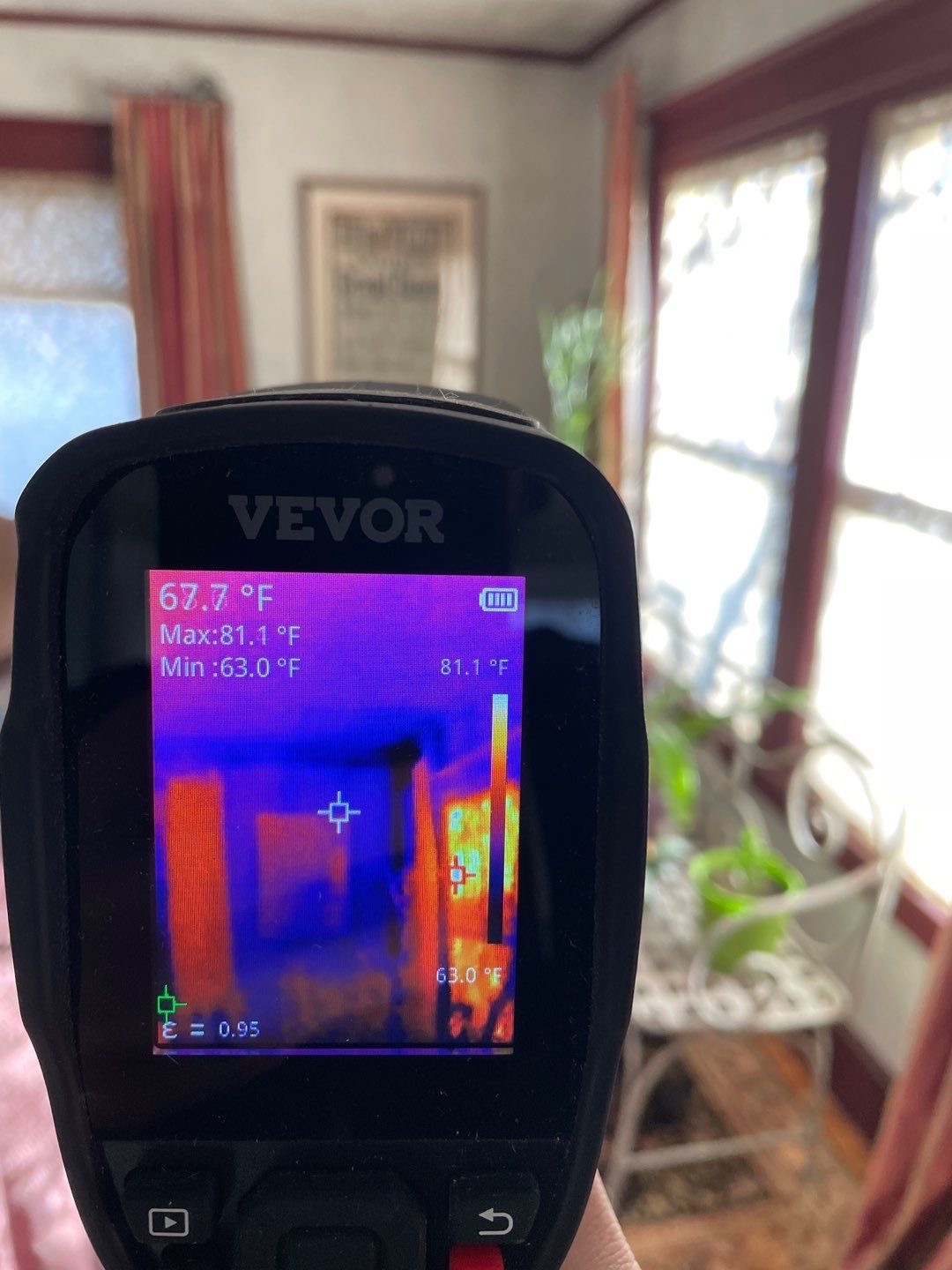
We use infrared cameras to see temperature differences in walls, ceilings, and floors. Cold spots show up clearly on thermal images and reveal hidden air leakage pathways, missing insulation, and areas where cold air is infiltrating.
Thermal imaging is especially useful in Portland's older homes, where walls may have been renovated, finished, or modified over the decades. Many Deering Highlands and East Deering homes we work in have been partially finished in basements and attics over the years, creating hidden pathways that are impossible to locate without a camera.
Step 4: Sealing the Leaks
The sealing work itself uses different materials depending on the size and location of each gap:
- Expanding foam for gaps around pipes, wires, and other penetrations through the attic floor, basement ceiling, and exterior walls
- Caulk for smaller gaps at framing joints and trim connections
- Rigid foam board for larger openings like open stud cavities, dropped ceiling soffits, and chimney chases
- Weather stripping for attic hatches, access panels, and other operable openings
- Fire-rated materials around chimney and flue penetrations, where building code requires non-combustible sealing
Step 5: Blower Door Testing (Verification)
After completing the air sealing work, we run the blower door test again to measure the improvement. This gives you a concrete, measurable result - not just "we think it is better," but a specific number showing how much the leakage was reduced.
Typical results: a 30-50% reduction in ACH50 from air sealing alone. Combined with insulation, the improvement is often even greater.
Air Sealing and Insulation: Why They Work Together
Air sealing and insulation are different things, but they are most effective when done together.
Insulation resists heat transfer through solid materials. It slows down the movement of heat through your walls, ceiling, and floors.
Air sealing stops air movement through gaps and openings. It prevents warm air from bypassing the insulation entirely.
Think of it this way: a winter jacket (insulation) keeps you warm, but only if you zip it up (air sealing). An unzipped jacket lets cold wind pass right through, no matter how thick the insulation is.
In Portland's older homes, we almost always recommend doing both. Air sealing first, then adding blown-in cellulose insulation on top. The air sealing prevents warm air from leaking through the insulation layer, and the insulation slows heat transfer through the now-sealed building envelope.
What Air Sealing Costs in Portland
Air sealing costs vary depending on the size of the home and the extent of the leakage. For most Portland homes, comprehensive air sealing runs $2,000-$5,000 as a standalone service.
However, air sealing is rarely done alone. Most homeowners combine it with insulation for a more complete improvement. A typical Portland project including air sealing and attic insulation runs $4,000-$10,000 before rebates.
Efficiency Maine rebates for insulation and air sealing can cover a significant portion of the project cost. Rebate amounts are income-dependent. Since October 1, 2026, Efficiency Maine pays a fixed amount per zone of the house (attic, walls, basement), with air sealing rebates of $50 to $300 per area, up to a lifetime limit of $8,600 per home. All homeowners qualify for baseline rebates regardless of income, and lower-income households receive larger amounts. We handle the rebate application and apply the amount directly to your invoice - no waiting for reimbursement.
Common Questions from Portland Homeowners
Will air sealing make my house too tight? This is a valid concern, and we take it seriously. In some cases, extensive air sealing can reduce ventilation to the point where indoor air quality is affected. We monitor this during the blower door test and will recommend mechanical ventilation if the home reaches a tightness level that warrants it. For most Portland homes, there is so much excess leakage that air sealing brings the home to a comfortable, healthy tightness without the need for additional ventilation.
Should I replace my windows first? In most cases, no. Air sealing the attic floor and basement will have a much larger impact on comfort and energy savings than replacing windows. If you are considering window replacement primarily for energy reasons, start with an energy assessment so you can compare the cost and impact of each option.
How long does air sealing take? For most Portland homes, air sealing work takes one to two days. If combined with attic insulation, add one to two more days depending on the attic size and access.
Can I do air sealing myself? You can handle some of the simpler tasks, like caulking around windows and weather-stripping doors. But the high-impact work - attic floor sealing, rim joist sealing, and hidden pathway sealing - requires access to unconditioned spaces, specialized materials, and diagnostic equipment. The blower door testing that verifies the work is done correctly also requires professional equipment.
Getting Started
If your Portland home was built before 1980, or if you are dealing with drafts, uneven temperatures, or high heating bills, air sealing should be near the top of your list. It is the most cost-effective energy improvement for most homes, and it makes every other upgrade - attic insulation, cold-climate heat pumps, boiler replacements - work more effectively because the envelope is no longer fighting against them.
The first step is a free energy assessment. We walk through your home, identify the major air leakage pathways, and give you a clear picture of what needs to be done and what it will cost. No obligation, no pressure, no diagnostic equipment during the walkthrough.
Horizon Homes has been air sealing and insulating Portland homes since 2006. As an Efficiency Maine Top Contractor for 10+ years, we bring BPI-certified building science expertise to every project.
Schedule your free assessment. Call (207) 221-3221 or book online. We serve Portland, South Portland, Westbrook, Scarborough, Gorham, Falmouth, and surrounding communities.
Find our guides faster: add Horizon Homes as a preferred source on Google.
Free Home Energy Assessment
Ready to Lower Your Energy Bills?
We identify the improvements that will have the biggest impact on your home's energy use, with clear pricing and rebate estimates.
- Free walkthrough, no equipment, no disruption
- Efficiency Maine rebates identified for you
- Written improvement plan with pricing
Schedule Your Free Assessment
We call within 1 business day.