Energy Savings for Scarborough Homeowners
Editor's note (October 2026): Efficiency Maine changed its insulation and air sealing rebates for work completed on or after October 1, 2026. They are now a fixed amount per zone of the house (attic, walls, basement) instead of a percentage of project cost, so the insulation rebate figures, combined totals, and cost examples below reflect the program when this article was published. See current Efficiency Maine rebates.
Editor's note (September 2026): The federal 25C tax credits referenced in this article expired December 31, 2025 and are only available for qualifying work completed before that date. The credit amounts and cost examples below reflect the period when the credit was available. Efficiency Maine rebates remain available and are now the primary incentive for insulation and heat pump projects. Learn more about what has changed.
We have been inside hundreds of Scarborough homes over the past 20+ years. And the thing that strikes us every time is how many homeowners assume their house is already energy-efficient because it was built after 1975.
That assumption costs them money every month.
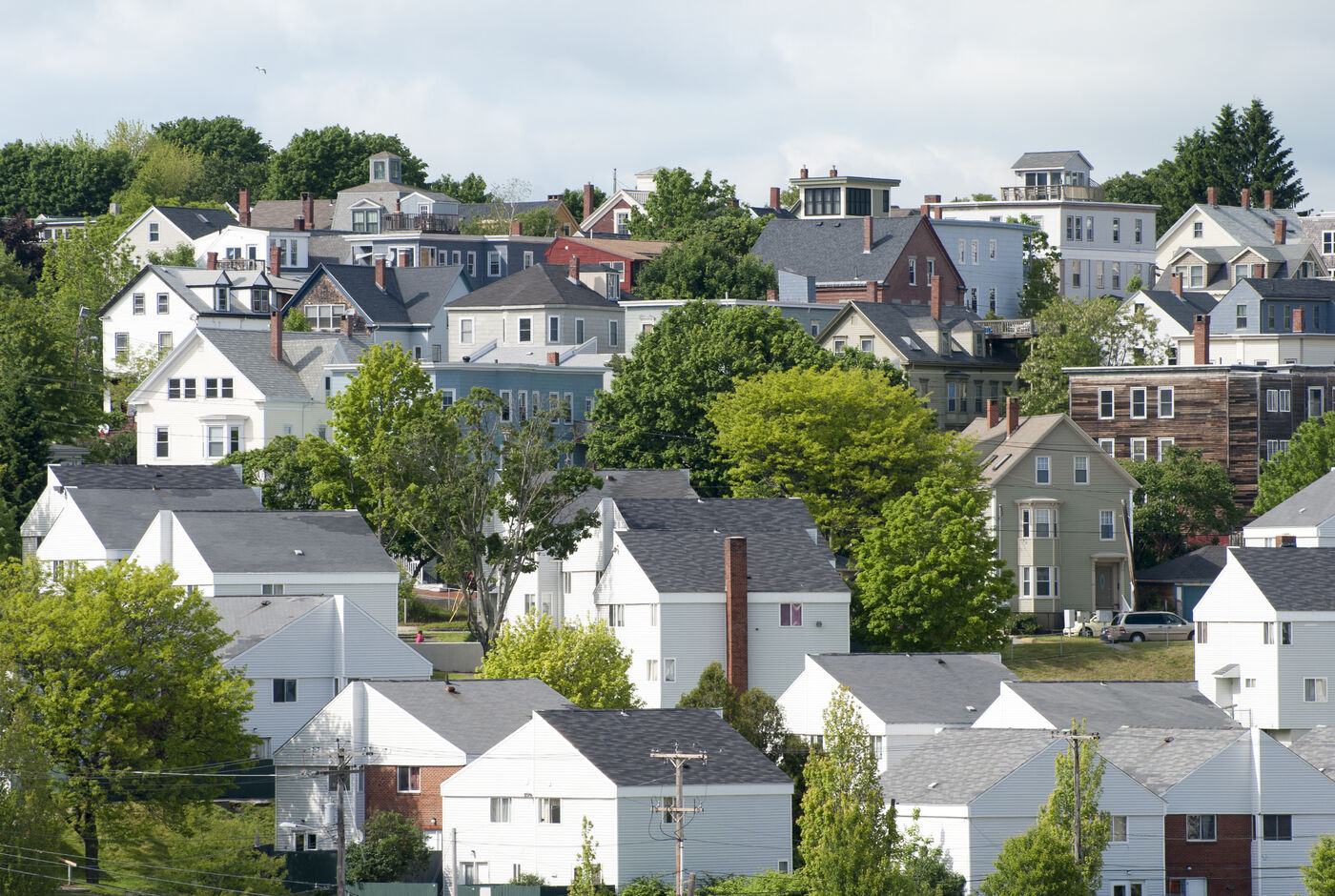
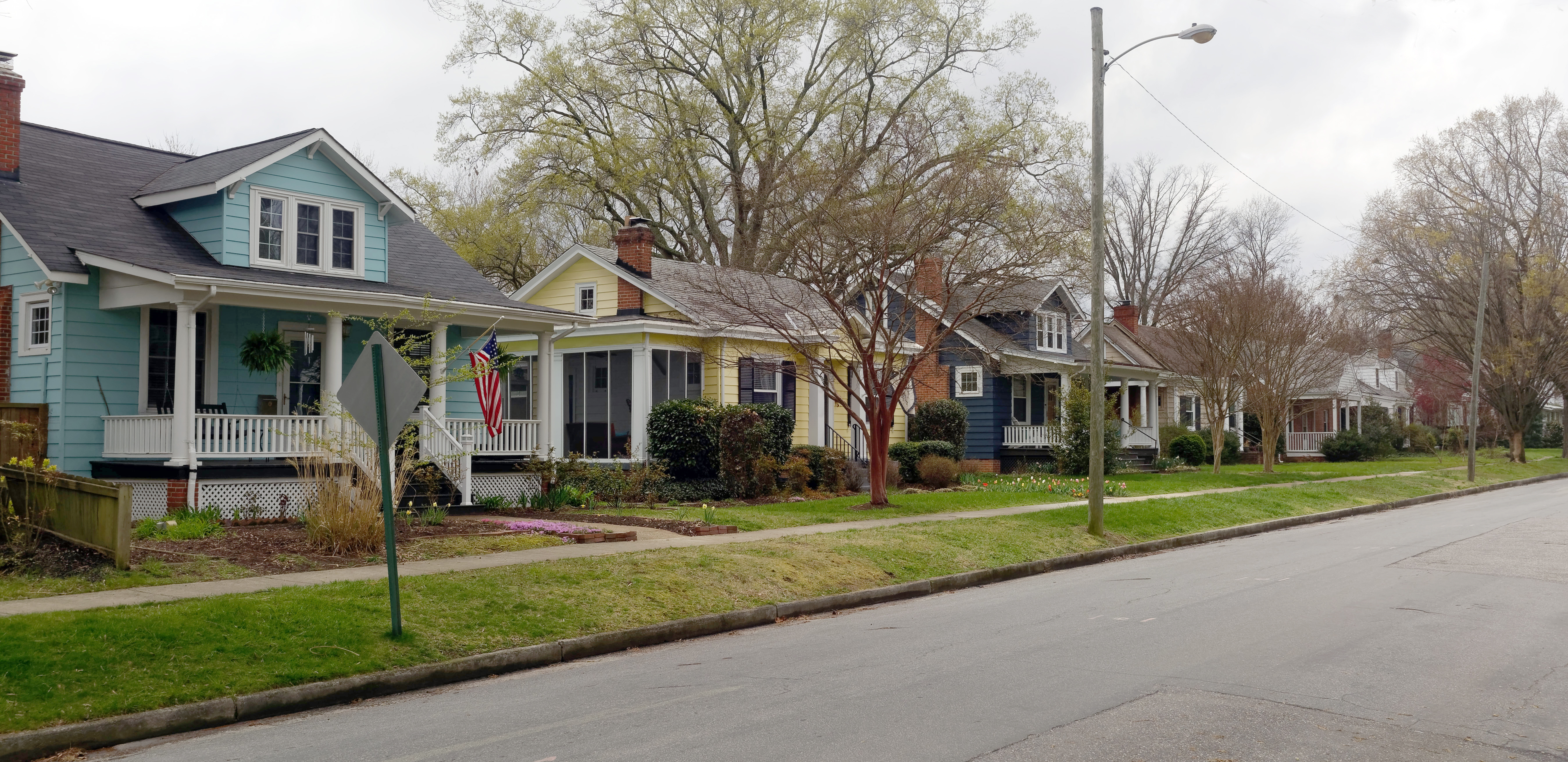
Scarborough's residential housing stock is different from what we see in Portland, South Portland, or Westbrook. Those cities have dense concentrations of pre-war homes - Victorians, Foursquares, and early Capes built when insulation was an afterthought. Scarborough's growth came later. The bulk of the homes we work on in Scarborough were built between 1970 and 2005, during the suburban expansion that turned farmland along Route 1 and Payne Road into neighborhoods.
These homes have insulation. They have double-pane windows. They were built to code - the code that existed at the time. And that is where the problem starts.
What Building Code Required Then vs. Now
Maine's energy code has changed multiple times since the 1970s. Each revision increased the requirements for insulation, air sealing, and mechanical efficiency. A home that met code in 1985 would fail the same standards applied to new construction today by a wide margin.
Here is what that means in practice for a typical Scarborough home:
Attic Insulation
A home built in the 1980s was typically required to have R-19 to R-30 in the attic. Today's recommendation for Maine's climate zone is R-49 to R-60. That is a significant gap - and it means a 1980s home is losing 30-50% more heat through the ceiling than a home built to current standards.
We find this consistently in Scarborough neighborhoods like Dunstan, Eight Corners, and the developments off Black Point Road. The insulation is there, but there is not enough of it. Six to eight inches of original blown-in or batt insulation, settled and compressed over decades, performing well below its labeled R-value.
Wall Insulation
Homes built in the 1970s through 1990s in Scarborough typically have fiberglass batt insulation in the wall cavities. On paper, that is R-11 to R-13 for a 2x4 wall. In reality, batts sag, compress, and leave gaps over time. Air moves through and around them. The effective R-value in a 30-year-old batt-insulated wall is often closer to R-7 or R-8.
Dense-pack cellulose fills the entire cavity, does not sag or settle, and performs at R-3.5 to R-3.8 per inch consistently over time. That is why we use it as our primary insulation material for wall retrofits.
Air Sealing
This is the big one for Scarborough's newer housing stock. Homes built before the mid-2000s were not tested for air tightness during construction. Builders insulated because code required it, but air sealing was not a standard practice.
The result: homes that have insulation in the walls and attic but still feel drafty, still have rooms that are hard to heat, and still run up energy bills that seem too high for a "newer" home.
Air leaks around recessed lights, plumbing penetrations, electrical boxes, attic hatches, and the framing connections between floors account for 20-30% of heat loss in a typical home. Insulation slows heat transfer. Air sealing stops air movement. You need both.
The Single-Zone Heating Problem
Many Scarborough homes built in the 1980s and 1990s run on a single heating zone. One thermostat, one zone valve, one temperature setting for the entire house. This was standard construction practice - efficient to build, but inefficient to live with.
The problem is that a single-zone system heats your basement hallway and your upstairs bedroom to the same set point. It does not account for the fact that your south-facing living room gets solar gain all afternoon while your north-facing bedrooms stay cold. It does not adjust for the second floor being warmer than the first floor because heat rises.
Homeowners compensate by turning the thermostat up until the coldest room is comfortable, which means every other room is overheated. That costs money.
Cold-climate heat pumps solve this by providing zone-by-zone temperature control. A multi-head mini-split system puts an individual unit in each room or area that needs it. Each one has its own thermostat. You heat the rooms you are using to the temperatures you want, and you stop paying to overheat the rooms you are not using.
For a Scarborough home with an existing boiler or furnace, a hybrid setup keeps that system as the primary heat source and adds cold-climate heat pumps for cooling and supplemental heat. The home's envelope and room layout guide the design.
What We Find During a Scarborough Assessment
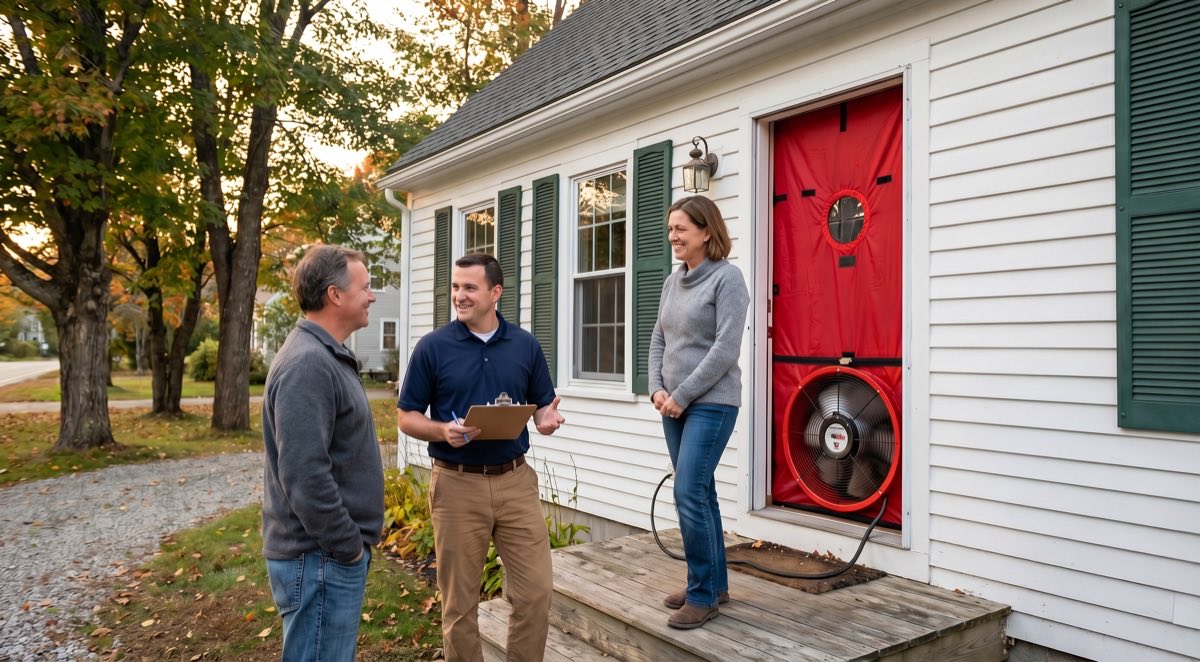
When a Scarborough homeowner calls us for a free energy assessment, we walk through the home and look at four things:
Insulation levels. We check the attic, walls, and basement or crawlspace. In Scarborough homes, we usually find some insulation everywhere - the question is whether it is enough, and whether it is performing as it should.
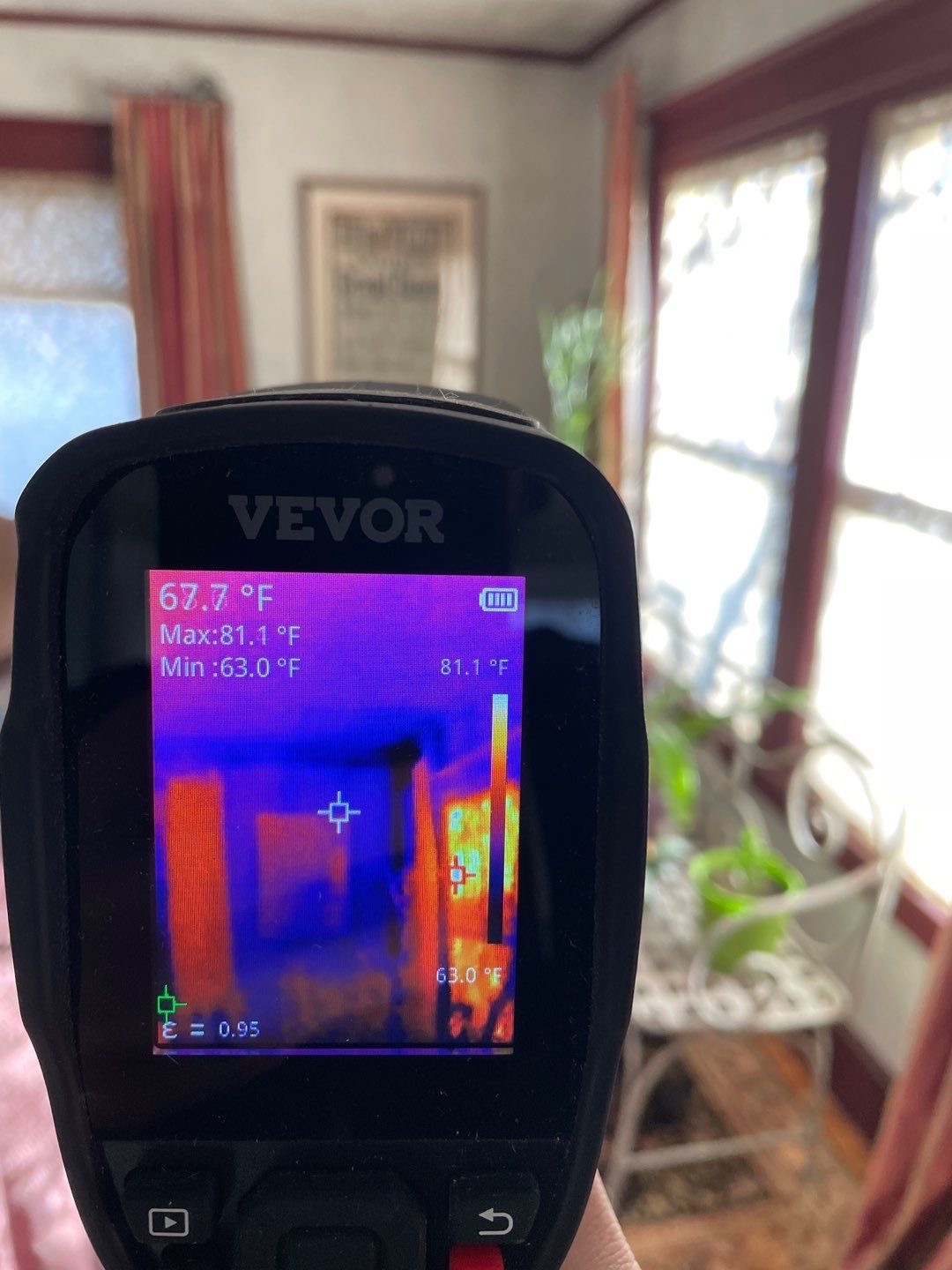
Air leakage points. We identify the major pathways where conditioned air is escaping. Attic bypasses, rim joists, and unsealed penetrations are the usual suspects, even in homes built in the 1990s.
Heating system type and condition. We look at what you are heating with, how old it is, and how efficiently it is operating. Many Scarborough homes still run on oil boilers or furnaces that are 20-30 years old, operating at 80-85% efficiency. Modern cold-climate heat pumps operate at 200-300% efficiency (they move heat rather than create it).
Comfort problems. We ask about cold rooms, hot rooms, drafts, and uneven temperatures. These symptoms tell us where the building envelope is failing, even before we look at the insulation.
The assessment is free, takes about 45 minutes, and there is no obligation. We give you a clear picture of where your home is losing energy and what improvements will have the biggest impact.
The Scarborough-Specific Opportunity
Scarborough homeowners are in a unique position compared to older housing stock in Portland or Westbrook. Your home already has a baseline level of insulation and relatively tight construction. The improvements needed are targeted rather than wholesale.
That means the cost of getting your home to high-performance levels is typically lower, and the payback period is shorter. You are not starting from zero - you are closing gaps.
A Typical Scarborough Project
For a 1980s-1990s colonial or raised ranch in Scarborough, a typical project scope includes:
- Attic air sealing and insulation top-up - Bringing the attic from R-19 to R-50+ with blown-in cellulose over the existing insulation, after sealing all penetrations and bypasses in the attic floor
- Wall insulation upgrade - Dense-packing cellulose into the wall cavities through small exterior holes, replacing or supplementing the original batts
- Basement rim joist insulation and air sealing - Addressing the rim joist area where the foundation meets the first floor framing
- Cold-climate heat pump installation - One or two Mitsubishi cold-climate mini-split systems sized to handle the heating and cooling load of the improved envelope
The sequence matters. We insulate and air-seal first, then size the heat pump to the improved home. A tighter, better-insulated home needs a smaller heat pump system - which costs less to install and less to operate.
Rebates for Scarborough Homeowners
Efficiency Maine rebates apply to Scarborough homeowners the same as anywhere in the state. The amounts are income-dependent, but the programs are available to all:
- Insulation and air sealing rebates: Up to $8,600 per home (a fixed amount per zone, set by income tier)
- Cold-climate heat pump rebates: Up to $9,000 (income-dependent)
- Federal tax credits (25C): Up to $2,000/year for heat pumps, up to $1,200/year for insulation
We handle the Efficiency Maine rebate paperwork and apply the amounts directly to your invoice. You do not wait for reimbursement.
As an Efficiency Maine Top Contractor for 10+ years, we know the program requirements and ensure your project qualifies for the maximum rebates available to your household.
Your Scarborough Home Is Better Than You Think - and It Can Be Better Still
Scarborough's housing stock does not need to be torn apart and rebuilt. It needs targeted improvements in the right order, performed by a contractor who understands how insulation, air sealing, and heating systems work together as a system.
That is what Horizon Homes has done since 2006. One contractor. One plan. A clear path from where your home is today to where it should be.
Schedule your free energy assessment. Call us at (207) 221-3221 or book online. We will walk through your home, show you where the energy is going, and give you a plan to keep more of it inside - where it belongs.
Find our guides faster: add Horizon Homes as a preferred source on Google.
Free Home Energy Assessment
Ready to Lower Your Energy Bills?
We identify the improvements that will have the biggest impact on your home's energy use, with clear pricing and rebate estimates.
- Free walkthrough, no equipment, no disruption
- Efficiency Maine rebates identified for you
- Written improvement plan with pricing
Schedule Your Free Assessment
We call within 1 business day.