Home Energy Guide for Gorham and Windham, Maine
Editor's note (October 2026): Efficiency Maine changed its insulation and air sealing rebates for work completed on or after October 1, 2026. They are now a fixed amount per zone of the house (attic, walls, basement) instead of a percentage of project cost, so the insulation rebate figures, combined totals, and cost examples below reflect the program when this article was published. See current Efficiency Maine rebates.
Editor's note (September 2026): The federal 25C tax credits referenced in this article expired December 31, 2025 and are only available for qualifying work completed before that date. The credit amounts and cost examples below reflect the period when the credit was available. Efficiency Maine rebates remain available and are now the primary incentive for insulation and heat pump projects. Learn more about what has changed.
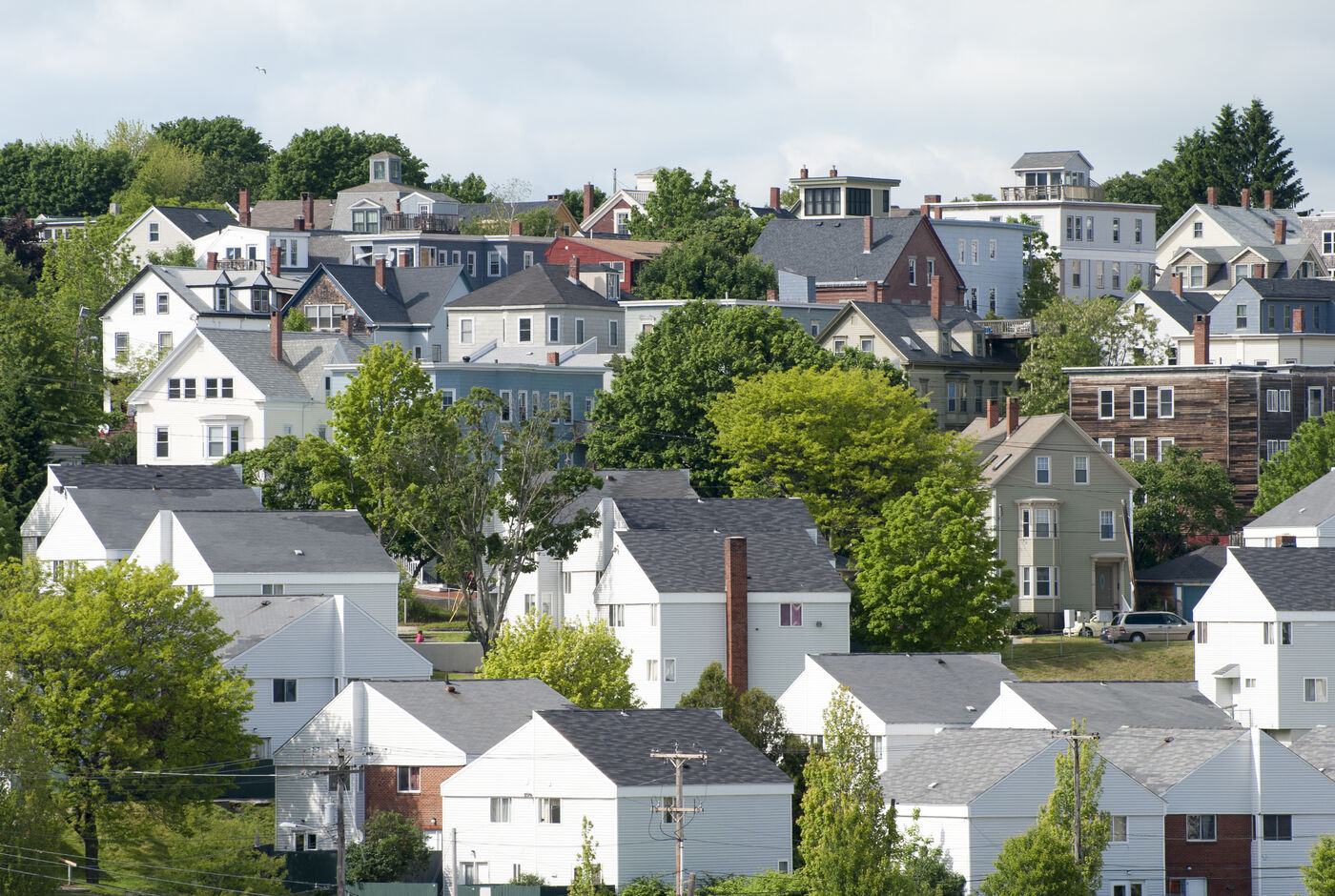
When we drive from our office in Westbrook out to a job in Gorham or Windham, the housing stock changes in ways that directly affect how we approach the work. The lots get bigger. The houses get bigger. And the energy bills get bigger too.
Gorham and Windham sit just outside the denser neighborhoods of Greater Portland, and the homes in these towns reflect that suburban-to-rural transition. Where Portland and South Portland are dominated by compact Capes and ranches from the 1940's through 1960's, Gorham and Windham add a different mix: larger colonials from the 1970's and 1980's, raised ranches, garrison colonials, and newer construction on larger lots - many of them still heated primarily with oil.
We have worked on hundreds of homes across both towns since 2006, and the patterns we see are consistent enough to be worth laying out for homeowners who are considering energy improvements.
What We See in Gorham Homes
Gorham's housing stock spans a wide range, from older village homes near the center of town to newer developments off routes 202 and 114. The energy challenges vary by era, but a few themes come up repeatedly.
Garrison Colonials and Two-Story Colonials (1970's-1990's)
These are some of the most common homes we work on in Gorham. Two-story construction with 1,800 to 2,800 square feet, full basements, and oil-fired boiler systems. They were built during an era when insulation standards existed but were not particularly ambitious.
Typical findings:
- Attic insulation at R-19 to R-30 - Better than the 1950's homes we see in Portland, but still well below the current R-49 to R-60 recommendation for Maine's climate zone. That gap between existing and recommended insulation translates directly into excess heating costs.
- Wall insulation present but thin - Most 1970's and 1980's homes have 3.5-inch fiberglass batts in the walls (about R-11 to R-13). We can improve this with dense-pack cellulose, which fills cavities more completely and reduces air movement within the wall assembly.
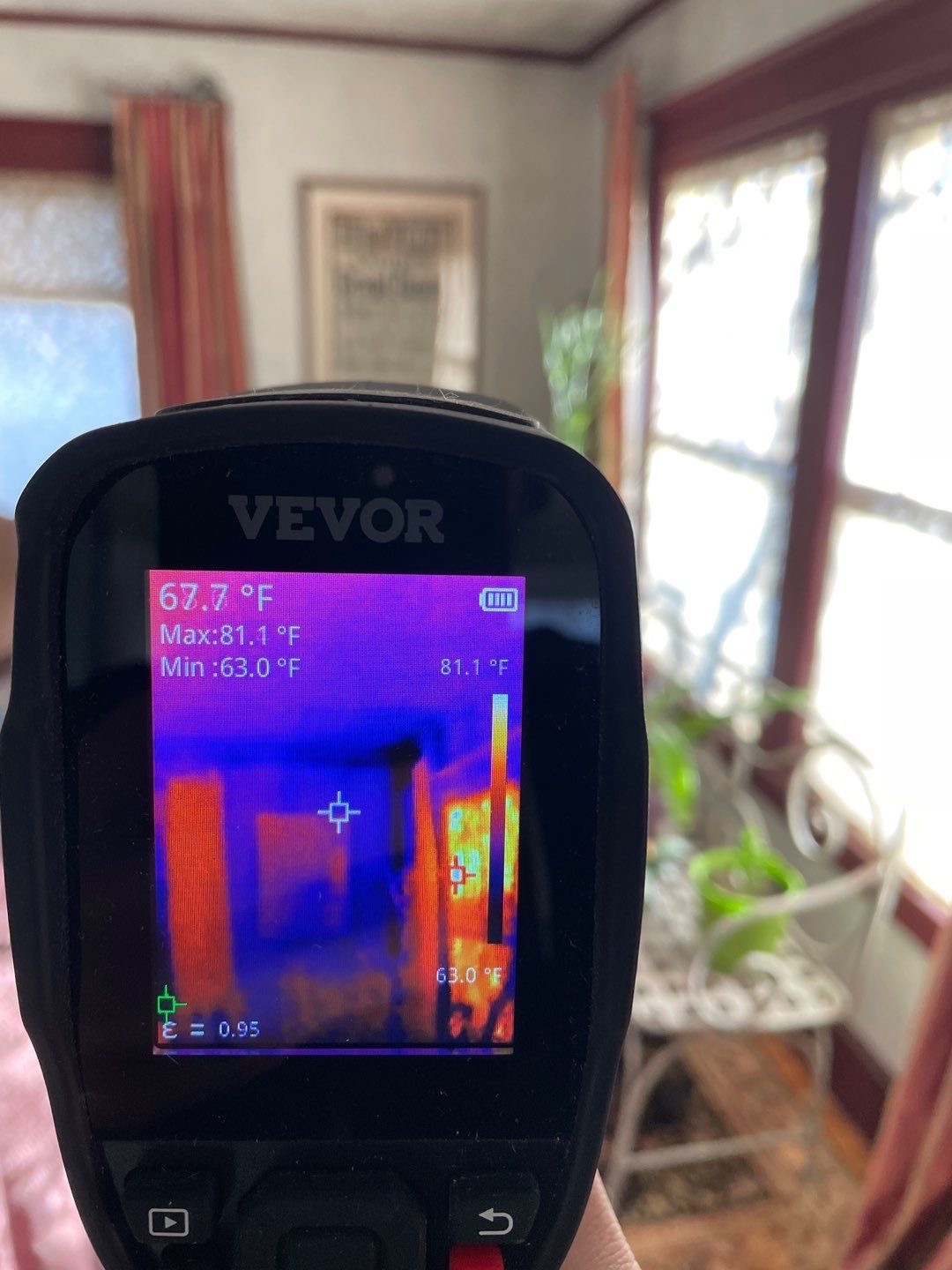
- Minimal air sealing - This is the consistent issue across almost every era. The homes have insulation, but the attic floor was never air sealed. Every wire, pipe, and light fixture that passes through the ceiling creates an air leak. Warm air flows past the insulation and into the attic continuously.
- Oil boilers from the 1990's or 2000's - Often still functional but operating at 80-85% efficiency. Modern options - cold-climate heat pumps or high-efficiency condensing boilers - operate at significantly higher efficiency levels.
For these homes, the highest-impact work is usually attic air sealing combined with additional blown-in cellulose insulation. The walls may benefit from dense-pack upgrades as well, depending on current conditions. Once the envelope is tightened, the homeowner has the option to right-size a new heating system to the reduced load.
Newer Construction (2000's-Present)
Gorham has seen significant new development, particularly in subdivisions off Mighty Street, Ichabod Lane, and the neighborhoods near the Gorham bypass. These homes were built to more modern energy codes, but "code minimum" does not mean "optimal."
Common issues in newer Gorham homes:
- Air sealing shortcuts - Building code requires certain air sealing measures, but enforcement varies. We frequently find unsealed top plates, open plumbing chases, and gaps around recessed lights - even in homes built within the last 15 years.
- HVAC oversizing - Heating and cooling systems in newer homes are often sized for worst-case conditions without accounting for the home's actual insulation and air sealing performance. This leads to short cycling (the system turns on and off frequently) and uneven temperatures.
- Cathedral ceilings and bonus rooms - Newer Gorham colonials often include vaulted ceilings in the master bedroom or a finished bonus room over the garage. These spaces are notorious for insulation and air sealing deficiencies because they are harder to access and insulate properly during construction.
For newer homes, the work is usually more targeted: identifying and fixing specific air sealing gaps, adding insulation to underperforming areas like bonus rooms, and possibly upgrading to cold-climate heat pumps for zone-by-zone comfort control. We see the same pattern in Scarborough's post-1970 subdivisions, covered in detail in energy savings for Scarborough homeowners.
Village Homes (Pre-1960's)
The center of Gorham, around Main Street and USM's Gorham campus, includes older homes built in the 1800's and early 1900's. These share the characteristics of older Portland housing stock: little or no insulation, no air sealing, and balloon-frame construction. They benefit enormously from comprehensive weatherization because the starting point is so far below modern standards.
What We See in Windham Homes
Windham's housing patterns overlap with Gorham's but have their own character. Route 302 serves as the commercial spine, and the residential areas spread out from there into a mix of established neighborhoods and newer developments around Highland Lake, Little Sebago, and the areas off River Road.
Lake-Area Homes
Windham's lake properties present a specific set of challenges. Many started as seasonal cottages that were converted to year-round use over the decades. These conversions often happened in stages - add a bedroom here, finish the basement there, close in a porch - without a comprehensive energy plan.
The result is a patchwork of building assemblies: some sections insulated, some not. Some sections air sealed, some completely open. The heating system was sized for the original footprint and keeps getting asked to do more as rooms are added.
For these homes, a free energy assessment is particularly valuable because the improvements need to be prioritized carefully. We identify which sections of the home are losing the most energy and develop a phased plan that delivers the biggest impact first.
Raised Ranches (1970's-1980's)
Windham has a concentration of raised ranches - the style with a finished lower level partially below grade and a main living level above. These homes have a specific energy vulnerability: the lower level walls are part foundation wall and part framed wall, and the transition between the two is almost never insulated or air sealed properly.
The band joist area - where the floor framing of the upper level meets the top of the lower-level walls - is consistently one of the leakiest spots in these homes. Cold air pours in through gaps in the rim joist area, making the lower level cold and drafty despite having finished walls and a heating system.
We address this with air sealing at the band joist and insulating the foundation walls - dense-pack cellulose for framed sections, polyiso rigid foam for concrete or block, and coordinated closed-cell spray foam through our subcontractors where moisture conditions call for it.
Larger Properties on Acreage
Windham has properties on one to five acres with homes in the 2,500 to 4,000 square foot range. These larger homes have larger energy bills - we regularly see annual oil consumption of 1,200 to 1,800 gallons, representing $5,000 to $8,000 per year in heating fuel alone.
The good news is that the savings potential is proportionally larger too. A 30% reduction in heating costs for a home spending $6,000 per year on oil means $1,800 in annual savings. At that rate, a weatherization project can pay for itself in 3 to 5 years, even before factoring in rebates.
Efficiency Maine Rebates for Gorham and Windham Homeowners
Both towns are in Efficiency Maine's service territory. As a Top Contractor for 10+ years, Horizon Homes handles and submits all of the paperwork. Current levels: up to $8,600 per home for insulation and air sealing (a fixed amount per zone, set by income tier), up to $9,000 for cold-climate heat pumps (income-dependent), and a heat pump water heater rebate (see the current amount on our rebates page). Federal tax credits (25C) add 30% of costs up to $1,200/year for insulation and $2,000/year for heat pumps.
We apply Efficiency Maine rebates directly to our invoices. You do not pay the full price and wait for reimbursement.
For a typical Gorham or Windham colonial - attic air sealing, blown-in cellulose in the attic, dense-pack walls, and basement insulation - a project might run $15,000 to $25,000 before rebates. After Efficiency Maine rebates and federal tax credits, the net cost often lands between $9,000 and $16,000 depending on the scope and income qualification.
The Whole-Home Approach for Larger Homes
For the bigger homes common in Gorham and Windham, the insulate-first approach is even more important than it is for smaller properties. Here is why:
A 2,400-square-foot colonial with an oil boiler consumes far more energy than a 1,200-square-foot ranch. The absolute savings from weatherization are larger, which means the economic case for doing the envelope work first is stronger.
More importantly, a larger home with a tight, well-insulated envelope can often be heated by a smaller system than you might expect. We have seen 2,800-square-foot colonials in Gorham go from a 150,000 BTU oil boiler to a cold-climate heat pump system at a fraction of that capacity - because the heat pump only needs to replace the heat the home actually loses, not the heat the old leaky house was wasting.
The sequence: free energy assessment to identify priorities, then air sealing and insulation to tighten the envelope, then a right-sized cold-climate heat pump or high-efficiency boiler, and finally mechanical ventilation if the home warrants it. Each step builds on the previous one, and the result is a home that costs 30-50% less to heat and cool.
Phased Projects
Not every homeowner wants to do everything at once. For larger homes where the full scope might be $20,000+, we regularly break projects into phases - attic air sealing and insulation first (highest ROI), then wall and basement insulation, then heating system upgrade. Each phase delivers measurable savings on its own, and the work from earlier phases makes later phases more effective.
Getting Started
If you own a home in Gorham or Windham and your heating bills feel higher than they should be - or if rooms in your house are consistently uncomfortable despite a functioning heating system - the building envelope is almost certainly part of the problem.
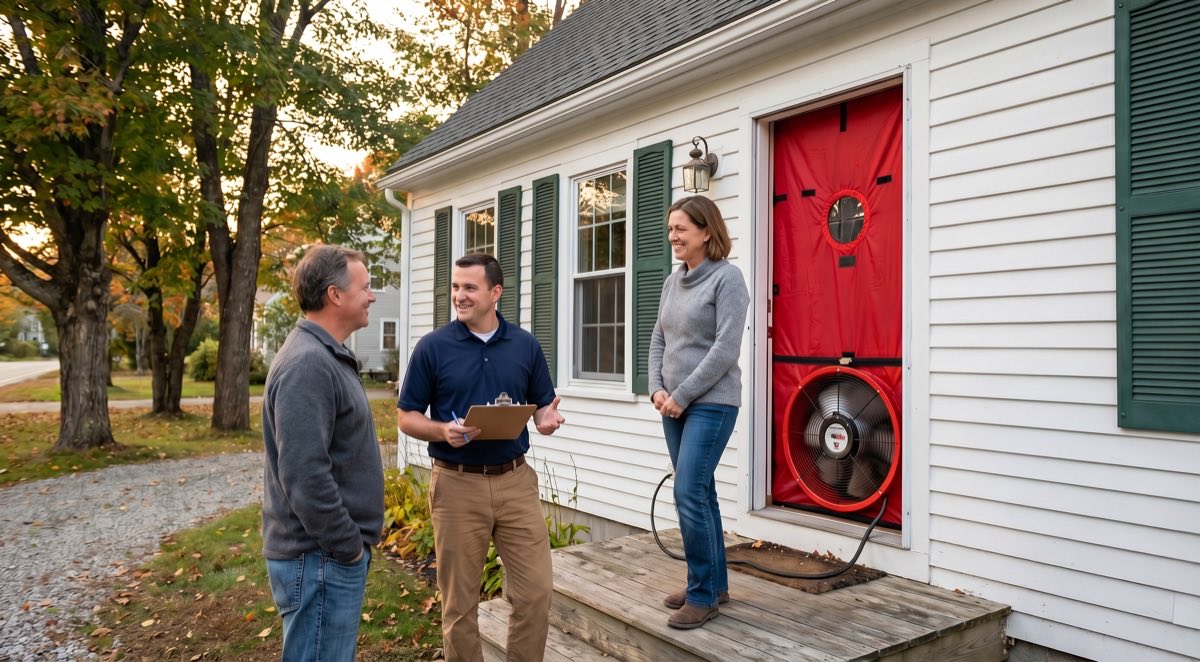
A free energy assessment takes about 45 minutes. We walk through the home, look at your insulation, identify air sealing opportunities, evaluate your heating system, and give you a clear picture of what improvements would deliver the best return. No equipment, no pressure, no obligation.
Call us at (207) 221-3221 or schedule online. Since 2006, Horizon Homes has been serving Gorham, Windham, and all of Greater Portland from our office at 865 Spring St in Westbrook - just a few miles down the road.
Find our guides faster: add Horizon Homes as a preferred source on Google.
Free Home Energy Assessment
Ready to Lower Your Energy Bills?
We identify the improvements that will have the biggest impact on your home's energy use, with clear pricing and rebate estimates.
- Free walkthrough, no equipment, no disruption
- Efficiency Maine rebates identified for you
- Written improvement plan with pricing
Schedule Your Free Assessment
We call within 1 business day.