What Heat Pumps Actually Do in a Maine Summer
Maine summers are not what they used to be. The past several years have brought more stretches of 85- and 90-degree heat, higher overnight lows, and the kind of coastal humidity that turns a second-floor bedroom into a sauna by late July. If you grew up here, you remember summers that barely required a fan. That is less true now.
Most older Maine homes were built without central air conditioning and have no ductwork to add it. Window units work for one room at a time. Portable AC units are loud, inefficient, and require venting through a window. Many homeowners spend June, July, and August uncomfortable in their own homes, then spend the fall thinking about what to do before next summer.
Cold-climate heat pumps solve this. And if you already have one installed for winter heating, you may not be using everything it does.
Heat Pumps Are Reversible — That Is the Point
A heat pump moves heat rather than generating it. In winter, it extracts heat from outside air and moves it inside. In summer, it runs in reverse: it pulls heat out of your home and moves it outside, the same way a refrigerator pulls heat out of its interior.
The result is a system that heats and cools from the same equipment, with no separate AC unit, no additional installation, and no additional Efficiency Maine rebate application. One system, two seasons.
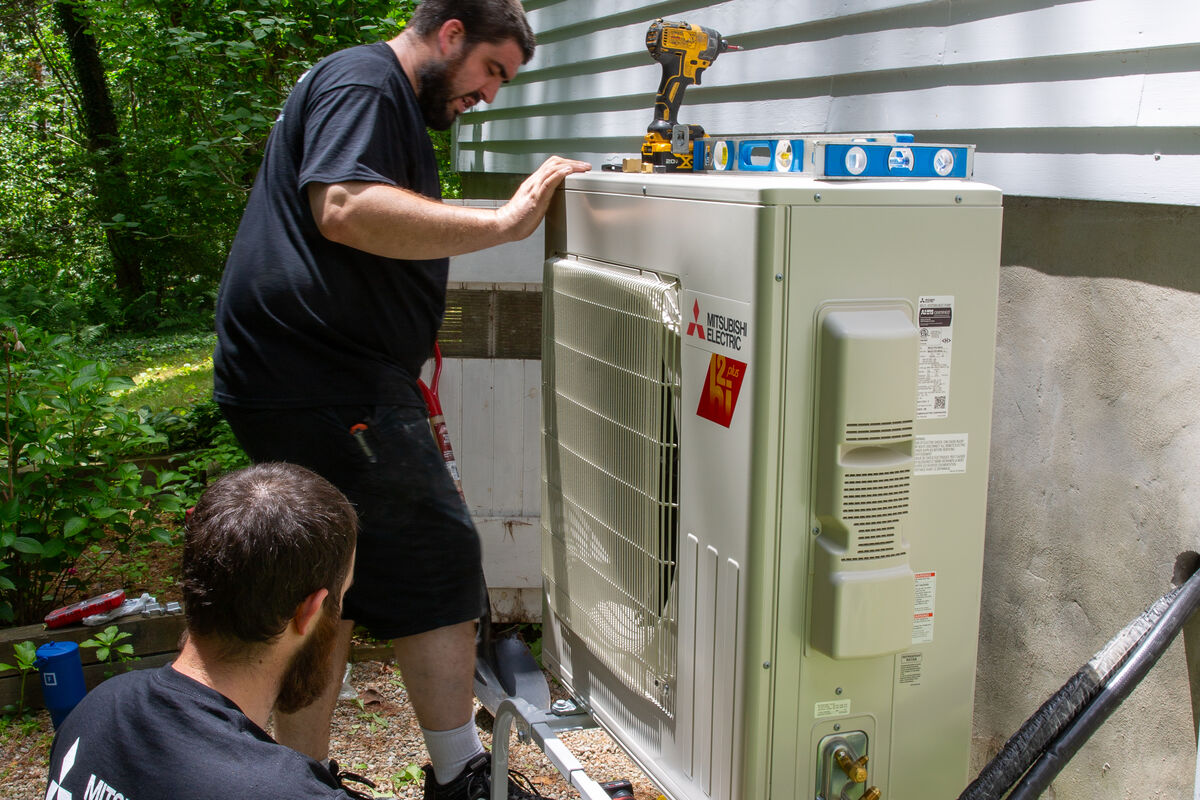
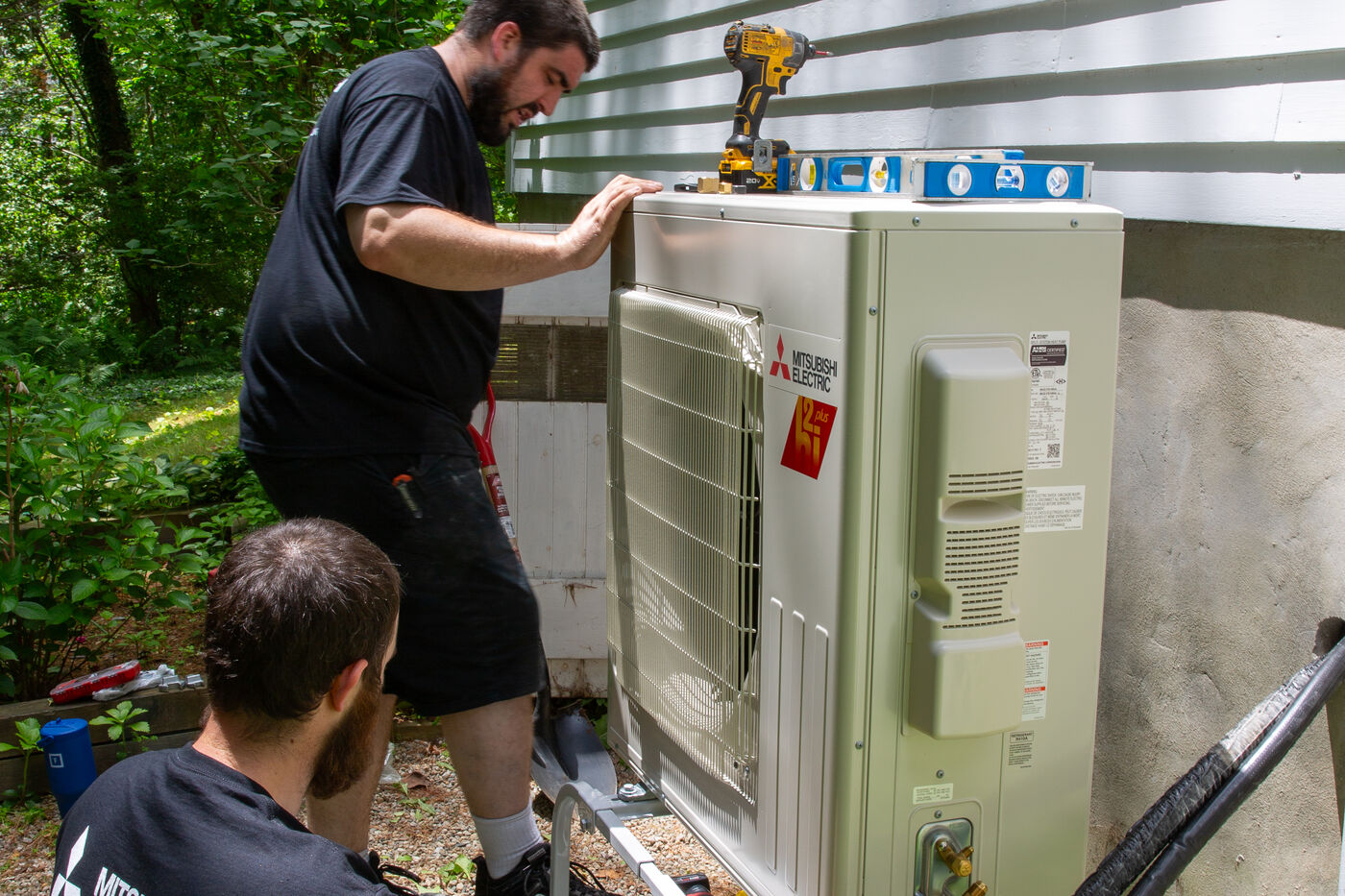
Most homeowners who install a Mitsubishi Hyper Heat mini-split primarily for winter comfort are pleasantly surprised by the summer cooling. It is not an afterthought feature. The same technology that makes these units effective in -13°F winters makes them efficient and quiet coolers in summer.
What Cooling from a Mini-Split Actually Feels Like
There is a difference between a window unit and a mini-split that is hard to describe until you have experienced both.
Window units cool the air but leave the humidity. They move air quickly but do a poor job of dehumidifying at lower speeds. You end up with cold, clammy air that does not feel refreshing.
Mini-splits dehumidify while they cool. They pull moisture out of the air as part of the cooling process, which is what actually makes a room feel comfortable. In a Maine summer with 80% humidity, dehumidification matters as much as temperature. The air in a mini-split room feels dry and still, not cold-and-wet.
Mini-splits are whisper-quiet. Window units run at 50 to 60 decibels. Mitsubishi's indoor heads run at 19 to 26 decibels at their lowest fan setting. That is quieter than a normal conversation. At night, this matters.
Zone control. A bedroom head cools the bedroom. A living room head cools the living room. You are not cooling an empty kitchen to make the bedroom livable. Each head has its own thermostat. This is both more comfortable and more efficient than central air.
The Second-Floor Problem in Maine Homes
If you have ever lived in a Maine Cape, Colonial, or Victorian with a second floor, you know the situation. The first floor is tolerable in July. The second floor, where the bedrooms are, hits 85 to 90 degrees by mid-afternoon and does not cool down until well after midnight.
This happens because heat rises, old homes have poor attic insulation that lets heat radiate down from a hot roof, and there is no ductwork to deliver cool air upstairs. Window units help, but only for the room they are in, and only imperfectly.
A mini-split head installed in an upstairs bedroom changes this. It cools and dehumidifies the room directly, quietly, and efficiently. Many homeowners who install a multi-zone system put one head in the living room and one in the primary bedroom — which addresses exactly where summer discomfort is most acute.
If your home also has inadequate attic insulation, adding insulation reduces the heat load on the second floor significantly. The combination of attic insulation and an upstairs mini-split is one of the most dramatic comfort improvements possible in an older Maine home. Our free energy assessment evaluates both together so you know which to prioritize.
What to Expect When You Switch to Cooling Mode
If you already have a heat pump installed, switching to cooling mode is straightforward: on most systems, you change the mode setting on the remote or app. The system automatically reverses.
A few things to know about summer operation:
It takes time to condition a room. If the bedroom has been sitting at 88°F all afternoon, a mini-split will need an hour or two to bring it down to a comfortable temperature. Running it during the day at a moderate setpoint (75–76°F) is more efficient than cooling a hot room from scratch at night.
Overnight is where it shines. Set the unit to run overnight and the bedroom stays at your target temperature while you sleep. No window unit noise, no cold blast, no decision in the morning about whether to close the window and lose the breeze.
The dehumidify mode. Most Mitsubishi units have a dedicated dry mode that removes humidity with minimal temperature change. On a cool but muggy Maine day, this is often better than full cooling mode — it removes the moisture that makes the air feel oppressive without overcooling the space.
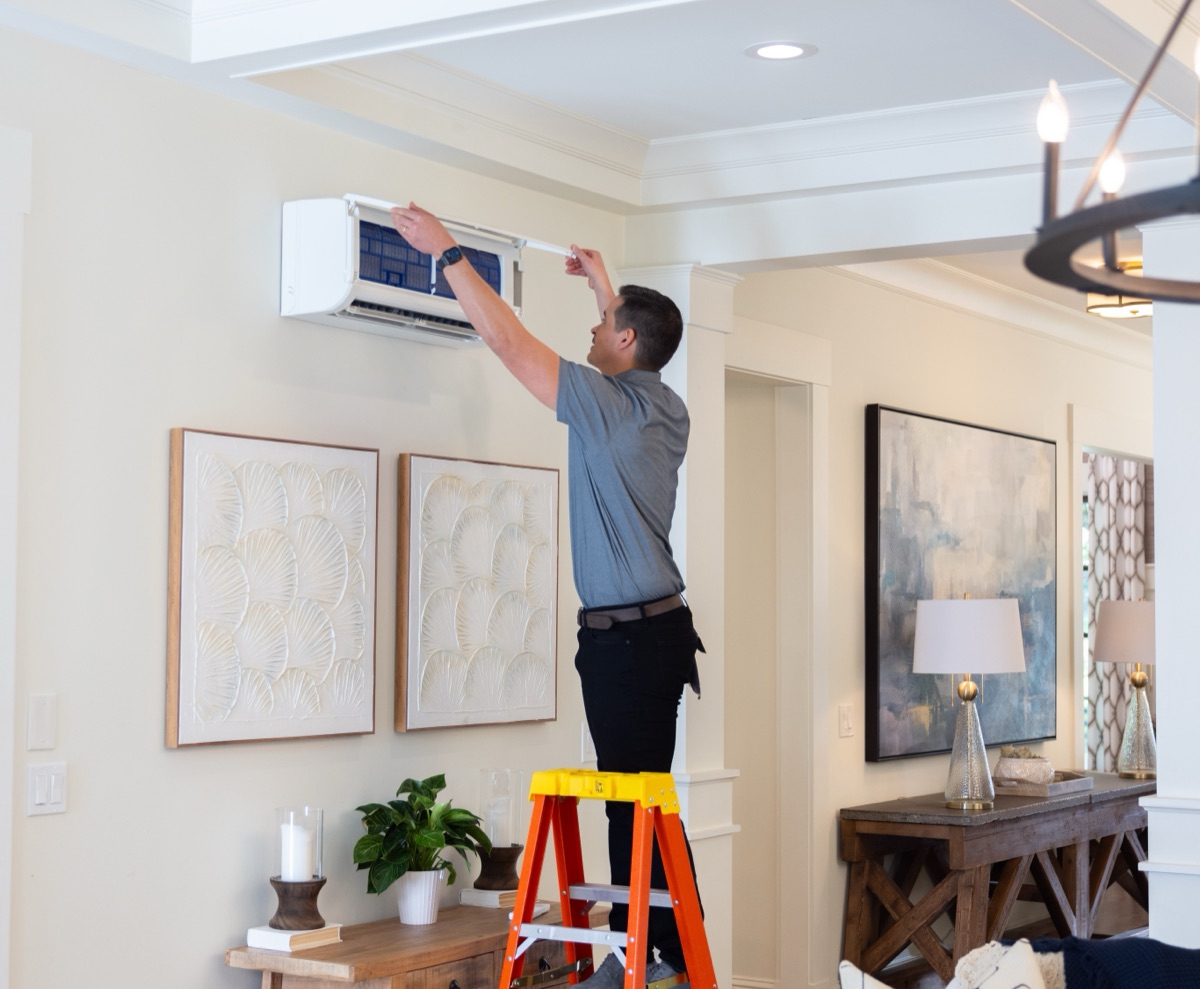
Filter maintenance. Heat pumps run heavily in summer. Check and clean the indoor filter every four to six weeks during the cooling season. A dirty filter reduces airflow and efficiency. It takes about five minutes and is the only regular maintenance the indoor unit needs.
Heat Pumps as a Cooling System: The Efficiency Case
Window AC units are rated by EER (energy efficiency ratio). Most residential window units have an EER of 10 to 12. A Mitsubishi Hyper Heat mini-split has an EER of 14 to 20, depending on the model and conditions.
In practical terms, this means a mini-split uses 20 to 40 percent less electricity to produce the same amount of cooling as a window unit. Over a Maine summer, that difference adds up. If you are running two or three window units, replacing them with a multi-zone mini-split will reduce your summer electric bill.
This matters because Maine's electric rates have risen alongside fuel costs. Managing summer electricity consumption is part of the same home efficiency picture as managing winter heating costs.
Installing Now Means Comfortable in Both Seasons
If you are considering a cold-climate heat pump installation, this is the right time of year. The reasons are practical, not marketing:
You get to use it this summer. An installation completed in May or June gives you the full summer to experience what the system does for comfort before winter arrives. You learn how to use the system, find the right setpoints for your home, and head into heating season with a system you already know and trust.
Summer installations can be tested in both modes. When we install in summer, we can run the system in cooling mode to verify performance immediately. This is better than winter-only verification.
Wait times are shorter now than they will be in fall. Our schedule fills significantly in September when homeowners realize heating season is close. Installing in late spring or early summer means a faster timeline from assessment to installation.
You are ready for whatever September brings. The first cold snap can arrive in Maine any time after Labor Day. If your heat pump is installed in June, you are not scrambling.
If you want to understand costs and rebate eligibility before scheduling, our guide to heat pump costs in Maine covers the full range, including income-tiered Efficiency Maine rebates and financing options.
What a Free Assessment Covers
If you do not have a heat pump yet, the process starts with a free energy assessment. In about an hour, we walk through your home and answer three questions:
- What does your building envelope look like? If insulation is thin, we recommend addressing that first — it reduces the size and cost of the heat pump system you need.
- How many zones do you need, and where? Sizing and placement determine whether you end up with a system that actually covers the whole house or one that cools the living room while the bedroom stays hot.
- What is your rebate eligibility? Efficiency Maine heat pump rebates range from $1,000 to $3,000 per unit depending on household income, up to $9,000 total. We apply the rebate directly to your invoice.
There is no cost, no pressure, and no obligation to proceed. We show you what your home needs and leave you with a clear plan and real pricing.
Schedule your free assessment or call us at (207) 221-3221.
Find our guides faster: add Horizon Homes as a preferred source on Google.