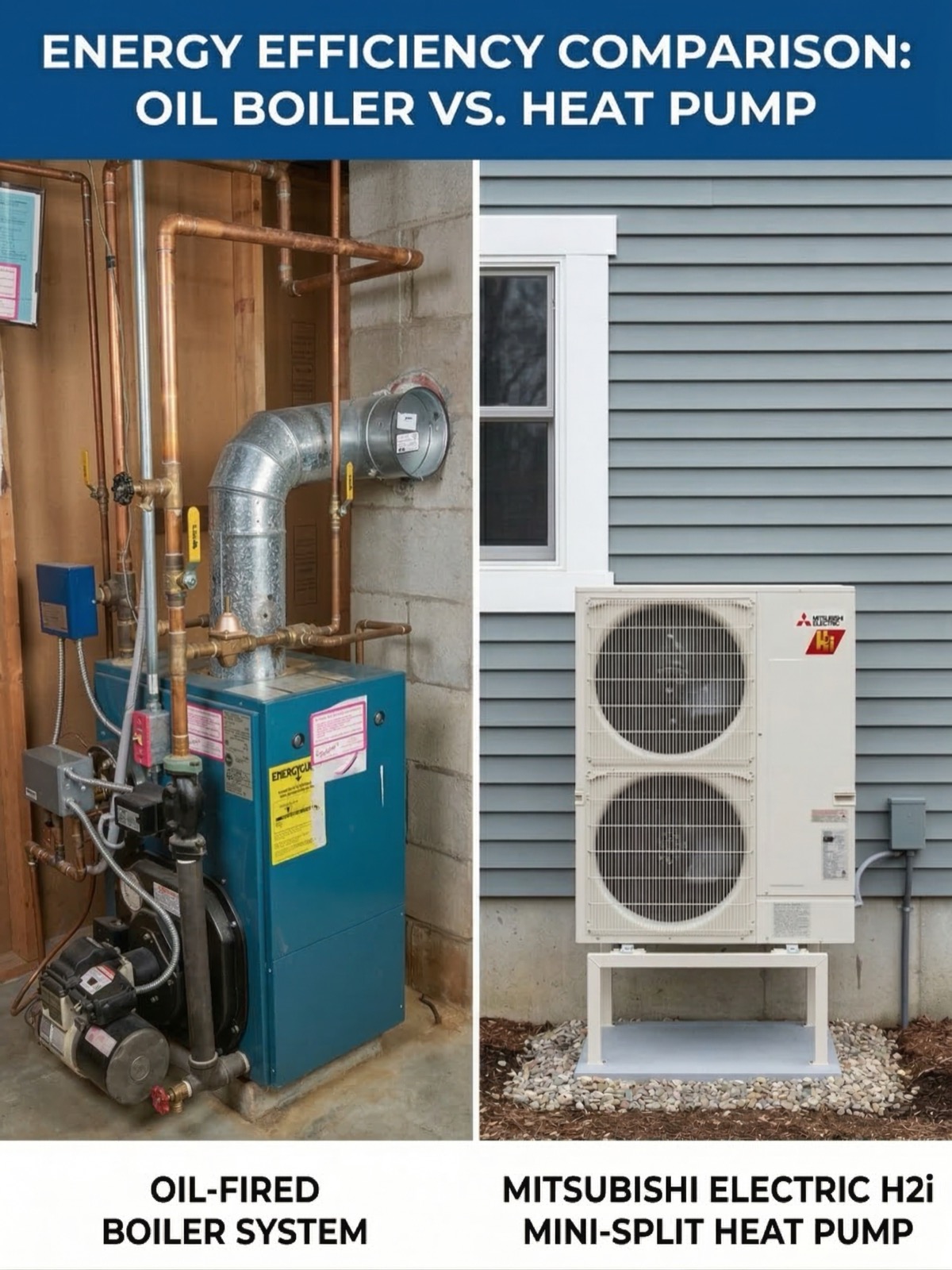
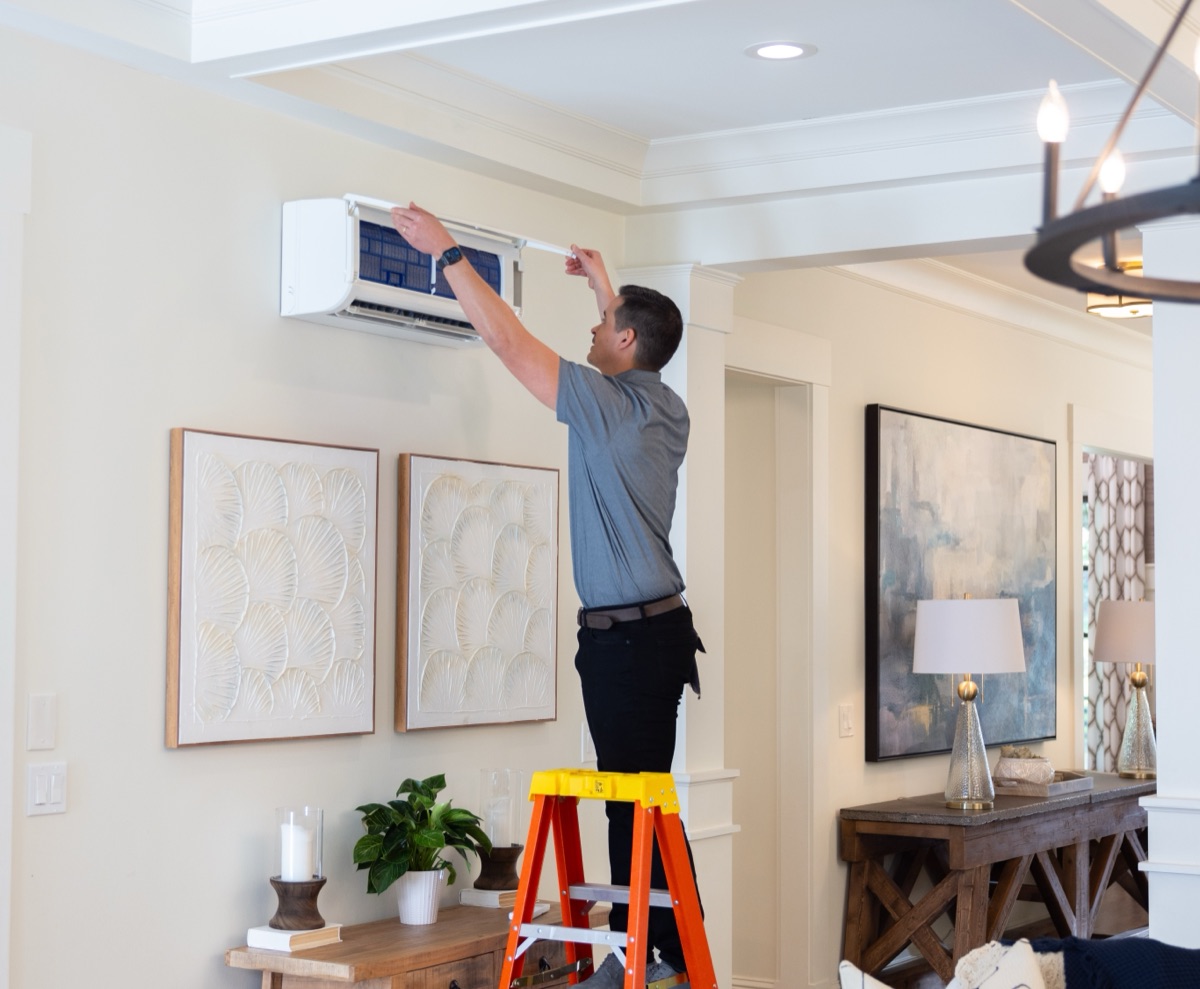
Branch Box Heat Pump Systems Explained for Maine Homeowners
Editor's note (August 2026): The federal 25C tax credits referenced in this article expired December 31, 2025 and are only available for qualifying work completed before that date. Efficiency Maine rebates remain available and are now the primary incentive for heat pump projects.
When we show up at a home with three outdoor condensing units lined up along the foundation - each connected to one or two indoor heads, each with its own electrical disconnect, its own set of refrigerant lines, and its own line hide running up the siding - the homeowner usually says some version of the same thing: "The last contractor said this was the only way to do it."
It is not the only way. There is a category of cold-climate heat pump equipment that most residential contractors either do not know about or choose not to install because it requires more design work and specialized training. It is called a branch box system, and for homes that need four or more zones of heating and cooling, it changes the entire equation.
Think of it as the difference between running a separate extension cord from the breaker panel to every appliance in your house versus wiring the house properly with circuits. Both deliver electricity. One is elegant and efficient. The other is three orange cords running across the living room floor.
What Is a Branch Box?
A branch box is a refrigerant distribution manifold - a compact metal box, roughly the size of a carry-on suitcase, that installs between one outdoor condensing unit and multiple indoor units. It sits inside your home, typically in the basement, a mechanical closet, or the attic.
One set of refrigerant lines runs from the outdoor unit to the branch box. From the branch box, shorter individual line sets run to each indoor unit. Inside the box, electronic expansion valves control exactly how much refrigerant flows to each zone based on what that zone is calling for at any given moment.
Mitsubishi calls their branch box the PAC-MKA series. It comes in configurations that support three or five ports. Two boxes can be daisy-chained together to serve up to eight zones from a single outdoor unit. The paired outdoor unit is the Mitsubishi SMART MULTI line, which is designed specifically to work with branch box distribution.
Other manufacturers - Daikin, Fujitsu, LG - offer similar technology under different names. We install those systems when the application calls for it, but the Mitsubishi SMART MULTI with branch box distribution is what we have the most field experience with in Maine.
Branch Box vs. Traditional Multi-Zone: The Key Differences
Most homeowners researching multi-zone cold-climate heat pumps will encounter two approaches. Understanding the difference matters because it affects cost, aesthetics, performance, and reliability.
Traditional multi-zone (MXZ-style). One outdoor unit with multiple refrigerant connection ports built directly into the condenser. Each indoor unit gets its own dedicated line set running all the way from the outdoor unit to the indoor head. For a three-zone system, that means three sets of copper lines running from the outdoor unit, through the wall, and to each indoor unit location.
This works well for two or three zones. But at four, five, or six zones, the outdoor unit becomes a tangle of copper lines. Each line set needs its own wall penetration on the exterior. Each set runs along the siding in its own line hide. The visual impact is significant, especially on historic homes or homes where curb appeal matters.
Branch box system. One outdoor unit with a single set of main refrigerant lines running to a centrally located branch box inside the house. From the branch box, shorter line sets run through interior walls, floors, and ceilings to each indoor unit. One exterior wall penetration. One line hide on the siding. One outdoor unit.
The practical advantages:
Fewer exterior penetrations. A six-zone traditional system needs six holes through your exterior wall and six line sets on the outside of your house. A branch box system needs one.
Shorter total line length. With the branch box positioned centrally, each indoor unit connects with a short run - often 15 to 25 feet versus 40 to 60 feet for lines running all the way back to an outdoor condenser. Shorter runs mean less refrigerant charge, less pressure drop, and better efficiency.
One outdoor unit. For homes where appearance matters - and in Portland, South Portland, Cape Elizabeth, and Falmouth, it often does - going from three condensers to one is a meaningful improvement. Historic homes with narrow side yards benefit particularly.
More precise zone control. The electronic expansion valves in the branch box modulate refrigerant flow to each zone independently and with greater precision than the mechanical distribution in a traditional multi-port condenser. One zone can heat while another cools - useful during shoulder seasons when the second floor has solar gain but the first floor needs warmth.
Simplified maintenance. One outdoor unit means one compressor to maintain, one set of outdoor coil fins to clean, one electrical disconnect. The branch box itself has no moving parts that require regular maintenance.
When a Branch Box System Makes Sense
Not every home needs a branch box. Here is how we evaluate during an energy assessment.
Four or more zones. Below four zones, a traditional multi-zone system or multiple single-zone units is often simpler and less expensive. The branch box's advantages become compelling at four zones and are substantial at five or six.
Aesthetic concerns. If the homeowner does not want multiple outdoor units or extensive line sets on the exterior, a branch box solves this regardless of zone count.
Historic or architecturally sensitive homes. Properties in Portland's historic districts, Cape Elizabeth, and similar areas where exterior modifications are scrutinized benefit from the minimal exterior footprint.
Large homes with central mechanical space. The branch box needs to go somewhere accessible - a basement, a utility room, or an attic with adequate clearance. Homes with a convenient central location for the box are ideal candidates.
New construction and major renovations. When walls and ceilings are open, routing the shorter line sets from a centrally located branch box to each zone is straightforward and cost-effective.
When a Branch Box May Not Be the Right Choice
Two or three zones. The additional cost of the branch box hardware and the SMART MULTI outdoor unit often does not justify itself for a small number of zones. Traditional multi-zone or individual single-zone systems may be more cost-effective.
No accessible central location. If there is no practical place to mount the branch box within reasonable distance of all indoor units, the line routing becomes complex and expensive, negating the branch box's advantages.
Budget priority over aesthetics. Branch box systems cost more in equipment than traditional multi-zone configurations. If minimizing upfront cost is the primary goal and exterior appearance is not a concern, a traditional approach costs less.
Important Note About Rebates
Like traditional multi-zone systems, branch box heat pump systems are generally not eligible for Efficiency Maine heat pump rebates. The rebate structure applies to single-zone (one-to-one) configurations. When multiple indoor units connect to one outdoor unit through a branch box, the system does not qualify for the standard per-unit rebate.
This is a significant factor in the cost analysis. A six-zone branch box system may cost $25,000 to $40,000 before rebates, with no Efficiency Maine rebate to offset that cost. Six individual single-zone systems would cost more in total equipment but might qualify for rebates on each unit, potentially making them less expensive after incentives.
We run both scenarios during your assessment and present the numbers transparently. The right choice depends on your priorities - lower net cost, fewer outdoor units, simpler maintenance, or some combination.
Federal 25C tax credits (30% of equipment cost, up to $2,000 per year) may still apply. Consult your tax advisor.
The Installation Process
Branch box installation is more involved than a standard multi-zone install, and it requires a contractor with specific training and experience.
Step 1: System design. We perform Manual J load calculations for every zone, select the outdoor unit capacity, determine the branch box configuration (3-port, 5-port, or daisy-chained), and design the refrigerant line routing from the box to each indoor unit.
Step 2: Branch box mounting. The box mounts to a wall in the selected central location. It needs to be accessible for the initial setup and for any future service, though it does not require regular maintenance access.
Step 3: Main line set. One set of refrigerant lines runs from the outdoor unit through the exterior wall to the branch box. This is the only exterior penetration.
Step 4: Distribution line sets. Individual line sets run from the branch box through interior walls, floors, and ceilings to each indoor unit. Because these runs are shorter and entirely interior, they do not require exterior line hides.
Step 5: Indoor unit installation. Each zone gets its indoor head - wall-mounted, ceiling cassette, floor unit, or ducted, depending on the room and homeowner preference. Branch box systems support mixing indoor unit types freely.
Step 6: Outdoor unit. The SMART MULTI condenser mounts on a wall bracket or raised pad. Despite serving six or more zones, the outdoor unit is a single, compact piece of equipment.
Step 7: Electrical. The outdoor unit needs a dedicated circuit. The branch box and indoor units have their own electrical requirements, typically smaller circuits that can often share breakers.
Step 8: Commissioning. The system requires careful refrigerant charging and configuration of the branch box's electronic expansion valves. Each zone is tested independently and in combination. This is where installer expertise matters most - an improperly commissioned branch box system will underperform.
Installation typically takes two to four days depending on zone count and routing complexity.
Cost Range
Branch box cold-climate heat pump systems in Maine typically cost:
- Four zones: $18,000 to $28,000 before rebates
- Five to six zones: $24,000 to $38,000 before rebates
- Seven to eight zones (daisy-chained boxes): $32,000 to $48,000 before rebates
These costs are higher than equivalent traditional multi-zone installations, primarily due to the SMART MULTI outdoor unit and the branch box hardware. The value proposition is not in lower equipment cost - it is in fewer outdoor units, cleaner aesthetics, shorter line runs, and more precise zone control.
For homeowners who would otherwise need three separate outdoor units, the branch box system often approaches cost parity while delivering a far cleaner installation.
Finding a Qualified Installer
Branch box systems require manufacturer-specific training. Not all HVAC contractors have experience with this equipment, and improper installation leads to performance issues that are difficult to diagnose.
Questions to ask:
- Have you installed Mitsubishi SMART MULTI branch box systems before? How many?
- Are you a Mitsubishi Diamond Contractor?
- Can you show me an example of a completed branch box installation?
- How do you commission and configure the electronic expansion valves?
At Horizon Homes, we have been installing branch box systems since the technology became available for residential applications. Our team has manufacturer training on the Mitsubishi SMART MULTI line, and we have completed branch box installations across Greater Portland in homes ranging from 1,800 to 4,500 square feet.
Related Guides
- Multi-Zone Heat Pump Systems for Maine Homes - Traditional multi-zone for comparison
- Ducted Mini-Split Heat Pumps for Maine Homes - Concealed indoor units with ductwork
- Cold-Climate Heat Pump Guide for Maine - The technology behind Hyper-Heat
- Heat Pump Sizing and Manual J for Maine Homes - Proper sizing across multiple zones
Interested in whether a branch box system is the right approach for your home? Schedule your free energy assessment or call (207) 221-3221. We will walk through your home, count the zones, evaluate the routing options, and give you a transparent comparison of branch box versus traditional multi-zone - including the rebate math. Since 2006, we have been designing whole-home cold-climate heat pump systems that work for Maine winters and look right on Maine homes.
Find our guides faster: add Horizon Homes as a preferred source on Google.
Free Home Energy Assessment
Considering Heat Pumps for Your Home?
We evaluate your home's insulation, heating system, and electrical capacity, then give you a clear recommendation with pricing and rebate estimates.
- Free walkthrough, no equipment, no disruption
- Efficiency Maine rebates identified for you
- Written improvement plan with pricing
Schedule Your Free Assessment
We call within 1 business day.