Oil Heat vs. Heat Pump in Maine: The 2026 Decision Guide
Editor's note (September 2026): The 30% federal tax credit described below is the federal 25C credit. It expired December 31, 2025 and does not apply to work completed in 2026 or later, so the “through 2032” timeline and the net-cost figures below reflect the period when the credit was still available. Efficiency Maine rebates remain available and are now the primary incentive for heat pump projects. Learn more about what has changed.
Two Westbrook homeowners this week asked the same question, almost word for word: "My oil boiler still works fine. Is it worth switching to a heat pump, or am I just chasing a trend?" It's not a trend. But the answer isn't the same for every house.
After hundreds of energy assessments in the past year across Greater Portland, we've found the decision comes down to three things: control, predictability, and what kind of energy future you want for your home.
The Stability Problem with Oil
Oil heat works. It's kept Maine homes warm for decades, and there's nothing wrong with a well-maintained oil boiler. But oil has one fundamental problem that no amount of maintenance can fix: you don't control the price.
Maine homeowners saw oil prices swing from under $2.00 per gallon to over $5.00 in the span of a few years. That's not a market you can budget around. OPEC production decisions, refinery shutdowns, tanker disruptions, and geopolitical instability - all of it flows directly into the price you pay at the fill pipe.
| Factor | Oil Heat | Heat Pump |
|---|---|---|
| Price set by | Global commodity markets | Maine PUC (annually) |
| Price volatility | High (swings year to year) | Low (rate changes once/year) |
| Can offset with solar | No | Yes |
| Efficiency trend | Maxed out (~85-95%) | Improving every year (200-300%+) |
| Summer cooling | Separate system needed | Built in |
| Carbon footprint | ~8-9 tons CO2/year | ~2-3 tons CO2/year |
Electricity isn't free, and Maine's rates aren't cheap. We've never told a homeowner that heat pumps are a magic savings bullet. But here's the difference: the Maine PUC sets electricity rates once per year. You know what you'll pay. You can budget for it. You can't budget for oil.
Fuel prices change weekly, so any fixed numbers we give here would be stale within a month. Our heating cost comparison calculator uses real prices from the Maine Governor's Energy Office, updated weekly for our service area.
Compare oil vs. heat pump costs with today's prices
What "Efficiency" Actually Means in Plain English
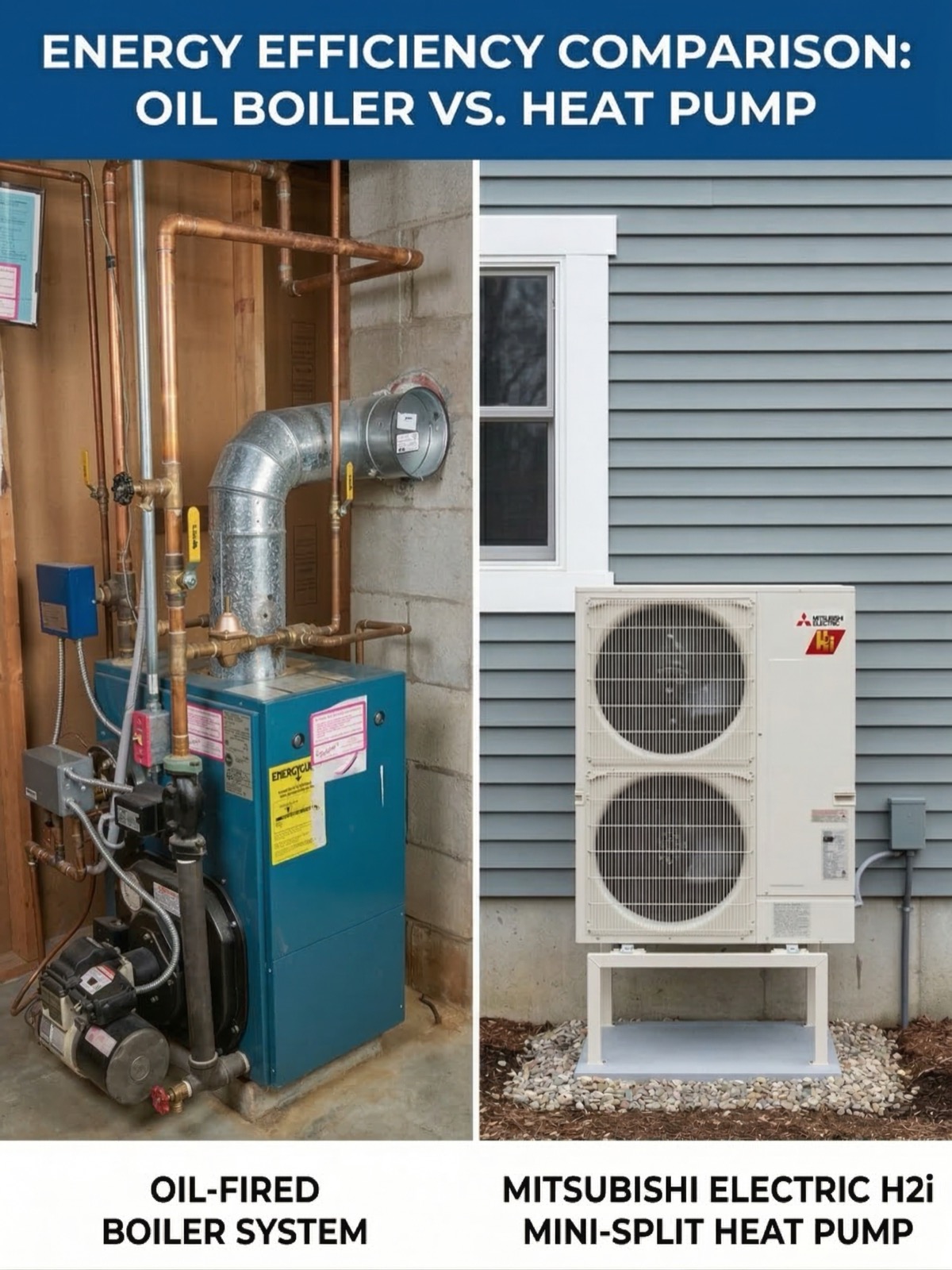
Your oil boiler burns a gallon of oil and converts about 85% of it into heat. That's good, but it's a hard ceiling. You can't get more than 100% of the energy out of a combustion process.
Heat pumps don't burn anything. They move heat from outside air into your home, and that process is fundamentally different. For every unit of electricity a heat pump uses, it delivers two to three units of heat. That's 200-300% efficiency, not because it's violating physics, but because it's moving heat instead of creating it.
Even at Maine's electricity rates, that 2-3x multiplier makes the operating cost competitive with oil in most scenarios. And unlike oil boiler technology (which has essentially maxed out), heat pump efficiency keeps improving. Cold-climate units available in 2026 perform significantly better at low temperatures than models from even three years ago.
The Cold Weather Question
Let's address the elephant in the room: Maine winters get cold. And the question on everyone's mind is whether heat pumps can handle it.
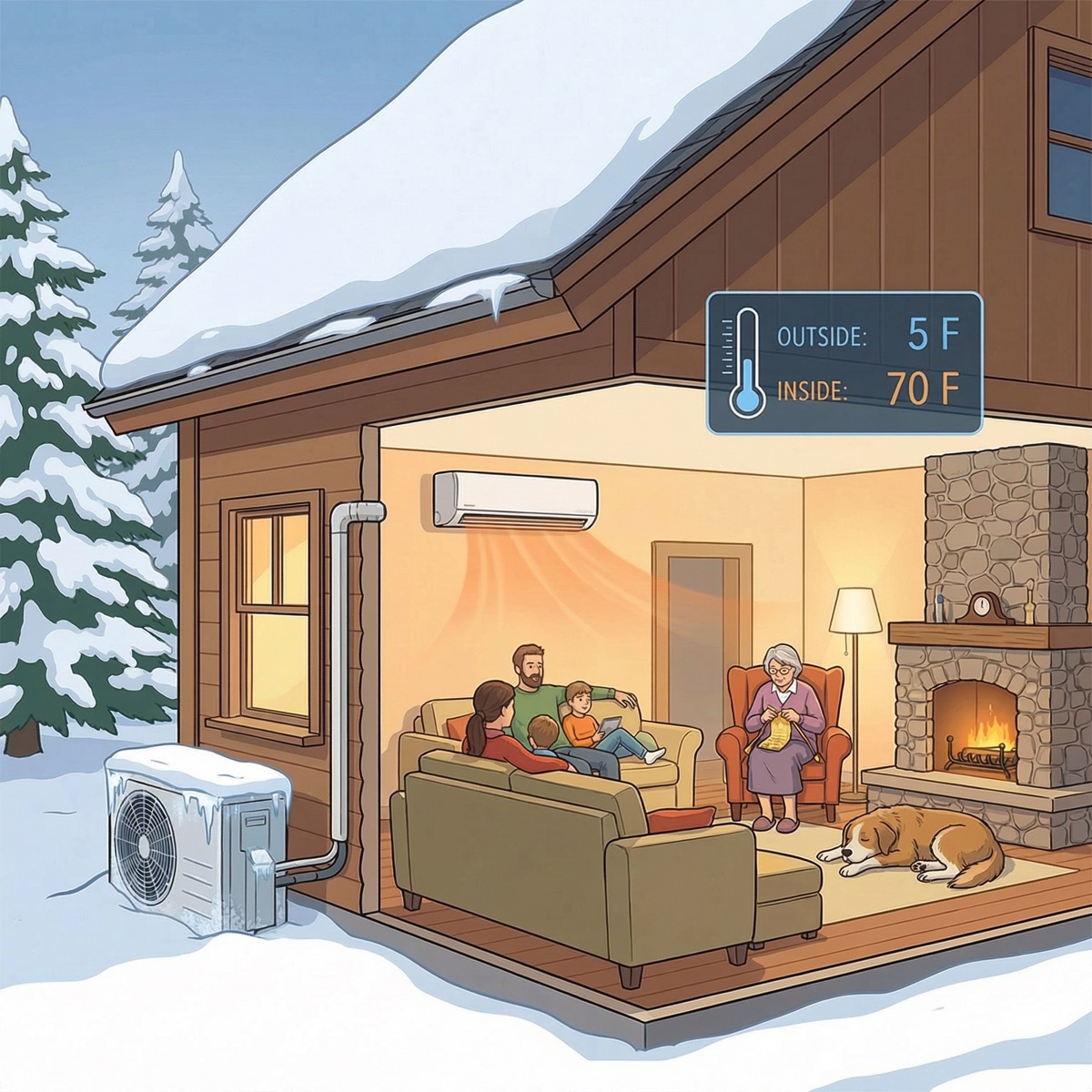
The short answer: yes, with the right equipment. Modern cold-climate heat pumps (like the Mitsubishi Hyper-Heat systems we install as a Diamond Contractor) maintain near-full heating capacity down to -5°F and continue operating at -22°F. A field study by RAP and Efficiency Maine metered 10 Maine homes through a full winter and found that 7 out of 10 didn't need supplemental heat at all. The heat pump carried the entire load.
Even at 5°F, cold-climate heat pumps deliver a COP of 2.2 to 2.8, meaning they're still producing nearly three times more heat than the electricity they consume. We cover this in detail in our post on heat pump performance below zero.
A whole-home cold-climate heat pump system is sized for the full heating load. A hybrid system instead keeps the boiler as the primary heat source and uses cold-climate heat pumps for cooling and supplemental heat. We review rebate eligibility for the proposed design separately.
This is actually good news. It means the system is designed right from the start, not undersized and leaning on fossil fuel to fill the gap. A properly sized whole-home heat pump system keeps your house warm through a Maine winter without compromise.
The Solar Connection
This is where the long-term picture gets compelling: you can't generate your own oil, but you can generate your own electricity.
Whether it's rooftop panels or a community solar subscription, pairing a heat pump with solar is a path toward dramatically lower, or even zero, heating costs. That's not theoretical. Maine homeowners are doing it right now.
An oil boiler will never have this option. No matter how efficient the boiler, you'll always need to buy the fuel from someone else.
What About Your Existing System?
If your oil boiler is 5 years old and running perfectly, nobody is suggesting you rip it out tomorrow. But if your system is 15-20+ years old and you're looking at a replacement anyway, the comparison shifts:
- New oil boiler, installed: $10,000 - $14,000
- Whole-home heat pump system, installed (before rebates): $14,000 - $20,000
- Heat pump after Efficiency Maine rebates: $11,000 - $17,000
The upfront cost is higher than an oil boiler replacement, but it closes significantly with rebates, especially for moderate- and low-income households who qualify for larger rebates ($2,000-$3,000 per outdoor unit). There's also a 30% federal tax credit available through 2032. And the heat pump gives you cooling in summer, predictable energy pricing, and a system you can pair with solar.
The Insulation Multiplier
Here's what most comparison articles leave out: the condition of your home's insulation changes the entire equation.
A well-insulated, air-sealed home needs a smaller heat pump system, runs it less often, and uses less electricity. At Horizon Homes, this is why we take a whole-home approach: insulate and air seal first, then right-size the heat pump. It costs less upfront and performs better over time.
A heat pump on a leaky house is working harder than it needs to. We see this often, and it's one reason some people feel disappointed by their heat pump's performance. The pump is fine. The building envelope is the problem.
When Oil Might Still Make Sense
We're not going to pretend heat pumps are the right answer for every situation. Oil may still be the better choice if:
- Your existing oil system is relatively new and well-maintained
- You have a hot water baseboard system and aren't ready for a full conversion
- Your home layout makes heat pump installation impractical (rare, but it happens)
- You're planning to sell in the next 2-3 years and want to minimize upfront investment
An honest energy assessment will tell you where you stand. We've told homeowners to keep their oil system when that was the right call. Our job is to give you accurate information, not push a product.
Frequently Asked Questions
Is switching from oil to a heat pump worth it in Maine?
For most Maine homeowners with aging oil systems, yes. The biggest advantages are price predictability (PUC-regulated electricity vs. volatile oil markets), heating and cooling in one system, and Efficiency Maine rebates that significantly reduce upfront cost. Run the numbers for your home to see the comparison with today's fuel prices.
Do heat pumps work in Maine winters?
Cold-climate heat pumps maintain near-full capacity down to -5°F and keep running at -22°F. A field study found 7 out of 10 Maine homes didn't use supplemental heat at all through the winter.
Can I keep my oil boiler?
Yes. In a hybrid setup, the boiler remains the primary heat source and cold-climate heat pumps provide cooling and supplemental heat. Whole-home heat pump rebate requirements are separate from this hybrid design.
Are heat pumps cheaper to run than oil in Maine?
At current Maine electricity rates, the operating cost difference depends on your home's insulation, system sizing, and fuel prices at the time. The margin can be modest. The bigger advantages are price stability, cooling in summer, and the ability to offset costs with solar. See the comparison with today's prices.
How long does installation take?
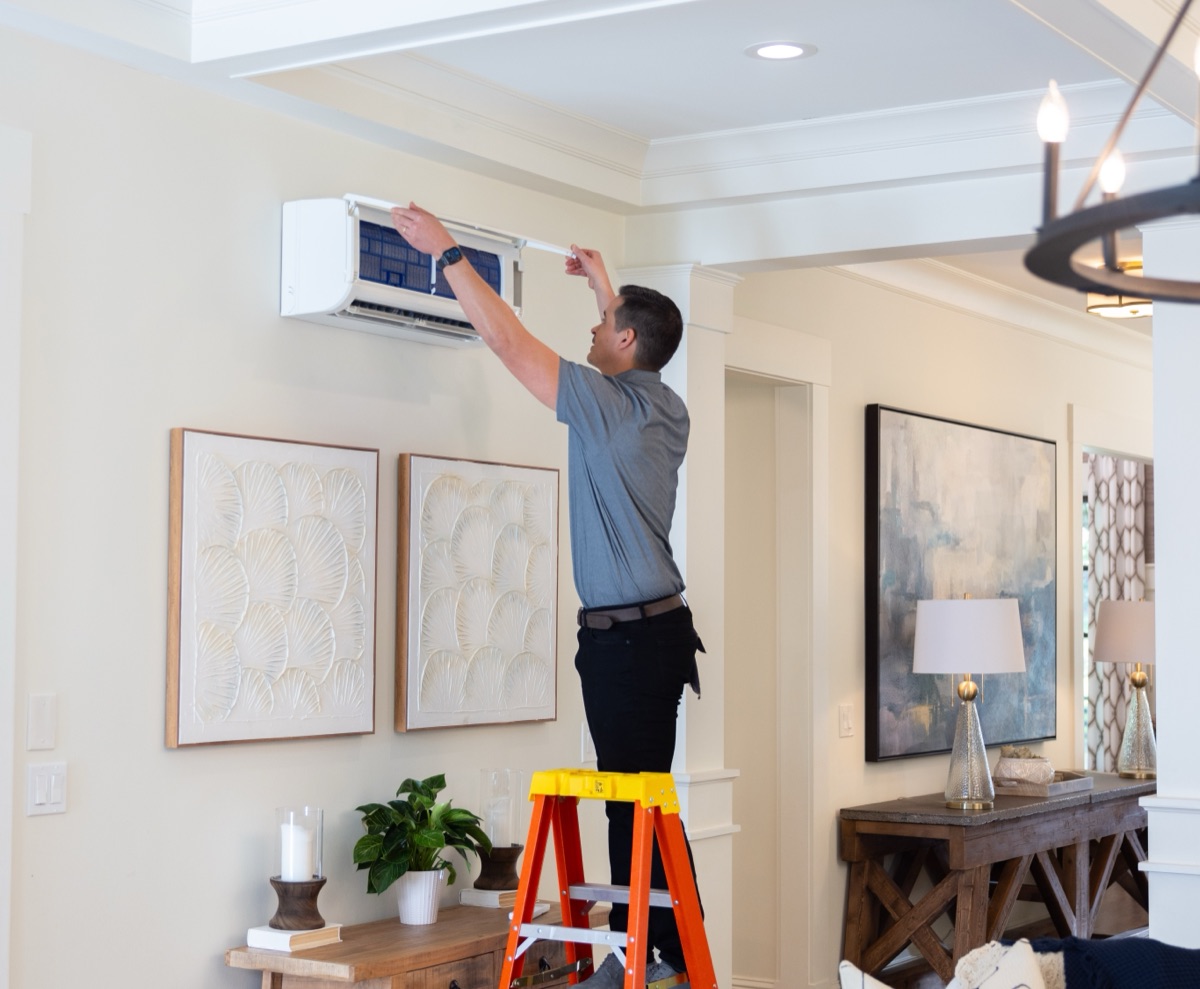
A typical whole-home heat pump installation takes 1-2 days. There's minimal disruption to your daily routine. There's no ductwork to run in most cases, and the indoor units mount on walls or ceilings.
Find Out What Makes Sense for Your Home
Every home is different. Start with our heating cost comparison calculator to see how the fuels compare at today's prices. When you're ready for numbers specific to your house, a free energy assessment covers your insulation, your current system, and all available rebates.
Run the Heating Cost Calculator | Book Your Free Assessment | (207) 221-3221
Find our guides faster: add Horizon Homes as a preferred source on Google.
Free Home Energy Assessment
Considering Heat Pumps for Your Home?
We evaluate your home's insulation, heating system, and electrical capacity, then give you a clear recommendation with pricing and rebate estimates.
- Free walkthrough, no equipment, no disruption
- Efficiency Maine rebates identified for you
- Written improvement plan with pricing
Schedule Your Free Assessment
We call within 1 business day.