Heat Pump Noise Levels: What Maine Homeowners Should Know
Outdoor condenser noise is one of the most common concerns we hear from homeowners considering heat pumps, and it makes sense. If your reference point is an older central air conditioning condenser, you know the drone. Those units can run at 70 to 80 decibels, loud enough that you have to raise your voice to talk over them. The assumption that heat pumps sound the same is reasonable given that starting point.
But the technology has moved considerably since then. Modern cold-climate heat pumps are engineered differently, and the noise difference is substantial.
How Loud Is a Cold-Climate Heat Pump, Really?
The outdoor unit is where most of the concern lives. The short answer: at the fan speeds that run most of the day, you will barely notice it.
Heat pumps with inverter-driven compressors adjust their output continuously based on how much heating or cooling is actually needed. On a mild Maine morning, they run at low to medium capacity. That is the operating mode they are in for the majority of the heating season. At those speeds, the Mitsubishi Hyper-Heat systems we install produce approximately 40 to 43 decibels measured at three feet from the unit, about the same as a quiet residential street with light traffic. Many homeowners say they have to walk right up to the unit to confirm it is running.
The higher figure you see in spec sheets (46 to 52 decibels) represents maximum capacity, meaning the system running flat out on the coldest days of the year (typically below -5°F in Maine). That range applies only occasionally, during sustained cold snaps when the heat pump is working at its absolute peak. Even at 50 dB, you can still carry on a normal conversation standing next to the unit.
To put these levels in context, here is how common sounds compare:
| Sound Source | Approximate Decibels |
|---|---|
| Rustling leaves | 20 dB |
| Whisper at 3 feet | 30 dB |
| Quiet library | 40 dB |
| Heat pump at typical low/medium speed | 40-43 dB |
| Moderate rainfall | 45 dB |
| Heat pump at max capacity (occasional) | 46-52 dB |
| Normal conversation at 3 feet | 55-60 dB |
| Window AC unit | 50-65 dB |
| Dishwasher | 55-65 dB |
| Gas lawn mower | 85-90 dB |
| Older central AC condenser | 70-80 dB |
The typical operating range is what matters for day-to-day life. Because inverter-driven systems modulate continuously, they spend the vast majority of their running time in that quieter partial-load range, not at maximum.
Indoor Units Are Even Quieter
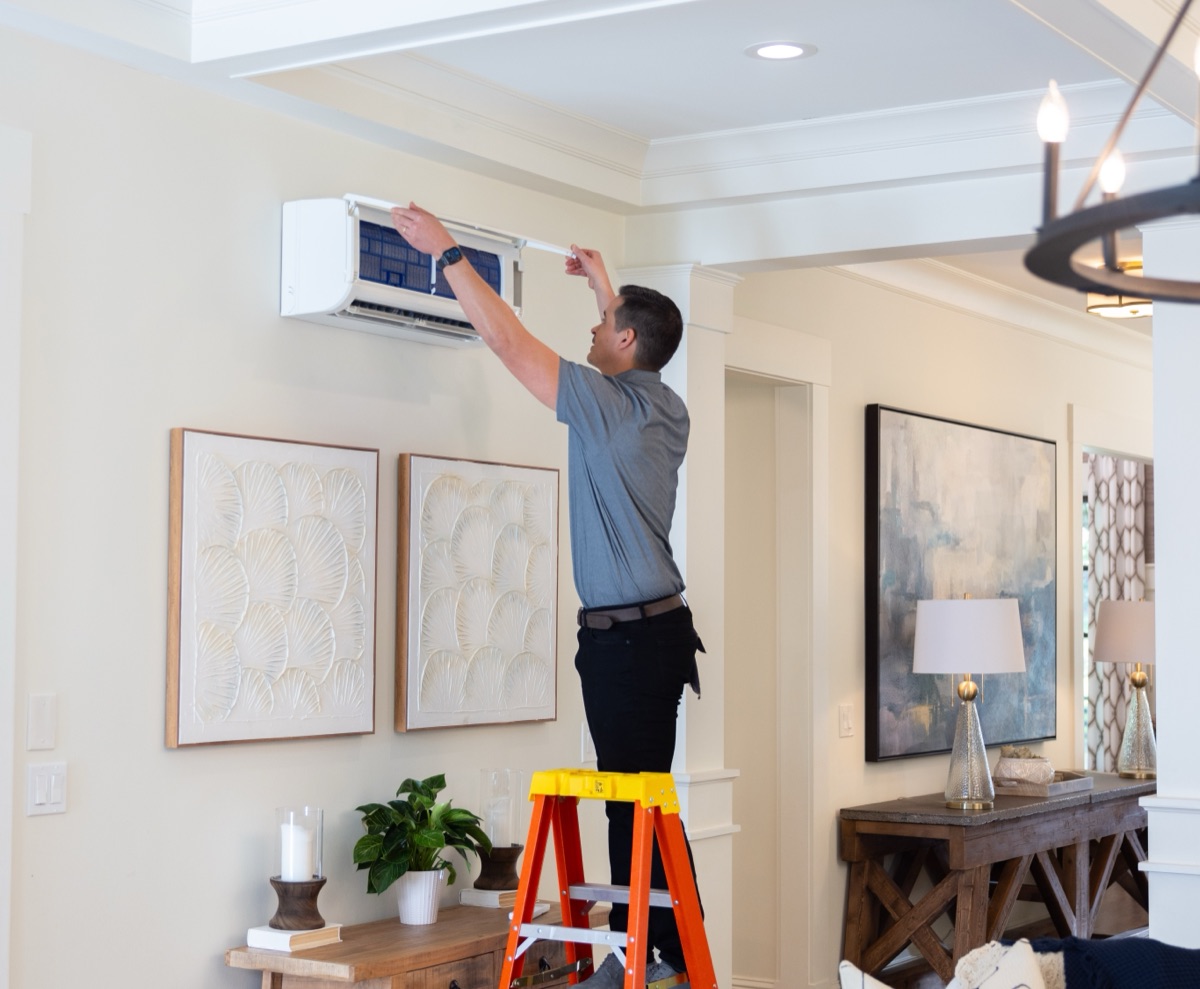
The indoor wall-mounted heads that deliver heating and cooling into your rooms operate at 19 to 25 decibels on their lowest fan setting. That is quieter than a whisper. Many homeowners tell us they forget the unit is running because there is no perceptible sound from it.
At higher fan speeds, the indoor units reach about 30 to 38 decibels, still quieter than a typical refrigerator. Most people run their systems on auto or low fan settings, which means the indoor noise level stays in that 19-25 dB range for the majority of the day.
For comparison, the ambient background noise in a typical quiet bedroom at night is about 30 decibels. The indoor unit on its low setting operates below that threshold. This matters if you are considering a unit for a bedroom, and many of our customers install them in bedrooms specifically because the rooms are too cold in winter or too hot in summer.
Why Cold-Climate Heat Pumps Are Quieter Than Older Systems
Three engineering advances make modern cold-climate heat pumps significantly quieter than earlier models or standard AC condensers:
Inverter-Driven Compressors
Older systems use single-speed compressors that cycle on and off. Each startup creates a noticeable surge of noise. Inverter-driven compressors in modern cold-climate heat pumps adjust their speed continuously to match the heating or cooling demand. Instead of repeatedly blasting on at full power and shutting off, the compressor runs steadily at whatever speed is needed. The result is a consistent, low hum rather than the start-stop cycling that makes older units noticeable.
Variable-Speed Fan Motors
The outdoor fan adjusts its speed to match the compressor output. When the system is running at 40% capacity on a moderate day, the fan runs at a corresponding lower speed. Lower fan speed means less airflow noise. During shoulder seasons, spring and fall in Maine, the outdoor unit is operating well below its maximum, and the sound output drops accordingly.
Improved Compressor Mounting and Vibration Isolation
Modern outdoor units use rubber isolation mounts and redesigned compressor housings that reduce vibration transfer to the cabinet. Vibration was a significant source of noise in older systems. The cabinet itself would amplify compressor vibrations, creating that resonant hum or rattle. Current units are designed to absorb and dampen vibrations before they reach the outer shell.
Placement Matters More Than Most People Think
Even with a quiet unit, where you put the outdoor condenser affects how you and your neighbors perceive the noise. A few placement principles can make the difference between a unit you never notice and one that becomes a mild annoyance:
Distance from windows and property lines
Sound intensity drops roughly 6 decibels every time you double the distance from the source. A unit that measures 50 dB at three feet will be around 44 dB at six feet and approximately 38 dB at twelve feet. Twelve feet from a bedroom window or a neighbor's property line makes a meaningful difference.
Avoid reflective surfaces
Placing the outdoor unit between two hard walls, like in a narrow alley between houses, can amplify the perceived noise because sound bounces back and forth. An open location with at least one or two sides unobstructed allows the sound to dissipate naturally.
Surface underneath the unit
A unit mounted on a concrete pad transmits less vibration than one mounted directly to a wooden deck. Our installers use anti-vibration pads and proper mounting brackets to minimize any transfer of vibration to the structure.
Snow and ice clearance
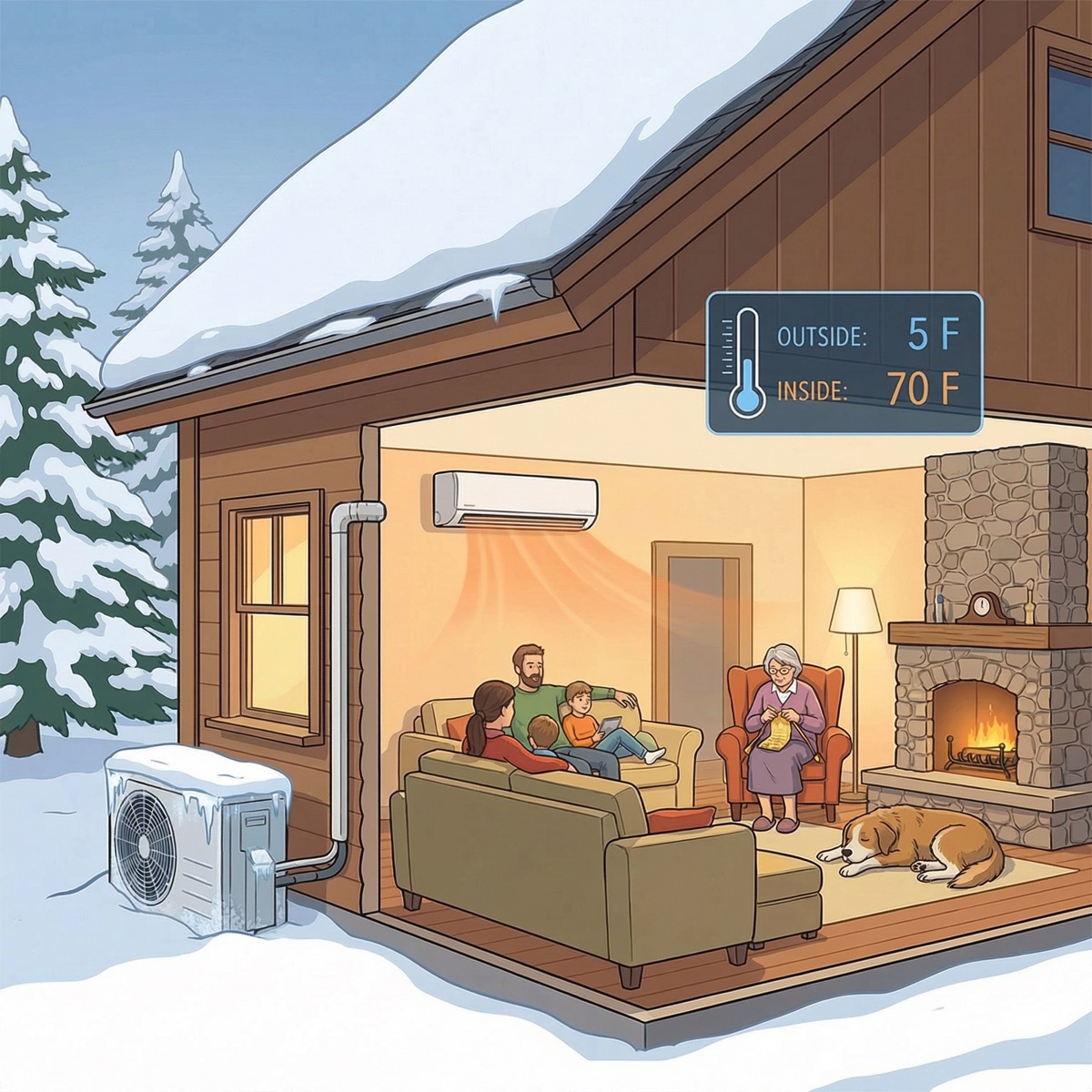
This is a Maine-specific consideration, but it affects noise indirectly. An outdoor unit that gets buried in snow or ice has to work harder, which means higher compressor speeds and more fan noise. Proper elevation off the ground, we typically install on wall brackets or raised stands, keeps the unit clear of snowdrifts and operating at normal efficiency and noise levels.
Addressing the Neighbor Concern
In dense neighborhoods where houses are 15 to 20 feet apart, an outdoor unit near the property line could theoretically be audible from next door. Here is the reality:
At 20 feet away, a typical distance between houses in Portland, South Portland, or Westbrook, a 50 dB outdoor unit drops to roughly 34-36 dB. That is below the ambient outdoor noise level on a typical residential street. At that distance, traffic noise, birds, wind, and other background sounds are louder than the heat pump.
We have installed cold-climate heat pumps on multi-family buildings, duplexes, and homes with less than 15 feet of separation between structures. We have not had a single noise complaint from a neighbor. The technology is that quiet.
If noise is a particular concern, a unit very close to a property line, near a patio where people sit in summer, or adjacent to a bedroom window, talk to us about placement during the assessment. There is almost always a location that works well for both performance and noise.
What About Defrost Mode?
Cold-climate heat pumps periodically run a defrost cycle during winter to keep ice from building up on the outdoor coil. During defrost, the system reverses briefly to melt accumulated frost. This can produce a slightly different sound, a brief whoosh as the reversing valve activates, followed by a short period of slightly louder fan operation as the system clears the frost.
Defrost cycles typically last 2 to 10 minutes and happen a few times per day during cold weather. The sound level during defrost is marginally louder than normal operation, maybe 3-5 decibels above the standard running noise. Most homeowners describe it as a brief change in the sound character rather than a meaningful increase in volume.
Comparing Heat Pump Noise to the Alternative
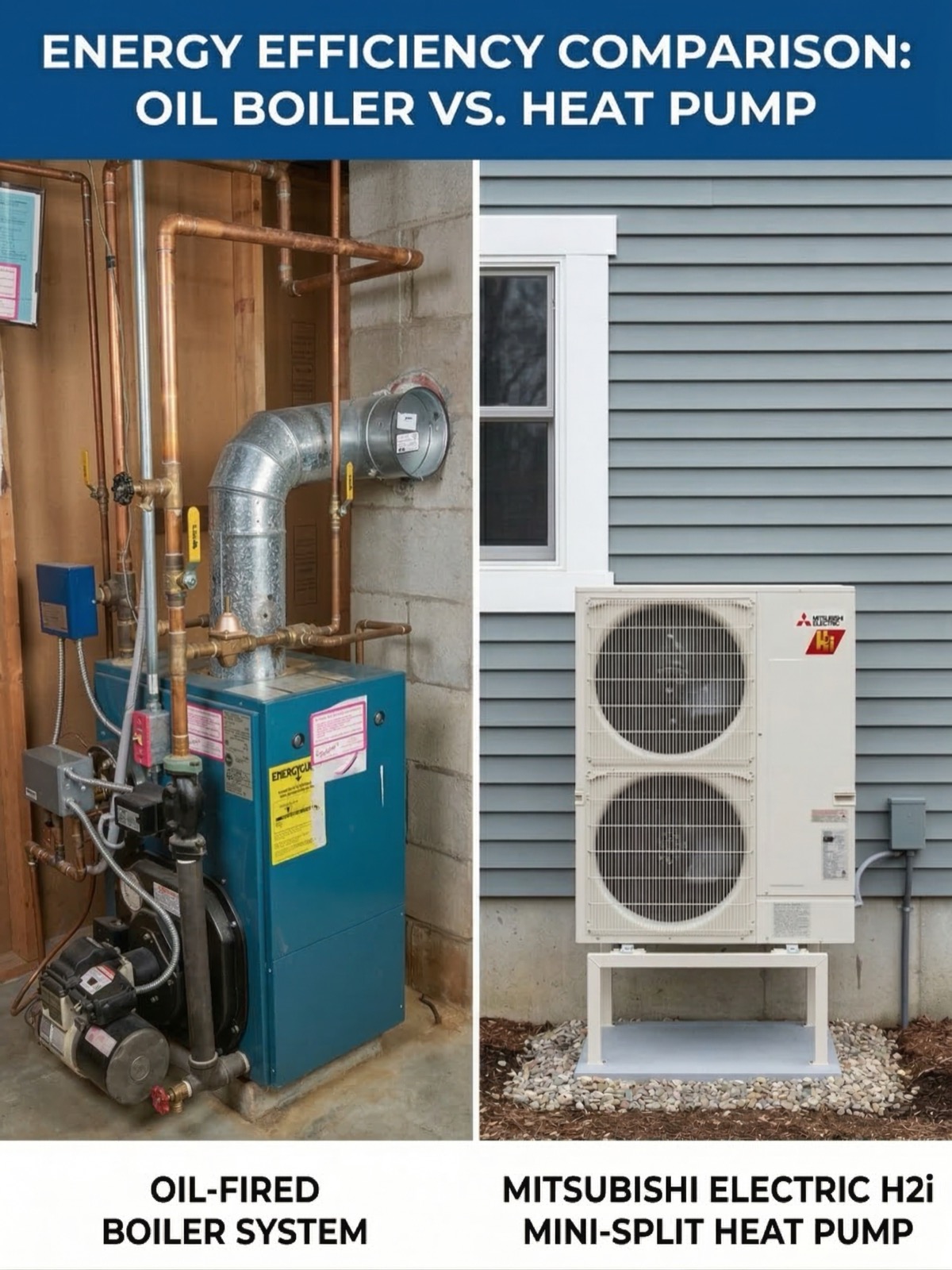
It is worth considering what a heat pump replaces. An oil furnace or boiler firing up in the basement produces 55-65 decibels inside the house, a noticeable rumble that carries through the floor. Oil delivery trucks backing into your driveway are considerably louder than that. Pellet stoves run at 40-55 decibels continuously.
A cold-climate heat pump running at 19-25 dB indoors and 46-52 dB outdoors is, in most cases, the quietest heating option available. The only quieter option would be electric baseboard heat, which is silent but costs roughly three times as much to operate.
The Bottom Line on Heat Pump Noise
Modern cold-climate heat pumps are engineered to be quiet. At the low and medium fan speeds they use for most of the day, the outdoor unit runs at around 40-43 dB, quieter than moderate rainfall. On the coldest days when the system works at full capacity, it reaches 46-52 dB, roughly equivalent to a quiet conversation. The indoor units are quieter than a whisper. This is not an edge case; it is how the technology actually operates.
If noise has been keeping you from exploring a heat pump for your Maine home, it is worth hearing one in person. During your free energy assessment, we can show you exactly where the outdoor unit would go and talk through placement options that work for your property. If you know someone with a Mitsubishi cold-climate system, ask them to stand next to the outdoor unit with you. The reaction is almost always the same: "That's it?"
Ready to learn more about cold-climate heat pumps for your home? Schedule a free energy assessment or call us at (207) 221-3221. We have been installing cold-climate heat pump systems in Greater Portland for 20+ years and can walk you through every detail, including where to put the outdoor unit so nobody notices it.
Find our guides faster: add Horizon Homes as a preferred source on Google.
Free Home Energy Assessment
Considering Heat Pumps for Your Home?
We evaluate your home's insulation, heating system, and electrical capacity, then give you a clear recommendation with pricing and rebate estimates.
- Free walkthrough, no equipment, no disruption
- Efficiency Maine rebates identified for you
- Written improvement plan with pricing
Schedule Your Free Assessment
We call within 1 business day.