Using Your Heat Pump for Cooling in Maine Summers
At a neighborhood barbecue in South Portland last summer, a homeowner told us something we have heard dozens of times: "We got the heat pump for winter. The cooling is the part we did not expect to care about." She had lived in Maine her whole life and figured a few window AC units were fine for the three or four weeks of real heat. Then she spent her first summer with the heat pump and said she would never go back to window units.
The summer of 2026 has reinforced what we have been seeing for several years: Maine heat is no longer brief or mild. Multi-day stretches at or above 90 degrees in July and August are a regular part of the season, not a once-a-decade event. Humidity levels that feel more like Maryland than Maine are increasingly common, and second floors in older homes - especially 1950s Capes and Colonials without adequate insulation - become unbearable by mid-afternoon. For a closer look at what makes upper floors so difficult to cool and what actually helps, see our guide on why second floors get so hot in Maine summers.
If you already have a cold-climate heat pump, you have a built-in air conditioning system that most homeowners underuse. If you are considering a heat pump for heating, the cooling capability is a significant bonus worth factoring into your decision. We cover broader warm-weather strategies in our staying cool in a Maine summer guide - this guide focuses specifically on getting the most from your heat pump when temperatures climb.
How Cooling Mode Works
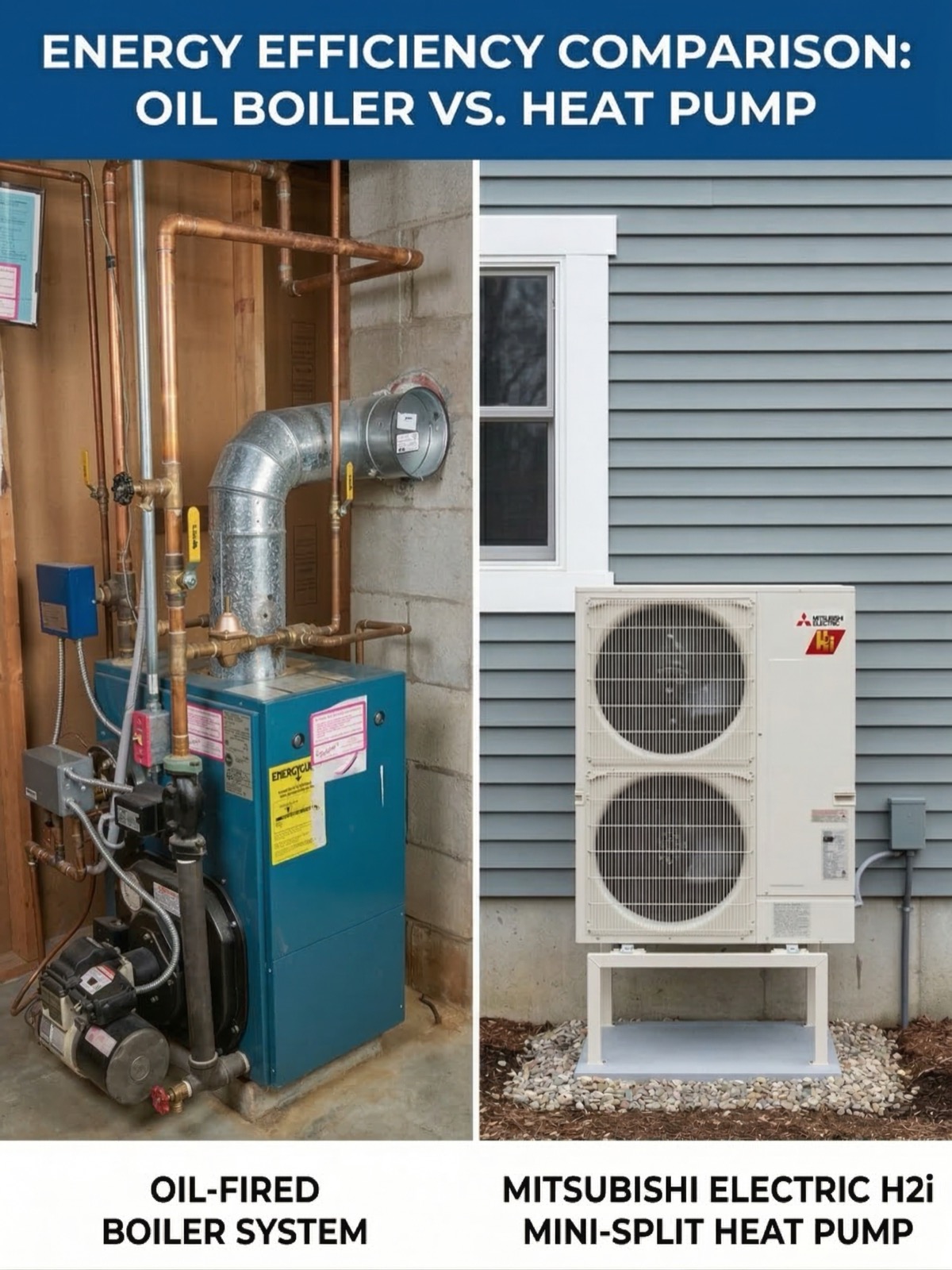
A cold-climate heat pump is, fundamentally, a refrigeration system that can run in two directions. In winter, it extracts heat from outside air and moves it indoors. In summer, it reverses: it extracts heat from your indoor air and dumps it outside.
When you switch your Mitsubishi remote to cooling mode (the snowflake icon), the reversing valve in the outdoor unit shifts, and the refrigerant flow reverses direction. The indoor coil, which acts as a condenser in heating mode, becomes an evaporator. It absorbs heat and moisture from the indoor air, cooling and dehumidifying the room simultaneously.
The outdoor unit, which extracts heat from cold air in winter, now rejects heat into warm outdoor air - a much easier job thermodynamically. This is why heat pumps are extraordinarily efficient air conditioners. A cold-climate heat pump rated at SEER2 15-20 delivers cooling at a fraction of the operating cost of window AC units or portable air conditioners.
Heat Pump Cooling vs. Window AC Units
Many Maine homeowners have relied on window AC units for years. Here is how a cold-climate heat pump compares.
Efficiency. A typical window AC unit has a SEER rating of 10-12. A Mitsubishi Hyper-Heat cold-climate heat pump has a SEER2 rating of 15-20. That means the heat pump produces the same cooling for 25-45% less electricity. Over a full summer, this adds up.
Dehumidification. This is where the difference is most noticeable in Maine, particularly in a summer like this one when humidity levels have been persistently high. Window AC units cool the air quickly but often short-cycle before removing adequate moisture. The result is a room that feels cold and clammy - 72 degrees but with 65% relative humidity. A variable-speed heat pump runs at lower speed for longer periods, giving the indoor coil more time to pull moisture from the air. The result is 72 degrees at 45-50% relative humidity, which feels dramatically more comfortable.
Noise. A window AC unit typically produces 50-60 decibels - roughly the volume of a normal conversation. A Mitsubishi mini-split indoor unit in cooling mode runs at 19-32 decibels, which is quieter than a library. The outdoor unit is also significantly quieter than a window unit's compressor.
Aesthetics and convenience. No seasonal installation and removal. No blocking your window view. No security concerns from a partially open window. No dripping condensate onto the siding. The heat pump is permanently installed, and switching from heating to cooling is a button press on the remote.
Air quality. Window AC units recirculate room air through a basic filter - or no filter at all. Heat pump indoor units include multi-stage filtration that captures dust, pollen, and airborne particles. For allergy sufferers, this matters.
Which Zones to Cool
If you have a multi-zone cold-climate heat pump system, you do not need to cool every zone at the same intensity. Strategic cooling saves energy and keeps costs down.
Bedrooms at night. Most people sleep better in a cool room - 65 to 68 degrees. Run the bedroom zone in cooling mode at night and let it rest during the day when the room is unoccupied. The sleep timer function on the Mitsubishi remote can adjust the temperature upward gradually through the night.
Living areas during the day. Your primary living space - kitchen, living room, home office - benefits from cooling during the heat of the day, especially from noon to 6 PM when solar gain peaks. Set these zones to 72-74 degrees.
Rooms you can skip. Guest bedrooms, storage rooms, and spaces you do not use in summer can be left unconditioned. Close the doors to these rooms to prevent cool air from migrating into unconditioned spaces.
Second floors. Heat rises, and second floors in Maine homes are always warmer than first floors. If you have a heat pump on the second floor, use it. If you do not, this may be the zone that justifies adding one.
Operating Tips for Efficient Cooling
Getting the most from your heat pump in cooling mode involves some habits that differ from what you might be used to with window AC.
Set it and leave it. A variable-speed heat pump is most efficient when it maintains a consistent temperature rather than cycling between extremes. Set your desired temperature and let the system modulate. Turning it off when you leave and blasting it when you return uses more energy than maintaining a steady setpoint.
Use dry mode for shoulder season humidity. In June and September, you may not need full cooling but the humidity is uncomfortable. The dry mode on your Mitsubishi remote prioritizes dehumidification over cooling. The system runs the fan at low speed and cycles the compressor gently to pull moisture without overcooling the room.
Close blinds on sun-facing windows. Solar gain through windows is the largest cooling load in most Maine homes during summer. Closing blinds or curtains on south- and west-facing windows during the afternoon reduces the work your heat pump needs to do. This is free efficiency.
Keep the outdoor unit clear. In summer, the outdoor unit rejects heat. If it is surrounded by dense vegetation, mulch, or stored items that restrict airflow, it works harder and costs more to operate. Maintain 18 inches of clearance on all sides and 24 inches above.
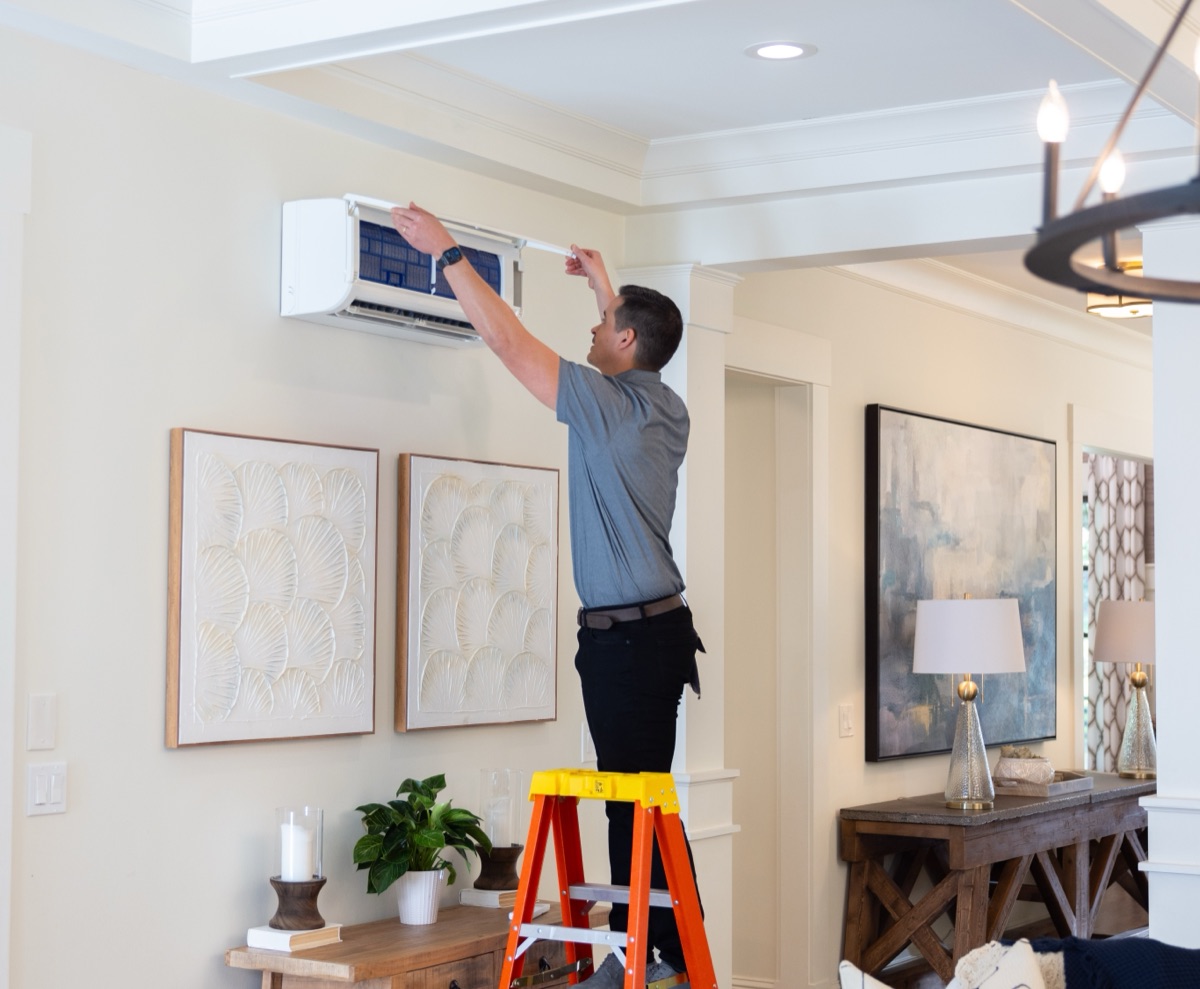
Clean the filters. Dirty filters restrict airflow and reduce cooling capacity just as they reduce heating capacity. Clean them monthly during cooling season.
Manage internal heat sources. Running the oven for an hour adds substantial heat to your kitchen. Using a clothes dryer generates heat and humidity. On the hottest days, cook outside or use a microwave, and run the dryer in the morning or evening.
The Humidity Factor
Maine's humidity has become a real comfort issue, and the 2026 cooling season has been a clear example of why. The combination of coastal moisture and warming temperatures creates conditions where indoor relative humidity reaches 60-70% without active dehumidification, and that number has become the norm during July and August rather than a periodic spike.
High indoor humidity causes more than discomfort. It promotes mold growth in bathrooms, basements, and closets. It makes wood floors and trim swell. It creates condensation on cool surfaces. And it makes 75 degrees feel like 82 degrees - which means you end up cranking the thermostat lower than you need to, running up your electricity bill in the process.
A cold-climate heat pump in cooling mode is one of the most effective dehumidifiers available for residential use. A well-sized system running in cooling mode maintains indoor humidity at 45-50% as a byproduct of normal operation. You do not need a separate dehumidifier in conditioned spaces. The dry mode setting on most Mitsubishi remotes is particularly useful during shoulder months: it prioritizes moisture removal over temperature drop, so you can take the edge off a humid June evening without overcooling the room.
For rooms without heat pump coverage - particularly basements - a standalone dehumidifier is still the right tool. But in your primary living spaces, the heat pump handles it.
Cost of Summer Cooling
Running a cold-climate heat pump in cooling mode is significantly less expensive than most homeowners expect. A typical single-zone system cooling a moderate space costs $30 to $60 per month in electricity during July and August, depending on usage patterns and set temperature.
Compare that to a window AC unit of similar capacity, which typically costs $50 to $90 per month due to lower efficiency and the inability to modulate output.
For the entire cooling season (June through September), total electricity costs for heat pump cooling in a well-insulated Maine home typically range from $100 to $250 per zone. This is cooling for the whole summer - often less than what many homeowners spend on window AC units.
When You Might Not Need Cooling
Not every Maine home needs active cooling on every summer day. If your home is well insulated, well shaded by mature trees, has good cross-ventilation, and sits on the coast where sea breezes moderate temperatures, you may be comfortable on most days without running the heat pump in cooling mode.
That said, the summers of the past few years have made the option more valuable than ever. The heat pump is there when you need it: press a button during that stretch of 90-plus-degree days in late July, and the house cools down in an hour. The rest of the time, open the windows and enjoy a Maine summer. If you want to think through the full range of passive and active strategies for keeping your home cool - from shade and ventilation to heat pump zoning - take a look at our staying cool in a Maine summer guide.
Related Guides
- Heat Pump Maintenance Guide for Maine - Keeping your system running well
- Single-Zone Ductless Heat Pump Guide - System basics
- Cold-Climate Heat Pump Guide for Maine - How the technology works
- Multi-Zone Heat Pump Systems for Maine Homes - Cooling specific rooms independently
Have questions about using your cold-climate heat pump for cooling, or ready to add cooling capability to your home? Schedule your free energy assessment or call (207) 221-3221. We have been helping Greater Portland homeowners stay comfortable year-round since 2006 - and that includes the increasingly warm Maine summers.
Find our guides faster: add Horizon Homes as a preferred source on Google.
Free Home Energy Assessment
Considering Heat Pumps for Your Home?
We evaluate your home's insulation, heating system, and electrical capacity, then give you a clear recommendation with pricing and rebate estimates.
- Free walkthrough, no equipment, no disruption
- Efficiency Maine rebates identified for you
- Written improvement plan with pricing
Schedule Your Free Assessment
We call within 1 business day.