Ducted Mini-Split Heat Pumps for Maine Homes
"I want a heat pump, but I do not want anything on my wall."
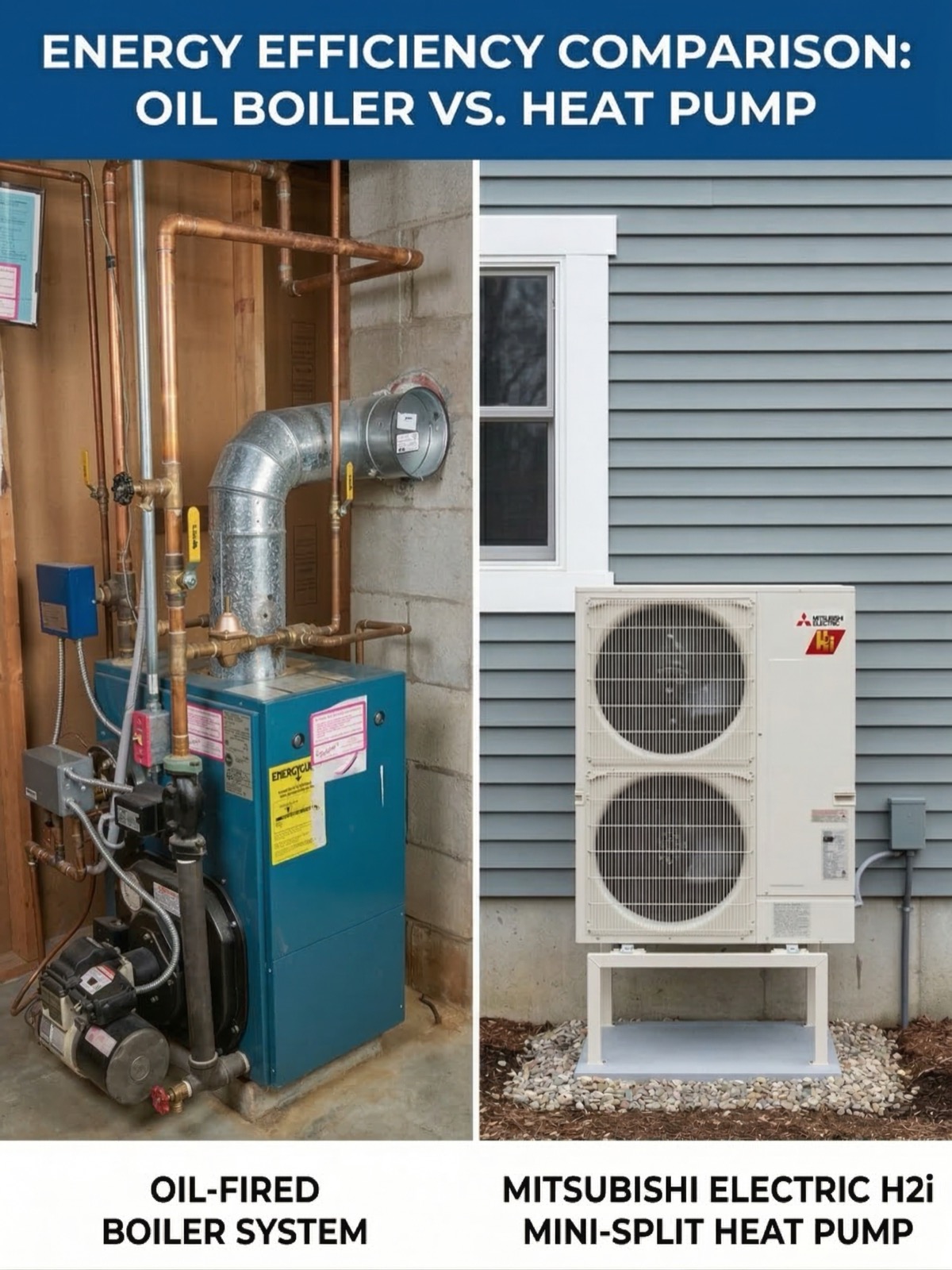
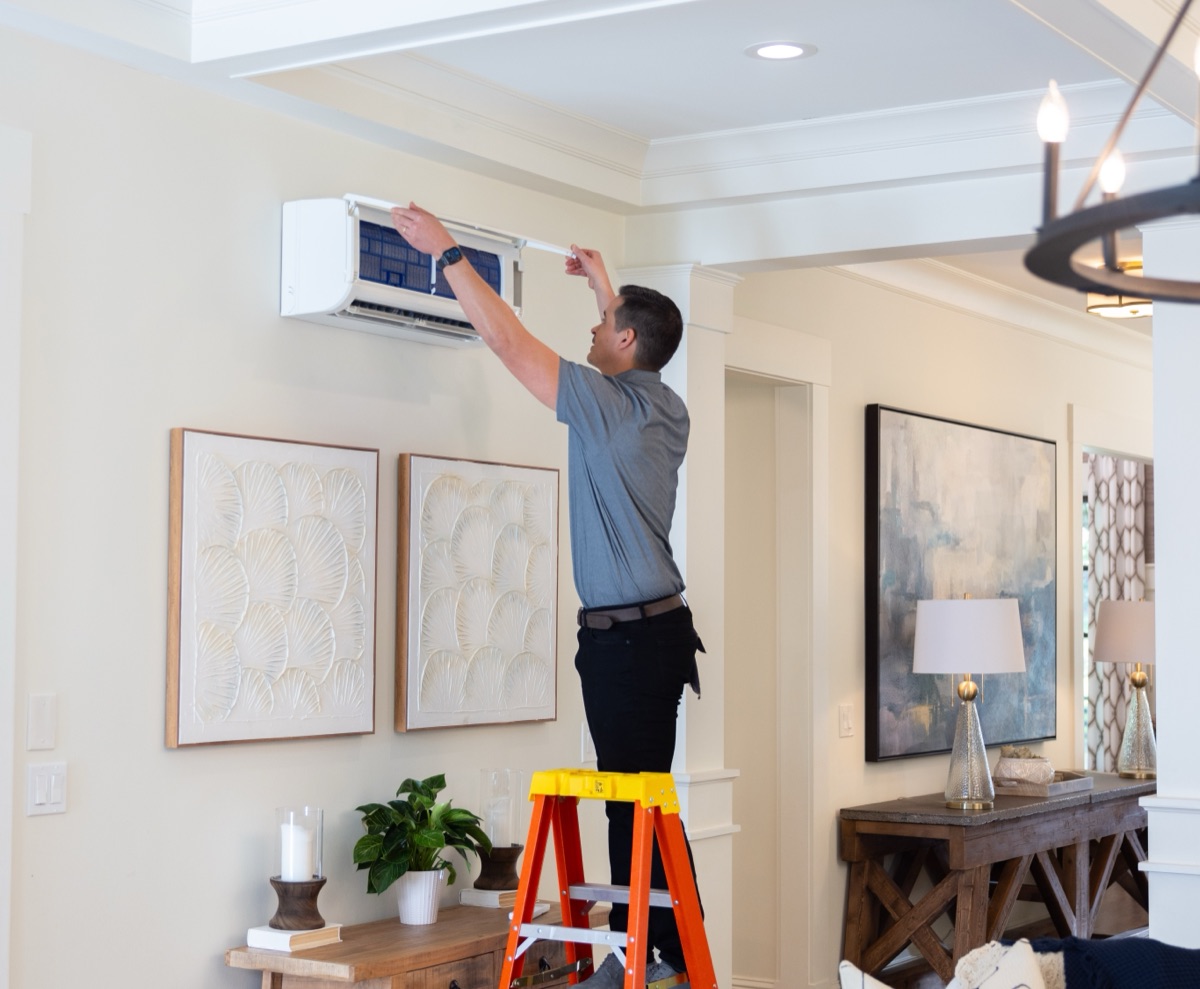
We hear this at least twice a week. And for years, the only honest answer was: that is a mini-split, and mini-splits go on walls. You could choose the location, you could choose the size, but you were getting a visible indoor unit.
That is no longer the case. Ducted mini-split heat pumps - sometimes called slim duct units or concealed duct units - give you every advantage of cold-climate heat pump technology with zero visible equipment inside the room. The indoor unit hides in a closet, a soffit, above a drop ceiling, or in the attic. Short duct runs deliver conditioned air through standard registers in the ceiling or wall, and a small return grille pulls air back to the unit.
If you have been avoiding heat pumps because of aesthetics, this guide is for you.
What Is a Ducted Mini-Split?
A ducted mini-split is a cold-climate heat pump where the indoor unit is designed to connect to ductwork rather than blow air directly into the room. The unit itself is a compact, rectangular box - roughly the size of a large suitcase - that sits horizontally in a concealed space.
From the outside, the system looks identical to a standard ductless mini-split installation: one outdoor condenser connected by refrigerant lines to an indoor unit. The difference is entirely in how the indoor unit distributes air.
Instead of a wall-mounted head with a visible fan and vane, the ducted unit connects to a small supply plenum and one to four short duct runs. Each duct terminates at a standard ceiling or wall register. The return air enters through a grille on the opposite side of the room or in a hallway.
The result: the rooms look exactly like they have central air conditioning. No wall units. No floor units. Just registers.
When Ducted Makes Sense
Ducted mini-splits are not always the right choice. They cost more than wall-mounted units, require accessible space to conceal the air handler, and involve more installation labor. But in certain situations, they are the clear winner.
Historic homes where aesthetics matter. Portland, South Portland, and Cape Elizabeth have thousands of homes built in the 1800s and early 1900s where homeowners want to preserve period character. A modern wall unit in a room with original plaster, crown molding, and wide-plank floors can feel out of place. Ducted units keep the technology invisible.
Open floor plans with no good wall location. Some rooms have floor-to-ceiling windows, built-in shelving, or architectural features on every wall. There is simply no good spot for a wall-mounted head. A ducted unit solves this by delivering air from the ceiling.
Existing ductwork. If your home already has ductwork from a forced-air furnace system, a ducted mini-split can sometimes tie into portions of that existing duct system. This is not always possible - old ductwork may be undersized, leaky, or poorly routed - but when it works, it saves significant installation cost.
Master suites and finished spaces. Many homeowners want their bedroom to feel like a retreat, not a mechanical room. Ducted units serve the space without any visual reminder that there is HVAC equipment in the room.
New construction and major renovations. When walls are open and ceilings are accessible, running short duct sections is straightforward. If you are already renovating, this is the easiest time to add ducted mini-split infrastructure.
How Ducted Mini-Splits Differ from Ductless
The core technology is identical. Both use the same Mitsubishi Hyper-Heat compressor technology rated to -13 degrees Fahrenheit. Both provide heating and cooling. Both use inverter-driven variable-speed operation for efficiency. The differences are practical.
Air distribution. A wall-mounted head blows air directly from the unit, creating a noticeable airflow pattern. A ducted unit distributes air through multiple registers, spreading it more evenly across the room. Many homeowners describe ducted airflow as "softer" and less noticeable.
Noise. The ducted unit itself can be slightly louder than a wall-mounted head because the fan works harder to push air through ductwork. However, because the unit is concealed in a closet or above the ceiling, the sound is muffled. At the register, noise levels are typically comparable to or quieter than a standard forced-air system.
Filtration and access. Wall-mounted units have accessible filters that you clean every four to six weeks. Ducted units have a filter at the return grille, which is also accessible, but the unit itself requires an access panel for deeper maintenance. We install these panels in accessible locations so your annual service visit is straightforward.
Static pressure. Ducted units must overcome the resistance of the ductwork, which affects airflow and efficiency. Proper duct design - short runs, smooth interior surfaces, correct sizing - is critical. This is where installer expertise matters most.
Cost. A ducted mini-split installation typically costs $1,000 to $2,500 more than an equivalent wall-mounted installation in the same zone, due to ductwork fabrication, additional labor, and the concealment work.
The Equipment
Mitsubishi's ducted mini-split line includes several models suited to Maine installations:
SEZ series (slim duct units). These are the most common ducted mini-splits we install. Available in 9,000 to 18,000 BTU capacities, the SEZ units are roughly 8 inches tall, making them easy to fit above ceilings or in shallow soffits. They handle up to 0.3 inches of water column static pressure, which is sufficient for two to four short duct runs.
PEA series (medium static pressure). For installations requiring longer duct runs or more registers, the PEA series handles up to 0.7 inches of static pressure. These units are larger and require more concealment space, but they can serve larger areas or more complex duct layouts.
Both series integrate with the Mitsubishi kumo cloud control system for smartphone operation and scheduling.
Installation Process
Ducted installations follow the same general sequence as any cold-climate heat pump install, with additional steps for the ductwork.
Step 1: Energy assessment and design. We survey the space, perform a Manual J load calculation, and determine whether ducted installation is feasible. The key question is: where does the air handler go? We need a concealed space within 10 to 15 feet of the rooms being served, with adequate dimensions for the unit and a path for refrigerant lines to reach the outdoor condenser.
Step 2: Ductwork design. We design the supply and return duct layout, specifying duct sizes, register locations, and the return air path. Short, direct runs with minimal turns perform best. We use rigid or semi-rigid insulated duct where possible and limit flexible duct to the final connection at each register.
Step 3: Concealment preparation. Depending on the location, this may involve building a soffit, modifying a closet, or accessing an attic crawlspace. In renovation projects, we coordinate with the general contractor to integrate the ducted unit into the overall construction plan.
Step 4: Unit and ductwork installation. The air handler mounts in its concealed location, and duct runs are fabricated and connected. Supply registers and the return grille are cut into the ceiling or wall.
Step 5: Outdoor unit, line set, and electrical. This follows the same process as any mini-split installation - condenser mounting, refrigerant line routing, dedicated electrical circuit.
Step 6: Commissioning. We verify airflow at each register, measure static pressure to confirm the duct system is performing within spec, and test heating and cooling operation.
Installation typically takes one to two days per zone, depending on concealment complexity and duct routing.
Cost Range
A single-zone ducted cold-climate mini-split installation in Maine typically costs between $5,500 and $9,500 before rebates. The higher end applies to installations requiring significant concealment work, longer duct runs, or ceiling modifications.
Multiple ducted zones follow the same scaling as standard multi-zone systems, with the ducting work adding $1,000 to $2,500 per zone compared to wall-mounted alternatives.
Rebate eligibility follows the same rules as other mini-split configurations. Single-zone ducted systems generally qualify for Efficiency Maine rebates (income-dependent, up to $9,000 for heat pumps). Multi-zone ducted systems connected to a single outdoor unit face the same rebate limitations described in our multi-zone guide.
Is Ducted Right for You?
Ask yourself these questions:
- Do you have accessible space above the ceiling, in a closet, or in the attic near the rooms you want to condition?
- Is the visual appearance of a wall-mounted unit a deal-breaker for you?
- Are you willing to invest the additional cost for concealment and ductwork?
- Do you have existing ductwork that might be reusable?
If you answered yes to the first two, a ducted mini-split deserves serious consideration. If you answered yes to the fourth, it may even be more cost-effective than you expect.
Related Guides
- Single-Zone Ductless Heat Pump Guide - The standard wall-mounted option
- Multi-Zone Heat Pump Systems for Maine Homes - Combining multiple zones
- Branch Box Heat Pump Systems Explained - Advanced whole-home distribution
- Cold-Climate Heat Pump Guide for Maine - The technology behind Hyper-Heat
Curious whether a ducted cold-climate heat pump will work in your home? Schedule your free energy assessment or call (207) 221-3221. Our team has 20+ years of experience designing hidden comfort systems for Maine homes, and we will tell you honestly whether ducted is the right fit - or whether a simpler approach makes more sense.
Find our guides faster: add Horizon Homes as a preferred source on Google.
Free Home Energy Assessment
Considering Heat Pumps for Your Home?
We evaluate your home's insulation, heating system, and electrical capacity, then give you a clear recommendation with pricing and rebate estimates.
- Free walkthrough, no equipment, no disruption
- Efficiency Maine rebates identified for you
- Written improvement plan with pricing
Schedule Your Free Assessment
We call within 1 business day.