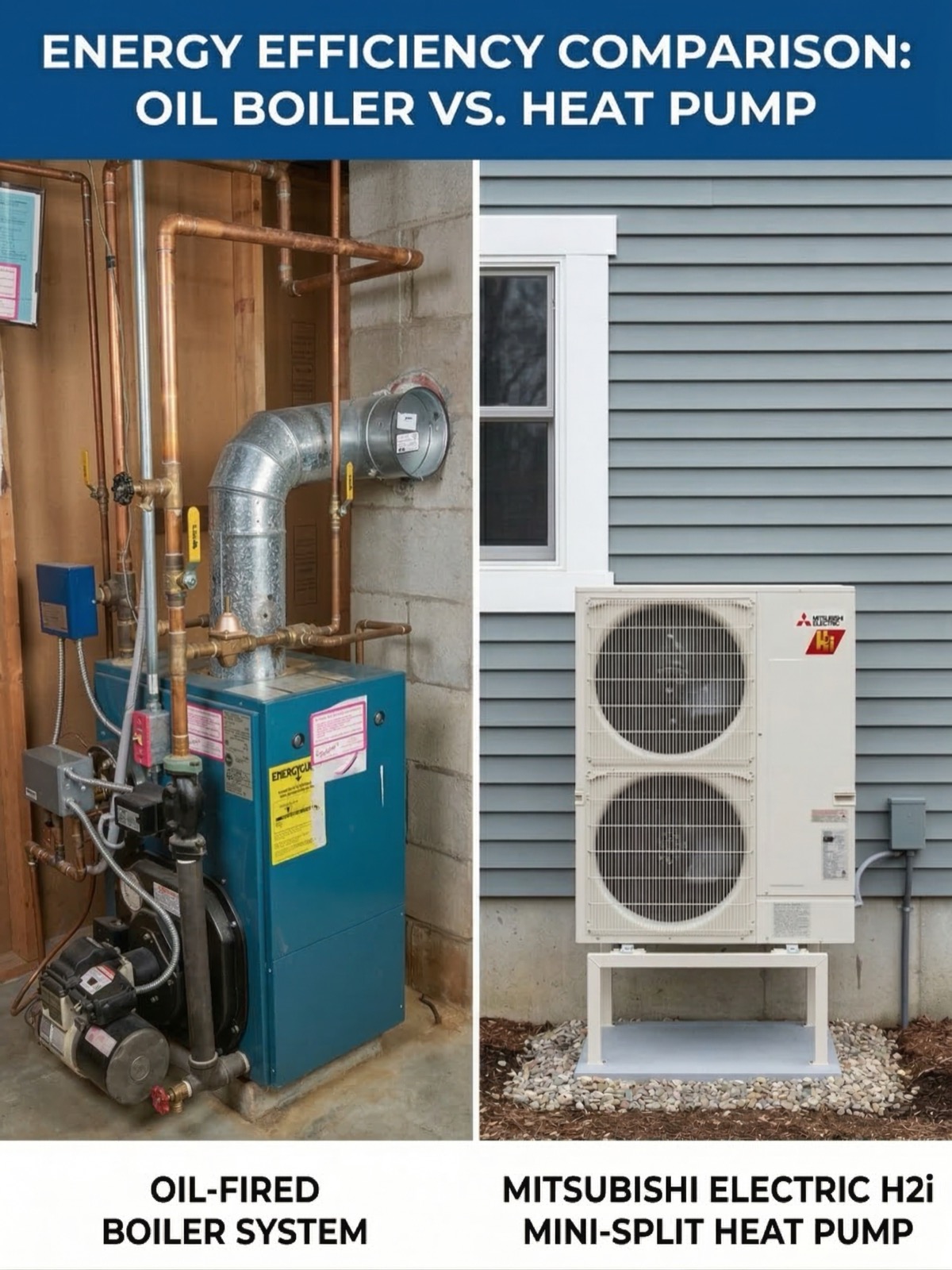
Heat Pump + Boiler Hybrid Systems for Maine Homes
Editor's note (August 2026): The federal 25C tax credits referenced in this article expired December 31, 2025 and are only available for qualifying work completed before that date. Efficiency Maine rebates remain available and are now the primary incentive for the heat pump portion of hybrid heat pump and boiler projects.
"I love my radiators. They are original cast iron, and when they come on in the morning, the whole house feels warm. I am not getting rid of them."
The homeowner in Portland's West End was clear about this before we even walked through the door. He had a cast-iron baseboard system fed by an oil boiler, and he had no interest in replacing it entirely. What he wanted was lower heating bills without sacrificing the comfort his family had relied on for thirty years.
For a homeowner who wants to keep that hydronic comfort, a hybrid system keeps the boiler as the primary heat source and adds cold-climate heat pumps for cooling and supplemental heat in selected rooms.
This is the hybrid approach, and for many Maine homeowners, it is the smartest path forward.
What Is a Hybrid Heat Pump and Boiler System?
A hybrid system uses two separate heating sources that operate in coordination: a conventional boiler (oil, natural gas, or propane) for primary heat and a cold-climate heat pump (one or more zones) for cooling and supplemental heat.
The two systems are not physically connected. They operate independently, each with their own distribution: the cold-climate heat pump delivers air from indoor heads, and the boiler delivers hot water through radiators or baseboard. Thermostat settings coordinate primary boiler heat with supplemental cold-climate heat pump operation.
The boiler maintains primary heat through the hydronic system. Cold-climate heat pumps add supplemental warmth in selected zones and cooling in summer.
Why Hybrid Makes Sense in Maine
Existing hydronic distribution and room-by-room comfort needs make a practical case for hybrid systems.
Heat pumps are most efficient at moderate temperatures. A Mitsubishi Hyper-Heat cold-climate heat pump operating at 30 degrees outside delivers heat at roughly 2.5 to 3.0 times the efficiency of electric resistance heating. At 15 degrees, it still operates at roughly twice the efficiency. This covers the majority of Maine's heating season.
Cold-weather capacity matters. Cold-climate heat pump output and efficiency vary with outdoor temperature. We account for those changes when sizing the supplemental system.
Comfort needs change with the season. Cold-climate heat pumps add cooling during summer and supplemental warmth during the heating season.
Boilers provide primary heat. A properly sized boiler supplies the hydronic system throughout the heating season, including during extreme cold.
Planning the System Roles
The boiler remains the primary heat source. We select cold-climate heat pump zones around cooling needs and areas that would benefit from supplemental warmth.
Room layout, insulation, air sealing, and existing hydronic distribution guide the design.
We evaluate the condition and capacity of your boiler before planning the cold-climate heat pump addition.
During commissioning, we coordinate thermostat settings so the boiler maintains primary heat and the cold-climate heat pump supplies supplemental warmth where needed.
Compatible controls can help coordinate the systems. The settings depend on the equipment and thermostat locations.
How They Work Together: Control Strategies
There are several ways to coordinate a heat pump and boiler in the same home.
Separate thermostats. The boiler thermostat controls primary hydronic heat. Cold-climate heat pump controls manage cooling and supplemental warmth in the rooms they serve. We set these up together during commissioning.
Compatible smart controls. Where the equipment supports them, controls can coordinate primary boiler heat and supplemental cold-climate heat pump operation. We check compatibility before recommending a control system.
Zone-based strategy. The boiler provides primary heat through the hydronic distribution. Cold-climate heat pumps add cooling and supplemental heat in the living room, kitchen, bedrooms, or other selected zones.
Seasonal coordination. Cold-climate heat pumps provide summer cooling and supplemental warmth during the heating season. The boiler remains the primary heat source.
Boiler Types in Hybrid Systems
The type of boiler you have affects the hybrid equation.
Standard oil boiler (80-85% AFUE). An existing oil boiler can remain the primary heat source if its condition and capacity suit the home. Cold-climate heat pumps add cooling and supplemental heat.
High-efficiency condensing gas boiler (95%+ AFUE). A wall-hung natural gas or propane boiler provides primary heat through the hydronic system. We install both types and can evaluate whether pairing one with cold-climate heat pumps fits your comfort goals.
Propane boiler. Propane is available in areas without natural gas service. A propane boiler can provide primary heat while cold-climate heat pumps add cooling and supplemental warmth.
Installation Considerations
Adding a cold-climate heat pump to a home with an existing boiler is one of the most straightforward installations we do because the two systems do not interact mechanically.
Existing hydronic distribution. The boiler continues to serve the piping, radiators, or baseboards. We assess its condition and coordinate controls with the cold-climate heat pump addition.
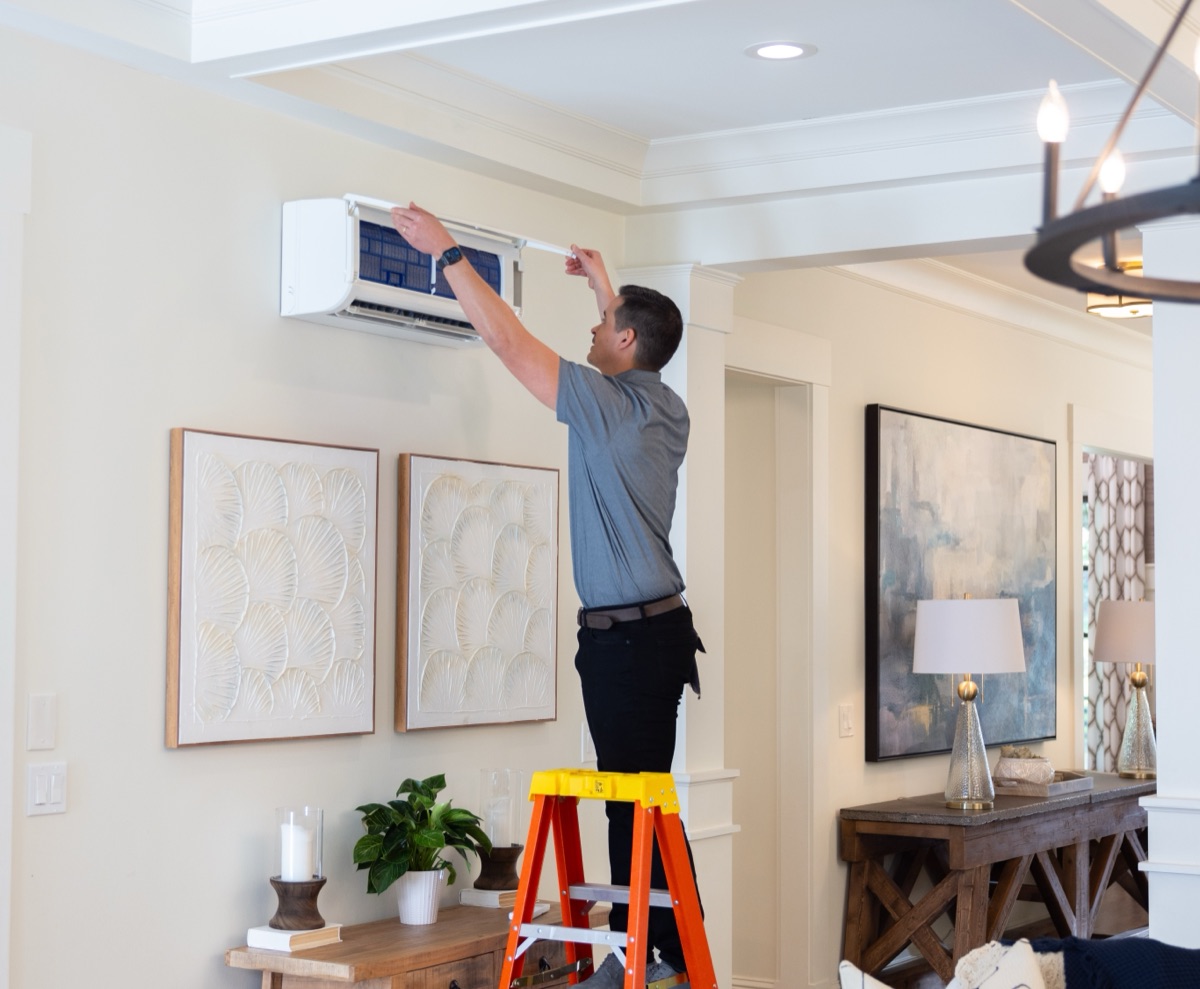
Heat pump installation is standard. Indoor heads mount on walls (or in ceilings/ducts for concealed installations), the outdoor unit mounts on a bracket or pad, and refrigerant lines connect the two. Each zone gets its own remote or thermostat.
Electrical requirements. The heat pump needs dedicated electrical circuits - typically 20-30 amps at 240 volts per outdoor unit. Most homes have adequate panel capacity for one to three heat pump zones without an electrical service upgrade.
Thermostat coordination. We configure primary boiler heat and supplemental cold-climate heat pump operation during commissioning, then walk you through the settings.
Cost and Savings
The cost of adding a cold-climate heat pump system to a home with an existing boiler depends on the number of zones and the installation complexity. Typical ranges:
- One zone (primary living area): $4,000 to $7,000 before rebates
- Two zones (living area + bedroom): $8,000 to $13,000 before rebates
- Three zones: $12,000 to $18,000 before rebates
Annual fuel savings for hybrid systems vary based on oil prices, electricity rates, home size, and insulation levels. Typical ranges we see across our customer base:
- Oil reduction: 40-70% fewer gallons per year
- Net annual savings (oil homes): $600 to $1,800 per year after accounting for increased electricity costs
- Simple payback period: 4 to 8 years after rebates and tax credits
Efficiency Maine rebates (income-dependent, up to $9,000 for heat pumps) and federal 25C tax credits (30% of equipment cost, up to $2,000/year) apply to the heat pump portion of the installation. We are an Efficiency Maine Top Contractor for 10+ years and handle all rebate paperwork.
When Hybrid Is Better Than Full Heat Pump
A hybrid system is often the right choice when:
- Your existing boiler is in good condition with years of useful life remaining
- You are not ready for the full investment of a whole-home heat pump system
- Your home has high heat loads that would require a very large (expensive) heat pump installation to cover entirely
- You value the reliability of having two independent heating systems
- Your home has cast iron radiators or radiant floor heating that you want to keep using
- You want to phase the transition over several years
A fully electric cold-climate heat pump system makes more sense when:
- Your boiler is at or near end of life and needs replacement regardless
- Your home is very well insulated with a low heating load
- You want to eliminate fossil fuel dependence entirely
- You are building new or doing a major renovation with open walls
Related Guides
- Switching from Oil to Heat Pump in Maine - The full transition
- Cold-Climate Heat Pump Guide for Maine - How Hyper-Heat performs at low temperatures
- Heat Pump Sizing and Manual J for Maine Homes - Sizing the heat pump portion correctly
- Single-Zone Ductless Heat Pump Guide - Starting with one zone
Curious about adding a cold-climate heat pump to your existing boiler system? Schedule your free energy assessment or call (207) 221-3221. We will evaluate the boiler as your primary heat source and identify where cooling and supplemental heat would improve comfort. We install both cold-climate heat pumps and high-efficiency boilers, so our recommendation is based on what works for your home.
Find our guides faster: add Horizon Homes as a preferred source on Google.
Free Home Energy Assessment
Considering Heat Pumps for Your Home?
We evaluate your home's insulation, heating system, and electrical capacity, then give you a clear recommendation with pricing and rebate estimates.
- Free walkthrough, no equipment, no disruption
- Efficiency Maine rebates identified for you
- Written improvement plan with pricing
Schedule Your Free Assessment
We call within 1 business day.