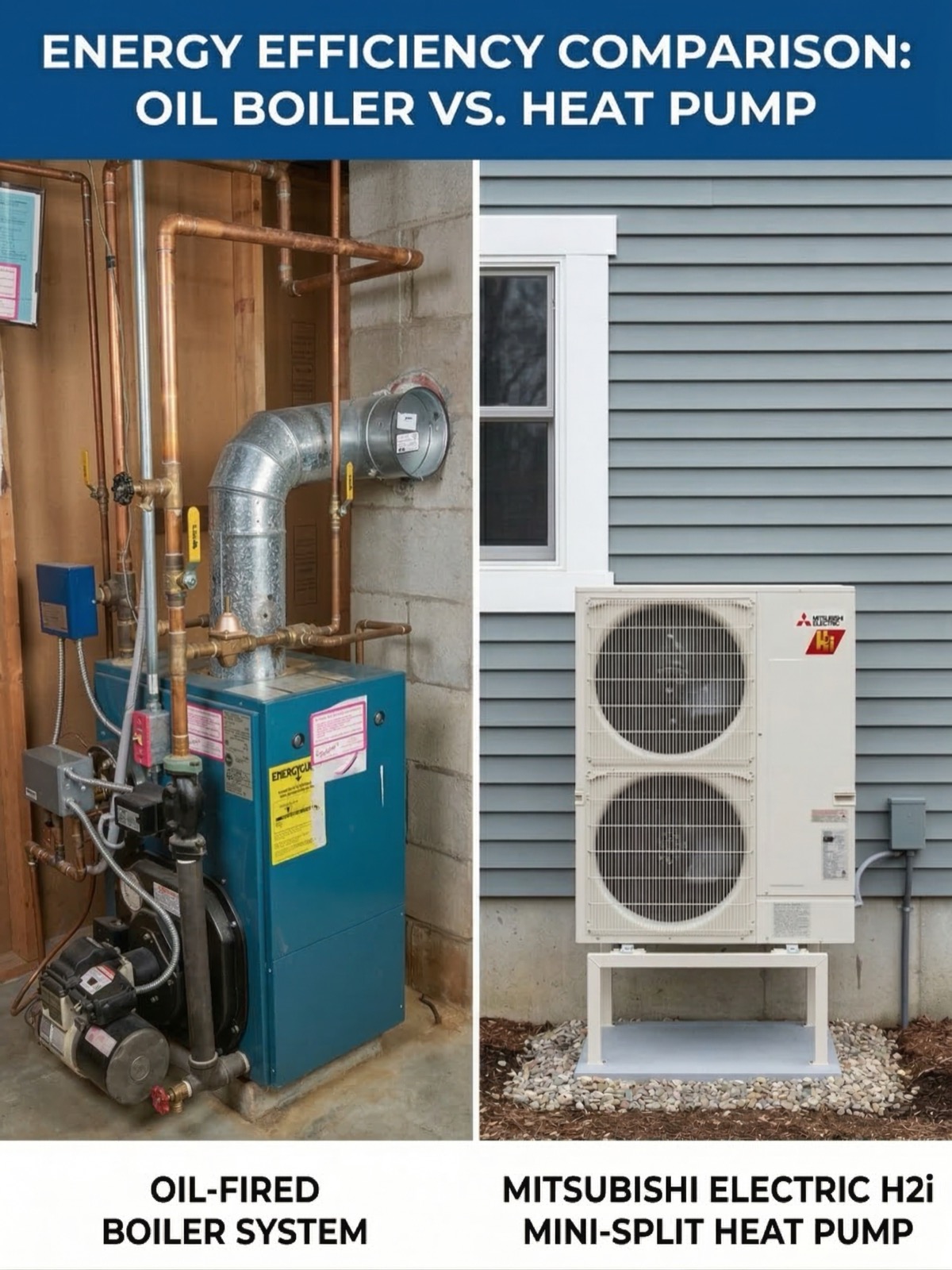
Heat Pump Maintenance Guide for Maine Homeowners
Every October, our phones start ringing with the same question: "Winter is coming. Do I need to do anything to my heat pump?"
The short answer is yes. A cold-climate heat pump running through a Maine winter is working harder than a unit in North Carolina. It is extracting heat from sub-zero air, defrosting its outdoor coil during ice storms, and running for thousands of hours between October and April. The good news is that most heat pump maintenance is straightforward, takes less than fifteen minutes, and does not require a technician.
Here is everything you need to know about keeping your cold-climate heat pump running efficiently for years.
Monthly Maintenance: Filter Cleaning
This is the single most important maintenance task, and it costs you nothing but a few minutes.
Every cold-climate mini-split has washable filters inside the indoor unit. These filters catch dust, pet hair, and airborne particles before they reach the evaporator coil. When the filters get dirty, three things happen: airflow drops, efficiency decreases, and the system works harder to maintain your set temperature.
How to clean the filters:
- Turn off the indoor unit using the remote or the breaker
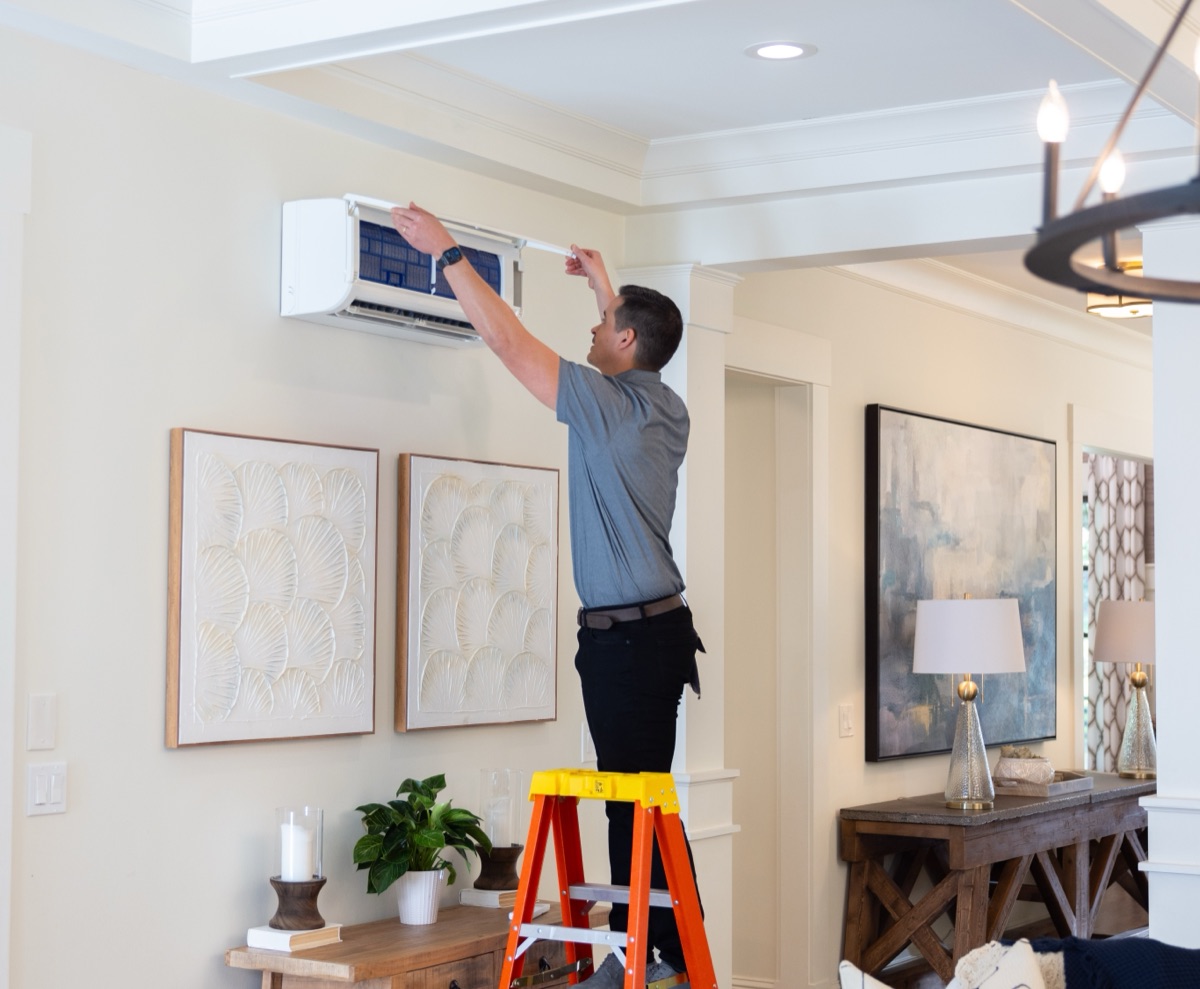
- Open the front panel of the indoor unit by lifting it upward - it hinges at the top
- Slide the filters out. They are lightweight mesh panels that release with a gentle pull
- Rinse them under warm water. A soft brush removes stubborn dust. Do not use soap, chemicals, or hot water
- Let them air dry completely before reinstalling. A damp filter in a running unit promotes mold
- Slide the filters back in and close the panel
How often: Every four to six weeks during heavy-use seasons (November through March for heating, July through August for cooling). Monthly is a safe default if you have pets, if the unit is near the kitchen, or if anyone in the household has allergies.
Many Mitsubishi units have a filter indicator light that turns on when cleaning is due. Do not ignore it.
Seasonal Maintenance: Preparing for Winter
In late September or early October, before you start relying on your heat pump for heating, run through this checklist.
Inspect the outdoor unit. Walk outside and look at the condenser. Remove any leaves, pine needles, grass clippings, or debris that have accumulated around or on top of the unit during summer. Vegetation should be trimmed back to maintain at least 18 inches of clearance on all sides and 24 inches above the unit.
Check the line set cover. The PVC channel (line hide) running along your exterior wall protects the refrigerant lines. Make sure it is intact, all sections are snapped together, and no sections have come loose. Damaged line hide exposes the insulation on your refrigerant lines to UV degradation and moisture.
Clean the outdoor coil. With the unit powered off, use a garden hose to gently rinse the aluminum fins on the outdoor unit. Spray from the inside out to push debris away from the coil. Do not use a pressure washer - the fins are delicate and bend easily.
Test both modes. Run the system in heating mode for 15 minutes, then switch to cooling for 15 minutes. Verify that both modes produce the expected output. Catching a problem in October is better than discovering it during the first cold snap.
Check the condensate drain. In cooling mode and during defrost cycles, the system produces condensation that drains through a small tube. Make sure the drain line is clear and not kinked. A blocked drain can cause water to back up into the indoor unit.
Winter-Specific Maintenance: Snow and Ice
Maine winters present challenges that heat pump owners in milder climates never face. Here is how to manage them.
Snow clearance around the outdoor unit. After every significant snowfall, clear snow from around the condenser. The unit needs to pull air through its coil to function, and a snow drift blocking the intake will reduce heating capacity and force the system to work harder. Maintain at least 18 inches of clearance on all sides.
If your outdoor unit is on a ground pad, consider whether a wall bracket would be a better option for your next system. Elevating the unit 18 to 24 inches above ground keeps it above most snow accumulation and reduces the frequency of clearing.
Ice buildup on the outdoor coil. During freezing rain or prolonged damp cold, ice can accumulate on the outdoor coil faster than the defrost cycle can remove it. If you see a thick layer of ice coating the coil fins (not just light frost, which is normal), let the defrost cycle run. If ice persists for more than a few hours, contact your installer.
Do not attempt to chip ice off the coil with a tool. The aluminum fins are fragile and easily damaged. If you need to accelerate melting, pour lukewarm (not hot) water over the coil.
Icicles above the outdoor unit. If your outdoor unit is mounted below a roof edge, icicles can fall onto the unit and damage the fan blade or cabinet. Consider installing a protective cover or relocating the unit during your next service visit if this is a recurring problem.
Do not cover the outdoor unit. A common misconception is that you should cover the outdoor unit with a tarp or manufacturer cover during winter. Do not do this. The unit runs all winter. Covering it restricts airflow and can trap moisture, leading to corrosion and ice problems.
Annual Professional Maintenance
Once a year, ideally in the fall before heating season, schedule a professional maintenance visit. Here is what a qualified technician should check during that visit.
Refrigerant charge. The technician measures refrigerant pressure and temperature at the service ports to verify the charge is within specification. Low refrigerant indicates a leak that needs repair - topping off without finding the leak is a temporary fix that will recur.
Electrical connections. All wiring connections at the indoor and outdoor units are checked for tightness and signs of overheating. Loose connections increase resistance, generate heat, and can eventually cause component failure.
Compressor performance. The technician measures compressor amperage and compares it to the manufacturer's specification. Elevated amperage can indicate a failing compressor, a restriction in the refrigerant circuit, or an electrical issue.
Coil condition. The evaporator coil (indoor) and condenser coil (outdoor) are inspected for dirt buildup, bent fins, and corrosion. Even with regular filter cleaning, the indoor coil can accumulate a thin film of dust over time that reduces heat transfer efficiency.
Blower motor and fan. The indoor blower wheel and outdoor fan blade are inspected for dirt, balance, and bearing condition. An unbalanced blower creates vibration and premature bearing wear.
Drain system. The condensate drain pan and line are checked for blockages, algae growth, and proper drainage.
Control board and sensors. The technician verifies that temperature sensors, pressure switches, and the control board are functioning correctly.
A thorough annual service visit typically takes 60 to 90 minutes per system.
Signs Something Is Wrong
Between scheduled maintenance visits, watch for these indicators that your heat pump needs attention.
Reduced heating output. If the indoor unit is blowing air but it does not feel as warm as it used to, possible causes include low refrigerant, a dirty coil, a failing compressor, or a clogged filter (check the filter first).
Unusual noises. Cold-climate heat pumps are quiet by design. A grinding, rattling, or squealing sound from either the indoor or outdoor unit warrants a service call. A periodic whooshing sound from the outdoor unit during defrost is normal.
Ice that does not clear. Light frost on the outdoor coil is normal during cold weather. The defrost cycle should clear it within 10 to 15 minutes. If the entire coil is coated in thick ice that does not clear after multiple defrost cycles, something is wrong - usually a defrost sensor failure or low refrigerant.
Short cycling. If the system turns on for a few minutes, shuts off, then turns on again repeatedly, it may be oversized for the space (a design issue), have a refrigerant problem, or have a failing component. Frequent cycling wastes energy and wears components faster.
Error codes. Mitsubishi units display error codes on the indoor unit when a fault is detected. The blinking pattern of the indicator light corresponds to a specific fault code. Note the pattern and share it with your technician - it dramatically speeds up diagnosis.
Higher-than-expected electricity bills. If your electricity usage has increased significantly without a change in your heating habits or the weather, the system may be losing efficiency due to a maintenance issue.
Warranty Information
Mitsubishi cold-climate heat pumps carry a standard 5-year parts warranty. Extended warranties up to 12 years are available through the Mitsubishi Diamond Contractor program or through separate warranty purchases.
Warranty coverage typically requires that the system was installed by a licensed contractor and that annual professional maintenance has been performed. Keep your maintenance records. If a compressor fails in year seven and you have no record of annual service, the warranty claim may be denied.
We provide maintenance records for every service visit and can help with warranty claims for systems we installed.
Your Maintenance Calendar
Here is the annual schedule condensed into one reference:
| When | What | Who |
|---|---|---|
| Every 4-6 weeks | Clean indoor unit filters | You |
| After every snowfall | Clear snow from outdoor unit (18 inches) | You |
| October | Seasonal prep: debris removal, coil rinse, drain check, test both modes | You |
| October/November | Annual professional service | Technician |
| Spring | Check outdoor unit for winter damage, clear debris | You |
| As needed | Monitor for error codes, unusual sounds, ice buildup | You |
Related Guides
- Cold-Climate Heat Pump Guide for Maine - Understanding your Hyper-Heat system
- Using Your Heat Pump for Cooling in Maine - Summer operation tips
- Single-Zone Ductless Heat Pump Guide - System basics
- Heat Pump Sizing and Manual J for Maine Homes - Why proper sizing prevents problems
Need professional maintenance or have a concern about your cold-climate heat pump? Schedule a service call or call (207) 221-3221. We have been maintaining Mitsubishi Hyper-Heat systems across Greater Portland since 2006, and we service systems we installed as well as those installed by other contractors.
Find our guides faster: add Horizon Homes as a preferred source on Google.
Free Home Energy Assessment
Considering Heat Pumps for Your Home?
We evaluate your home's insulation, heating system, and electrical capacity, then give you a clear recommendation with pricing and rebate estimates.
- Free walkthrough, no equipment, no disruption
- Efficiency Maine rebates identified for you
- Written improvement plan with pricing
Schedule Your Free Assessment
We call within 1 business day.