Multi-Zone Heat Pump Systems for Maine Homes
Editor's note (August 2026): The federal 25C tax credits referenced in this article expired December 31, 2025 and are only available for qualifying work completed before that date. Efficiency Maine rebates remain available and are now the primary incentive for multi-zone heat pump projects.
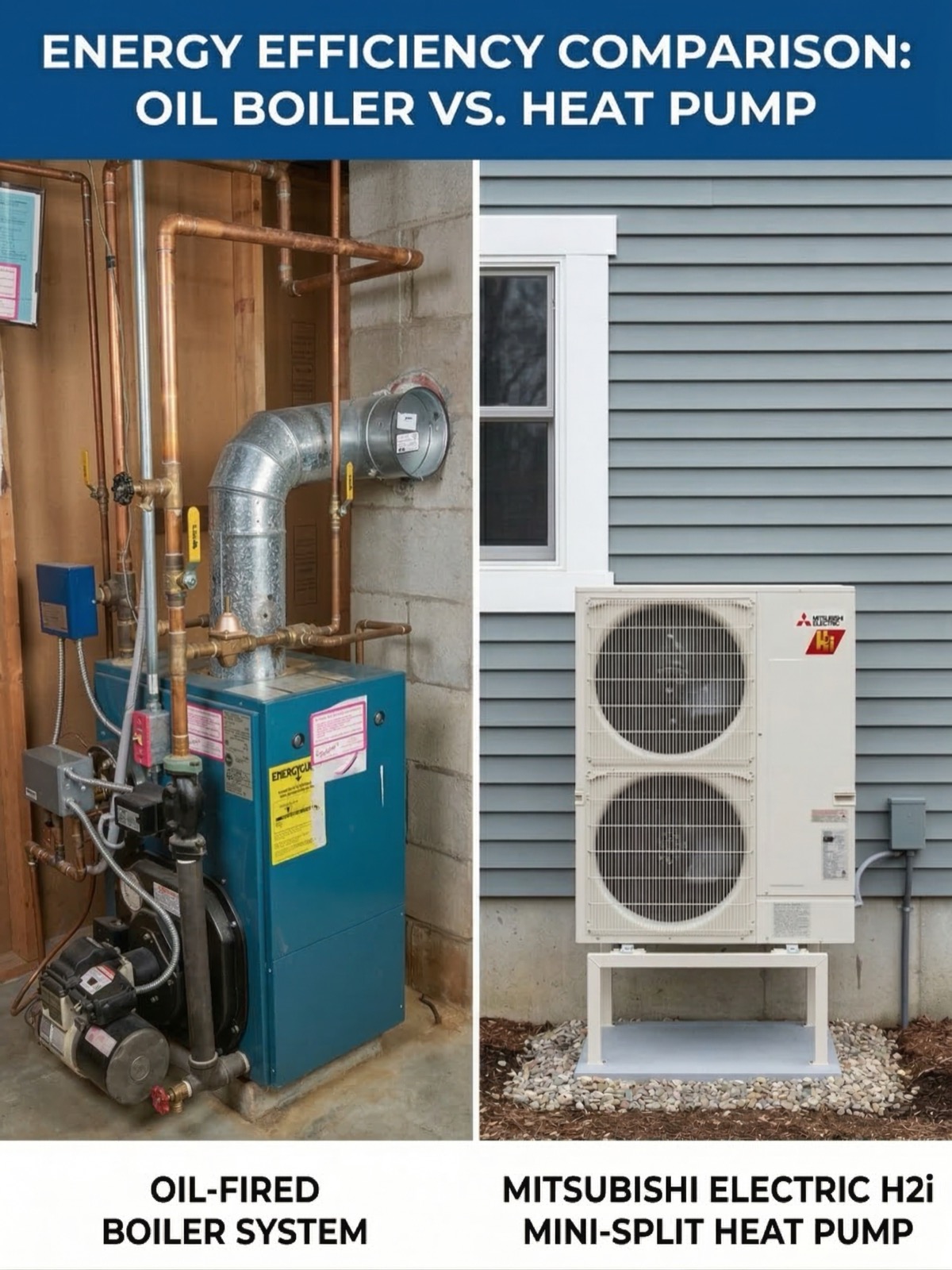
The couple in their 1960's Colonial in Falmouth described it perfectly: "Upstairs is an oven. Downstairs is a refrigerator. And the thermostat is in the hallway, so it thinks everything is fine." They had one oil boiler, one thermostat, and seven rooms that never agreed on what "comfortable" meant.
This is the most common complaint we hear from homeowners across Greater Portland. Baseboard heat, forced hot air, and even radiant systems controlled by a single thermostat cannot account for the fact that your south-facing living room gets hours of solar gain while your north-facing bedroom sits in shade all day. Heat rises, the second floor bakes, and the first floor stays cold. No single thermostat can fix physics.
A multi-zone cold-climate heat pump system solves this by giving each room - or each area of your home - independent temperature control.
How a Multi-Zone System Works
A multi-zone heat pump system pairs one outdoor unit with two, three, four, or five indoor units. Each indoor unit serves its own zone and responds to its own thermostat or remote control. You set each zone to whatever temperature you want, independently, while the rest of the home holds at different setpoints.
The outdoor unit is a variable-speed compressor that reads the combined demand from all connected zones and adjusts its output accordingly. At midnight when only the bedroom calls for heat, the compressor ramps down to a fraction of its capacity. On a hard January morning when every zone is calling at once, it scales up to full output. That continuous modulation - rather than the on-off cycling of a conventional furnace - is the primary reason cold-climate heat pumps achieve efficiencies that traditional heating equipment cannot match.
The most common configuration we install is the Mitsubishi MXZ multi-zone outdoor unit paired with two to five MSZ indoor heads. Each indoor head connects to the outdoor unit through its own dedicated refrigerant lines. If you are considering a larger home with more zones or need cooling flexibility between zones, it is worth reviewing how branch box systems handle multi-zone wiring and expansion before finalizing your design.
Indoor Unit Options
One of the advantages of a multi-zone system is that you can mix and match indoor unit types across different zones. Not every room needs the same style of head.
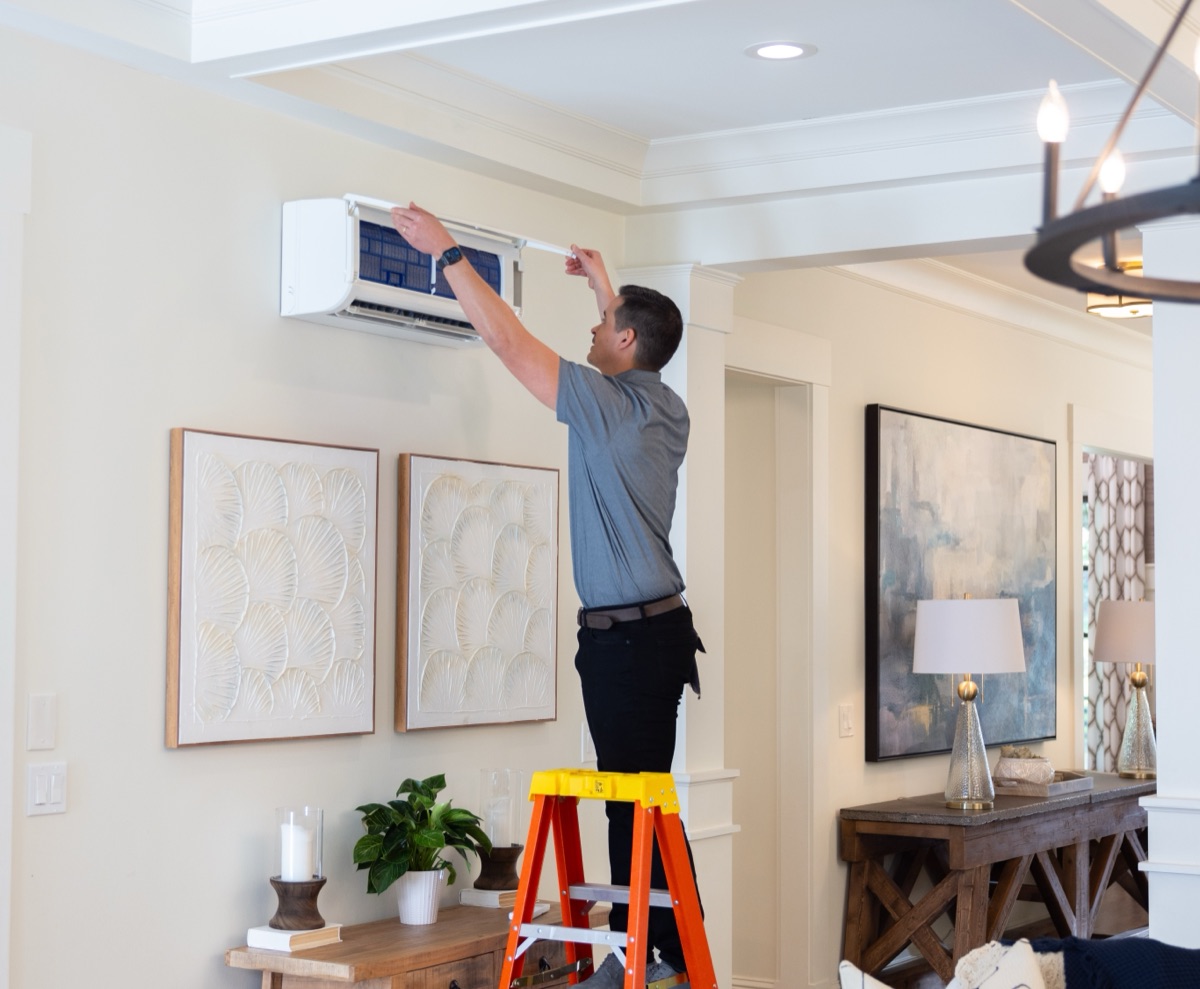
Wall-mounted units are the most common. They mount high on an interior wall, distribute air across the room through an oscillating vane, and carry the lowest per-zone cost. They are well-suited for bedrooms, living rooms, and home offices.
Floor-mounted units install low on the wall, near the baseboard line, and push warm air upward. They are a practical choice for rooms with floor-to-ceiling windows, limited wall space, or older residents who prefer controls at eye level rather than overhead.
Ceiling cassettes recess flush into the ceiling and distribute air in two or four directions from a single central grille. Once installed, almost nothing is visible. These work best where attic space above is accessible to house the recessed unit body - a common situation in Cape and two-story Colonial homes across Maine.
Slim duct units tuck into a closet, soffit, or above a dropped ceiling and connect to short duct runs that terminate at standard registers. They deliver heat pump performance with no visible indoor head. We cover the full range of ducted options in our ducted mini-split guide.
Sizing a Multi-Zone System
Proper sizing is the most important factor in a multi-zone installation. Each indoor head must be sized for the specific zone it serves, and the outdoor unit must be sized to handle the combined demand of all connected heads under real Maine winter conditions.
This starts with a Manual J load calculation for each zone. The calculation accounts for room dimensions, insulation values, window area and orientation, air leakage rates, and typical occupancy. We do not estimate BTU requirements from square footage alone - that shortcut leads to oversized equipment that short-cycles through the shoulder seasons, drives up operating costs, and fails to manage humidity properly.
The outdoor unit does not need to equal the sum of all indoor unit capacities. Because zones rarely call for full output simultaneously, the outdoor unit can typically be sized at 80-90% of the total connected indoor capacity. Mitsubishi refers to this as the "combination capacity ratio," and staying within the manufacturer's recommended range is important for both system longevity and steady-state efficiency.
We walk through all of this during your free energy assessment.
Zone Control Benefits
Independent zone control changes how you experience your home. Here is what our customers report after living with multi-zone systems through a full Maine winter.
Bedrooms stay cool for sleeping. Many people sleep best between 62 and 65 degrees. With a single thermostat, you either cool the entire house to reach that temperature or accept sleeping warm. With zone control, the bedroom holds your preferred sleeping temperature while the rest of the home stays wherever you want it.
Unused rooms cost nothing to maintain. The guest bedroom that sits empty ten months a year can hold 55 degrees on its own zone rather than being heated to living-space temperatures. A single-thermostat system treats every connected room identically regardless of whether anyone occupies it.
Upper floors stop overheating. Heat rises, and in a two-story home with one thermostat on the first floor, the second floor typically runs 5 to 10 degrees warmer. Independent zones on each floor eliminate that imbalance without compromise.
Shoulder season flexibility. In April and October, the south-facing side of your house may need cooling while the north-facing rooms still need heat. A multi-zone heat pump can deliver heat to one zone and cooling to another at the same time - something no boiler or furnace can do.
The Installation Process
A multi-zone installation follows the same general steps as a single-zone install, with some additional considerations.
Step 1: Energy assessment and system design. We survey the entire home, perform Manual J calculations for each proposed zone, and design the system layout. This includes selecting indoor unit types, determining outdoor unit placement, and planning refrigerant line routes.
Step 2: Indoor unit placement. Each zone gets its indoor unit positioned for optimal air distribution. In bedrooms, we typically place the head on the wall opposite the bed. In living areas, we aim for the longest throw across the open space.
Step 3: Outdoor unit installation. The outdoor unit mounts on a wall bracket or raised pad. For multi-zone systems, the condenser is larger and heavier than a single-zone unit, so a solid mounting surface matters. We keep it accessible for maintenance and elevated above typical snow accumulation.
Step 4: Line set routing. Each indoor unit needs its own dedicated refrigerant line set running back to the outdoor unit. On a three-zone system, that means three separate sets of copper lines. We route them through interior walls, chases, and soffits wherever the framing allows, minimizing exposed runs on the exterior. (A branch box configuration, if applicable to your home, consolidates some of this routing - see the branch box guide for how that approach differs.)
Step 5: Electrical. Multi-zone outdoor units typically require a 30 to 50 amp, 240-volt dedicated circuit. Each indoor unit needs a lower-amperage connection as well, though these can often share circuits depending on the configuration.
Step 6: Commissioning. We vacuum, charge, and test every zone independently, then verify the system operates correctly when multiple zones call simultaneously.
Installation time varies from one to three days depending on the number of zones and complexity of the line set routing.
Cost Range
A multi-zone cold-climate heat pump system in Maine typically costs:
- Two zones: $8,000 to $13,000 before rebates
- Three zones: $12,000 to $18,000 before rebates
- Four to five zones: $16,000 to $25,000 before rebates
The main cost drivers are the number of zones, line set length and routing complexity, indoor unit types (ceiling cassettes and ducted units cost more than wall-mounted heads), electrical work, and accessibility.
Important Note About Rebates
Here is something many homeowners do not realize until they are deep in the planning process: multi-zone heat pump systems are generally not eligible for Efficiency Maine heat pump rebates.
Efficiency Maine's current rebate structure applies to single-zone (one-to-one) cold-climate heat pump installations. When you connect multiple indoor units to one outdoor unit, the system typically does not qualify for the standard per-unit rebate.
This does not mean multi-zone systems are a bad investment. The energy savings, comfort improvements, and zone control benefits are real and substantial. But you should factor the full installed cost into your decision rather than expecting rebate-level pricing.
There are some exceptions and workarounds. Installing multiple single-zone systems instead of one multi-zone system costs more in equipment but may qualify for per-unit rebates. The math sometimes works in favor of multiple single-zone units, and sometimes it does not. We run both scenarios during your assessment and give you the honest numbers.
Federal 25C tax credits applied to qualifying work completed before December 31, 2025. If your project was installed in 2025 or earlier, consult your tax advisor about eligibility.
Multi-Zone vs. Multiple Single-Zone Systems
This is the question we help homeowners answer most frequently. Here is how we think about it.
Choose multi-zone when:
- You need four or more zones and want to minimize outdoor units
- Curb appeal matters - one outdoor unit instead of four
- You want simultaneous heating and cooling capability
- You are comfortable with the rebate situation described above
Choose multiple single-zone systems when:
- You need two or three zones and want to maximize rebate eligibility
- Each zone is far enough apart that individual outdoor units make sense logistically
- You want the simplicity of independent systems (if one fails, the others keep working)
- The rebate math makes individual systems more cost-effective
There is no universal right answer. It depends on your home layout, your budget, your rebate eligibility, and your priorities.
Related Guides
- Single-Zone Ductless Heat Pump Guide - When one zone is all you need
- Branch Box Heat Pump Systems Explained - The advanced multi-zone approach
- Ducted Mini-Split Heat Pumps for Maine Homes - Hidden indoor units with ductwork
- Heat Pump Sizing and Manual J for Maine Homes - Why proper sizing matters
Want to find out how many zones your home needs and what it will cost? Schedule your free energy assessment or call (207) 221-3221. We have been designing multi-zone cold-climate heat pump systems for Maine homes since 2006, and we will walk you through every option with transparent pricing.
Find our guides faster: add Horizon Homes as a preferred source on Google.
Free Home Energy Assessment
Considering Heat Pumps for Your Home?
We evaluate your home's insulation, heating system, and electrical capacity, then give you a clear recommendation with pricing and rebate estimates.
- Free walkthrough, no equipment, no disruption
- Efficiency Maine rebates identified for you
- Written improvement plan with pricing
Schedule Your Free Assessment
We call within 1 business day.