Single-Zone Ductless Heat Pump Guide for Maine Homes
Editor's note (August 2026): The federal 25C tax credits referenced in this article expired December 31, 2025 and are only available for qualifying work completed before that date. Efficiency Maine rebates remain available and are now the primary incentive for heat pump projects.
The most common complaint we hear on assessment visits is a version of the same problem: one room or one floor runs cold all winter, the existing heat source runs constantly, and the quote to extend the current system runs $5,000 to $7,000 in new piping or ductwork. A single-zone cold-climate heat pump solves that problem for less money, adds cooling, and does not require touching the existing system at all.
One wall unit, no ductwork, and it can heat an entire open-concept first floor. That sounds too simple until you see the thermostat reading 71 degrees at -8 outside and the oil delivery history cut by a third.
What Is a Single-Zone Ductless Heat Pump?
A single-zone ductless heat pump is a heating and cooling system with two components: one outdoor unit (the condenser) and one indoor unit (the head). They connect through a small bundle of refrigerant lines, a drain line, and a communication cable that runs through a three-inch hole in your exterior wall.
The outdoor unit extracts heat from the outside air - even in below-zero temperatures - and moves it indoors. In summer, the process reverses, and the system works as an air conditioner. One outdoor unit. One indoor unit. One zone of comfort.
The word "ductless" is key. There are no air ducts to install, no sheet metal runs through your walls or ceiling. The indoor unit mounts directly on a wall, typically high up near the ceiling, and distributes conditioned air throughout the space.
When a Single-Zone System Is the Right Choice
Not every home needs a whole-house multi-zone system. A single-zone cold-climate heat pump makes sense in several common situations we see across Greater Portland.
Open floor plans and great rooms. If your first floor is one large connected space - kitchen, dining, and living area flowing together - a single indoor head can often condition the entire area effectively. We see this frequently in ranch homes and 1950's Capes that have had walls removed during renovation.
One problem room. Many Maine homes have that one room that is always too cold in winter or too hot in summer. A bonus room over the garage, a finished basement, a sunroom, or a master bedroom on the north side of the house. A single-zone system targeted at that one space can solve the problem without reworking the entire heating system.
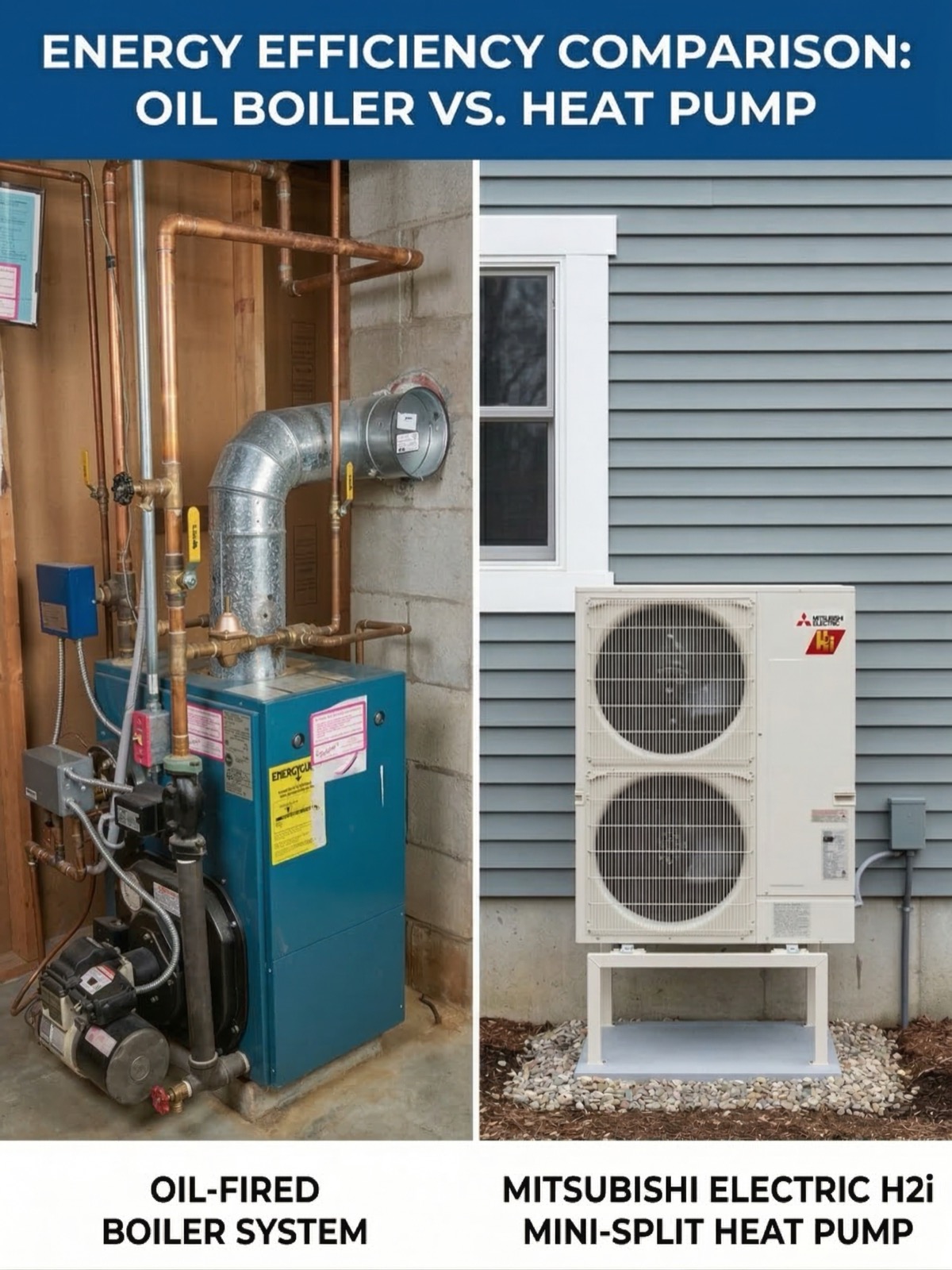
Supplementing an existing heating system. If your oil or gas boiler handles most of the house adequately, but one area needs help, a single-zone heat pump fills the gap at a fraction of the cost of extending your existing system.
Primary heating for a small home or apartment. For a studio, one-bedroom apartment, or small cottage under 800 square feet, a single-zone system may provide all the heating and cooling you need.
New additions. Adding a room to your home? Running ductwork or piping from your existing system to the addition is often impractical and expensive. A single-zone heat pump gives the new space independent climate control.
The Equipment: What We Install
At Horizon Homes, we primarily install Mitsubishi Hyper-Heat cold-climate mini-split systems. We have been installing them since 2006, and after 20+ years in the weatherization business, we have seen enough Maine winters to know which equipment holds up and which does not.
The Mitsubishi Hyper-Heat line is rated to provide heat down to -13 degrees Fahrenheit. These are not the same heat pumps that struggled in Maine winters a decade ago. The Hyper-Heat units use flash injection compressor technology that maintains strong heating output even as temperatures drop into the negatives.
For single-zone installations, we typically spec units in the 9,000 to 24,000 BTU range, depending on the size of the space, insulation levels, and the results of our load calculation. Common models include:
- MSZ-FS09NA / MUZ-FS09NAH - 9,000 BTU, ideal for bedrooms and smaller rooms up to 350 square feet
- MSZ-FS12NA / MUZ-FS12NAH - 12,000 BTU, covers 400 to 600 square feet depending on insulation
- MSZ-FS18NA / MUZ-FS18NAH - 18,000 BTU, handles larger living areas up to 900 square feet
Each model includes a wireless remote, a built-in Wi-Fi adapter for smartphone control, and multi-stage filtration. The indoor units are quiet - typically 19 to 32 decibels, which is quieter than a whisper.
The Installation Process, Step by Step
Understanding what happens during installation helps you plan for the day. Here is what a typical single-zone install looks like from start to finish.
Step 1: The energy assessment. Before we size any equipment, we conduct a free home energy assessment. Our technician walks through your home, measures the space, evaluates insulation levels, checks air sealing, and talks with you about your comfort goals. This is where we determine the right BTU capacity for your zone. Oversizing a heat pump is just as problematic as undersizing one, and the assessment prevents both.
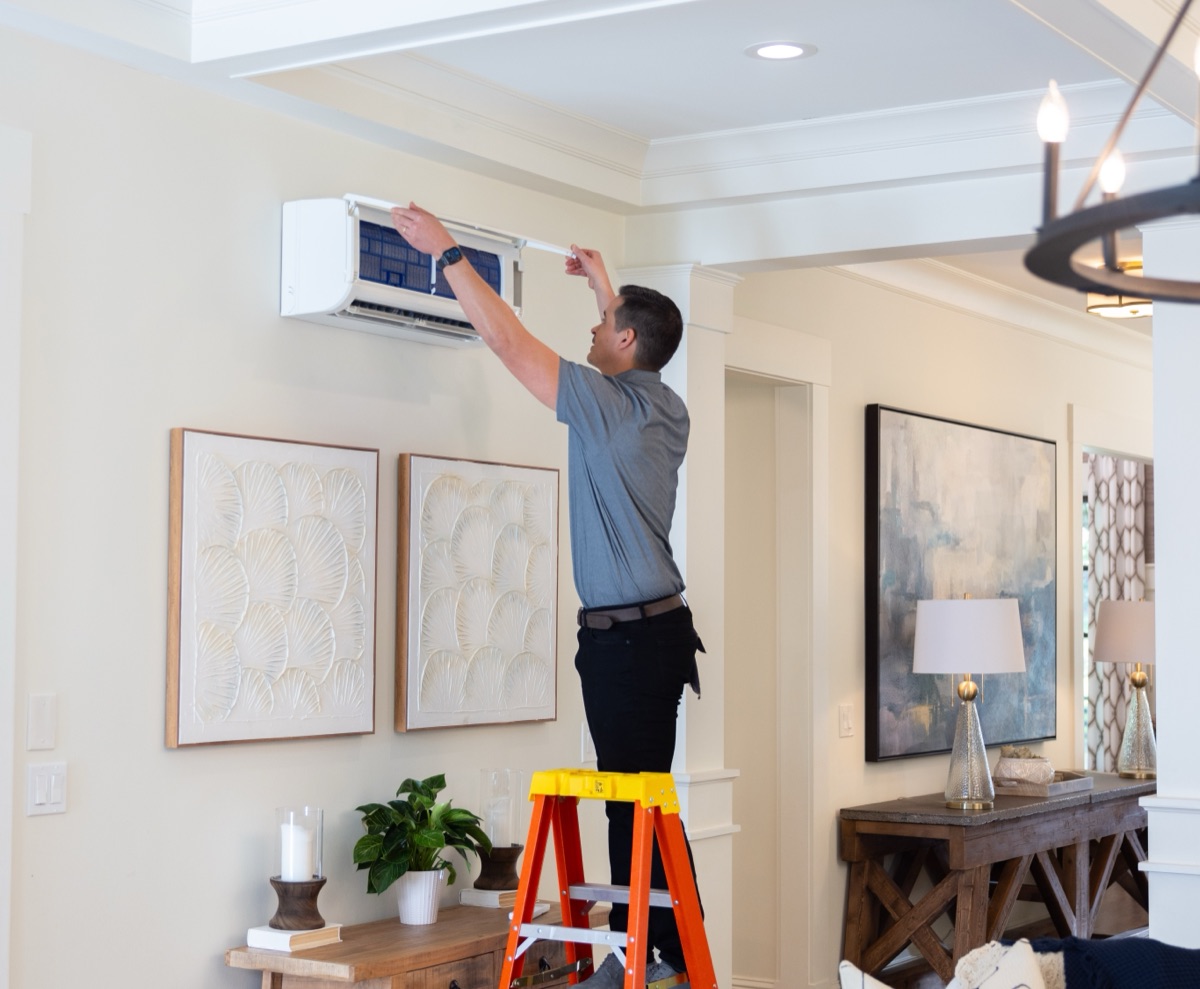
Step 2: Choosing the indoor unit location. The indoor head needs to be mounted on an exterior wall or a wall adjacent to one, so the refrigerant line set can reach the outdoor unit without an excessively long run. We look for a spot that provides good airflow coverage across the room while keeping the unit accessible for filter cleaning.
Step 3: Choosing the outdoor unit location. The condenser sits on a mounting pad or wall bracket outside, ideally on a south- or east-facing wall where it gets some sun exposure in winter and stays out of prevailing winds. We also consider snow load - in Maine, keeping the unit elevated on a wall bracket or a raised pad prevents snowdrifts from blocking airflow.
Step 4: Running the line set. Our crew drills a three-inch hole through the exterior wall and runs the refrigerant lines, condensate drain, and communication cable between the indoor and outdoor units. The penetration is sealed and insulated. On the exterior, the line set is covered with a line hide - a matching PVC channel that runs neatly along the siding.
Step 5: Electrical work. The outdoor unit needs a dedicated electrical circuit, typically 20 to 30 amps on a 240-volt breaker. If your electrical panel has space, this is straightforward. If your panel is full, we may need to add a sub-panel, which adds some cost.
Step 6: Vacuuming and charging. After all connections are made, we pull a vacuum on the refrigerant lines to remove moisture and air, then release the factory charge of R-410A refrigerant from the outdoor unit. This is a critical step - improper vacuum procedures lead to problems down the road.
Step 7: Commissioning and walkthrough. We power up the system, verify heating and cooling operation, check refrigerant pressures, and walk you through the controls. Most homeowners are comfortable operating the system within five minutes.
Total installation time for a standard single-zone system is typically four to six hours.
Cost Range and What Affects the Price
A single-zone cold-climate heat pump installation in Maine typically costs between $4,000 and $7,000 before rebates. Where your project falls in that range depends on several factors:
- Unit capacity. A 9,000 BTU unit costs less than a 24,000 BTU unit
- Line set length. Longer runs between indoor and outdoor units require more material and labor
- Electrical work. If a new circuit is simple, the cost is minimal. A panel upgrade adds $800 to $1,500
- Mounting. Wall brackets for the outdoor unit cost more than a ground pad but keep the unit above snow
- Accessibility. Second-floor installations or difficult exterior wall access add labor time
Rebates and Incentives
Efficiency Maine offers rebates on qualifying cold-climate heat pump installations. For a single-zone system, the rebate can significantly reduce your out-of-pocket cost.
Rebate amounts are income-dependent. Some homeowners qualify for enhanced rebates of up to $9,000 across their heat pump installation. Standard rebates for non-income-qualifying households are also available and still meaningful.
We are an Efficiency Maine Top Contractor for 10+ years, and we handle the rebate paperwork on your behalf. The rebate is applied directly to your invoice - you do not have to wait for a reimbursement check.
Federal tax credits may also apply. The 25C energy efficiency tax credit covers 30% of the cost of qualifying heat pump equipment, up to $2,000 per year. Check with your tax advisor for eligibility.
What to Expect After Installation
Most homeowners notice the difference immediately. A cold-climate heat pump delivers warm air at a consistent temperature rather than the on-off cycling of baseboard heat. The room stays at your set temperature without the temperature swings you may be used to.
In terms of energy costs, your results depend on what you are replacing. Homeowners switching from oil-fired baseboard heat or electric resistance heating typically see the most significant savings. Those supplementing an existing efficient boiler may see more modest savings but gain a cooling option they did not have before.
Plan on cleaning the filters every four to six weeks during heavy-use seasons. The indoor unit has washable filters that slide out in seconds. Keep the outdoor unit clear of snow - we recommend at least 18 inches of clearance on all sides.
Related Guides
- Multi-Zone Heat Pump Systems for Maine Homes - When one zone is not enough
- Cold-Climate Heat Pump Guide for Maine - Deep dive into Hyper-Heat technology
- Heat Pump Sizing and Manual J for Maine Homes - Why proper sizing matters
- Switching from Oil to Heat Pump in Maine - Cost comparison and transition planning
Ready to find out if a single-zone cold-climate heat pump is right for your home? Schedule your free energy assessment or call us at (207) 221-3221. We have been helping Greater Portland homeowners since 2006, and we will give you an honest recommendation - even if a heat pump is not the right answer for your situation.
Find our guides faster: add Horizon Homes as a preferred source on Google.
Free Home Energy Assessment
Considering Heat Pumps for Your Home?
We evaluate your home's insulation, heating system, and electrical capacity, then give you a clear recommendation with pricing and rebate estimates.
- Free walkthrough, no equipment, no disruption
- Efficiency Maine rebates identified for you
- Written improvement plan with pricing
Schedule Your Free Assessment
We call within 1 business day.