Heat Pump vs Boiler: Which Is Right for Your Home
Editor's note (October 2026): Efficiency Maine changed its insulation and air sealing rebates for work completed on or after October 1, 2026. They are now a fixed amount per zone of the house (attic, walls, basement) instead of a percentage of project cost, so the insulation rebate figures, combined totals, and cost examples below reflect the program when this article was published. See current Efficiency Maine rebates.
Editor's note (August 2026): The federal 25C tax credits referenced in this article expired December 31, 2025 and are only available for qualifying work completed before that date. Efficiency Maine rebates remain available and are now the primary incentive for the heat pump side of this comparison. Boiler installations do not currently qualify for a comparable state rebate.
The heat pump vs. boiler question is one of the most common conversations we have with Maine homeowners facing a heating system decision. Your boiler is 20-plus years old, you know a replacement is coming, and you are getting conflicting advice: heat pumps cannot keep up in January, or heat pumps cut your oil bill in half. Both things can be true depending on the home.
The honest answer is more nuanced than most people expect: it depends on your home, your existing systems, and your goals. Sometimes a heat pump is clearly the right call. Sometimes a boiler upgrade makes more sense. And for many homes, the best solution includes both.
At Horizon Homes, we install both cold-climate heat pumps and high-efficiency condensing boilers. We don't have a financial incentive to push one over the other. What we care about is recommending the system that actually fits your home. Here's the framework we use to help homeowners make this decision.
Understanding What Each System Does
Before comparing, it helps to understand how these two technologies work differently.
Cold-climate heat pumps
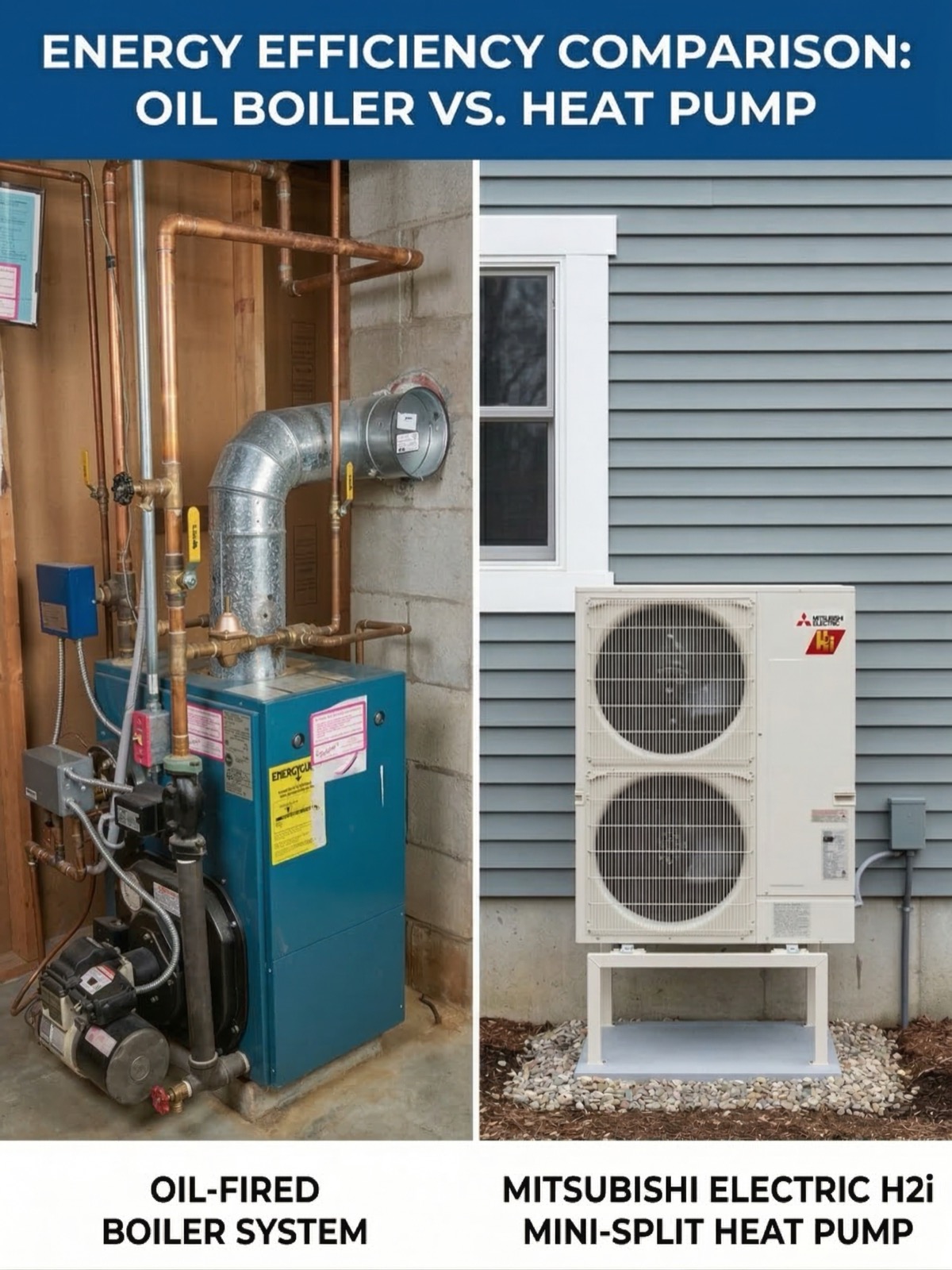
A cold-climate heat pump moves heat rather than generating it. Even in cold air, there's heat energy available. The heat pump extracts that heat from outdoor air and moves it inside using a refrigerant cycle. In summer, the process reverses - pulling heat out of your home to provide cooling.
Modern cold-climate heat pumps (primarily Mitsubishi in our installations) work reliably down to -15F. They deliver 2-3 times more heating energy than the electricity they consume, which is why they're so efficient.
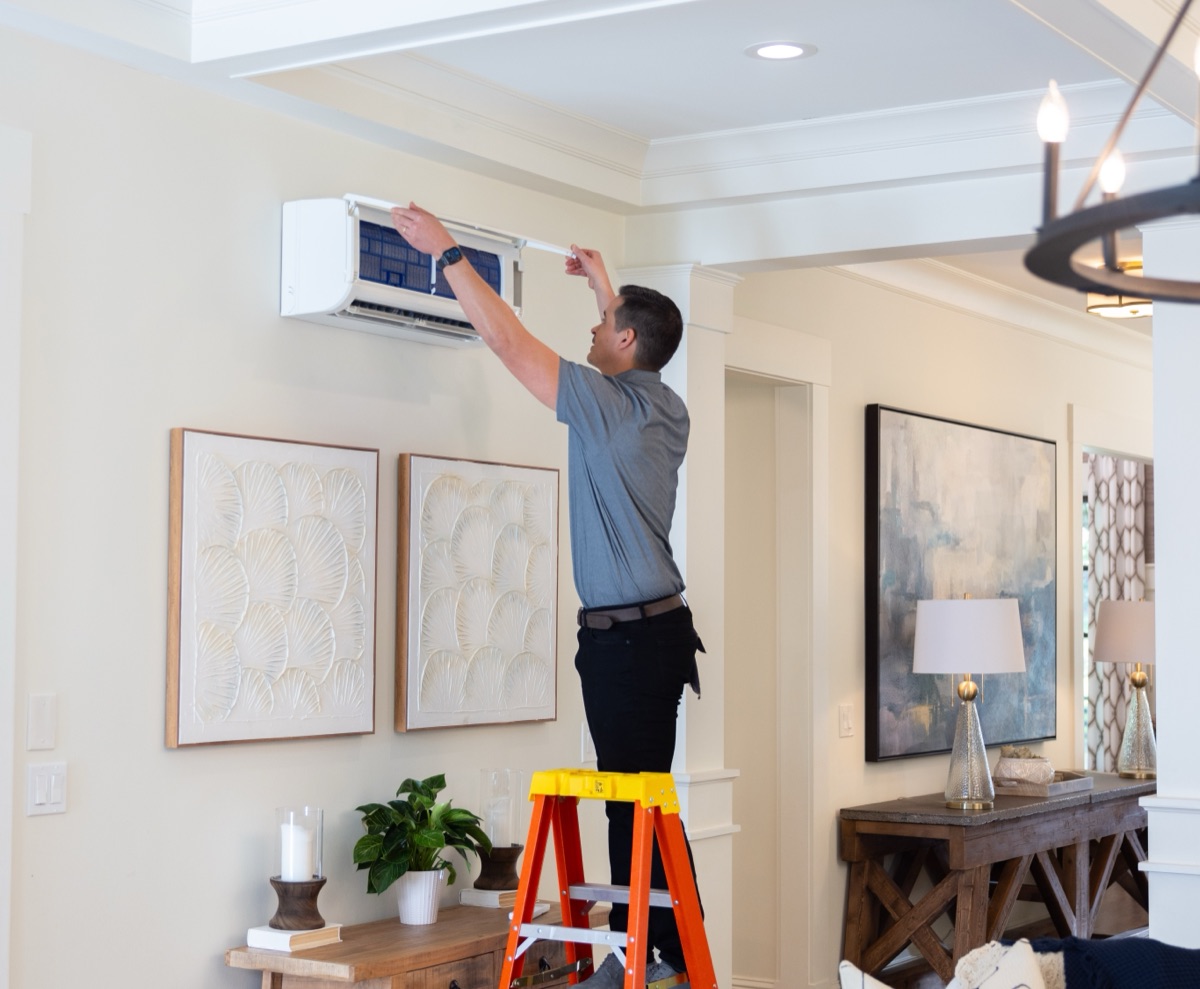
Heat pumps deliver heat through wall-mounted or ceiling-mounted indoor units (mini-splits), providing zone-by-zone temperature control. Each room or zone has its own unit and its own thermostat.
High-efficiency condensing boilers
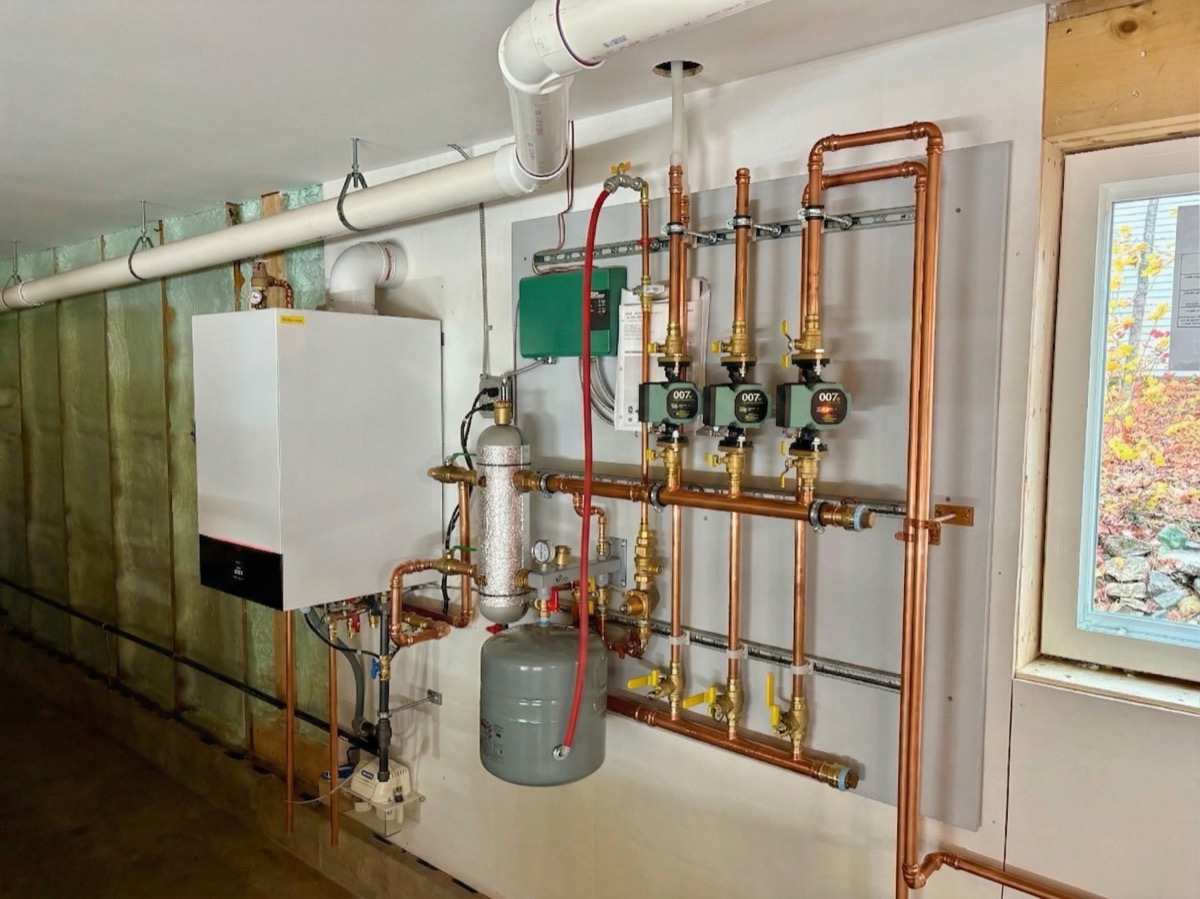
A condensing boiler burns natural gas or propane to heat water, which circulates through your home's existing hydronic distribution - baseboard radiators, radiant floor tubing, or a combination. Modern wall-hung condensing units operate at 95-98% AFUE, extracting nearly all the heat energy from the fuel they burn.
Boilers deliver heat through your existing distribution system, providing whole-home heating through the infrastructure already built into your walls and floors.
The Decision Framework
Here are the factors that determine which direction makes sense for your home.
Factor 1: Your existing distribution system
This is often the most important factor.
If you have hydronic distribution (baseboard, radiant floor, or both): Your home was designed around hot water heat distribution. These systems provide even, comfortable heat and represent a significant investment that's already in place. A condensing boiler upgrade connects directly to your existing distribution and can be operational in a single day.
Adding cold-climate heat pumps to a home with good hydronic distribution preserves the boiler as the primary heat source. The cold-climate heat pumps provide cooling and supplemental heat.
If you have forced hot air (ductwork): Heat pumps are often a strong fit, since you're already accustomed to air-delivered heat. Mini-splits provide zone control that ductwork can't match, and you gain cooling capability.
If you have electric baseboard or space heaters: Heat pumps are almost always the right move. You're currently using the most expensive form of heating, and heat pumps deliver 2-3x more heat per dollar of electricity.
Factor 2: Your home's building envelope
The condition of your insulation and air sealing directly affects which heating system makes sense and how it should be sized.
Well-insulated home: A well-insulated home needs less heating capacity. Heat pumps can often handle the full heating load in a tight, well-insulated house, even in Maine's coldest weather. This is the scenario where heat pumps shine brightest.
Poorly insulated home: A drafty home with inadequate insulation needs more heating capacity, especially during cold snaps. Heat pumps may struggle to keep up as the sole heat source in a leaky house when temperatures drop below zero. A boiler connected to whole-home distribution handles high heating loads more effectively.
This is why we recommend insulating and air sealing first, before making heating system decisions. Tightening the envelope reduces the heating load, which means a smaller (and cheaper) heat pump system can do the job. It also means your existing boiler doesn't have to work as hard while you decide on a long-term heating strategy.
Considering a change? Schedule a free energy assessment or call (207) 221-3221 to find out where your home stands.
Factor 3: Fuel costs and availability
The economics of heat pump vs. boiler depend heavily on what fuel you're currently using and what it costs.
Natural gas: Natural gas is currently the least expensive heating fuel in Maine on a per-BTU basis. A high-efficiency condensing boiler burning natural gas is hard to beat on pure operating cost. Heat pumps are still more efficient in terms of energy conversion, but the low cost of natural gas narrows the operating cost gap.
Propane (LP): A propane boiler can provide primary heat through existing hydronic distribution. Adding cold-climate heat pumps provides cooling and supplemental heat. The right combination depends on your home and comfort goals.
Oil: Oil is the most expensive common heating fuel in Maine. Homes converting from oil see the largest savings from heat pump installations. If you're heating with oil and considering your options, a heat pump is almost always part of the right answer.
Electricity: Maine's electricity rates are moderate by New England standards. Heat pumps consume electricity, so your electric bill will increase - but the reduction in fuel costs typically exceeds the increase in electricity by a significant margin.
Factor 4: Cooling needs
Boilers don't provide cooling. Heat pumps do.
If you currently have no cooling in your home and you want it, heat pumps solve two problems at once. You get efficient heating and air conditioning from the same equipment. This dual function can tip the balance toward heat pumps even in homes where a boiler upgrade might otherwise make more sense on heating economics alone.
Factor 5: Rebate availability
Efficiency Maine rebates for cold-climate heat pumps are currently more generous than rebates for boilers:
- Cold-climate heat pumps: Up to $9,000 (income-dependent)
- High-efficiency boilers: Federal tax credit of 30% up to $600 (25C)
- Insulation and air sealing: Up to $8,600 per home (a fixed amount per zone, set by income tier) - regardless of which heating system you choose
The rebate difference is significant. A $15,000 heat pump installation with a $7,000 rebate costs $8,000 out of pocket. A $12,000 boiler installation with a $600 tax credit costs $11,400. The heat pump rebate advantage changes the math for many homeowners.
Note: rebate amounts are income-dependent and vary by household. Your contractor should review your specific eligibility during the assessment process.
When a Heat Pump Is the Clear Winner
- You heat with oil or electric baseboard - The efficiency and cost savings are dramatic
- You want cooling - A boiler can't help you in July
- Your home is well-insulated (or you're insulating as part of the project) - Heat pumps perform best in tight homes
- You don't have an existing hydronic distribution system - No baseboard or radiant floor to connect a boiler to
- Rebate eligibility is strong - The heat pump rebates can significantly reduce the cost gap
When a Boiler Upgrade Makes More Sense
- You have a well-designed hydronic distribution system that you want to keep - baseboard, radiant floor, or both
- You have natural gas service - Low fuel costs make a high-efficiency boiler very economical to operate
- Your home needs significant envelope work first - A boiler handles high heating loads in drafty homes more effectively while you plan insulation improvements
- You prefer the heat quality - Many homeowners prefer the even, radiant heat that hydronic systems provide over air-delivered heat
- Budget is a primary concern - A boiler upgrade for a home with existing hydronic distribution is often less expensive than a multi-zone heat pump installation, even after considering rebates
When the Answer Is Both
Many of our customers end up with a combination. This isn't a compromise - it's often the optimal approach. Here's how it typically works:
Condensing boiler as primary heat + heat pumps for zones and cooling:
The boiler handles the base heating load through existing hydronic distribution. Heat pumps are installed in key zones - living areas, bedrooms - providing supplemental heating, cooling, and zone-by-zone temperature control.
The boiler provides primary heat throughout the heating season. The cold-climate heat pumps add supplemental warmth in individual zones and provide cooling in summer.
This combination approach works particularly well for:
- Homes with good hydronic distribution plus specific zones that need cooling
- Homeowners who want to reduce fossil fuel use gradually without abandoning a working distribution system
- Homes where the building envelope will be improved over time, allowing the heat pumps to take on more of the heating load as the insulation improves
The sequence matters: If you're doing both, we recommend insulating and air sealing first. This reduces the overall heating load, which means the boiler can be smaller and the heat pump system doesn't need as many zones.
Making the Right Decision for Your Home
The heat pump vs. boiler question doesn't have a universal answer. It depends on your home's construction, your existing systems, your fuel costs, and your budget.
Starting with good information leads to better decisions. A free energy assessment gives you a clear picture of where your home stands - your insulation levels, your heating system's condition, your air sealing needs, and your options.
Schedule your free energy assessment or call us at (207) 221-3221. We'll help you figure out what actually makes sense for your home, your budget, and your goals. No pressure, no agenda - just honest recommendations from a team that installs both systems and has been helping Maine homeowners since 2006.
Find our guides faster: add Horizon Homes as a preferred source on Google.
Free Home Energy Assessment
Considering Heat Pumps for Your Home?
We evaluate your home's insulation, heating system, and electrical capacity, then give you a clear recommendation with pricing and rebate estimates.
- Free walkthrough, no equipment, no disruption
- Efficiency Maine rebates identified for you
- Written improvement plan with pricing
Schedule Your Free Assessment
We call within 1 business day.