Heat Pump vs. Oil Boiler: Maine Cost Comparison

Editor's note (September 2026): The 30% federal tax credit described below is the federal 25C credit. It expired December 31, 2025 and does not apply to work completed in 2026 or later, so the “through 2032” timeline and the net-cost figures below reflect the period when the credit was still available. Efficiency Maine rebates remain available and are now the primary incentive for heat pump projects. Learn more about what has changed.
It's late summer in Maine, and the first oil delivery of the heating season is right around the corner. Maybe you're standing in your basement staring at a 25-year-old oil boiler that just needed a $600 repair, and you're thinking about what comes next before the cold sets in. Your neighbor switched to heat pumps last year and hasn't looked back. But is it the right move for your house?
Fall is the smart time to decide. Making the switch before the deep-winter rush means you head into the coldest months on a system you can budget for, instead of locking in another year of oil prices you can't control.
The honest answer: it depends. And it's not just about cost. Maine electricity rates are above the national average, so the savings math isn't as simple as "electricity is cheaper than oil." The real reasons people switch are predictability, comfort, cooling, and getting off a fuel whose price you can't control. Cost is part of the picture, but it's not the whole picture.
Ready to compare options for your Greater Portland home? Explore our cold-climate heat pump installations and insulation services, then request a free energy assessment. We will discuss your existing heating system, cooling needs, and priorities during a visual walkthrough only, with no diagnostic testing or obligation.
The Baseline: A Typical 2,000 Square Foot Maine Home
For this comparison, we'll use a moderately insulated 2,000-square-foot home in the Greater Portland area - the kind of house you'd find in Westbrook, Gorham, Scarborough, or South Portland. Think 1970s to 1990s construction, some insulation in the attic, original windows, and a basement that's chilly but not terrible.
This is the most common type of home we assess at Horizon Homes, and the numbers below reflect what we typically see.
How the Cost Picture Actually Works
Fuel prices change weekly. Oil swings with global markets. Electricity rates are set annually by the Maine PUC. Any article that gives you a fixed dollar amount for annual heating cost is out of date the week after it's published.
That's why we built a heating cost comparison calculator that uses real, weekly-updated fuel prices from the Maine Governor's Energy Office for our service area. You can plug in your current fuel, your home size, and your system age, and see what the numbers look like today, not six months ago.
Compare your heating costs with today's prices
Here's what we can say about the general picture: oil prices are tied to global commodity markets that no homeowner can predict or control. OPEC decisions, refinery shutdowns, tanker disruptions - all of it flows directly into what you pay at the fill pipe. Maine heating oil has moved between roughly $3 and $5 a gallon over recent winters, and there's no reason to expect that swing to settle down. Every fall, homeowners find out where the number landed only after the first delivery hits.
Heat pump operating costs depend on electricity rates, which the Maine PUC sets once per year. You know what you'll pay. You can budget for it. That predictability is worth something, even when the per-BTU savings are modest, and it's the reason a lot of our fall assessments turn into winter installs.
Why People Actually Switch
Cost comparison is the question most people start with, but it's rarely the reason they decide to go through with it. After hundreds of energy assessments across Greater Portland, the factors that tip the decision are:
Heating and cooling in one system. A heat pump heats your home in winter and cools it in summer. No window units, no separate AC system, no seasonal swaps. For Maine homeowners who've been sweating through July with a box fan, this alone changes the equation.
Price predictability. Your January oil delivery could be $3.50 a gallon or $5.50. You have no control over that. Electricity rates are regulated and change once a year. You can plan around them.
Solar offset potential. You can't generate your own oil, but you can generate your own electricity. Whether it's rooftop panels or a community solar subscription, pairing a heat pump with solar is a path toward dramatically lower heating costs. That's a path oil heat simply can't offer.
Zone control. Heat pumps let you set different temperatures in different rooms. The bedrooms can be cooler while the living room stays comfortable. Oil systems heat the whole house to one temperature whether anyone's in the room or not.
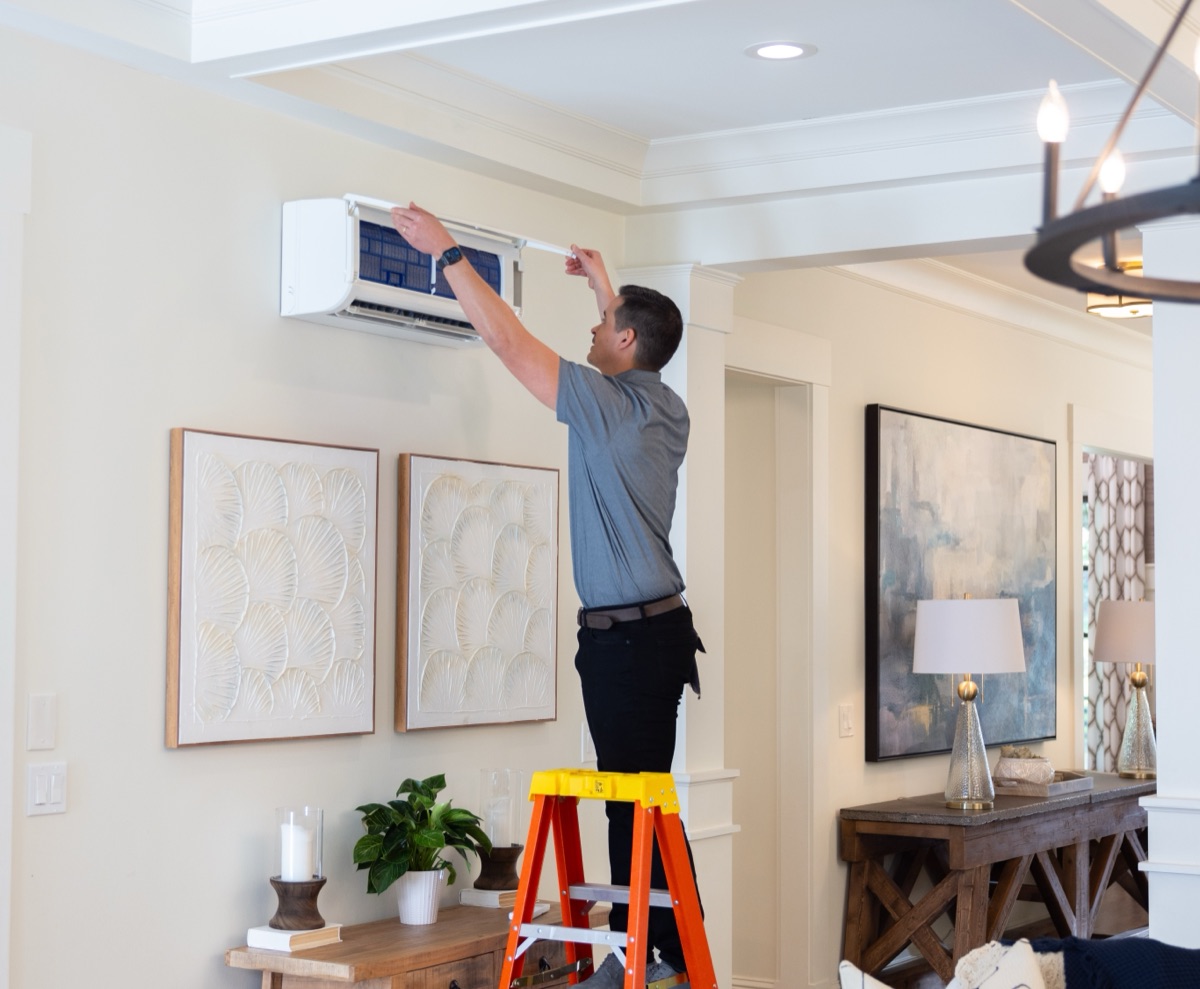
Lower maintenance. No combustion, no fuel storage, no exhaust system. Heat pumps need their filters cleaned every month or two (a five-minute task) and an occasional professional check. That's it.
How Heat Pumps Work So Efficiently
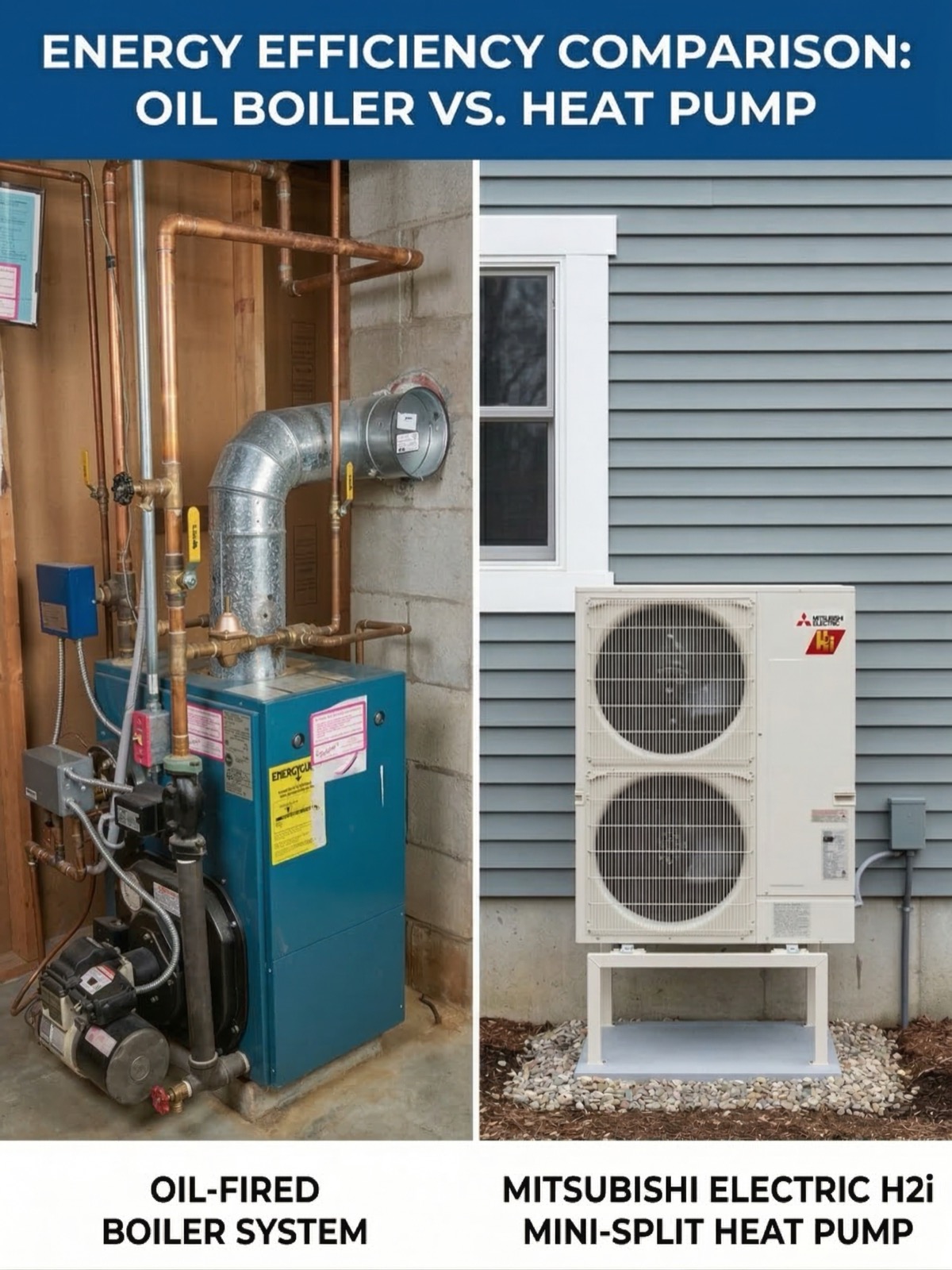
Your oil boiler burns a gallon of oil and converts about 85% of it into heat. That's good, but it's a hard ceiling.
Heat pumps don't burn anything. They move heat from outside air into your home. Even when it's 10°F outside, there's still heat energy in the air, and a heat pump extracts it and concentrates it inside. For every unit of electricity a heat pump consumes, it delivers two to three units of heat. That 200-300% efficiency is what makes the economics work, even at Maine's electricity rates.
Equipment Costs: The Upfront Investment
Switching heating systems isn't free. Here's what the equipment side looks like:
Replacing an Oil Boiler
If your oil boiler or furnace is nearing end of life (15-25 years is typical), you're looking at a replacement cost of $8,000 to $12,000 for a new high-efficiency oil unit, installed. That's money you'll spend just to keep the same fuel source.
Installing a Heat Pump System
A whole-home cold-climate heat pump system for a 2,000-square-foot home typically runs $12,000 to $18,000 before incentives. That includes the outdoor compressor(s), indoor heads for each zone, and professional installation.
After Efficiency Maine rebates ($1,000 to $3,000 per outdoor unit for any income level), the net cost comes down to $9,000 to $15,000. Moderate-income and low-income households qualify for larger rebates ($2,000 or $3,000 per unit), which brings the net cost even lower. There's also a 30% federal tax credit available through at least 2032.
The upfront cost is higher than an oil boiler replacement, but you're getting a system that heats, cools, and runs on a fuel you can control and offset with solar.
See what the numbers look like for your specific situation
Environmental Impact
For homeowners who care about their carbon footprint (and increasingly, that's most of us), the difference is meaningful. A home burning 800 gallons of oil per year produces roughly 8 to 9 tons of CO2. A heat pump system running on grid electricity (which in Maine includes a growing share of renewables) produces roughly 2 to 3 tons of CO2 equivalent.
That's a reduction of 5 to 7 tons per household, per year. If you add solar panels down the road, the heat pump's carbon footprint drops close to zero.
The Insulation Factor: Why It Matters More Than People Think
Here's something most heat pump vs. oil comparisons leave out: the condition of your home's insulation changes the entire equation.
A well-insulated, air-sealed home needs less heat. That means a smaller, less expensive heat pump system can do the job. It runs less often, uses less electricity, and keeps the house more comfortable.
At Horizon Homes, this is why we take a whole-home approach: insulate and air seal first, then right-size the heat pump for your home's actual needs. It costs less upfront and performs better over time. A heat pump on a leaky house is working harder than it needs to. If you're weighing the order of operations, our guide on why insulation comes before other upgrades walks through why the envelope work pays off first. See our heat pump installation service for details on equipment, sizing, and rebates.
What About Propane and Natural Gas?
If you heat with propane, the comparison actually shifts more in favor of heat pumps because propane has less energy per gallon than oil. You need more gallons for the same heat output, which often makes propane more expensive per BTU than oil. We have a detailed propane vs. heat pump comparison if that's your situation.
Natural gas is generally cheaper than oil, but availability is limited in many Maine communities outside of the Portland urban core. Our heating cost calculator includes natural gas so you can compare directly.
Keeping Primary Boiler Heat
A hybrid system keeps the boiler as the primary heat source and adds cold-climate heat pumps for cooling and supplemental heat. This preserves the existing hydronic distribution and adds room-by-room comfort control.
We evaluate the condition of the existing boiler and coordinate the controls for both systems during the project.
The Bottom Line
For a typical 2,000-square-foot Maine home considering a switch from oil:
- Heating and cooling in one system - no separate AC needed
- Predictable energy costs - PUC-regulated rates vs. global oil markets
- Rebates available - Efficiency Maine rebates reduce upfront cost by $1,000 to $3,000+ per unit, plus 30% federal tax credit
- Solar-ready - offset your heating cost with panels or community solar
- With insulation improvements - the system works better, costs less to run, and you can install a smaller unit
The cost picture depends on your home, your current system, and fuel prices at the time you make the decision. Run the comparison with today's prices to see what the numbers look like for your situation.
See What Makes Sense for Your Home
Every home is different. Our heating cost calculator gives you a side-by-side comparison using real, weekly-updated fuel prices. And when you're ready for real numbers specific to your house, a free energy assessment covers your insulation, your current system, and all available rebates.
Run the Heating Cost Calculator | Book Your Free Assessment | (207) 221-3221
Find our guides faster: add Horizon Homes as a preferred source on Google.
Free Home Energy Assessment
Considering Heat Pumps for Your Home?
We evaluate your home's insulation, heating system, and electrical capacity, then give you a clear recommendation with pricing and rebate estimates.
- Free walkthrough, no equipment, no disruption
- Efficiency Maine rebates identified for you
- Written improvement plan with pricing
Schedule Your Free Assessment
We call within 1 business day.