Switching from Oil to Heat Pump in Maine: A Complete Guide
Editor's note (October 2026): Efficiency Maine changed its insulation and air sealing rebates for work completed on or after October 1, 2026. They are now a fixed amount per zone of the house (attic, walls, basement) instead of a percentage of project cost, so the insulation rebate figures, combined totals, and cost examples below reflect the program when this article was published. See current Efficiency Maine rebates.
Editor's note (August 2026): The federal 25C tax credits referenced in this article expired December 31, 2025 and are only available for qualifying work completed before that date. Efficiency Maine rebates remain available and are now the primary incentive for heat pump projects.
Between November and March, oil prices drive more calls to our office than anything else. Five or six deliveries a winter at $400 to $500 each adds up to $2,000 to $3,000 before you have touched a single other utility. Every price spike sends a fresh wave of homeowners looking for alternatives, and the question is always the same: will a cold-climate heat pump actually save money, or is this trading one expensive heating system for another?
The honest answer is that it depends on your specific situation. But we can walk through the math so you can see where you land.
The Cost Comparison: Oil vs. Cold-Climate Heat Pump
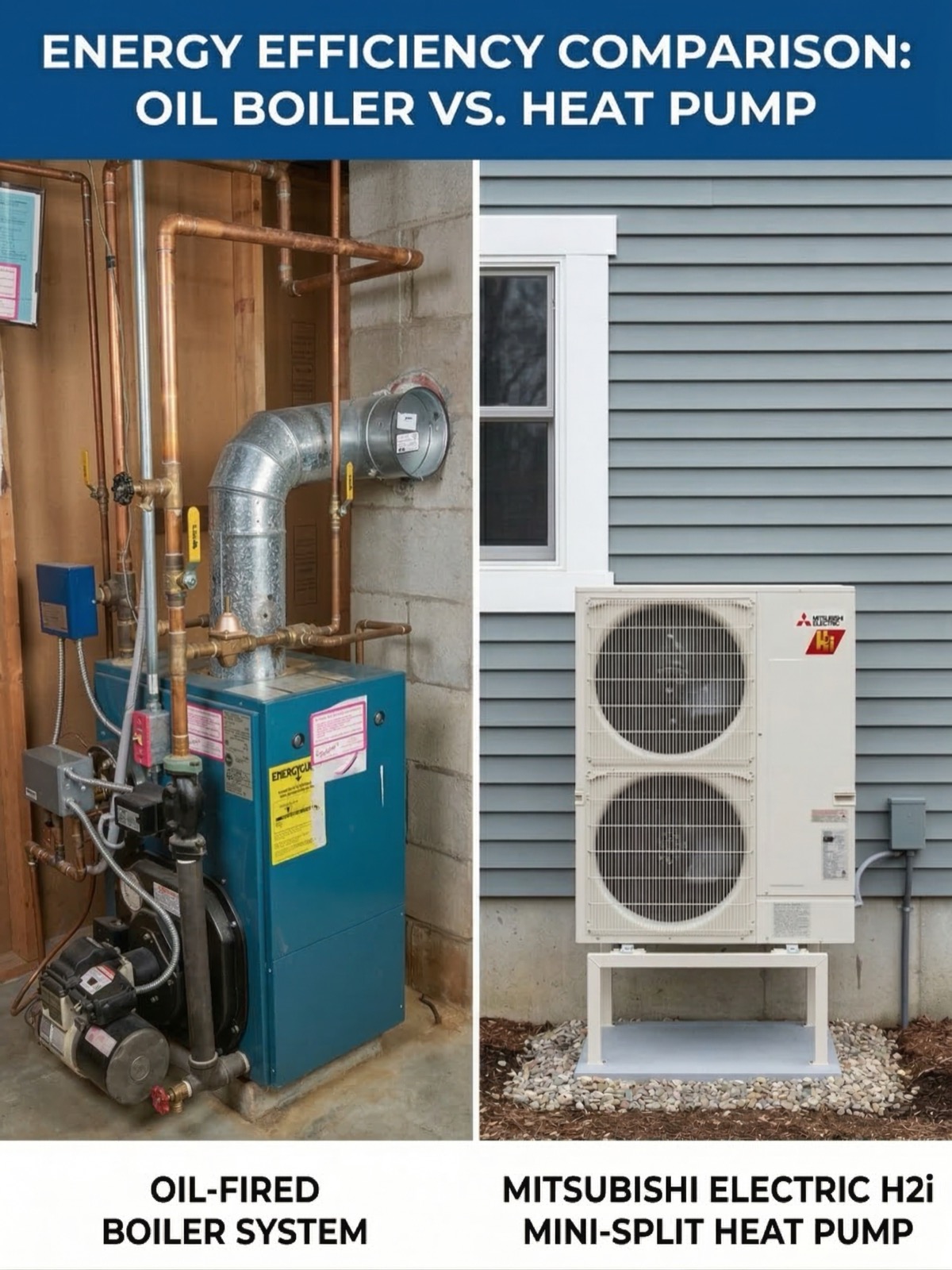
To compare oil heat to heat pump heating, we need to account for the efficiency of each system and the cost of each fuel.
Oil boiler efficiency. A typical oil boiler in Maine operates at 80-87% efficiency (AFUE). That means 13-20% of the heat energy in the oil goes up the chimney or is lost through the jacket and piping. A gallon of heating oil contains approximately 138,500 BTU of energy. At 85% efficiency, you get about 117,725 BTU of usable heat per gallon.
Cold-climate heat pump efficiency. A Mitsubishi Hyper-Heat cold-climate heat pump operates at a seasonal average COP (Coefficient of Performance) of roughly 2.0 to 2.5 in Maine's climate. That means for every unit of electricity consumed, the heat pump delivers 2.0 to 2.5 units of heat. One kilowatt-hour of electricity contains 3,412 BTU. At a COP of 2.25 (a reasonable seasonal average for Maine), each kWh produces about 7,677 BTU of heat.
The math at current prices. Let us use recent average prices for the Portland area:
- Heating oil: $3.50 to $4.50 per gallon (fluctuates seasonally)
- Electricity: $0.20 to $0.24 per kWh (CMP residential rate, including delivery)
At $4.00 per gallon of oil and $0.22 per kWh of electricity:
- Cost per 100,000 BTU from oil (at 85% efficiency): $3.40
- Cost per 100,000 BTU from heat pump (at 2.25 seasonal COP): $2.87
That is roughly a 15-20% cost reduction per BTU of delivered heat. For a home burning 800 gallons of oil per year ($3,200 at $4/gallon), the annual savings range from $500 to $800 depending on actual efficiency and electricity rates.
When the savings are larger. The math favors heat pumps more strongly when:
- Oil prices are above $4.50/gallon (they reached $5+ in recent years)
- Your existing boiler is older and operating below 80% efficiency
- Your home is well insulated, reducing the total heating load
- You have access to time-of-use electricity rates or solar panels
When the savings are smaller. Heat pump savings narrow when:
- Oil prices drop below $3.00/gallon
- Electricity rates rise significantly
- Your existing boiler is a high-efficiency condensing unit (95%+ AFUE)
- Your home is poorly insulated and the heat pump spends more hours at low COP
The Transition: Keep Your Boiler
Here is something that surprises many homeowners: switching to a heat pump does not mean ripping out your oil boiler. In fact, we recommend keeping it.
A hybrid system keeps the boiler as the primary heat source and adds cold-climate heat pumps for cooling and supplemental heat.
Here is why this works:
The cold-climate heat pump adds zone control. It provides cooling in summer and supplemental warmth in the rooms it serves during the heating season.
The boiler provides primary heat. Your existing hydronic distribution continues to deliver heat throughout the heating season, including during extreme cold.
No need for electrical upgrades for whole-house heating. If you tried to replace your entire oil system with heat pumps sized to carry the full load at -13 degrees, you might need a substantial electrical panel and service upgrade. The hybrid approach keeps your total electrical load manageable.
Your boiler still works for domestic hot water. If your oil boiler provides hot water through an indirect tank, keeping the boiler active means your hot water system remains unchanged.
The Phased Approach
We encourage homeowners to think about the oil-to-heat-pump transition as a phased process rather than an all-at-once conversion.
Phase 1: Insulate and air seal. Before installing any heat pump equipment, reduce your home's heating load. Adding blown-in cellulose insulation to the attic and walls, plus comprehensive air sealing, can reduce your heating needs by 20-40%. This means a smaller, less expensive heat pump system, lower operating costs, and faster payback on your investment.
Phase 2: Install cold-climate heat pumps in key living spaces. Start with the rooms where you spend the most time - living room, kitchen, master bedroom. These units provide cooling and supplemental heat while the boiler remains the primary heat source.
Phase 3: Expand as budget allows. Add zones over time - bedrooms, home office, finished basement. Each additional zone shifts more heating load from oil to electricity and increases your savings.
Phase 4: Evaluate boiler replacement. When your boiler reaches end of life, evaluate a replacement sized for the improved home. In a hybrid system, the boiler remains the primary heat source.
This phased approach spreads the investment over several years, allows you to take advantage of annual rebate and tax credit limits, and gives you time to verify the savings before committing further.
Installation Process: What to Expect
If you are adding a heat pump system while keeping your oil boiler, the installation process does not touch your existing heating system at all. The two systems operate independently.
Step 1: Energy assessment. We evaluate your home's insulation, air sealing, heating load, and current oil consumption. We identify the zones that will deliver the most savings and comfort improvement.
Step 2: System design. We recommend specific cold-climate heat pump equipment, placement locations, and a phasing plan if applicable. You will see projected energy savings based on your actual oil consumption history.
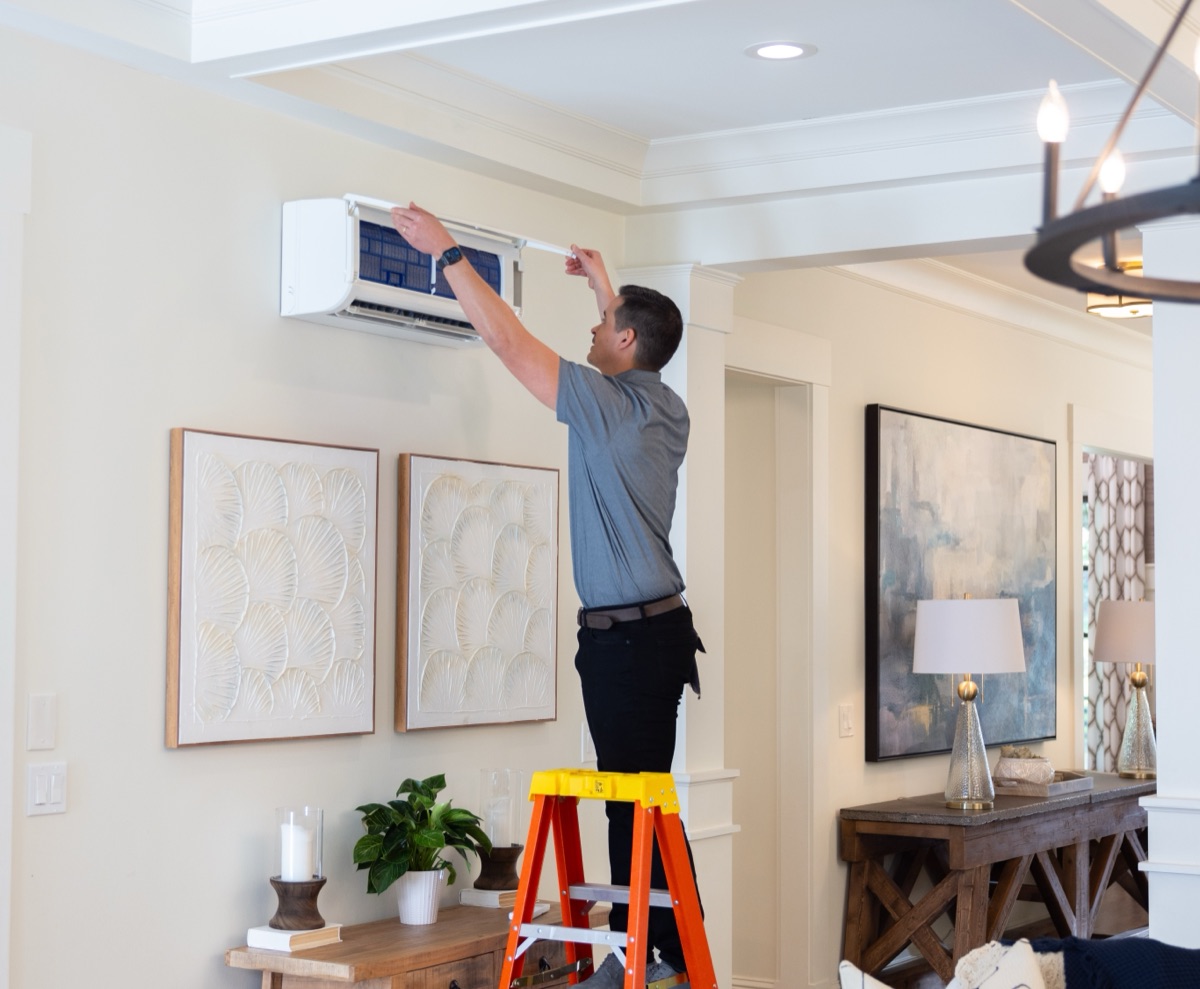
Step 3: Installation. One to three days depending on the number of zones. The heat pump system gets its own electrical circuits and operates completely independently from your oil system.
Step 4: Thermostat coordination. We set up controls around primary boiler heat, with cold-climate heat pumps providing cooling and supplemental warmth in selected zones.
Rebates and Incentives for Fuel Switching
Efficiency Maine offers rebates on qualifying cold-climate heat pump installations. Rebate amounts are income-dependent, with enhanced rebates of up to $9,000 available for qualifying households. Standard rebates are available to all homeowners.
Federal 25C tax credits cover 30% of qualifying heat pump equipment costs, up to $2,000 per year.
For homeowners completing insulation and air sealing work alongside the heat pump installation, additional Efficiency Maine rebates for weatherization can reach up to $8,600 per home (a fixed amount per zone, set by income tier). The combined rebates for a comprehensive project - insulation, air sealing, and heat pumps - can substantially offset the total investment.
We are an Efficiency Maine Top Contractor for 10+ years and handle all rebate paperwork. The rebate is applied directly to your invoice.
Real Numbers: What Homeowners Are Seeing
We avoid guaranteeing specific savings because every home is different. But here is the range we see across our customer base:
- Hybrid system roles: Boiler for primary heat, cold-climate heat pumps for cooling and supplemental heat
- Annual savings: $800 to $2,000 depending on home size, insulation level, and oil prices
- Simple payback period: 5 to 10 years after rebates and tax credits
- Comfort improvement: Consistent temperatures, zone control, and cooling as a bonus
A hybrid setup combines primary boiler heat with cold-climate heat pumps for cooling and supplemental heat. Fuel use and electricity consumption depend on the home, equipment, controls, and comfort preferences.
What About Propane and Natural Gas?
If you heat with propane or natural gas rather than oil, the math changes but the principles are the same. Propane at $3.50+ per gallon makes the economics similar to oil. Natural gas, when available and at typical Maine rates, is less expensive per BTU than oil - so the savings from switching to a heat pump are smaller, and the payback period is longer.
For natural gas homeowners, a hybrid heat pump and boiler approach keeps the gas boiler as the primary heat source and adds cold-climate heat pumps for cooling and supplemental heat.
Related Guides
- Cold-Climate Heat Pump Guide for Maine - How Hyper-Heat technology performs in winter
- Heat Pump + Boiler Hybrid Systems in Maine - The hybrid approach in detail
- Single-Zone Ductless Heat Pump Guide - Starting with one zone
- Heat Pump Sizing and Manual J for Maine Homes - Proper sizing for your home
Want to see how the oil-to-heat-pump math works for your specific home? Schedule your free energy assessment or call (207) 221-3221. We will review your oil consumption, assess your home's insulation and heating load, and give you a transparent comparison with projected savings. Since 2006, we have helped hundreds of Greater Portland homeowners make this transition - and we will tell you honestly if the numbers work in your favor.
Find our guides faster: add Horizon Homes as a preferred source on Google.
Free Home Energy Assessment
Considering Heat Pumps for Your Home?
We evaluate your home's insulation, heating system, and electrical capacity, then give you a clear recommendation with pricing and rebate estimates.
- Free walkthrough, no equipment, no disruption
- Efficiency Maine rebates identified for you
- Written improvement plan with pricing
Schedule Your Free Assessment
We call within 1 business day.