High-Efficiency Boilers in Maine: What to Know
Editor's note (March 2026): Rebate amounts mentioned in this article reflect conditions at the time of publication and are income-dependent. See current rebates.
Heat pumps get most of the attention in Maine energy conversations right now, and for good reason. They're efficient, they provide cooling, and the rebates are generous. But heat pumps are not the right answer for every home and every situation.
If your home has natural gas or propane service and an existing hydronic distribution system (baseboard radiators, in-floor radiant, or a combination), upgrading to a high-efficiency condensing boiler is worth serious consideration. For some homes, it's the smarter first move. For others, it's the best long-term solution.
At Horizon Homes, we install both cold-climate heat pumps and high-efficiency boilers. We recommend the option that fits your home, your budget, and your goals. Here is what you need to know about modern boilers and when they make sense.
Old Boilers vs. Modern Condensing Boilers
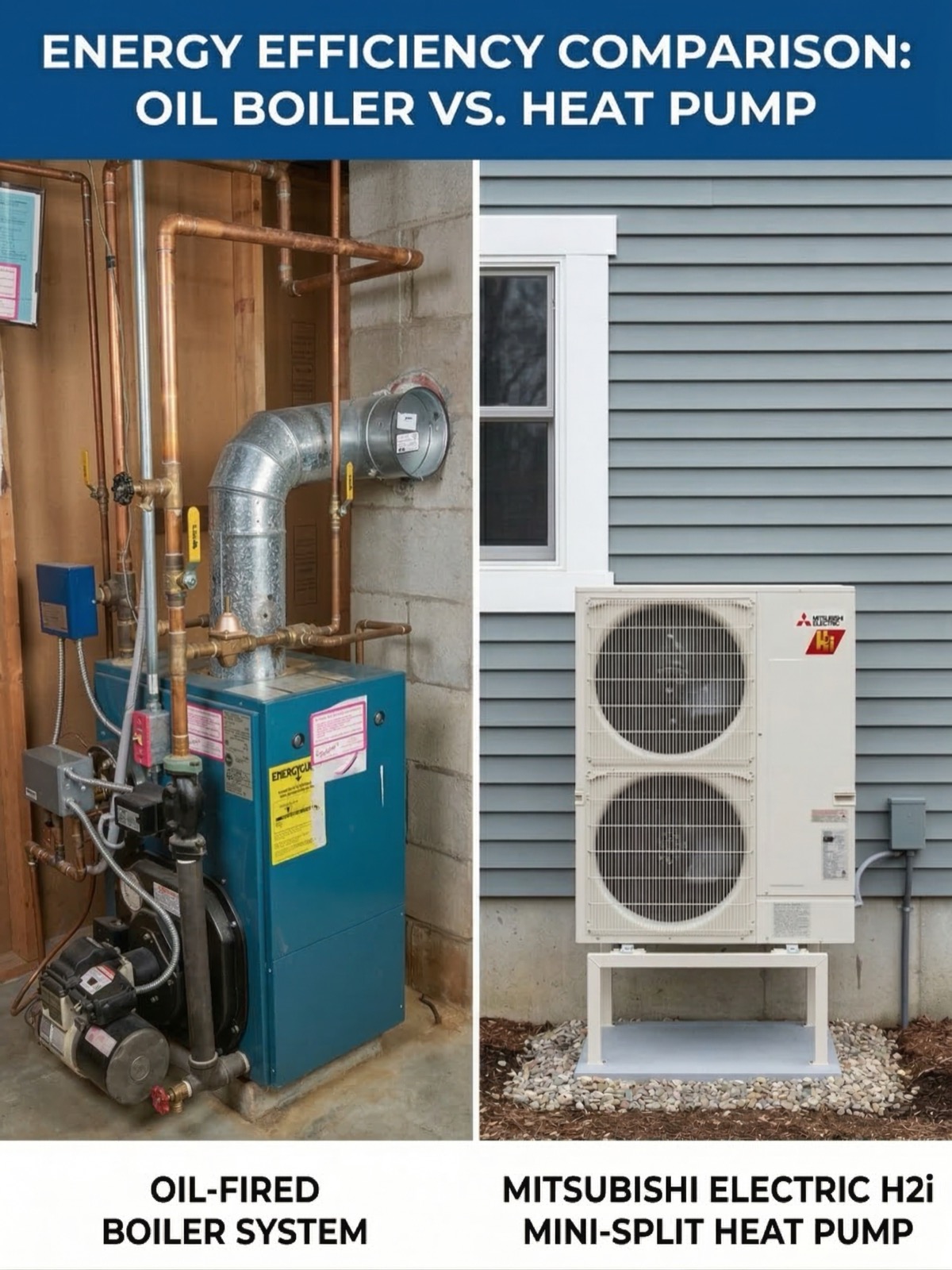
If your home has a cast iron boiler that was installed in the 1980s or 1990s, it's probably operating at 78-82% efficiency. That means 18-22 cents of every dollar you spend on fuel goes up the chimney as waste heat.
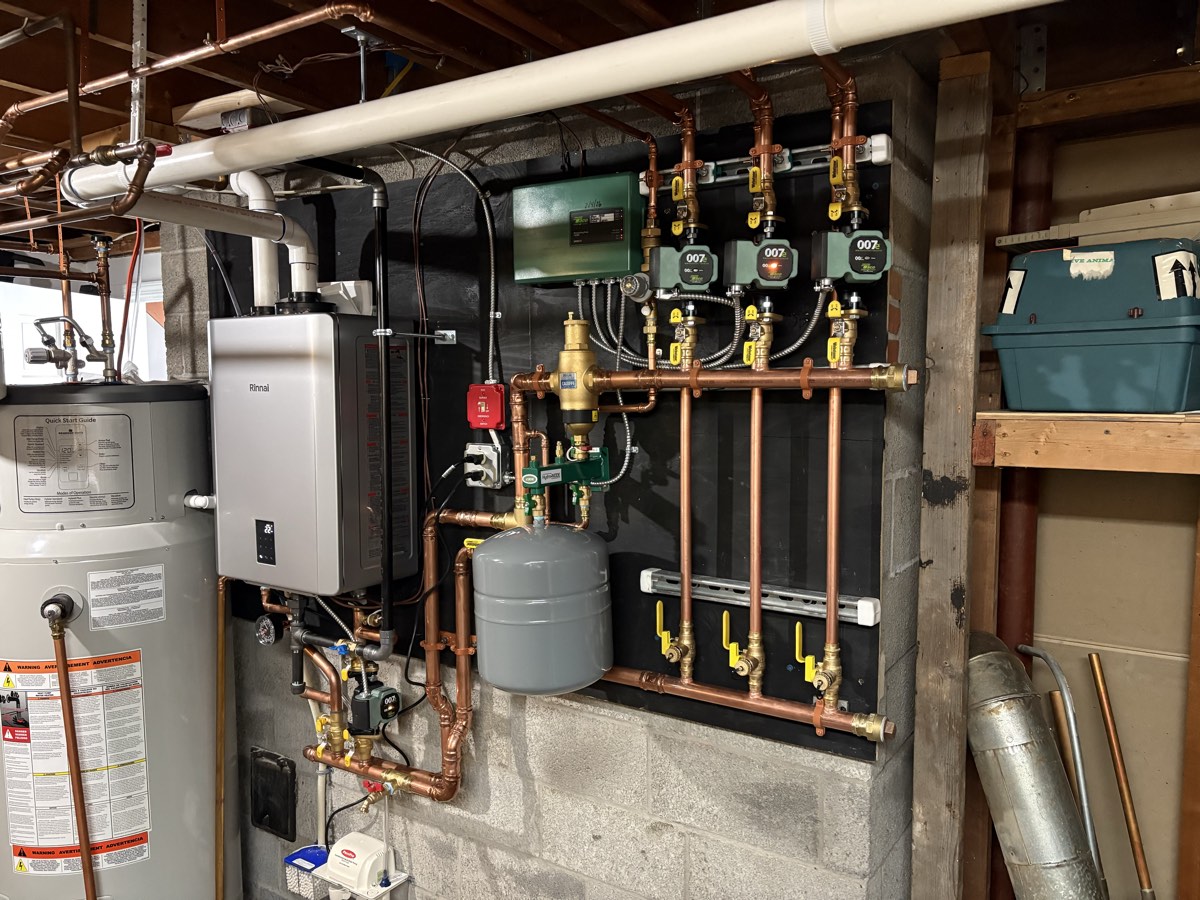
Modern wall-hung condensing boilers operate at 95-98% efficiency. They extract so much heat from the combustion gases that the exhaust is cool enough to vent through PVC pipe instead of a traditional chimney. The "condensing" part of the name refers to this process - the unit condenses water vapor out of the exhaust gases, capturing heat that an older system would waste.
Here is what that means in practical terms:
- A home spending $3,000 per year on natural gas with an 80% efficient boiler would spend roughly $2,400-$2,550 with a 95% efficient condensing unit, saving $450-$600 annually on fuel alone.
- The new boiler is smaller (wall-hung rather than floor-standing), quieter, and modulates its output to match the heating load. It doesn't just run at full blast or shut off. It adjusts.
- Condensing boilers work best with lower water temperatures (typically 120-140F vs. 160-180F for old cast iron), which means they pair well with radiant floor systems and can improve comfort with properly sized baseboard radiators.
When a Boiler Makes More Sense Than a Heat Pump
We install heat pumps in most of the homes we work on. But there are specific situations where a boiler upgrade is the better fit:
Your home already has natural gas baseboard or radiant distribution
If you have radiators or radiant floors throughout the house and natural gas or propane service, you already have a heating distribution system that works. Replacing the boiler with a condensing unit is a straightforward upgrade that uses your existing infrastructure. There's no need to install wall-mounted indoor heads or figure out air distribution for rooms that are already heated by baseboard.
You need whole-house consistent heat without multiple indoor units
Heat pumps deliver heat through wall-mounted or ceiling-mounted heads, and each head serves a zone. In a home with many small rooms, closed floor plans, or three floors, getting even heat distribution from a mini-split system can be challenging. A boiler with hydronic distribution heats every room that has a radiator or radiant loop.
Your heating load is too large for a heat pump-only approach
In larger homes (2,500+ square feet) with older, less-efficient envelopes, the heating load on the coldest nights may exceed what a reasonably sized heat pump system can deliver. A condensing boiler can handle the full load. A hybrid approach keeps the boiler as the primary heat source and adds cold-climate heat pumps for cooling and supplemental heat.
You're not ready for a full transition
Some homeowners want to improve efficiency but aren't ready for the investment or the change that comes with switching fuel sources. Upgrading from an old cast iron boiler to a condensing unit is a familiar technology with a lower upfront cost, and it delivers meaningful savings immediately.
When a Heat Pump Is the Better Choice
To be clear: for most homes in southern Maine, cold-climate heat pumps are the most efficient heating option available. They deliver 2-3 units of heat for every unit of electricity consumed, which translates to lower operating costs than any combustion system. They also provide summer cooling, which a boiler does not.
Heat pumps are typically the better choice when:
- You're heating with oil or propane at high per-unit costs
- Your home is well-insulated (or you're addressing insulation as part of the project)
- You want both heating and cooling
- You're eligible for Efficiency Maine heat pump rebates, which can cover $1,000-$3,000 per unit depending on income
A combination approach starts with insulation and air sealing, then pairs the boiler as the primary heat source with cold-climate heat pumps for cooling and supplemental heat.
Not sure which direction is right for your home? Schedule a free energy assessment and we will evaluate your home as a complete system - envelope, distribution, and heating equipment - and help you understand all the options.
What to Look for in a High-Efficiency Boiler
If a boiler upgrade is the right path for your home, here is what matters:
Efficiency Rating (AFUE)
Look for 95% AFUE or higher. AFUE (Annual Fuel Utilization Efficiency) measures how much of the fuel's energy becomes heat for your home. At 95%, only 5 cents of every fuel dollar is wasted. Anything below 90% is not a condensing unit.
Wall-Hung Design
Modern condensing boilers mount on the wall rather than sitting on the floor. This frees up floor space in your mechanical room and keeps the unit above any potential water issues in the basement. The compact size also makes installation easier in tight spaces.
Modulating Burner
A modulating boiler adjusts its firing rate to match the heating demand. On a mild day, it might run at 30% capacity. On the coldest night of the year, it ramps up to 100%. This is far more efficient and comfortable than an older system that cycles between full-on and full-off, overshooting the thermostat and then letting the temperature drop before firing again.
Stainless Steel Heat Exchanger
Condensing boilers produce acidic condensate as a byproduct of extracting extra heat from the exhaust. A stainless steel heat exchanger resists corrosion and lasts longer than cast iron or aluminum alternatives. Most quality condensing boilers come with 10-15 year heat exchanger warranties.
Outdoor Reset Control
This feature adjusts the boiler's water temperature based on the outdoor temperature. When it's 40F outside, the boiler sends cooler water through the radiators. When it's 0F, it sends hotter water. This maximizes condensing efficiency and reduces fuel consumption.
Natural Gas vs. Propane
Condensing boilers are available for both natural gas and propane. In the Greater Portland area, natural gas is available in many neighborhoods through the local utility. Outside the gas service area, propane is the alternative.
Natural gas is generally cheaper per BTU than propane, so homeowners with gas service tend to see better economics. But propane condensing boilers still offer a major improvement over older propane or oil systems, and they may be the best option in areas where gas service is not available and electricity rates make heat pump economics less favorable.
The Cost of a Boiler Upgrade
A wall-hung condensing boiler installation typically costs $8,000-$14,000, depending on the size of the unit, the complexity of the installation, and whether existing piping and controls need to be updated.
Efficiency Maine offers rebates for qualifying high-efficiency heating equipment, including boilers. Rebate amounts are income-dependent and change periodically, so check current availability when you're planning your project.
Compared to a full heat pump system ($10,000-$20,000+ depending on the number of heads), a boiler upgrade is often a lower upfront investment while still delivering meaningful efficiency gains.
The Whole-Home Perspective
Whether you're upgrading a boiler or installing heat pumps, the same principle applies: start with the envelope. Air sealing and insulation reduce your home's heating load, which means any heating system runs less, costs less to operate, and can be sized smaller.
This is the approach we take at Horizon Homes. We evaluate the whole building, not just the mechanical equipment, because the building envelope and the heating system work together as a single system.
If you're considering a boiler upgrade, we'll also look at your insulation, air sealing, and windows to make sure you're not paying to heat air that's escaping through the attic or basement. The best boiler in the world can't overcome a leaky envelope.
Ready to Explore Your Options?
Horizon Homes installs both high-efficiency boilers and cold-climate heat pumps. We've been serving Greater Portland since 2006, and we're an Efficiency Maine Top-Rated Vendor for 10+ years.
Call us at (207) 221-3221 or schedule a free energy assessment online. We'll evaluate your home, your existing systems, and your goals, then recommend the approach that makes the most sense for your situation. No sales pressure, no obligation.
We serve Portland, South Portland, Westbrook, Scarborough, Falmouth, Cape Elizabeth, and surrounding communities.
Find our guides faster: add Horizon Homes as a preferred source on Google.
Free Home Energy Assessment
Considering Heat Pumps for Your Home?
We evaluate your home's insulation, heating system, and electrical capacity, then give you a clear recommendation with pricing and rebate estimates.
- Free walkthrough, no equipment, no disruption
- Efficiency Maine rebates identified for you
- Written improvement plan with pricing
Schedule Your Free Assessment
We call within 1 business day.