Mini-Split vs Central Heat Pump: Maine Guide
"Should I go ductless or ducted?" It's the first question most homeowners ask.
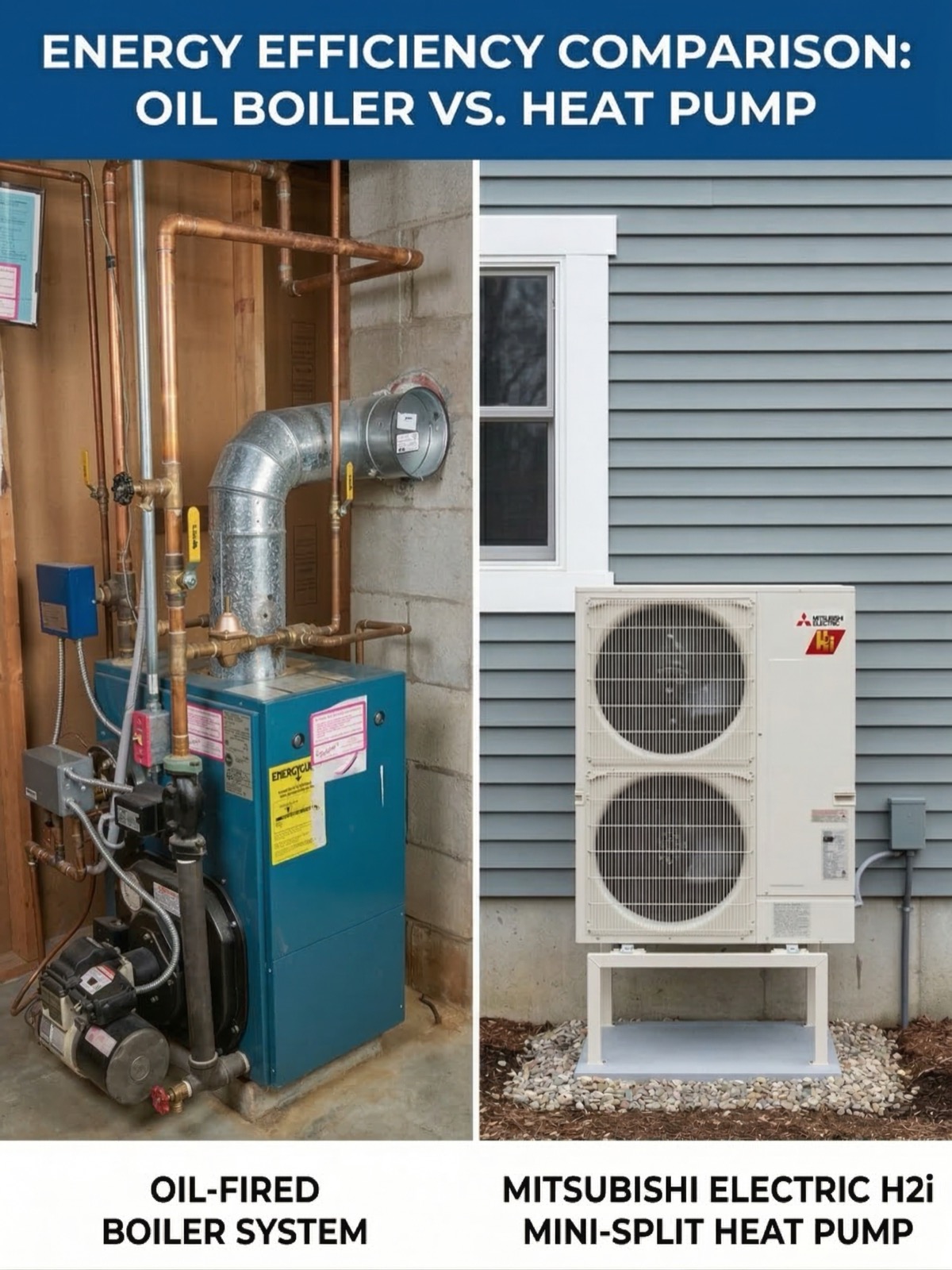
The request is almost always the same: replace the oil boiler with a heat pump system. And the assumption, often based on a neighbor's installation, is that a ducted central system is the obvious path.
Five minutes inside a typical 1960s Cape Cod changes that assumption. No ducts anywhere in the house. The oil boiler fed hot water baseboard radiators. Installing ductwork would mean tearing into finished walls, ceilings, and closets - easily adding $10,000 to $15,000 to the project before the heat pump equipment even entered the picture.
This is the reality for most homes in Greater Portland and across Maine. The majority of homes here were built with oil boilers and hydronic baseboard heat. No ducts. That single fact changes the entire mini-split vs central heat pump conversation.
What Is a Ductless Mini-Split Heat Pump?
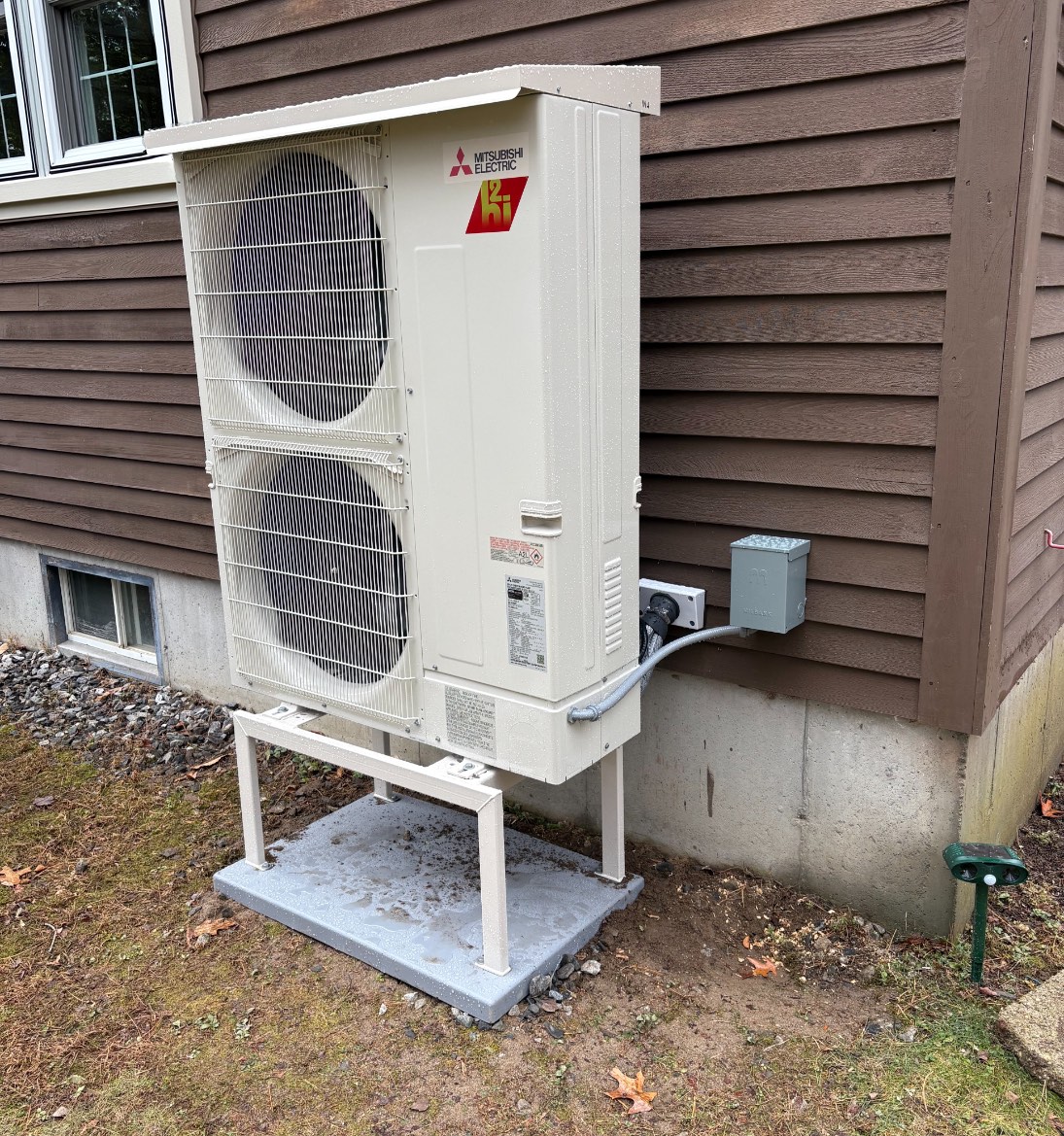
A ductless mini-split system has two main components: an outdoor compressor unit and one or more indoor air handlers mounted on walls or ceilings. Refrigerant lines connect the two through a small hole in the wall, about three inches in diameter.
Each indoor unit heats and cools its own zone independently. A three-zone system, for example, might have one unit in the living area, one in the primary bedroom, and one in a finished basement. Each zone has its own thermostat and can run at different temperatures.
The installation process is straightforward. There is no ductwork to design, fabricate, or install. A typical three-zone system takes one to two days to install, with minimal disruption to the home.
What Is a Central (Ducted) Heat Pump?
A central heat pump works like a traditional forced-air system. One outdoor unit connects to an indoor air handler that pushes heated or cooled air through a network of ducts to every room in the house. If your home already has a forced-air furnace with ductwork in good condition, a central heat pump can sometimes use that existing distribution system.
The key word is "sometimes." Ductwork designed for a gas furnace may not be sized correctly for a heat pump. Heat pumps deliver air at lower temperatures than furnaces, so they need higher airflow to move the same amount of heat. Undersized ducts create noise, pressure problems, and comfort issues.
Why Mini-Splits Win for Most Maine Homes
For the majority of homes in our service area, ductless mini-splits are the better choice. Here is why.
No Ductwork Required
This is the simplest and most important factor. If your home doesn't have ducts, adding them is expensive, invasive, and often impractical. Older Maine homes have plaster walls, low basement ceilings, and tight floor cavities that make duct installation difficult or impossible without major renovation.
A mini-split system avoids all of this. The refrigerant lines run through small openings, and the indoor units mount directly to walls or ceilings. The installation footprint is minimal compared to a full duct system.
Zone-by-Zone Temperature Control
With a central ducted system, your entire home is one zone. The thermostat in the hallway decides the temperature for every room. If the living room is comfortable, the upstairs bedrooms might be five degrees warmer. If the bedrooms are right, the living room might be too cool.
Mini-splits solve this by treating each area independently. Keep the bedroom at 66 degrees for sleeping while the living room runs at 70. Turn down the guest room when nobody is using it. This kind of control isn't possible with a single-zone ducted system unless you add zone dampers and multiple thermostats, which adds cost and complexity.
Zone control also saves energy. You heat and cool the spaces you're using, not the ones you aren't. Most homeowners see a 20-30% reduction in energy use compared to heating the entire home to one temperature.
No Duct Losses
Even in homes that have ductwork, those ducts are often a problem. Ducts running through unconditioned attics and crawl spaces lose 20-30% of heated air before it reaches the living space. Leaky duct joints, poor insulation around duct runs, and long distances from the air handler all reduce efficiency.
Mini-splits deliver heat directly to the room. There is no distribution system to lose energy through. The refrigerant lines are small, well-insulated, and lose almost nothing in transit.
Cold-Climate Performance
This is where the conversation gets specific to Maine. Not all heat pumps perform the same in cold weather. Standard heat pumps lose capacity and efficiency as temperatures drop below freezing. By the time you hit zero degrees, many standard models can't keep up.
Cold-climate mini-splits are a different category. The Mitsubishi Hyper-Heat systems we install are rated to operate at full capacity down to 5 degrees Fahrenheit and continue producing heat down to -13 degrees. These units use advanced inverter compressor technology that adjusts output continuously rather than cycling on and off.
At Horizon Homes, we exclusively install cold-climate rated equipment. Maine winters are too demanding for anything less. When we say "cold-climate heat pump," we mean a system specifically engineered and tested for temperatures well below zero.
Ready to find the right system for your home? Schedule a free energy assessment and we will walk through your options based on your home's layout, insulation, and heating needs. Or call us at (207) 221-3221.
When a Ducted System Makes Sense
Ducted heat pumps are not the wrong choice for every home. There are specific situations where they work well.
You already have good ductwork. If your home has a forced-air furnace with properly sized, well-sealed ductwork in conditioned space, a ducted heat pump can use that existing system. This is more common in homes built after 1990, especially ranch-style homes with ductwork in the basement.
You prefer a cleaner look. Some homeowners don't want wall-mounted units in their living spaces. A ducted system hides the distribution entirely. Short-run ducted options from Mitsubishi can serve individual rooms through small ceiling cassettes, offering a middle ground between fully ducted and wall-mounted systems.
New construction. If you're building new, ductwork can be designed specifically for a heat pump from the start. Proper sizing, sealed connections, and conditioned duct runs eliminate the problems that plague retrofit duct installations.
The Hybrid Approach: Mini-Splits Plus Your Existing Boiler
Many Maine homeowners are choosing a phased approach rather than a full system replacement. This is one of the strategies we recommend most often.
Step one: Install cold-climate mini-splits in the main living areas for cooling and supplemental heat.
Step two: Keep your existing boiler as the primary heat source through the hydronic distribution. Insulation and air sealing reduce the heating load on both systems.
Step three: When the boiler reaches end of life in 5-10 years, evaluate whether to replace it or expand the heat pump system to cover the full home.
This approach adds cooling and zone control while preserving your hydronic heat. It also lets you phase improvements to suit your budget.
What About Efficiency Maine Rebates?
Both ducted and ductless cold-climate heat pumps qualify for Efficiency Maine rebates. The rebate amounts are income-dependent, but all Maine homeowners qualify for some level of support. Rebates can cover a significant portion of the installed cost, and we handle the paperwork as part of the project.
We also apply rebate amounts directly to your invoice, so you don't pay the full price and wait for reimbursement. You pay the net amount after rebates from day one.
As an Efficiency Maine Top Contractor for 10+ years, we know the program inside and out. We can walk you through what you qualify for during your free energy assessment.
Sizing Matters More Than Brand
Whether you choose a mini-split or ducted system, proper sizing is the single biggest factor in performance and efficiency. An oversized system short-cycles, wastes energy, and creates uneven temperatures. An undersized system can't keep up on the coldest days.
This is why insulation and air sealing matter so much in the heat pump conversation. A well-insulated home needs a smaller heat pump. A smaller system costs less to install, runs more efficiently, and lasts longer because it isn't working as hard.
At Horizon Homes, we always look at the whole picture. We assess your insulation, air sealing, and building envelope before recommending a heat pump system. This whole-home approach means the equipment we install is matched to your home as it will be after all improvements are complete, not as it is today.
How to Decide: A Simple Framework
Choose mini-splits if:
- Your home has no existing ductwork
- You want zone-by-zone temperature control
- You want to phase the project over time
- Your home was built before 1990 with hydronic heat
Choose ducted if:
- You have existing, properly sized ductwork in good condition
- You strongly prefer hidden distribution
- You're building new and can design ducts for heat pump use
Not sure? That is exactly what our free home energy assessment is for. We walk through your home, look at your layout and existing systems, and give you a clear recommendation. No cost, no obligation, no pressure.
The Bottom Line
For the vast majority of Maine homes, ductless mini-splits are the most practical, efficient, and cost-effective path to heat pump heating and cooling. They avoid the expense and disruption of ductwork, provide better zone control, and the cold-climate models we install handle Maine winters reliably.
The right system depends on your specific home. Your layout, existing heating system, insulation levels, and budget all factor into the recommendation. A free energy assessment is the best way to get a clear, personalized answer.
Horizon Homes has been helping Greater Portland homeowners find the right heating solutions since 2006. Schedule your free energy assessment or call (207) 221-3221 to talk through your options.
Find our guides faster: add Horizon Homes as a preferred source on Google.
Free Home Energy Assessment
Considering Heat Pumps for Your Home?
We evaluate your home's insulation, heating system, and electrical capacity, then give you a clear recommendation with pricing and rebate estimates.
- Free walkthrough, no equipment, no disruption
- Efficiency Maine rebates identified for you
- Written improvement plan with pricing
Schedule Your Free Assessment
We call within 1 business day.