DIY vs. Hiring an Air Sealing Contractor in Maine: What You Need to Know
Editor's note (October 2026): Efficiency Maine changed its insulation and air sealing rebates for work completed on or after October 1, 2026. They are now a fixed amount per zone of the house (attic, walls, basement) instead of a percentage of project cost, and the Efficiency Maine rebate figures in this article are current as of October 2026. Amounts depend on household income and project scope. See current Efficiency Maine rebates.
You can feel the cold air coming from somewhere. Maybe the baseboards, maybe the windows, maybe that one corner of the bedroom that is always five degrees colder than everywhere else. So you buy a tube of caulk and go to work on every gap you can find.
A few hours later, the gaps around your windows look clean. The door sweeps are new. And the cold air is still there.
This is the gap between DIY weatherstripping and professional air sealing. Both are valid. They just address different problems. Understanding the difference will save you time, money, and a lot of frustration.
What You Can Do Yourself
Some air sealing tasks are straightforward, require no specialized equipment, and deliver modest but real improvements. If you are a homeowner comfortable with basic tools, these are worth doing:
Caulking around windows and door frames. Gaps between the trim and the wall are visible, accessible, and easy to seal with a tube of paintable caulk. This addresses 10-15% of typical air leakage in an older home.
Installing door sweeps and weatherstripping. Exterior doors that rattle in the wind or show daylight at the bottom are leaking conditioned air. A $20 door sweep takes 15 minutes to install.
Adding foam gaskets behind outlet and switch plates on exterior walls. Each one leaks a small amount of air. Across 20-30 outlets, it adds up.
Sealing around dryer vents and exterior penetrations. Where pipes or ducts pass through exterior walls, gaps are common and easy to seal with expanding foam.
These are real improvements. If your home has not had any weatherization work, they are worth doing regardless of what else you plan. But they address roughly 10-20% of total air leakage in a typical older Maine home.
The other 80% is in places you cannot see or reach without professional equipment and access to unconditioned spaces.
What a Professional Air Sealing Contractor Does
The leaks that account for the majority of heat loss in Maine homes are hidden. They are in the attic floor, the basement rim joists, and the wall-to-floor junctions between stories. Finding them requires a different approach.
Blower door diagnostic testing
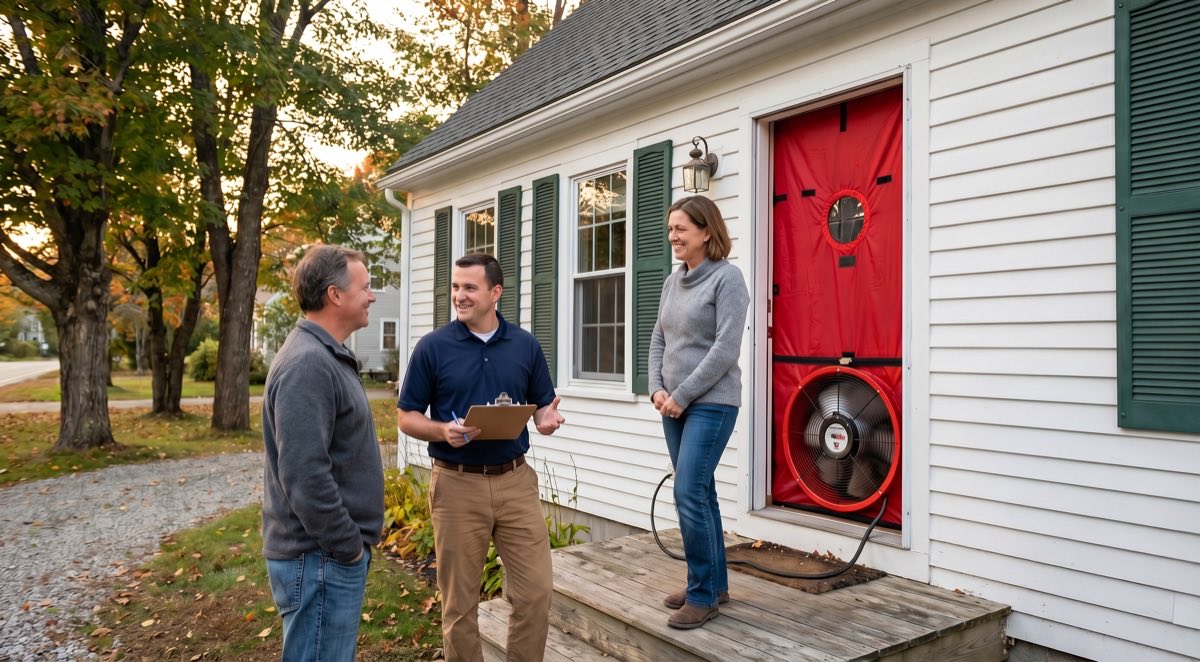
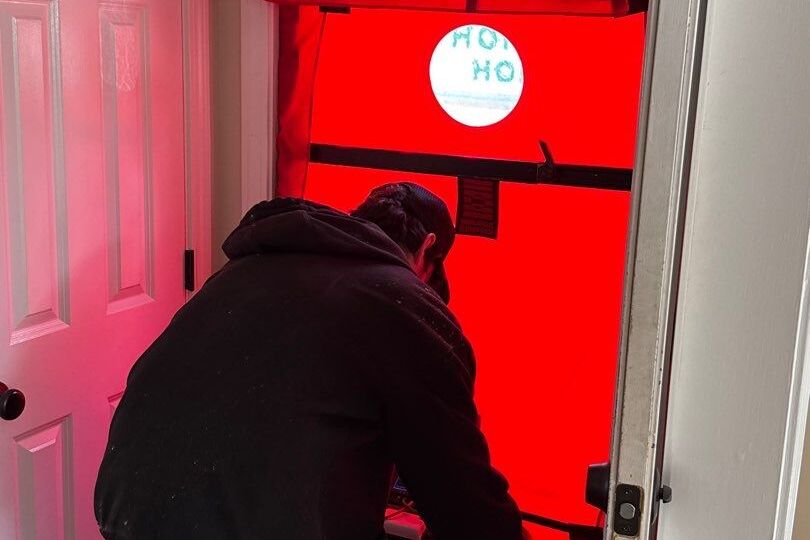
A blower door is a calibrated fan that fits in an exterior doorway and depressurizes the house to a standardized pressure. This makes every air leak measurable. An air sealing contractor uses the blower door to establish a baseline (how leaky is the home right now), locate leaks (where the air is moving), and verify improvement (how much did the sealing work reduce leakage).
Without a blower door, you are guessing. With one, you have numbers.
Most older homes in Greater Portland test at 8-15 air changes per hour at 50 pascals (ACH50). After professional air sealing, that number drops by 30-50%. The reduction translates directly to lower heating bills and better comfort.
Attic bypasses and top plates
The attic floor is the biggest single source of air leakage in most homes. Warm air rises through gaps around:
- Plumbing stacks and vent pipes
- Electrical wiring holes
- Recessed can lights (especially older non-IC-rated fixtures)
- The attic hatch or pull-down stairs
- Chimney and flue chases
- Open stud cavities at the top of interior walls
Sealing these requires working in the attic, often in tight spaces with limited headroom, using fire-rated materials around flues and chimneys. This is not a weekend project. It is skilled work in an uncomfortable environment.
Rim joist sealing
The rim joist is the band of framing where the first floor sits on the foundation. In most homes built before 1990, it is completely unsealed. Cold air enters through gaps between the foundation and framing, through old mortar joints, and around utility penetrations.
Professionals seal rim joists with cut-and-cobble polyiso foam board or two-part spray foam, covering the entire perimeter and sealing each bay individually. This addresses 20-30% of total air leakage in many homes.
Hidden pathways between floors
Older homes have internal air channels that are invisible from the living space. Dropped ceiling soffits, plumbing chases, stacked closets, and balloon-frame wall cavities all create pathways for air to move between conditioned and unconditioned spaces. Identifying and sealing these requires building science knowledge - understanding how air, heat, and moisture interact in a structure.
The Cost of Missing the Big Leaks
Here is why the distinction matters. If you DIY-seal the 10-15% of leakage you can see and reach, you will notice a small improvement. But the attic bypasses, rim joists, and hidden chases account for the remaining 85-90%. That is where the heating dollars are going.
A homeowner who spends $200 on caulk and weatherstripping might reduce their heating bill by 3-5%. The same homeowner who invests in professional air sealing (typically $2,000-$5,000 before rebates) sees 15-25% reductions.
The math is clear: professional air sealing pays for itself in two to four heating seasons. DIY sealing helps, but it does not solve the core problem.
Efficiency Maine Rebates Require a Registered Contractor
This is an important detail. Efficiency Maine weatherization rebates of up to $8,600 per home are only available when the work is performed by a registered vendor. Since October 1, 2026, the rebates are a fixed dollar amount per zone of the house (attic, walls, basement) based on household income, not a percentage of cost. Air sealing rebates add $50 to $300 per area, depending on the area and your income tier.
Because the amounts are fixed per zone, what you pay out of pocket depends on your income tier, which zones you treat, and how large each zone is. The rebate narrows the cost gap between DIY and professional work, and professional work delivers far better results.
As a registered Efficiency Maine vendor, Horizon Homes handles all the rebate paperwork and deducts the amount directly from your invoice. You pay the net amount. No waiting for reimbursement.
When to DIY and When to Call a Contractor
A simple framework:
DIY if you are dealing with visible, accessible gaps at windows, doors, and exterior penetrations. These are worth sealing regardless of your plans for professional work.
Call a contractor if you are dealing with drafts that persist despite visible sealing, uneven temperatures between floors, high heating bills relative to your home's size, or cold floors on the first level. These are signs that the major leaks are in the attic, basement, and hidden pathways - areas that require diagnostic testing and professional access.
Most homeowners who schedule an assessment with us have already tried the DIY approach. The fact that the problems persist is what brings them to the phone.
Start With the Assessment
A free energy assessment shows you exactly where your home is leaking air and how much. We walk through from attic to basement, identify the major air leakage pathways, and give you a prioritized plan with costs and rebate estimates.
No diagnostic equipment during the assessment. No obligation. Just a clear picture of what your home needs.
Schedule your free energy assessment or call us at (207) 221-3221. Horizon Homes is BPI-certified and has been an Efficiency Maine Top-Rated Vendor for 10+ years. We have been sealing and insulating homes across Greater Portland since 2006.
Find our guides faster: add Horizon Homes as a preferred source on Google.
Free Home Energy Assessment
Ready to Lower Your Energy Bills?
We identify the improvements that will have the biggest impact on your home's energy use, with clear pricing and rebate estimates.
- Free walkthrough, no equipment, no disruption
- Efficiency Maine rebates identified for you
- Written improvement plan with pricing
Schedule Your Free Assessment
We call within 1 business day.