Spring Is the Best Time for an Energy Assessment in Maine

Editor's note (October 2026): Efficiency Maine changed its insulation and air sealing rebates for work completed on or after October 1, 2026. They are now a fixed amount per zone of the house (attic, walls, basement) instead of a percentage of project cost, so the insulation rebate figures, combined totals, and cost examples below reflect the program when this article was published. See current Efficiency Maine rebates.
Editor's note (March 2026): Rebate amounts in this article reflect conditions at the time of publication. See current rebates.
We booked 14 energy assessments last week across Greater Portland. Come October, that number triples. The phone starts ringing in September, and by the time the first heating bill arrives, our schedule is packed six to eight weeks out.
If you have been thinking about getting your home assessed, spring is not just a good time. It is the best time.
Why Most Homeowners Wait Too Long
The pattern repeats every year. November rolls around, the furnace kicks on, and suddenly everyone in Cumberland County wants to talk about insulation. By then, every weatherization contractor in southern Maine is booked through the holidays. You spend another winter with the same drafty rooms, the same heating bills, and the same plan to "do something about it next year."
Spring breaks that cycle. Right now, between late March and June, is when you have every advantage: shorter wait times, better working conditions, and enough runway to get improvements done before next heating season.
What a Spring Assessment Gets You
A free home energy assessment is a walkthrough of your home where we look at your insulation, air sealing, heating system, and comfort issues. We identify where your home is losing energy, then give you a clear plan with prioritized improvements and what they will cost after Efficiency Maine rebates.
Spring gives you three specific benefits that disappear by fall.
1. Time to Plan and Budget
When you get your assessment in April or May, you have months to review the recommendations, explore financing options through Efficiency Maine Green Bank (starting at 0% APR), and decide on scope. There is no pressure to make a decision before the first cold snap.
Compare that to getting assessed in October. You are looking at a six-week wait for the assessment itself, then another four to six weeks for the work. That puts your project in December or January, when attic work is harder and schedules are tightest.
2. Better Conditions for the Work
Insulation and air sealing are easier, faster, and more effective in mild weather. Cellulose blows more consistently when the temperature is moderate. Air sealing materials cure properly. And nobody has to work in a 130-degree attic (summer) or a below-freezing one (winter).
For cold-climate heat pump installations, spring is ideal because the system can be tested in both heating and cooling modes before you need either one.
3. Rebates Before the Rush
Efficiency Maine rebate funding is allocated annually. While the programs have been well-funded in recent years, early movers have the advantage. Getting your assessment and project completed in spring or early summer means your rebate application is processed before the fall wave of submissions.
For insulation and air sealing, rebates pay a fixed amount per zone by household income, up to $8,600 per home. Heat pump rebates range from $1,000 to $3,000 per unit. These are applied directly to your invoice, so you never wait for a reimbursement check.
Schedule a free energy assessment and we will show you exactly where your home is losing energy, with a plan you can act on before fall.
What Happened to the Federal Tax Credits?
If you have been reading about energy efficiency tax credits, here is the update: the federal 25C tax credit expired on December 31, 2025. That means the $1,200 insulation credit and the $2,000 heat pump credit are no longer available for 2026 projects.
The good news is that Efficiency Maine rebates are state-funded (through RGGI and utility surcharges) and are not affected by the federal change. For many homeowners, the Efficiency Maine rebates are often more generous than the federal credits were, especially for income-qualifying households.
A spring assessment helps you understand exactly which rebates apply to your situation before committing to anything.
The Spring Assessment Timeline
Here is what a typical spring project looks like when you start now:
Week 1-2: Schedule and complete your free energy assessment. We walk through your home, identify the priorities, and present a plan with costs and rebate estimates.
Week 3-4: Review the plan, ask questions, finalize scope, and submit your rebate application. If you are financing, the Green Bank application typically takes a few days.
Week 5-8: We complete the work. For a typical insulation and air sealing project in a Greater Portland home, this is usually a two to three day process. Heat pump installations typically take one to two days.
By June or July: Your home is sealed, insulated, and ready. You spend the summer comfortable (heat pumps cool, too) and head into October knowing your heating costs are about to drop.
Compare that to starting in September: you are looking at December completion at the earliest, spending another $3,000+ on heating oil while you wait.
What We Look at During the Assessment
During your free energy assessment, we walk through your home with you and check:
- Attic insulation. Is it at R-50 (the recommended level for Maine retrofits)? What type is it? Is it compressed, water-damaged, or missing in spots?
- Basement and crawlspace. Uninsulated basement walls and rim joists are some of the biggest sources of heat loss in Maine homes. We look at foundation type, moisture issues, and current insulation.
- Air leaks. Visible gaps around penetrations, attic hatches, recessed lighting, and plumbing chases. The stuff you can feel on a cold day but might not notice in spring.
- Heating system. What are you running, how old is it, and what would a transition to a cold-climate heat pump or high-efficiency boiler look like?
- Comfort issues. Cold rooms, hot upstairs, ice dams last winter, high bills. We want to hear what is bothering you about your home.
The assessment takes about 45 minutes to an hour. There is no cost, no obligation, and no high-pressure sales pitch. We are a 20+ year Efficiency Maine Top-Rated Vendor - our job is to give you good information so you can make a smart decision.
Why "Energy Assessment," Not "Energy Audit"?
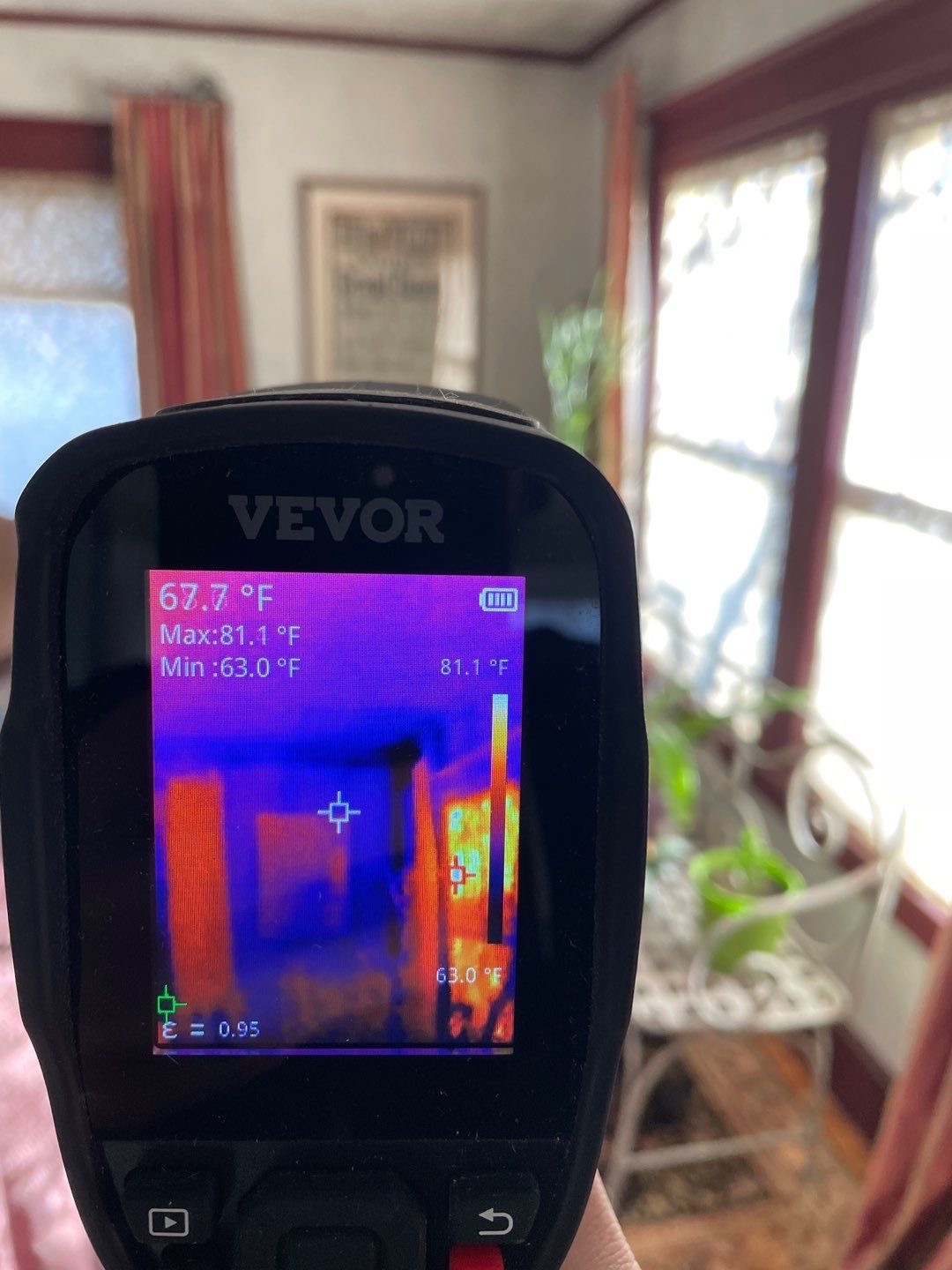
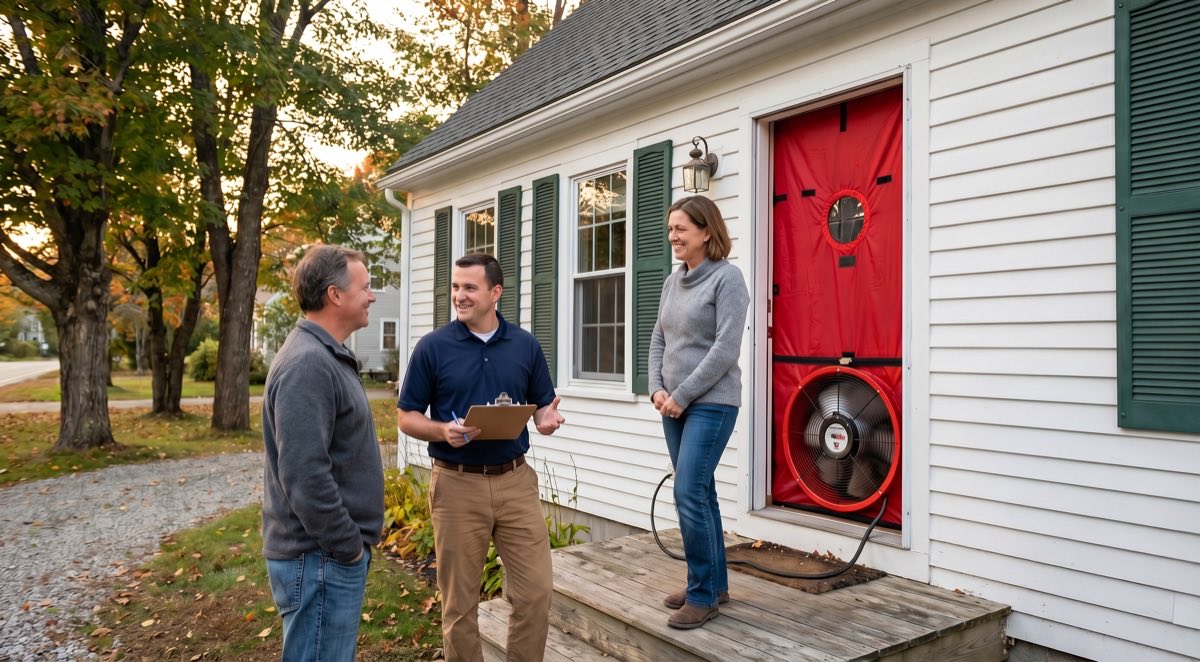
You may see other companies advertise a "free energy audit" that includes blower door testing and infrared cameras. Our assessment is different by design. If you are curious about what a traditional paid audit costs and how it compares to what we offer, see our breakdown: how much does a home energy audit cost in Maine?
We start with a visual walkthrough because it tells us everything we need to build your plan. Blower door testing is an invasive diagnostic tool that we use during the actual air sealing work to measure improvement and target remaining leaks. Using it as a sales tool adds complexity to a visit that should be simple and stress-free.
The result is the same: you get a detailed understanding of your home's energy performance and a clear path to improving it. We just skip the part where you have to tape off your kitchen and stand in a loud, pressurized house for 20 minutes during a sales call.
Start This Spring. Save Next Winter.
Every week you wait past mid-April, the schedule gets tighter. By July, we are booking into late summer and fall. By September, we are telling people their project will not be done before heating season.
Right now, we have availability in the Greater Portland area for assessments within one to two weeks. That includes Portland, South Portland, Scarborough, Cape Elizabeth, Gorham, Westbrook, Windham, Falmouth, Cumberland, Yarmouth, Freeport, Brunswick, Saco, Biddeford, and Kennebunk.
Schedule your free energy assessment and get a clear plan for your home before the fall rush. Or call us at (207) 221-3221.
Find our guides faster: add Horizon Homes as a preferred source on Google.
Free Home Energy Assessment
Ready to Lower Your Energy Bills?
We identify the improvements that will have the biggest impact on your home's energy use, with clear pricing and rebate estimates.
- Free walkthrough, no equipment, no disruption
- Efficiency Maine rebates identified for you
- Written improvement plan with pricing
Schedule Your Free Assessment
We call within 1 business day.