This Winter Cost You a Fortune. Next Winter Doesn’t Have To.

Editor's note (October 2026): Efficiency Maine changed its insulation and air sealing rebates for work completed on or after October 1, 2026. They are now a fixed amount per zone of the house (attic, walls, basement) instead of a percentage of project cost, so the insulation rebate figures, combined totals, and cost examples below reflect the program when this article was published. See current Efficiency Maine rebates.
Editor's note (March 2026): Oil prices and rebate amounts referenced in this article reflect conditions at the time of publication. Efficiency Maine rebate amounts are subject to change. See current rebates.
If you heat with oil in Maine, this winter hit different. Not just the cold. The cost. Heating oil crossed $4 a gallon statewide in early March, and you probably watched those delivery receipts climb all winter thinking, there has to be a better way.
There is. And spring is exactly the right time to do something about it.
What Just Happened to Maine Heating Oil Prices
Here is the picture in plain numbers. As of the first week of March 2026, the statewide average for heating oil is $3.94 to $4.00 per gallon, depending on your region. That is nearly 20 cents higher than March 2025, when the average sat around $3.76. Central Maine is seeing the highest prices at $4.00, while southern and western parts of the state hover around $3.88.
The recent spike was sudden. Between late February and early March, prices jumped over 3 percent in a single week after global conflict sent crude oil futures climbing. For a household that burns 800 gallons a season (a modest estimate for a Greater Portland home), that translates to roughly $3,200 in heating oil costs this winter alone.
And this is not a one-time event. Oil prices have been on a rollercoaster for years, and every geopolitical flare-up, pipeline disruption, or refinery issue lands squarely on your monthly budget. The pattern is clear: the cost of heating with oil in Maine is volatile, unpredictable, and trending in the wrong direction.
Why Spring Is Your Best Window to Act
Most homeowners think about their heating situation in October, when the furnace kicks on and the first delivery truck shows up. By then, the phone lines at every contractor in southern Maine are ringing off the hook, schedules are packed into November and December, and you are stuck with whatever your house gives you for another winter.
Spring flips that equation. Right now, between mid-March and June, is the ideal time to address your home’s energy performance for three practical reasons:
- Contractor availability. Weatherization and heat pump installers are booking now for spring and early summer. Wait until fall and you may be looking at a six to eight week wait.
- Better working conditions. Attic insulation, air sealing, and heat pump installation are all easier and faster to complete in mild weather. No frozen pipes to work around, no rushing to get the heat back on.
- Time to see results. Improvements made this spring will be fully in place and tested well before next heating season starts. You will head into October knowing exactly where you stand.
Think of spring as the off-season for home energy work. The demand is lower, the conditions are better, and you have the luxury of time to make smart decisions rather than panicked ones.
Schedule a free energy assessment and we will show you exactly where your home is losing heat and money, before the fall rush starts.
The Three Moves That Actually Lower Your Heating Costs
There is a lot of advice floating around about saving energy. Some of it helps. Most of it is marginal. If you want to make a real, measurable difference in what you spend to heat your Maine home, these are the three things that matter most, in this order.
These are the energy efficient home improvements that move the needle. Here is each one in detail.
1. Air sealing. Before you add insulation or install a heat pump, you need to stop the uncontrolled air leaks in your building envelope. In a typical Maine home, the gaps around attic hatches, basement rim joists, electrical penetrations, and pipe chases can add up to the equivalent of leaving a window open all winter. Air sealing closes those gaps and is usually the highest return-on-investment improvement you can make.
2. Insulation. Once your home is properly sealed, blown-in cellulose insulation in attics, walls, and basement ceilings keeps the heat you are paying for inside the house where it belongs. Many homes in the Greater Portland area were built with minimal insulation by today’s standards, and upgrading can reduce heating costs by 20 to 40 percent.
3. Switch your fuel source. If you are heating with oil, you have options. Natural gas and propane systems cost less per BTU to operate than oil and are not subject to the same wild price swings. A high-efficiency cold-climate heat pump goes a step further, running on electricity instead of any fossil fuel, with savings of $1,200 to $1,600 per year over oil. We install all three: natural gas, propane, and heat pump systems. The right choice depends on your home, your budget, and whether natural gas is available on your street. That is exactly what we help you figure out.
The order matters. Insulating before installing heat pumps means your heat pump can be sized smaller, costs less to run, and keeps every room comfortable. It is a whole-home approach, and it is the strategy that delivers the biggest long-term savings.
What Efficiency Maine Will Pay For Right Now
Here is the part that surprises most homeowners: you do not have to pay for all of this yourself. Efficiency Maine rebates cover a significant portion of both weatherization and heat pump projects.
As of 2026, the available rebates include:
- Weatherization (insulation and air sealing): a fixed amount per zone of the house, set by income tier. For a large zone (500+ square feet), that is $2,000 for any income, $3,000 for moderate-income households, and $4,000 for low-income households, with a limit of $8,600 per home
- Whole-home heat pumps: $1,000 per outdoor unit for any income, $2,000 for moderate-income, and $3,000 for low-income (up to $9,000 total for qualifying households)
One important change for 2026: the $2,000 federal heat pump tax credit (Section 25C) expired at the end of 2025. That means Efficiency Maine rebates are now the primary financial incentive for these upgrades. They are not set to expire this year, but they are subject to change and are funded from a limited pool.
For a typical project that includes attic insulation, air sealing, and one or two heat pump units, homeowners in the Greater Portland area are regularly seeing $4,000 to $13,000 in rebates applied to their project cost. That can bring a full whole-home upgrade into the range of what you would spend on two or three years of oil deliveries, except this investment pays you back every single winter after that.
We handle the rebate paperwork for every project. You do not need to navigate the application process on your own. For a full breakdown of current rebate amounts, see our Efficiency Maine rebates guide.
What a Free Energy Assessment Tells You
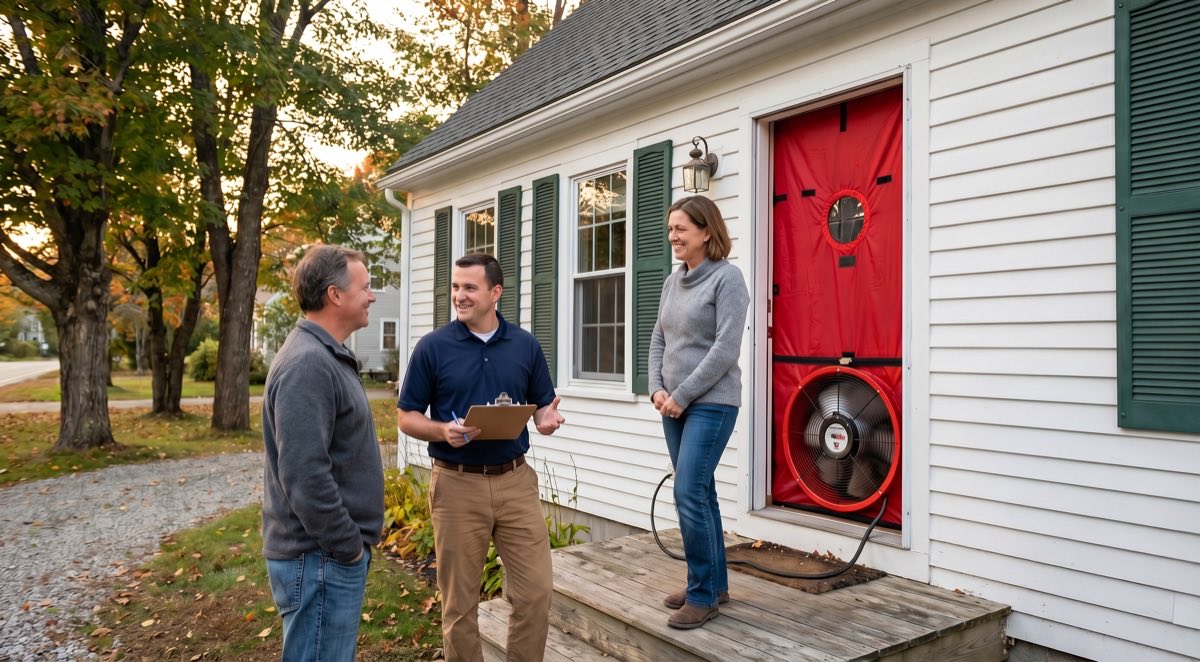
If you are thinking about making changes but are not sure where to start, that is exactly what a home energy assessment is for. It is not a sales pitch. It is a free, no-pressure walkthrough of your home.
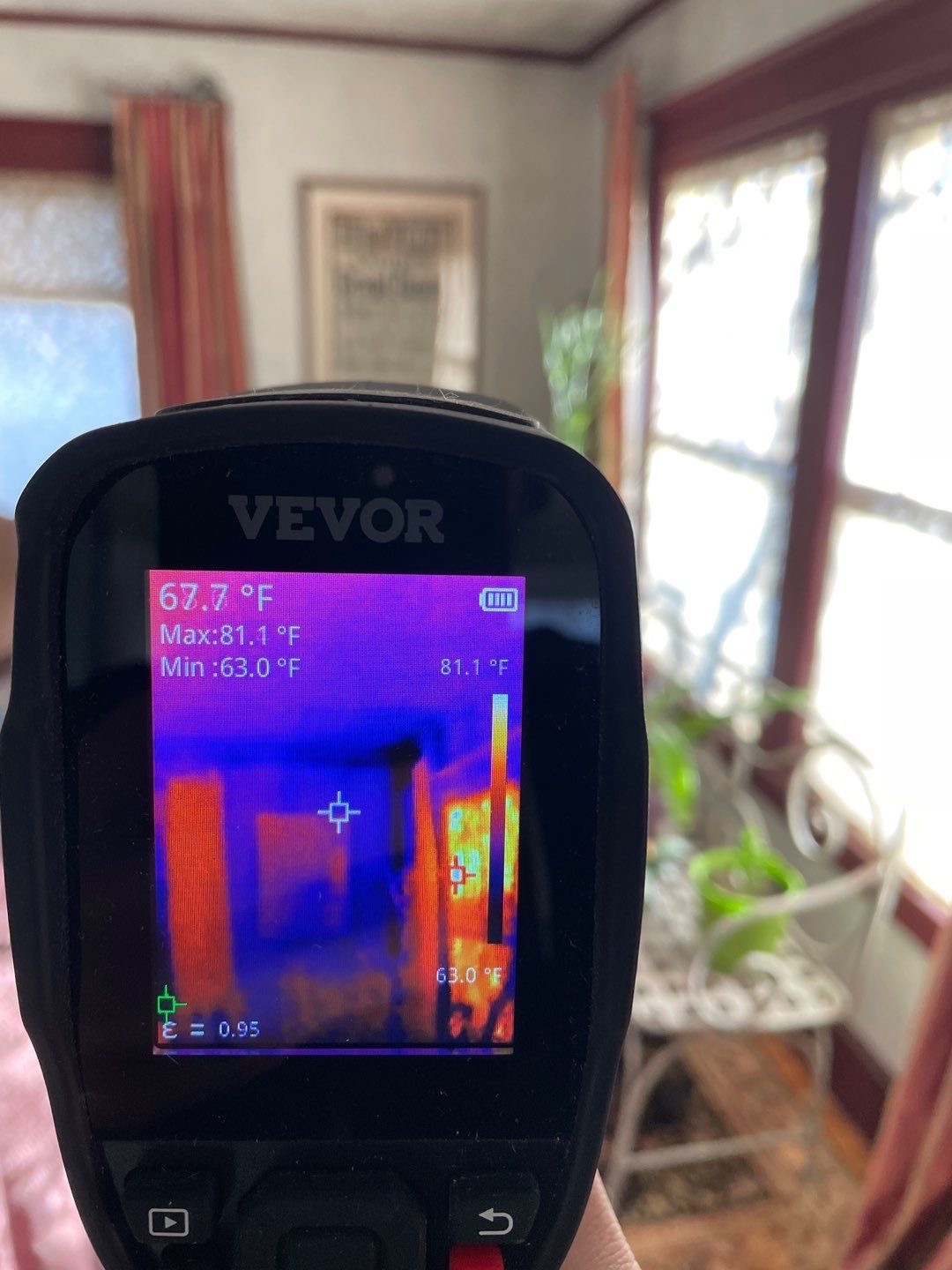
When one of our energy advisors visits your home, they walk through every area (attic, basement, walls, windows, heating system) and identify exactly where heat is escaping and where the biggest opportunities for improvement are. The assessment takes about an hour, and you walk away with a clear picture of:
- Where your home is losing the most heat
- Which improvements will make the biggest difference for your specific house
- What rebates you qualify for
- Realistic cost estimates and projected savings
There is no obligation, and no pressure. We have been doing this in Greater Portland since 2006, and we have assessed hundreds of Maine homes. Every house is different, and cookie-cutter advice does not cut it. If you want to know what is going on inside your walls and attic, here is what to expect during an assessment. If you are weighing which improvements to do first, see our guide to the 5 best energy efficient home improvements for Maine homes.
Your Heating Bill Does Not Have to Be a Gamble
This past winter was expensive and stressful for a lot of Maine homeowners. But here is the optimistic truth: you do not have to keep playing the same game with oil prices.
The technology exists right now to cut what you spend on heating. The rebates exist to make it affordable. And spring gives you the time and conditions to get it done right, without rushing.
Imagine heading into next October knowing your attic is sealed tight, your walls are properly insulated, and your heat pump is ready to go. No anxiously checking oil futures. No wincing at delivery receipts. Just a warm, comfortable home that costs less to heat, no matter what happens in global oil markets.
That is not a pipe dream. It is what hundreds of Maine homeowners have already done, and it is available to you right now.
Schedule your free energy assessment and find out exactly what it would take to make next winter different. No cost, no obligation. Just straightforward answers from a team that has been helping Maine homeowners take control of their energy costs for nearly 20 years. Or give us a call at (207) 221-3221. We are happy to talk through your situation.
Find our guides faster: add Horizon Homes as a preferred source on Google.
Free Home Energy Assessment
Ready to Lower Your Energy Bills?
We identify the improvements that will have the biggest impact on your home's energy use, with clear pricing and rebate estimates.
- Free walkthrough, no equipment, no disruption
- Efficiency Maine rebates identified for you
- Written improvement plan with pricing
Schedule Your Free Assessment
We call within 1 business day.