Air Sealing and Indoor Air Quality in Maine
The most common pushback we hear when we recommend attic air sealing is some version of this: "I don't want to seal the house up too tight." The reasoning sounds intuitive. Seal it up and you trap stale air, moisture, and pollutants inside.
It is exactly backwards.
The homes with visible mold on the basement walls, persistent winter congestion, and humidity problems year-round are the leaky ones. That leakage is not delivering fresh air. It is pulling the worst air in the building, basement air full of moisture, mold spores, and radon, up through the living spaces and out through the attic.
We have been working on Maine homes for 20+ years, and we can tell you this with confidence: a leaky home does not have good air quality. It has uncontrolled air quality. And there is a critical difference.
The Myth: "A House Needs to Breathe"
This phrase has been repeated so often that it sounds like settled wisdom. But building scientists have long since debunked it. The idea comes from a time before we understood how air moves through buildings, and it confuses two different things: the structure needing to manage moisture (true) and the occupants needing fresh air (also true, but handled differently than most people think).
A house does not need random, uncontrolled holes to function. What a house needs is:
- A well-sealed envelope that keeps conditioned air in and unconditioned air out
- A controlled ventilation system that brings in fresh outdoor air on purpose, in measured amounts, through a deliberate pathway
Relying on air leaks for ventilation is like regulating your home's temperature by leaving windows open at random. You have no control over how much air comes in, where it comes from, or what it carries with it.
How a Leaky Home Makes Air Quality Worse
Here is what is happening in a typical older Maine home with a leaky building envelope.
The Stack Effect
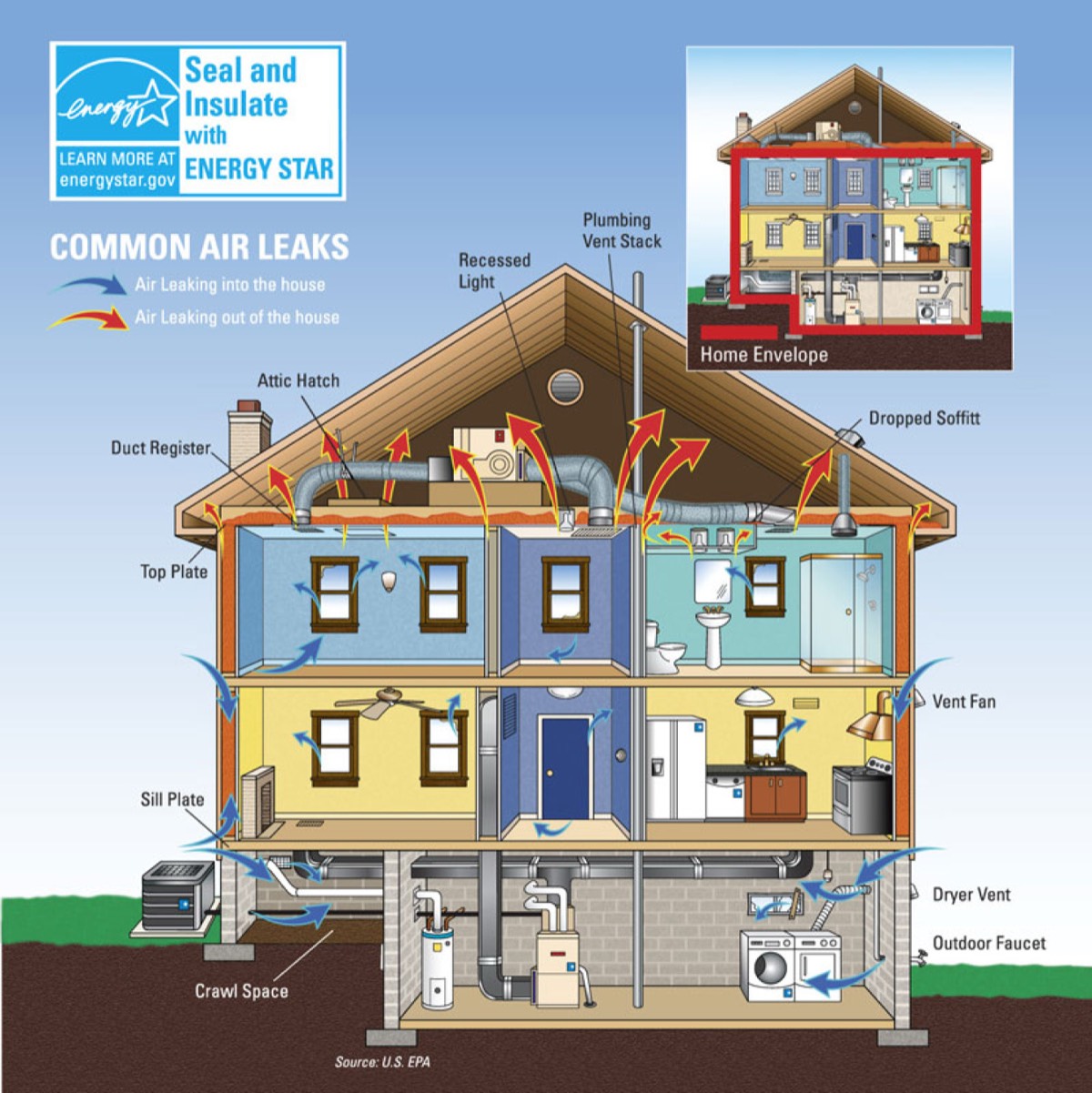
Warm air rises. In winter, the warm air in your home rises toward the upper floors and attic. As it escapes through gaps in the attic floor - around wiring, plumbing, light fixtures, and the attic hatch - it creates negative pressure in the lower levels of the house. That negative pressure pulls replacement air in through every available opening in the basement and lower walls.
This is the stack effect, and it runs continuously whenever there is a temperature difference between inside and outside. In a Maine winter, that means it runs for months straight.
Where the Replacement Air Comes From
The air being pulled into your home through the stack effect does not come from a clean outdoor source filtered through a ventilation system. It comes from:
- Your basement and crawlspace. This air carries moisture from the foundation, mold spores from damp surfaces, and volatile organic compounds (VOCs) from stored chemicals, paints, and solvents.
- Soil gases, including radon. Maine has among the highest radon levels in the country. The EPA estimates that one in three Maine homes has radon above the recommended action level. In a leaky home with strong stack effect, basement radon gets pulled directly into living spaces.
- Wall cavities. Air moving through uninsulated wall cavities can carry dust, insulation fibers, and mold from concealed surfaces you never see.
- The garage (in attached-garage homes). Carbon monoxide, gasoline vapors, and exhaust residue get drawn into living spaces through shared walls and ceiling penetrations.
The stack effect does not care about air quality. It just moves air from bottom to top, and whatever is in that air comes along for the ride.
The Numbers
The average older Maine home exchanges its entire volume of air 8 to 15 times per day through uncontrolled leakage. That sounds like a lot of "fresh" air. But consider where that air is coming from, and you start to understand why allergy symptoms, musty odors, and even headaches are so common in drafty older homes.
A modern, well-sealed home with mechanical ventilation exchanges air 4 to 6 times per day, and every bit of that air comes from a clean outdoor source, filtered and distributed intentionally.
What Proper Air Sealing Looks Like
When we air seal a home, we are closing the pathways that allow uncontrolled air movement. The key areas include:
- Attic floor penetrations: Every wire, pipe, duct, and fixture that passes through the attic floor is a potential air leak. Sealing these stops the chimney effect that drives stack-effect airflow.
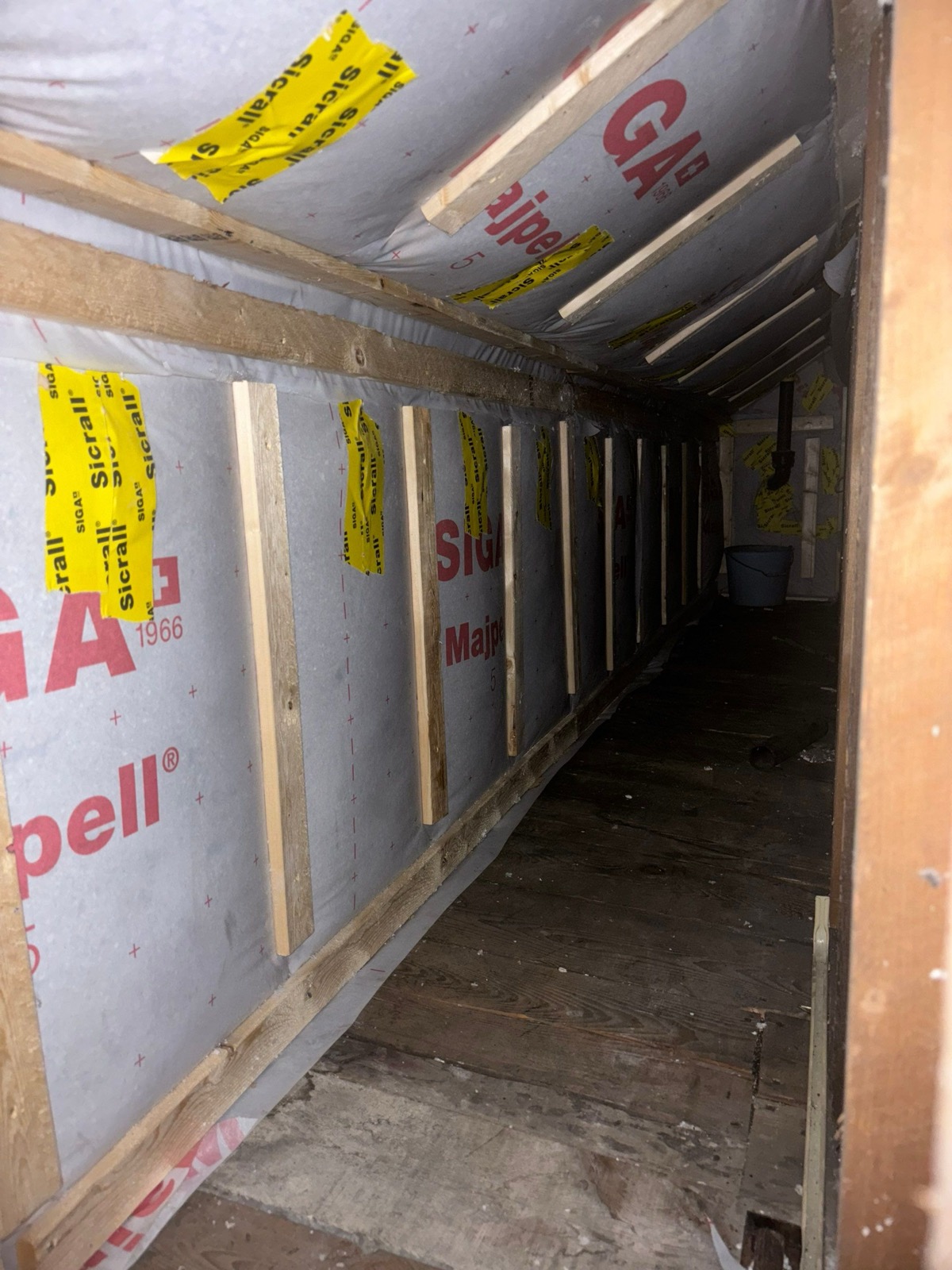
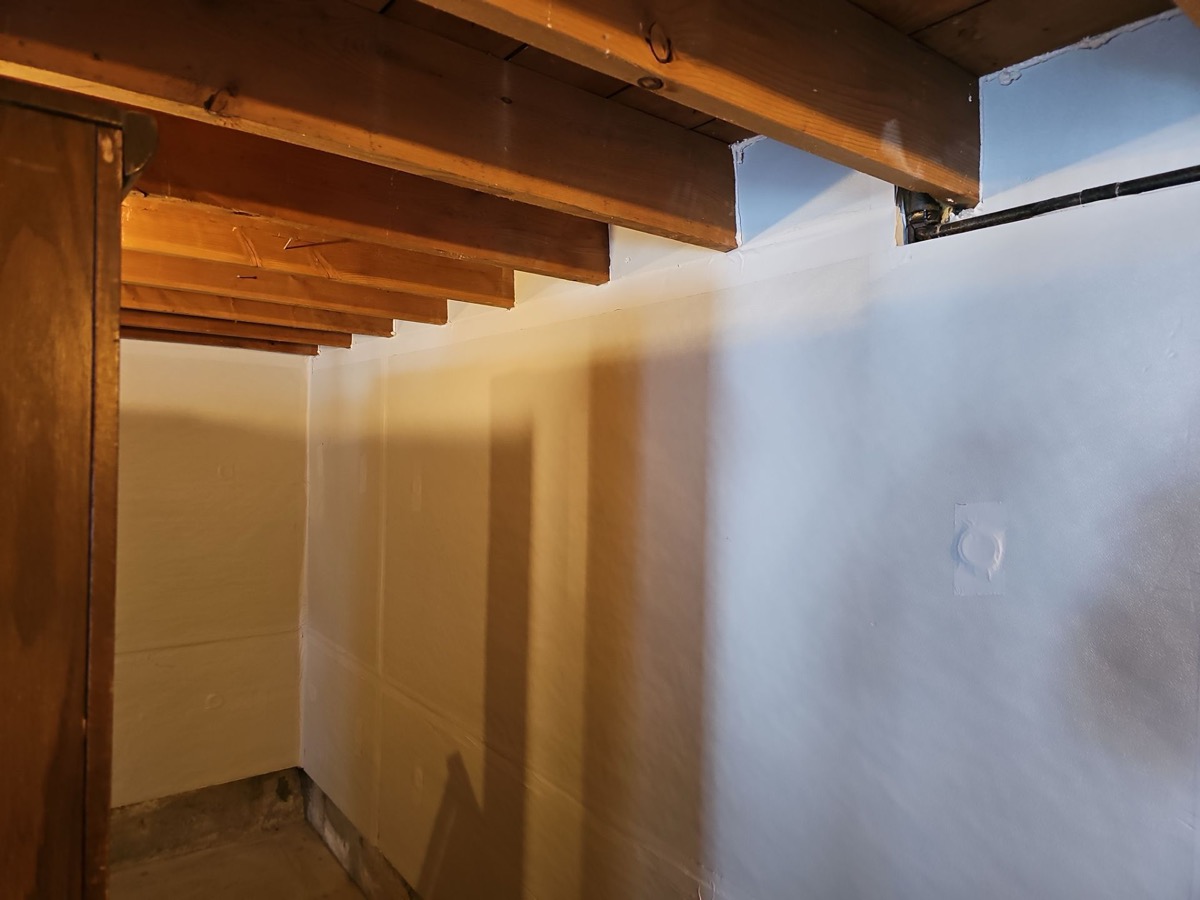
- Basement rim joists: The band of framing where your foundation meets the first-floor structure is one of the leakiest areas in most homes. Sealing and insulating it cuts off the entry point for basement air.
- Top plates of interior walls: The framing at the top of your walls often has open gaps where it meets the attic floor, creating a direct channel from your wall cavities to the attic.
- Recessed light fixtures: Older can lights are essentially open holes in your ceiling. We seal around them or replace them with airtight IC-rated fixtures.
- Plumbing and chimney chases: Large openings around chimneys and plumbing stacks can be sealed with metal flashing and fire-rated caulk.
This work is targeted, methodical, and done before any new insulation goes in. Air sealing first, insulation second, always in that order, because insulation works best when it is not fighting air currents.
"But What About Ventilation?"
This is the right question, and it is the one that separates informed contractors from those repeating the "house needs to breathe" myth.
When you tighten a home's envelope, you do reduce the uncontrolled air exchange. That is the entire point. But you replace it with controlled ventilation that delivers better air quality than the leaky home ever had.
The options include:
- Exhaust-only ventilation: A simple, low-cost approach using a quiet, continuously running bath fan. Air enters through small, intentional openings in the building envelope. Suitable for moderately tight homes.
- Balanced ventilation (ERV or HRV): An Energy Recovery Ventilator or Heat Recovery Ventilator brings in fresh outdoor air while exhausting stale indoor air. The key feature is that it recovers 70-80% of the heat from the outgoing air, so you are not wasting energy. This is the gold standard for tight homes in cold climates.
The difference between controlled and uncontrolled ventilation is the difference between drinking from a water filter and drinking from a puddle. The volume might be similar. The quality is not.
The Health Benefits Are Real
Proper air sealing combined with controlled ventilation leads to measurable improvements in indoor air quality:
- Reduced radon exposure. Sealing the basement-to-living-space pathway and depressurizing below the slab (if radon levels warrant it) directly addresses Maine's most significant indoor air health risk.
- Lower humidity and mold risk. Uncontrolled air movement carries moisture. Stopping that movement and controlling ventilation keeps indoor humidity in the 30-50% range where mold cannot thrive.
- Fewer allergens. Dust, pollen, and outdoor pollutants enter through controlled pathways that can be filtered, rather than through random cracks that bring in whatever happens to be nearby.
- Less drafty, more comfortable rooms. This is a quality-of-life improvement that homeowners notice immediately. Consistent temperature throughout the house, no cold spots near exterior walls, and the end of that persistent feeling of "the house just feels cold even with the heat running."
What About Our Assessment?
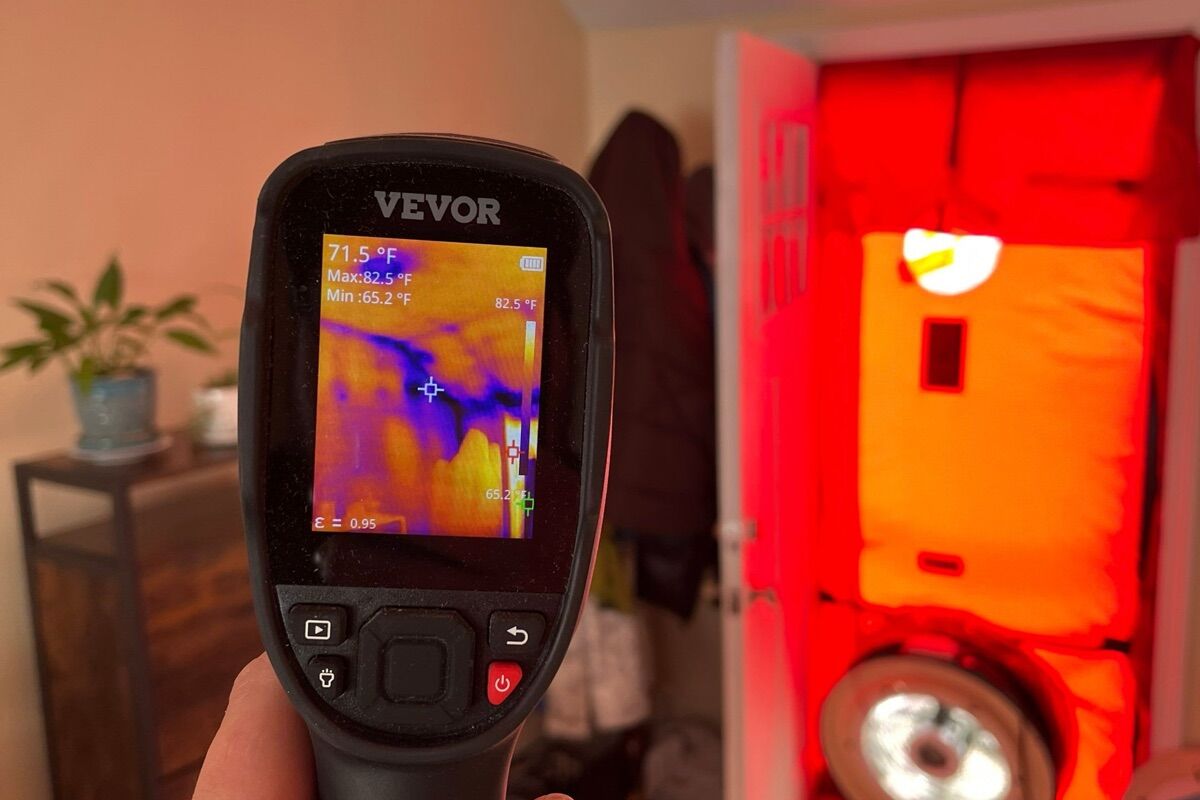
During a free energy assessment, our advisor walks through your home and identifies the major air leakage pathways. We look at your attic, basement, walls, and mechanical systems to build a picture of how air moves through your home. It is a visual inspection, 1-3 hours depending on home size, and it gives you a clear understanding of what is happening and what would make the biggest difference.
If you have concerns about indoor air quality, allergies, musty smells, or persistently damp spaces, those are all signs that your home's air sealing needs attention. And addressing them does not mean trapping bad air inside. It means stopping the flow of bad air from your basement and crawlspace, and replacing it with clean, filtered outdoor air on your terms.
Rebates Make It Affordable
As a Top-Rated Efficiency Maine Vendor for 10+ years, Horizon Homes helps you access rebates for both air sealing and insulation work. Rebate amounts are income-dependent and vary by household, but they can offset a significant portion of the project cost. We handle the paperwork so you can focus on the results.
Schedule Your Free Energy Assessment
If your home feels drafty in winter, stuffy in summer, or your family deals with unexplained allergies and congestion, the answer is not more air leaks. It is fewer leaks and better ventilation. Call us at (207) 221-3221 to schedule your assessment. We serve the entire Greater Portland area, from Brunswick to Kennebunk.
Find our guides faster: add Horizon Homes as a preferred source on Google.
Free Home Energy Assessment
Dealing With This in Your Home?
Most comfort problems trace back to insulation, air sealing, or heating system issues. A free walkthrough identifies the root cause.
- Free walkthrough, no equipment, no disruption
- Efficiency Maine rebates identified for you
- Written improvement plan with pricing
Schedule Your Free Assessment
We call within 1 business day.