Humidity and Condensation in Your Maine Home: A Guide
Every February we get calls from homeowners with water running down their windows. And every July we hear from others whose basements smell musty. Both problems trace back to the same thing: moisture in the wrong place at the wrong time.
Maine's climate creates some of the most challenging moisture conditions in the country. We swing from bone-dry winter air to thick summer humidity, and our homes have to handle both extremes. Understanding how moisture behaves in your home is the first step to preventing the damage it causes.
The Basic Rule: Warm Air Holds More Moisture
Everything about home moisture management comes back to this one fact. Warm air can hold far more water vapor than cold air. At 70 degrees, air can hold about four times as much moisture as air at 30 degrees.
When warm, moist air meets a cold surface, the air cools below its dew point and the water vapor condenses into liquid water. That is why your glass of iced tea sweats in summer, and it is the same reason your windows drip in winter.
In a house, condensation happens wherever warm air meets cold surfaces. The surfaces you can see, like windows, are the obvious ones. The surfaces you cannot see, like the inside of wall cavities and the underside of roof sheathing, are where the real damage happens.
Winter Moisture: The Indoor Problem
In winter, the moisture source is inside your home. Cooking, showering, breathing, and even houseplants add water vapor to indoor air. In a tight, well-insulated home, that moisture has nowhere to go unless you manage it intentionally.
Window condensation is the most visible symptom. Single-pane windows and older double-pane units have cold interior surfaces. When indoor humidity rises above 30 to 35 percent in winter, moisture collects on the glass, runs down the frame, and pools on the sill. Over time, this rots wood frames and grows mold.
But window condensation is actually a warning system. It tells you the indoor humidity is high enough to cause problems on surfaces you cannot see.
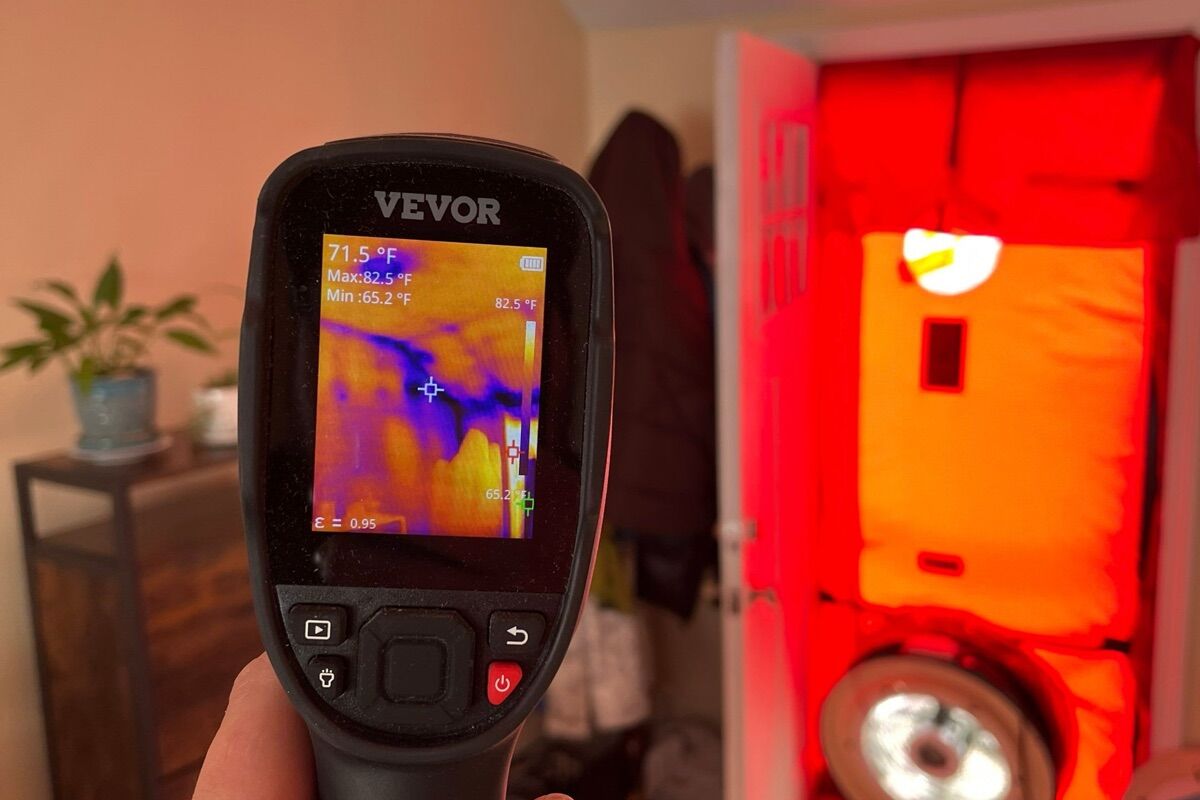
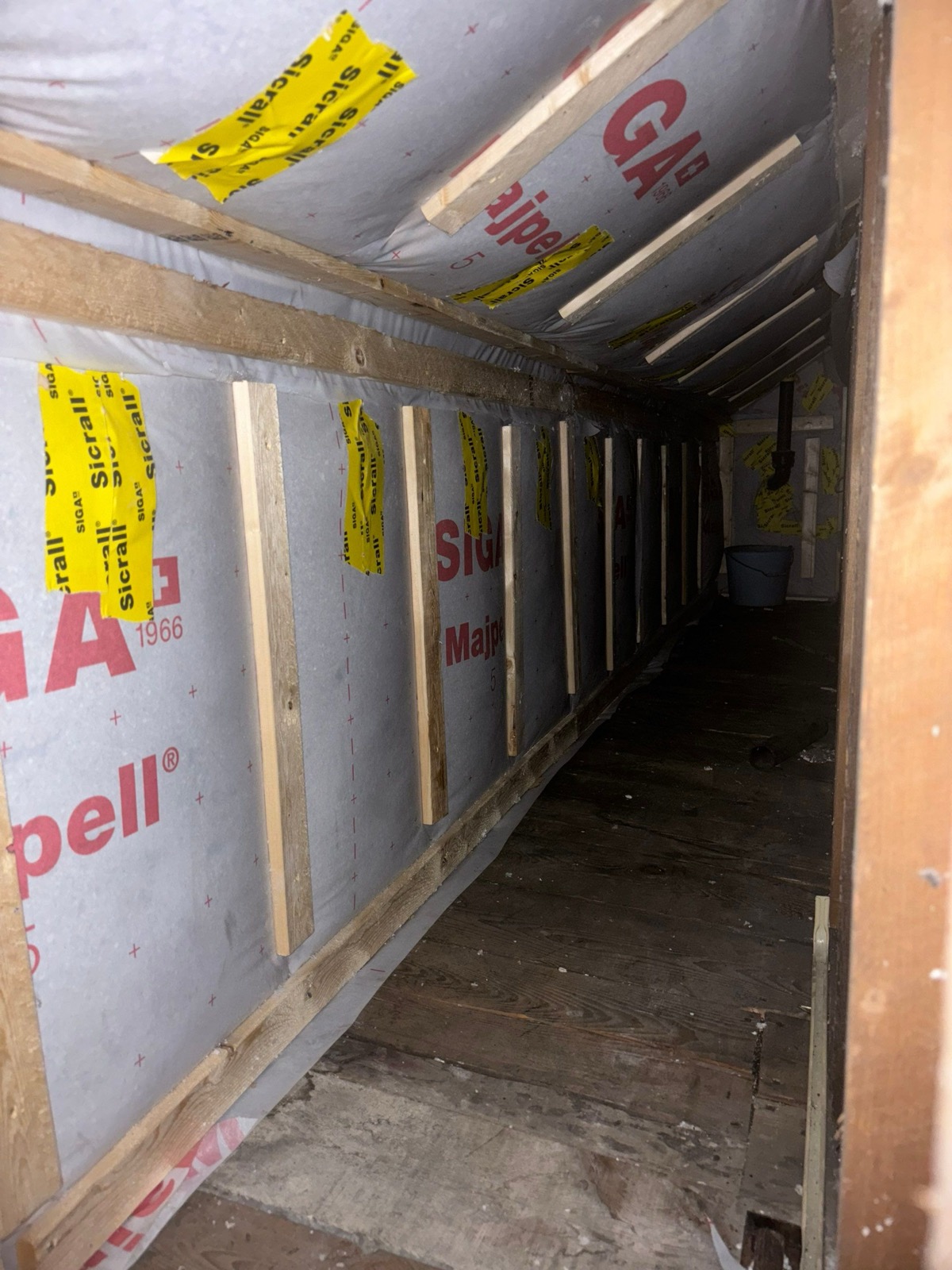
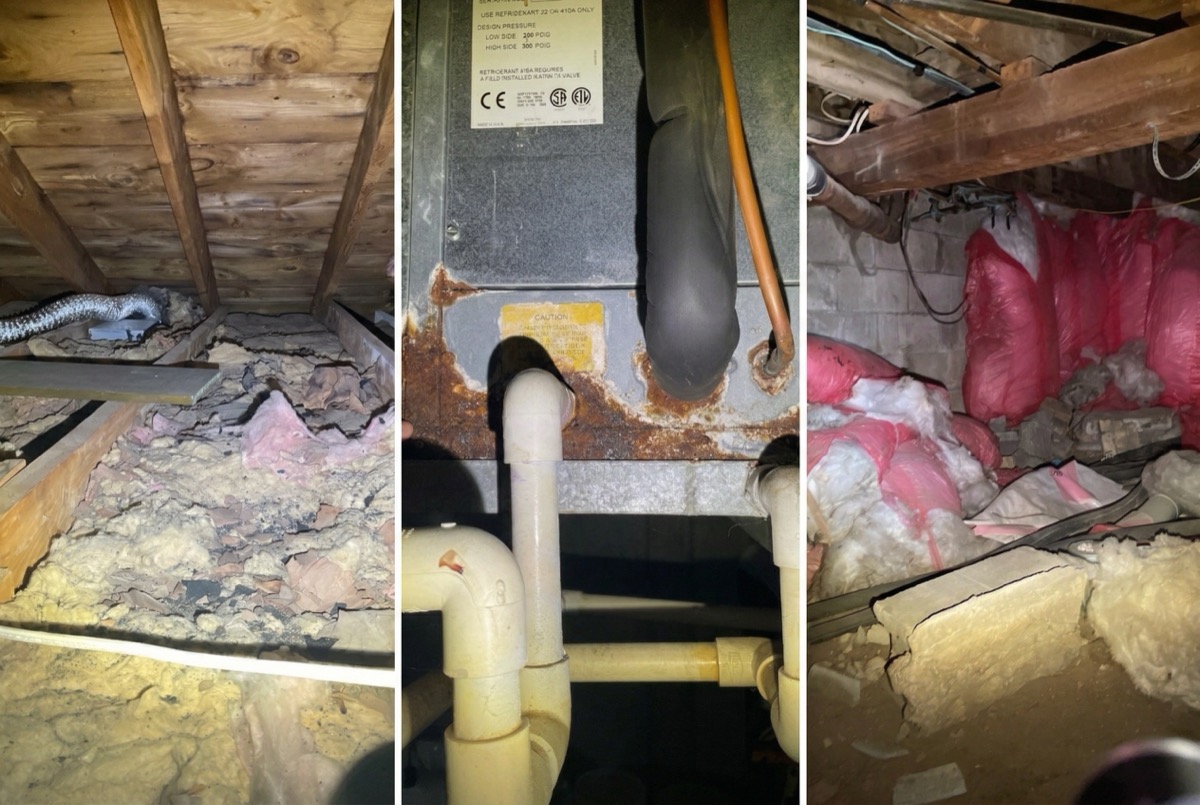
Hidden condensation happens when warm, moist indoor air leaks into the attic or wall cavities through gaps in the building envelope. When that moisture hits the cold roof sheathing or exterior wall sheathing, it condenses or freezes. We have seen attics with a visible layer of frost on the underside of the roof deck. When that frost melts during a warm spell, it drips onto the insulation and ceiling below.
Common paths for moisture to reach cold surfaces:
- Gaps around recessed lights, plumbing stacks, and wiring in the attic floor
- Open top plates of interior partition walls
- Bathroom exhaust fans vented into the attic instead of outside
- Poorly sealed attic hatches and pull-down stairs
- Rim joist areas in the basement
Air sealing these pathways is the most effective way to prevent hidden winter condensation. Keeping moisture out of wall and attic cavities matters more than trying to dry those spaces out after the fact.
Schedule a free energy assessment and we will identify where moisture is getting into your home's hidden spaces.
Summer Moisture: The Outdoor Problem
In summer, the moisture source reverses. Humid outdoor air is the problem, and the vulnerable surfaces are in your basement and crawlspace.
When warm, humid summer air enters a cool basement, the air cools below its dew point and moisture condenses on cold surfaces. Concrete walls, concrete floors, cold water pipes, and ductwork all collect condensation. This is why basements feel damp and smell musty in July and August, even when there is no water intrusion.
Opening basement windows in summer makes this worse, not better. You are inviting humid outdoor air into the coolest part of your house. That is the opposite of what you want.
Managing summer basement moisture:
- Keep basement windows closed during humid weather
- Run a dehumidifier set to 50 percent relative humidity or lower
- Insulate cold water pipes to prevent surface condensation
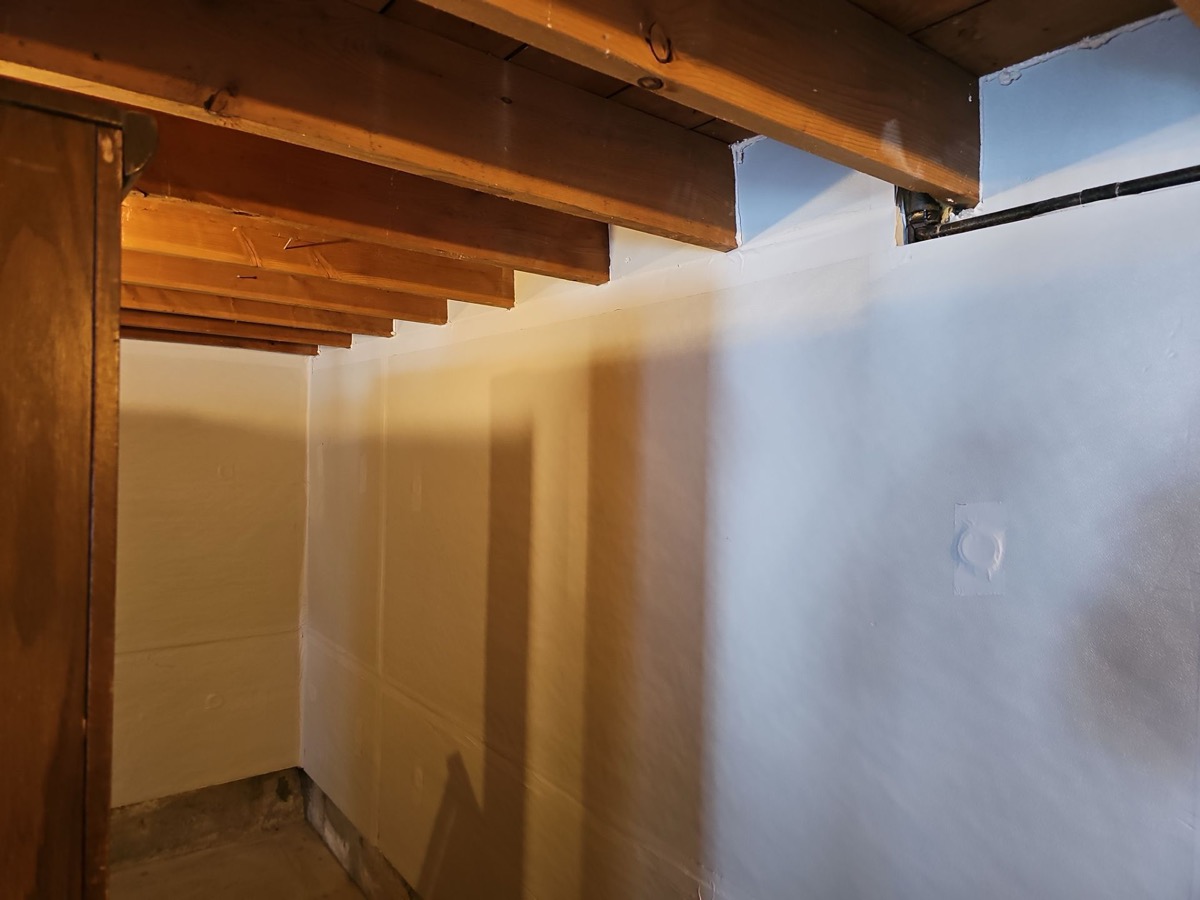
- Insulate basement walls so they stay closer to indoor temperature, reducing the temperature difference that drives condensation
- Ensure proper exterior drainage so groundwater stays away from the foundation
Basement insulation with rigid foam board on flat concrete walls or spray foam on rubble and stone walls addresses both energy loss and summer condensation. Warmer wall surfaces do not collect moisture.
The Seasonal Cycle
Maine homes go through a predictable moisture cycle that most homeowners feel but few fully understand:
Late fall (November-December): As outdoor temperatures drop, indoor relative humidity starts to rise. The house is sealed up, cooking and showering add moisture, and there is less air exchange with the dry outdoor air. Window condensation appears on the coldest mornings.
Deep winter (January-February): Outdoor air is extremely dry. If the house is leaky, indoor humidity drops to 15 to 20 percent, which is uncomfortable. Dry skin, static shocks, and cracked woodwork. If the house is tight, indoor humidity may stay at 35 to 45 percent, which is comfortable but requires monitoring to prevent condensation.
Spring (March-May): Outdoor temperatures rise, reducing the condensation risk on windows and walls. A transition period where moisture stress decreases.
Summer (June-September): Outdoor humidity peaks. Basements and crawlspaces become the vulnerable zone. Condensation on cool surfaces, musty smells, and elevated humidity if not managed with dehumidification.
What Is the Right Indoor Humidity Level?
There is no single perfect number because the right humidity depends on outdoor temperature. The colder it is outside, the lower your indoor humidity needs to be to avoid condensation.
A general guide for Maine homes in winter:
| Outdoor Temperature | Target Indoor Humidity |
|---|---|
| 20 to 30 degrees F | 35 to 40% |
| 10 to 20 degrees F | 30 to 35% |
| 0 to 10 degrees F | 25 to 30% |
| Below 0 degrees F | 20 to 25% |
These ranges assume double-pane windows. Homes with single-pane windows need to stay at the lower end. Homes with triple-pane or high-performance windows can tolerate higher indoor humidity without condensation.
A $15 digital hygrometer from the hardware store is the easiest way to track indoor humidity. Place it in a central living area, not near the kitchen or bathroom where readings spike temporarily.
When Moisture Problems Mean Something Bigger
Occasional window condensation on the coldest mornings is normal, especially in homes with older windows. Chronic condensation, water pooling on sills, mold on window frames, or musty smells in walls or attic spaces are signs of a building envelope problem.
If you see:
- Frost or mold in the attic - Air leaks are carrying moisture into the attic space. Air sealing the attic floor is the priority.
- Peeling exterior paint - Moisture from inside the house is migrating through walls and pushing paint off the siding. This is an air sealing issue, not a paint issue.
- Mold on exterior walls or in closets - Poor insulation is creating cold spots where condensation accumulates. Adding insulation raises surface temperatures and eliminates the cold spots.
- Chronic basement dampness - Could be groundwater (exterior drainage problem), condensation (insulation and dehumidification problem), or both.
Each of these problems has a building science explanation and a practical fix. The Building Performance Association maintains resources on moisture management for anyone who wants the technical depth.
Get Ahead of Moisture Problems
Moisture damage is slow and cumulative. By the time you see mold or rot, the underlying problem has been active for months or years. The most cost-effective approach is to address the building envelope issues, air sealing and insulation, that create the conditions for moisture problems in the first place.
Schedule your free energy assessment and we will walk through your home, check for moisture risks, and recommend improvements that protect your home and your comfort. Or call us at (207) 221-3221.
Find our guides faster: add Horizon Homes as a preferred source on Google.
Free Home Energy Assessment
Dealing With This in Your Home?
Most comfort problems trace back to insulation, air sealing, or heating system issues. A free walkthrough identifies the root cause.
- Free walkthrough, no equipment, no disruption
- Efficiency Maine rebates identified for you
- Written improvement plan with pricing
Schedule Your Free Assessment
We call within 1 business day.