Why Is My Second Floor So Hot in Summer?
If your second-floor bedrooms hit 85 degrees by mid-afternoon while the first floor sits at a comfortable 72, two window AC units running full blast will not solve the problem. July electric bills over $350, and the rooms still too warm to sleep in. The assumption is always that you need a bigger air conditioner. You don't. You need to fix your attic.
This is one of the most common complaints we hear at Horizon Homes, and we have been solving it for 20+ years across Greater Portland. The hot second floor is not a cooling problem. It is a building envelope problem, and throwing more air conditioning at it is like turning up the radio to drown out a rattling engine.
The Building Science Behind Your Hot Upstairs
To understand why your second floor turns into a sauna every summer, you need to understand two things: radiant heat transfer and the stack effect.
Your Attic Is an Oven
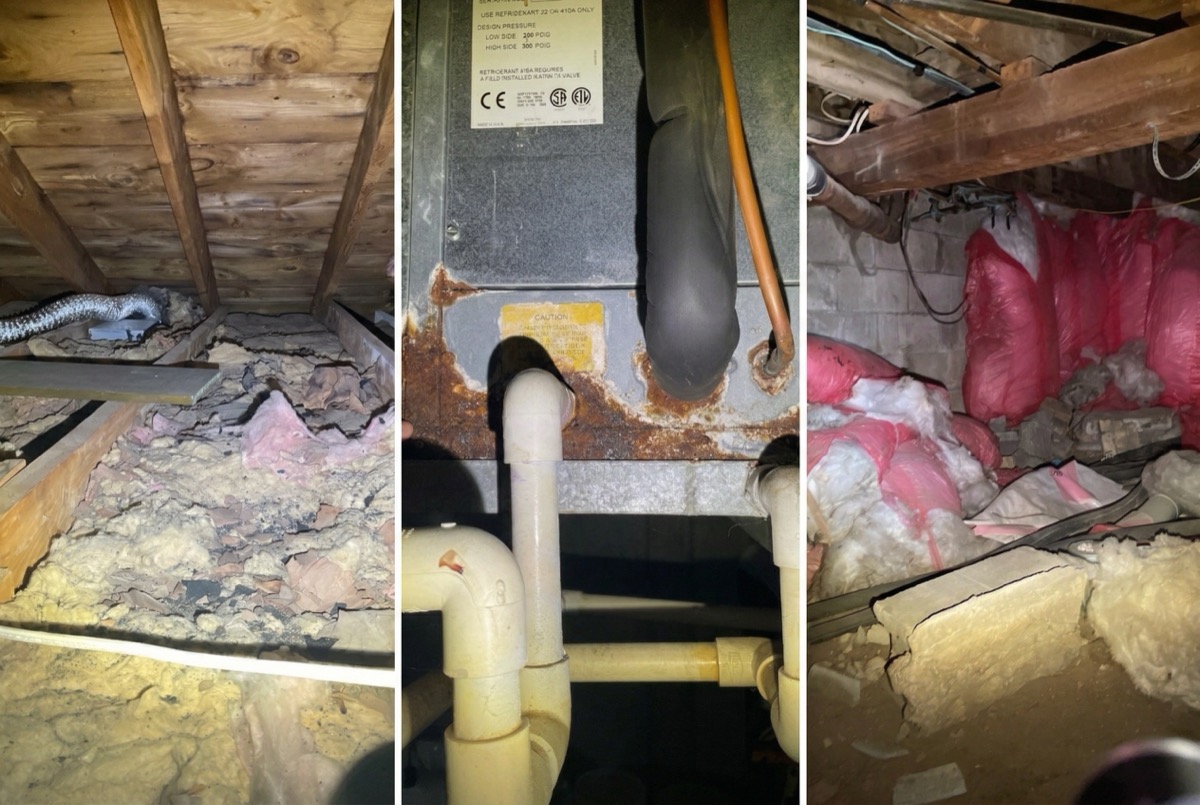
On a sunny July day in Maine, your roof shingles can reach 150 to 170 degrees. That heat radiates through the roof sheathing and into your attic space. If your attic has thin or degraded insulation - and most older Maine homes have far less than the recommended R-50 - that heat transfers right through the attic floor and into the rooms below.
The ceiling of your second floor is the only barrier between your living space and that superheated attic. With three or four inches of old insulation up there (common in homes built before 1990), the ceiling might as well be a warming plate.
Stack Effect in Reverse
During winter, the stack effect pulls cold air in through your basement and pushes warm air up and out through your attic. In summer, the process reverses in a way that makes your upper floors miserable.
Here is what happens. Hot air in the attic creates a pressure difference. Air leaks in your attic floor - around light fixtures, wiring penetrations, plumbing stacks, and the tops of interior walls - allow that superheated attic air to seep into your second-floor rooms. At the same time, any cool air you are generating with your AC drifts downward (cool air is denser) and exits through leaks in the lower levels.
You are paying to cool air that is constantly being replaced by hot attic air. No amount of window AC units can keep up with that cycle.
The Temperature Sandwich
Your second floor gets hit from two directions. Radiant heat pushes down from the attic through the ceiling. Meanwhile, heat that built up in your walls during the day radiates inward. The first floor stays cooler because it has the basement below (which stays naturally cool) and is farther from that rooftop heat source.
This is why the temperature difference between floors can be 10 to 15 degrees on a hot day, even with the same cooling system serving both levels.
The Fix: Insulation and Air Sealing, Not More AC
The solution targets the root cause instead of the symptom.
Step 1: Air Seal the Attic Floor
Before adding any insulation, the attic floor needs to be sealed. Every gap around wiring, plumbing, ductwork, recessed lights, and top plates needs to be closed. This stops the convective loop that pulls hot attic air into your living space.
Air sealing is the single most cost-effective improvement you can make for summer comfort upstairs. It addresses the stack effect directly, cutting off the pathway that allows hot air to infiltrate your rooms.
Step 2: Insulate to R-50
Once the attic floor is sealed, we blow in cellulose insulation to bring the attic up to R-50, which is the recommended level for Maine's climate zone. Blown-in cellulose is dense enough to resist air movement through the insulation itself, and it fills around framing members, wiring, and other obstructions that batt insulation tends to miss.
The difference is dramatic. Instead of a thin barrier between your second floor and a 150-degree attic, you have a thick thermal blanket that keeps that heat where it belongs - outside your living space.
The Result
Most homeowners who complete attic air sealing and insulation see the temperature difference between their first and second floors drop to 2 to 4 degrees. The upstairs becomes livable again without running AC around the clock, and many homeowners find they need less cooling overall.
After attic air sealing and insulation, the window AC units go. A single cold-climate heat pump keeps the entire second floor comfortable through the summer, and the July electric bill drops by more than half. We see this result consistently.
Cold-Climate Heat Pumps: Heating and Cooling in One System
Here is something many Maine homeowners don't realize: cold-climate heat pumps are not just for winter. They provide efficient cooling in the summer too. A single wall-mounted unit can keep an entire floor comfortable, and it does it more efficiently than a window AC unit.
If you are already thinking about upgrading your heating system, addressing the attic first means you can right-size the cold-climate heat pump to your home's actual cooling and heating load. A well-insulated home needs a smaller system, which costs less to install and less to operate.
This is the whole-home approach we use with every client. Fix the envelope first, then match the equipment to the improved home.
What About Rebates?
Efficiency Maine rebates can cover a significant portion of both insulation and cold-climate heat pump installation costs. As a Top-Rated Vendor for 10+ years, Horizon Homes handles the rebate paperwork so you don't have to. Rebate amounts are income-dependent, so the specific amount varies by household.
How to Tell If Your Attic Is the Problem
You don't need special equipment to spot the signs. If your second floor is consistently warmer than your first floor in summer, your attic is almost certainly part of the problem. A few other indicators:
- Your AC runs constantly upstairs but can't keep up
- The ceiling feels warm to the touch on hot days
- You can see daylight through gaps in your attic floor (around pipes, wires, or the attic hatch)
- Your attic insulation is less than 12 inches deep (R-50 in cellulose is roughly 14-15 inches)
- Your home was built before 1990 and the attic has never been retrofitted
Start With an Assessment
A free energy assessment from Horizon Homes takes 1-3 hours. Our advisor walks through your home room by room, checks your attic insulation depth and condition, identifies air leakage paths, and maps out the most cost-effective path to a comfortable home year-round.
The assessment is a free visual walkthrough, not a sales pitch. We will tell you what we find, what we recommend, and what the costs and rebate options look like.
Schedule Your Free Energy Assessment
If your second floor turns into a furnace every summer, don't spend another season fighting it with window units and fans. The fix starts in the attic, and it works for winter comfort too. Call us at (207) 221-3221 to get started. We serve the entire Greater Portland area, from Brunswick to Kennebunk.
Find our guides faster: add Horizon Homes as a preferred source on Google.
Free Home Energy Assessment
Dealing With This in Your Home?
Most comfort problems trace back to insulation, air sealing, or heating system issues. A free walkthrough identifies the root cause.
- Free walkthrough, no equipment, no disruption
- Efficiency Maine rebates identified for you
- Written improvement plan with pricing
Schedule Your Free Assessment
We call within 1 business day.