Attic Insulation in Maine: The Complete Guide
Editor's note (October 2026): Efficiency Maine changed its insulation and air sealing rebates for work completed on or after October 1, 2026. They are now a fixed amount per zone of the house (attic, walls, basement) instead of a percentage of project cost, so the insulation rebate figures, combined totals, and cost examples below reflect the program when this article was published. See current Efficiency Maine rebates.
Editor's note (August 2026): The federal 25C tax credits referenced in this article expired December 31, 2025 and are only available for qualifying work completed before that date. Efficiency Maine rebates remain available and are now the primary incentive for attic insulation projects.
We walk into dozens of Maine attics every month. Some of them have 3 inches of fiberglass batts that were installed when the house was built in the 1960's. Some have 6 inches of cellulose that has settled to 4 inches over the years. A few have nothing at all - just bare ceiling joists and a direct view down to the drywall.
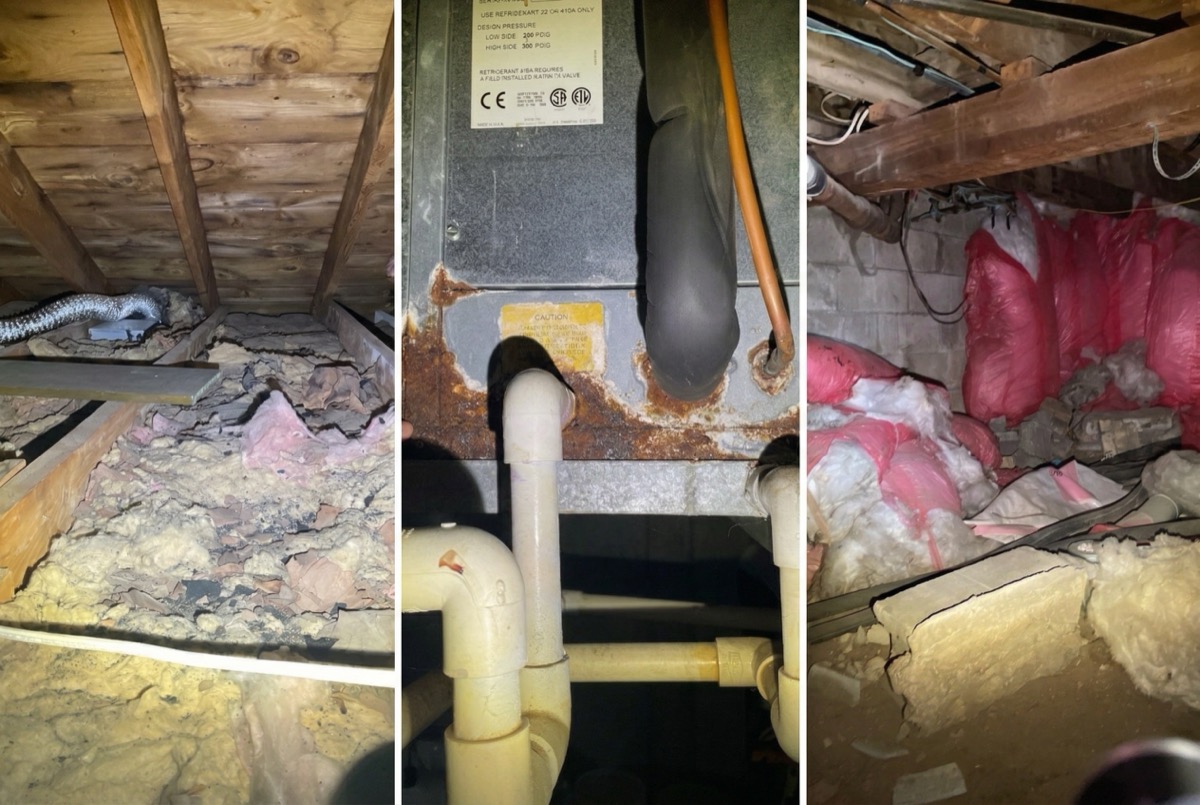
What we almost never find is an attic with enough insulation. In our experience, roughly 80% of Maine homes have attic insulation that falls well below the current code requirement of R-49. Many are at R-13 or less, which means they have about a quarter of the insulation they need for Maine's climate.
The attic is the single most important area to insulate in any Maine home. Heat rises, and in winter, a poorly insulated attic is the biggest pathway for that heat to leave your house. But insulation alone is only half the solution. Air sealing the attic floor before adding insulation is the step that most homeowners and many contractors skip, and it is the step that makes the biggest difference.
Here is everything you need to know about insulating your Maine attic correctly.
Why the Attic Matters Most
In a typical Maine home, 25-40% of total heat loss occurs through the attic. This is not an estimate we made up - it is consistent with decades of building science research and thousands of blower door tests across New England homes.
The reason is straightforward. Warm air rises. In winter, the warmest air in your home collects at the ceiling level. If the attic floor is poorly insulated and poorly sealed, that warm air passes through the ceiling into the attic, where it heats the roof sheathing (contributing to ice dams), and eventually escapes to the outside.
Your heating system replaces the lost heat, which means it runs longer and burns more fuel. The cycle continues 24 hours a day, every day of heating season. In Maine, that is roughly seven months.
Step One: Air Seal the Attic Floor
This is the most important section of this entire article. If you take away one thing, make it this: air sealing the attic floor must happen before adding insulation.
Why? Because air leakage and heat loss through insulation are two different mechanisms, and air leakage is often the larger problem.
Insulation slows heat transfer through solid materials by conduction. But if warm air can bypass the insulation entirely by flowing through gaps, holes, and openings in the attic floor, even R-60 of insulation will not stop that loss. The warm air moves right through the insulation layer via convection, carrying heat with it.
Common air leakage points in Maine attics:
Plumbing and Electrical Penetrations
Every wire, pipe, and duct that passes through the attic floor creates a hole. In a typical home, there are dozens of these penetrations. Each one may be small individually, but collectively they can add up to the equivalent of leaving a window open all winter.
The fix: Expanding foam sealant around each penetration. This takes time - sealing 30-50 individual holes in an attic is several hours of work - but the payoff is immediate.
Recessed Light Fixtures
Recessed lights (can lights) are among the worst air leakage culprits in any attic. Older fixtures are not airtight, and the gap between the fixture housing and the surrounding drywall creates a direct pathway for warm air to flow into the attic.
The fix: If the fixtures are IC-rated (insulation contact rated), we can seal around them with fire-rated materials and cover them with insulation. If they are not IC-rated, they need to be replaced with airtight IC-rated or LED retrofit fixtures before insulation can safely cover them. This is a code requirement, not optional - non-IC fixtures can overheat if covered with insulation.
Bathroom Exhaust Fans
Bathroom fans penetrate the attic floor and, in well-intentioned installations, vent to the outside through a duct that runs across the attic to a roof or soffit vent. In less well-intentioned installations, the fan dumps warm, moist air directly into the attic space, which creates both air leakage and moisture problems.
The fix: Seal around the fan housing where it penetrates the ceiling. If the fan is venting into the attic rather than outside, extend the ductwork to a proper exterior termination. Moisture venting into an attic leads to mold, wood rot, and insulation damage.
Attic Hatches and Pull-Down Stairs
The attic access point is often the largest single air leak in the attic floor. Hatches are rarely weather-stripped, and pull-down stairs have large gaps around the frame.
The fix: Weather-strip the hatch perimeter, add rigid foam insulation to the back of the hatch, and install a compression latch to hold it tight against the weather stripping. For pull-down stairs, an insulated attic stair cover (a box that sits over the stairs when they are retracted) provides both air sealing and insulation.
Chimney and Flue Chases
Where a chimney or furnace flue passes through the attic floor, building code requires a gap between the chimney and any combustible material (wood framing). This gap is often left open, creating a large pathway for air leakage.
The fix: Sheet metal flashing and high-temperature caulk around the chimney chase. This is a fire-rated assembly and must be done with appropriate materials. We never use expanding foam or other combustible sealants near chimney or flue penetrations.
Knee Walls and Top Plates
In homes with knee walls (common in Cape Cods and story-and-a-half designs), the top of the knee wall where it meets the attic space is frequently unsealed. Interior wall cavities can also be open at the top plate, allowing warm air to rise through the wall cavity and into the attic.
The fix: Seal the top of every interior wall where it meets the attic floor. For knee walls, seal both the top plate and the joist cavities. See our Cape Cod insulation guide for detailed information on these complex areas.
Step Two: Blow Cellulose to R-50+
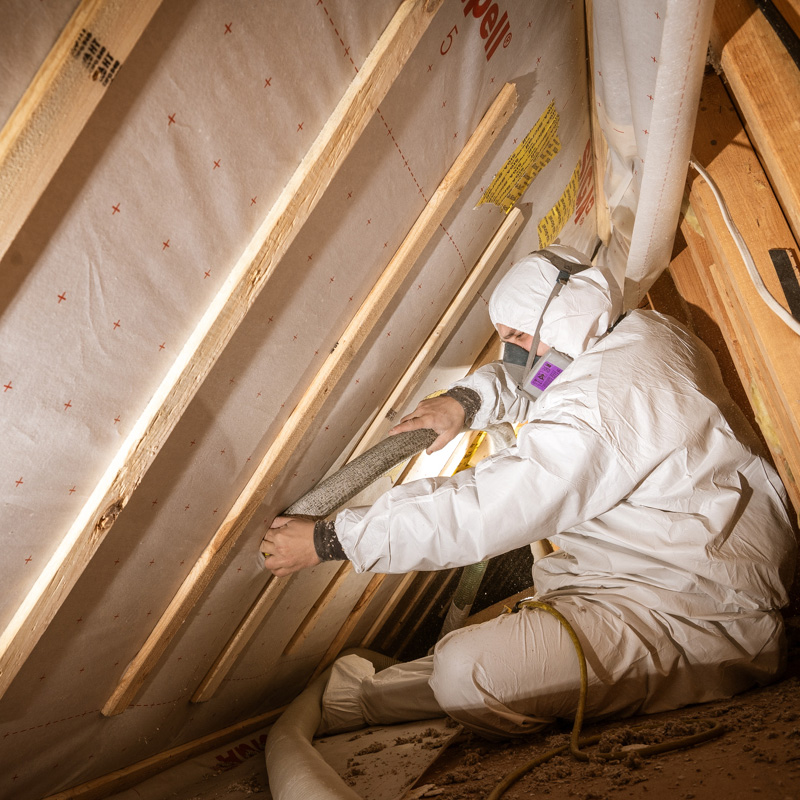
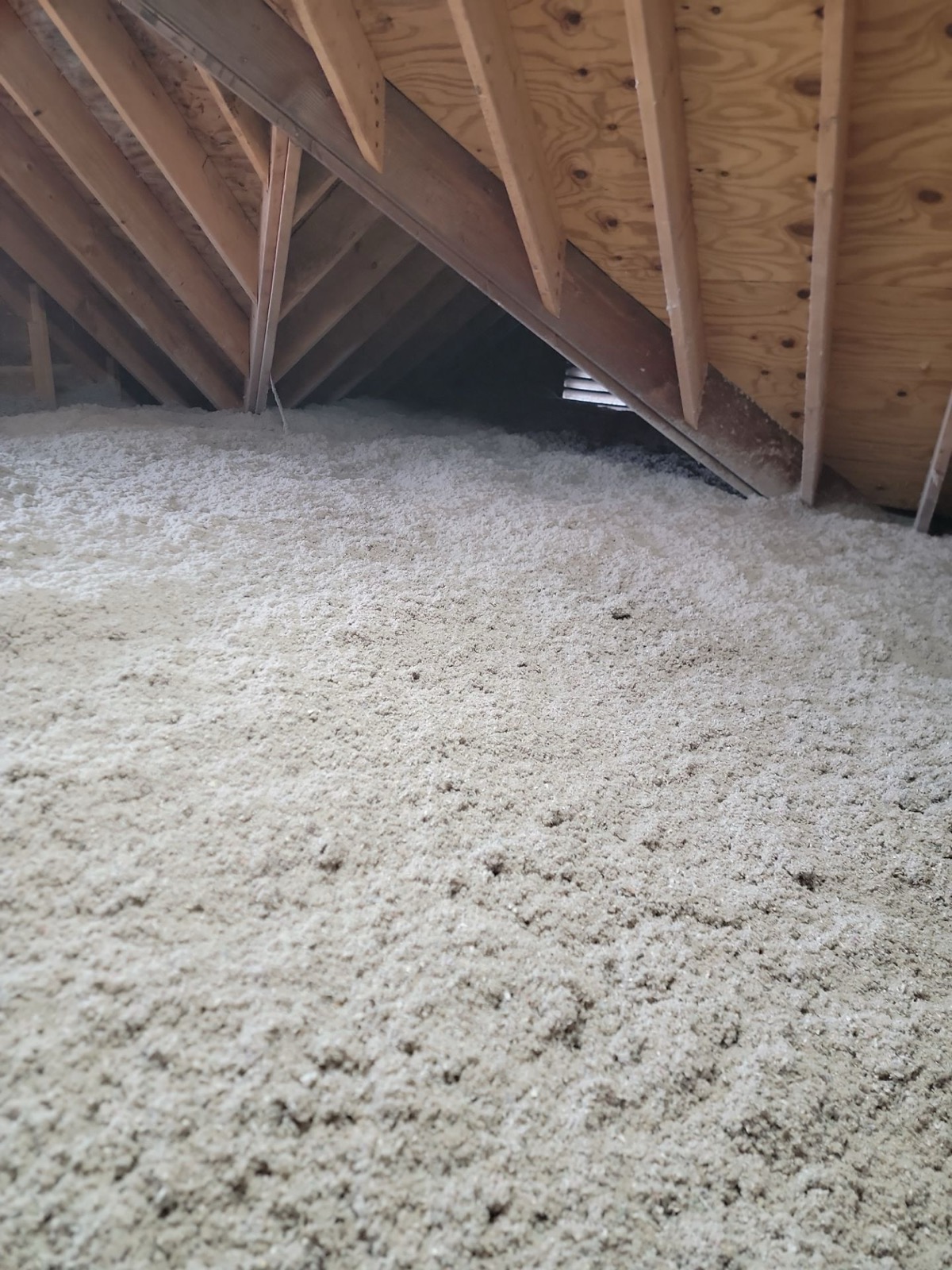
Once the attic floor is properly air sealed, we blow loose-fill cellulose insulation across the entire attic floor to a depth of 16-18 inches. This achieves R-50 or higher, which meets the current energy code for Maine's climate zone (Zone 6).
Why Cellulose, Not Fiberglass
We install cellulose in every attic we work on. Here is why.
Cellulose performs better in cold climates. Cellulose is denser than fiberglass, which means it resists air movement through the insulation layer more effectively. In Maine, where the temperature difference between inside and outside can exceed 70 degrees, this matters significantly.
Cellulose fills completely. Blown-in cellulose conforms to every gap, irregular joist spacing, pipe, and wire in the attic floor. Fiberglass batts must be cut to fit around obstacles, and gaps reduce fiberglass performance by 20-40% compared to its rated R-value.
Cellulose is sustainable and cost-effective. Made from approximately 85% recycled newspaper, with a Class 1 fire rating, zero off-gassing, and a 30+ year lifespan. It costs 40-70% less than spray foam and delivers comparable real-world performance when combined with proper air sealing.
What about existing fiberglass? If your attic has fiberglass batts in reasonable condition, we air seal the attic floor and blow cellulose directly on top. The combination works well and avoids the cost of removal. If the existing material is damaged, contaminated, or displaced by animals, removal before re-insulating is the right approach.
Depth and R-Value
The R-value of blown cellulose is approximately R-3.7 per inch. To reach R-49 (the code minimum for Maine), you need approximately 13.5 inches. We typically install to 16-18 inches (R-55 to R-65) because the marginal cost of a few extra inches is small, and the extra depth provides a buffer against natural settling over the first year.
Ventilation
Attic ventilation must be preserved during insulation work. We install ventilation baffles at every soffit vent location, creating a channel between the roof sheathing and the top of the insulation. This ensures air can flow from the soffit vents up to the ridge vent even with deep insulation in place.
What Attic Insulation Costs in Maine
For most Maine homes, a complete attic air sealing and insulation project runs $3,500-$8,000 before rebates. The cost depends on:
- Attic square footage
- Accessibility (walk-up stairs vs. a small hatch in a closet ceiling)
- Number and complexity of air sealing targets
- Current insulation condition (removal adds cost)
- Whether recessed lights need upgrading
Efficiency Maine rebates can significantly reduce the out-of-pocket cost. Efficiency Maine pays a fixed amount per zone of the house (attic, wall, or basement) for insulation, plus a separate amount for air sealing, with higher amounts at lower income tiers and a limit of $8,600 per home ($5,600 per mobile home). All homeowners qualify for baseline rebates regardless of income.
We handle the entire Efficiency Maine rebate process and apply the amount directly to your invoice. You don't file paperwork or wait for reimbursement.
Federal tax credits under Section 25C provide up to $1,200 per year for insulation and air sealing (30% of project cost).
Common Mistakes to Avoid
Adding insulation without air sealing. This is the most common and most costly mistake. Without air sealing, you are putting a blanket on top of a sieve. The insulation helps, but you miss 40-60% of the potential improvement.
Using fiberglass batts in an attic. Batts leave gaps around every obstacle. Blown cellulose fills completely and costs less.
Blocking soffit vents. Always install ventilation baffles before blowing insulation. Blocked soffits trap moisture and can lead to mold and roof damage.
Ignoring recessed lights. Non-IC-rated fixtures must be replaced or enclosed before insulation can safely cover them.
When to Insulate Your Attic
Spring and early fall are ideal for scheduling. If you are dealing with ice dams, the time to act is before next winter - spring gives enough lead time to complete the work before heating season.
Getting Started
If your Maine home was built before 2000 and you have not had comprehensive attic work done, your attic is almost certainly under-insulated. Bringing it to R-50+ with proper air sealing is one of the best investments you can make in your home.
The first step is a free energy assessment. We check your attic insulation depth and condition, identify air leakage points, and give you a clear plan with costs and rebate estimates. No obligation.
Horizon Homes has been insulating Maine attics since 2006. As an Efficiency Maine Top Contractor for 10+ years, we do both insulation and air sealing, and we always recommend the air sealing first.
Ready to stop heating your attic? Call (207) 221-3221 or schedule your free assessment online.
Find our guides faster: add Horizon Homes as a preferred source on Google.
Free Home Energy Assessment
Wondering Where Your Home Is Losing Heat?
We walk through your home, identify insulation gaps and air leaks, and give you a prioritized plan with pricing and Efficiency Maine rebates.
- Free walkthrough, no equipment, no disruption
- Efficiency Maine rebates identified for you
- Written improvement plan with pricing
Schedule Your Free Assessment
We call within 1 business day.