Why Insulation Should Come Before Solar Panels
A homeowner in South Portland called us last spring after getting a quote for a 28-panel rooftop solar array - roughly $32,000 before the solar tax credit. The system was sized to offset his annual electricity usage, which included electric baseboard heat in half his home and a 15-year-old oil boiler handling the rest.
We asked him one question: "How much insulation do you have in your attic?"
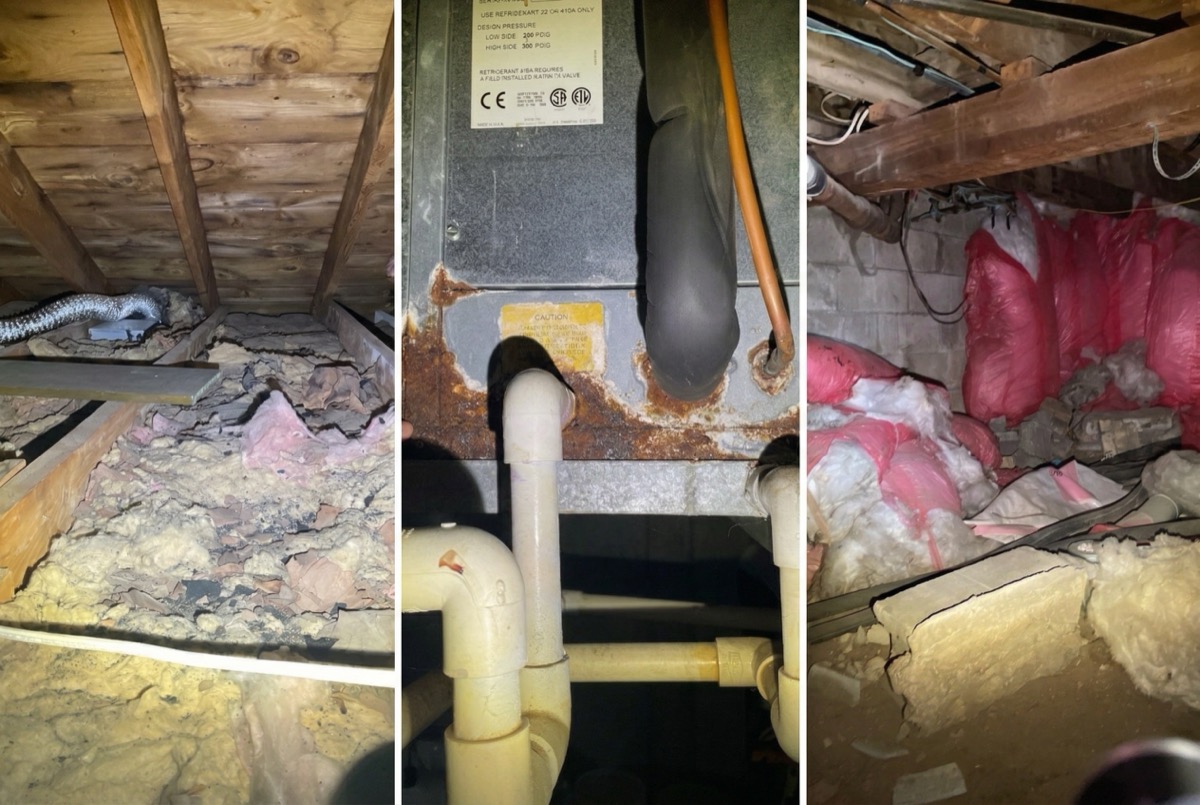
He did not know. Turns out, it was about 4 inches of compressed fiberglass from the original 1978 construction. His walls had no insulation at all. His basement rim joists were uninsulated and open to the outdoors. His home was consuming significantly more energy than it needed to, and the solar array was being sized to generate enough power to cover all of that waste.
This is not a knock on solar. Solar is a good investment for many Maine homeowners, and the economics have improved steadily. But there is a sequence that makes the math work dramatically better, and most solar companies do not bring it up because it is not what they sell.
Insulate first. Then size your solar array to match the reduced load.
The Core Math
Energy efficiency follows a simple hierarchy:
- Reduce waste. Stop losing energy through the building envelope.
- Improve systems. Upgrade to high-efficiency heating and cooling.
- Generate clean energy. Size renewable systems to match your actual needs.
Each step makes the next one cheaper and more effective. Skip step one, and you overpay for everything downstream.
Here is what that looks like in real numbers for a typical 1,800-square-foot home in Greater Portland.
Before Insulation
- Annual energy consumption: 14,000 kWh (electricity) + 800 gallons of oil
- Monthly electricity bill: $200-$280 (baseboard heat months push it higher)
- Annual oil cost: $2,800-$3,200 at current prices
- Solar array needed to offset electricity: 28-32 panels (approximately 10-12 kW system)
- Estimated solar cost: $30,000-$36,000 before tax credit
After Insulation and Air Sealing
Comprehensive insulation and air sealing on this type of home typically reduces heating energy by 30-50%. If you also convert from oil to a cold-climate heat pump, the overall electricity consumption drops because heat pumps use 2-3 times less energy per unit of heat than electric baseboard, and the home is losing less heat through the envelope.
- Annual energy consumption: 8,000-10,000 kWh (all-electric with heat pumps, after envelope work)
- Solar array needed: 18-22 panels (approximately 6.5-8 kW system)
- Estimated solar cost: $19,500-$25,000 before tax credit
The Savings
By insulating first, the solar array is 30-40% smaller. That translates to:
- $8,000-$13,000 less in solar equipment costs
- Fewer panels on your roof (matters for aesthetics, structural load, and available roof space)
- Faster payback period because the system cost is lower relative to the energy it offsets
The insulation project might cost $6,000-$10,000 before rebates. Efficiency Maine pays a fixed amount per zone, so on a $10,000 attic and wall job (two zones of 500+ sq ft, with attic and living-space air sealing) the rebate is $4,200 at the any-income tier ($2,000 x 2 + $150 + $50), $6,300 at moderate income ($3,000 x 2 + $225 + $75), and $8,400 at low income ($4,000 x 2 + $300 + $100). That leaves $5,800, $3,700, or $1,600. So you spend roughly $1,600-$5,800 on insulation, save $8,000-$13,000 on solar, and your home is more comfortable year-round. The net cost of insulating is negative. It pays for itself through the solar savings alone, before you count the reduced heating bills.
Why Solar Companies Do Not Mention This
This is not a criticism of solar installers. The reputable ones in Maine do honest work. But their business model is built around sizing and installing solar arrays. They are not insulation contractors, and they do not profit from telling you to spend money with someone else first.
The consultation process at most solar companies starts with your utility bills. They look at your annual electricity usage, design a system to offset it, and give you a price. The question they are answering is: "How much solar do you need to cover your current usage?" The question they are not answering is: "Should your current usage be this high in the first place?"
That is not their job. But it is worth understanding before you sign a contract.
The Building Science Behind the Numbers
Your home's building envelope - the boundary between conditioned space and the outdoors - is where energy escapes. In a pre-1980s Maine home with minimal insulation and no air sealing, the envelope is working against you around the clock. Understanding how your home moves heat, air, and moisture is the foundation for getting this right.
Heat Loss Pathways
In a typical under-insulated Greater Portland home, heat escapes through:
- The attic: 25-40% of total heat loss. Warm air rises, and if the attic floor is not air sealed and insulated to at least R-50, a meaningful portion of your heating dollars passes straight through the ceiling.
- Walls: 20-30% of total heat loss. Many homes built before 1980 have little or no wall insulation. Even homes from the 1980s and 1990s often have only R-11 fiberglass batts that have compressed or shifted over decades of settling.
- The basement and foundation: 15-25% of total heat loss. Uninsulated basement walls and rim joists are major heat sinks, particularly in homes where the basement is used as living or utility space.
- Air leaks: Gaps, cracks, and penetrations throughout the envelope allow warm air to escape and cold air to infiltrate. A blower door test on a typical older Maine home might measure 3,000-5,000 CFM50 of air leakage - the equivalent of leaving a window open year-round.
When you add all of that up, 30-50% of the energy your heating system produces is being wasted. That waste is what drives up your utility bills, and it is what forces a larger solar array to compensate.
What Insulation Actually Changes
After a comprehensive insulation and air sealing project:
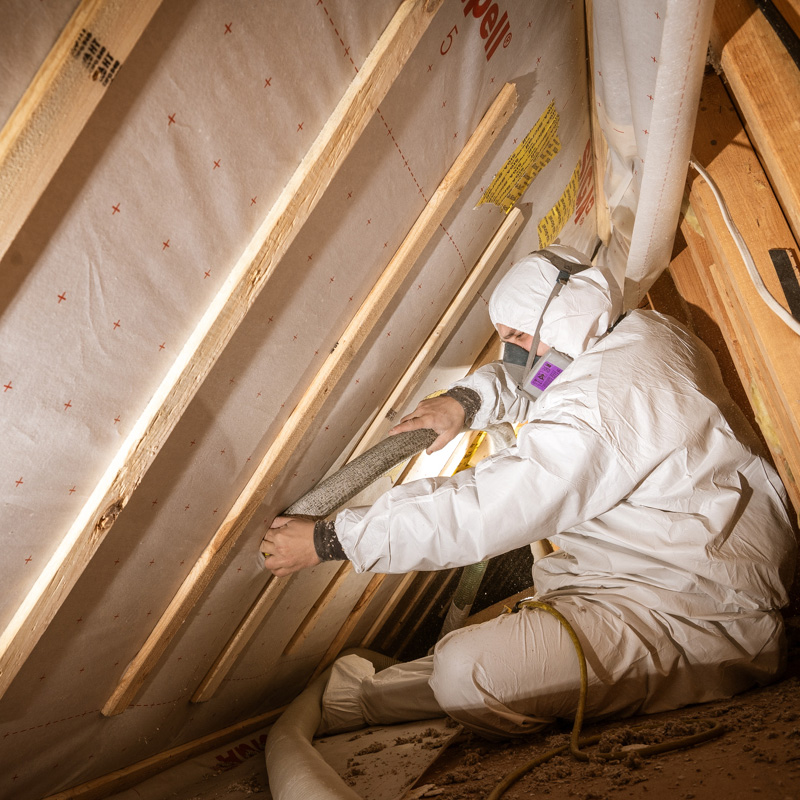
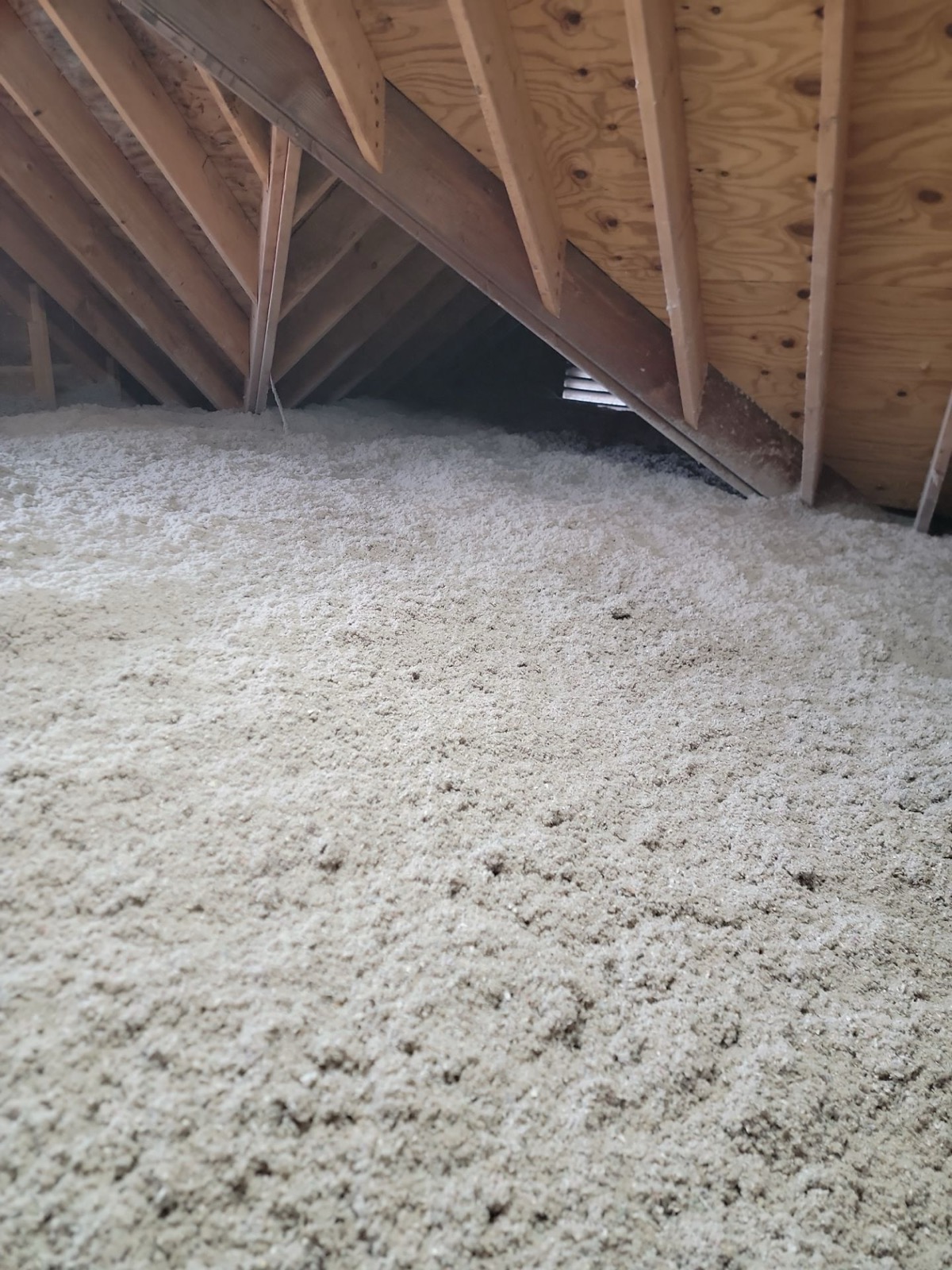
- Attic insulation goes from R-8 or R-12 to R-50 (blown-in cellulose, 14-16 inches deep)
- Wall cavities are filled with dense-pack cellulose through small-diameter holes drilled from the exterior, then patched
- Basement rim joists and walls are insulated
- Air leaks are sealed throughout the envelope
- Blower door results typically improve by 25-40%
The result is a home that holds heat longer, recovers temperature faster, and runs its heating system less. The cooling load in summer drops too. Total energy consumption falls, and the solar array you need to offset that consumption shrinks proportionally. For older homes, a whole-house insulation approach tends to produce the biggest combined impact on comfort and energy bills.
A Real Comparison: Two Approaches to the Same Home
Consider a 1960's Colonial in South Portland - 2,000 square feet, oil boiler, minimal insulation, annual energy costs around $5,500.
Approach A: Solar first, insulate later (or never)
- 30-panel solar array: $34,000 (before 30% solar tax credit = $23,800 net)
- Annual energy savings: $2,400-$3,000 in electricity offset
- Payback period: 8-10 years
- Home comfort: unchanged (still drafty, still cold upstairs, still hot in summer)
Approach B: Insulate first, then right-size solar
- Insulation and air sealing: $9,000 (before rebates)
- Efficiency Maine rebate: $3,600-$7,200 (depending on income)
- Net insulation cost: $1,800-$5,400
- Annual heating savings: $1,200-$1,600
- Reduced solar array needed: 20 panels at $23,000 (before 30% credit = $16,100 net)
- Combined net cost: $17,900-$21,500
- Combined annual savings: $3,600-$4,600
- Payback period: 4-6 years
- Home comfort: dramatically improved
Approach B costs less, pays back faster, and makes the home more comfortable. The solar installer still gets a sale - just a smaller one. And the homeowner gets a home that works better in every season.
When Solar Should Come First
There are situations where it makes sense to prioritize solar:
- Your home is already well insulated. If you have R-50 in the attic, insulated walls, and a tight envelope, there may not be much efficiency to gain. Go straight to solar.
- You are planning a roof replacement. If your roof is due for replacement, installing solar during the re-roofing project saves the cost of a second crew visit. It may make sense to do solar now and insulation next year.
- Your timeline is driven by a specific incentive. The federal solar investment tax credit (25D) is currently at 30% through 2032 under the Inflation Reduction Act. If you have reason to act on solar before addressing the envelope - a tight cash-flow window, a simultaneous roof project - that timing can still make sense.
In most cases, though, insulation delivers a faster return and creates better conditions for every subsequent improvement.
We Do Not Install Solar - and That Is the Point
Horizon Homes does not sell or install solar panels. We have no financial interest in steering you toward or away from any solar company. Our recommendation to insulate first is grounded in building science and in what we see across hundreds of Maine homes each year.
When we tell a homeowner that insulation should come before solar, we are not competing with their solar quote. We are trying to make sure that solar investment works as hard as possible by reducing the load it needs to cover.
Think of it as right-sizing. You would not install an oversized boiler for a well-insulated home. The same logic applies to solar: size the system for the home's actual energy needs, not for the energy it currently wastes through a leaky envelope.
The First Step
If you are considering solar and have not looked at your home's insulation, that is the right place to start. Our free energy assessment is a visual walkthrough - no testing equipment, no pressure - that takes about 45 minutes and gives you a clear picture of where your home is losing energy and what insulation and air sealing would realistically reduce.
Bring your solar quote if you have one. We can help you understand how much smaller that array could be after envelope improvements, and we can map out a phased plan - insulate this season, install solar next year - that maximizes the return on both investments.
Call us at (207) 221-3221 or schedule your free energy assessment online. Horizon Homes has been working with Greater Portland homeowners since 2006. We can help with that first step.
Find our guides faster: add Horizon Homes as a preferred source on Google.
Free Home Energy Assessment
Wondering Where Your Home Is Losing Heat?
We walk through your home, identify insulation gaps and air leaks, and give you a prioritized plan with pricing and Efficiency Maine rebates.
- Free walkthrough, no equipment, no disruption
- Efficiency Maine rebates identified for you
- Written improvement plan with pricing
Schedule Your Free Assessment
We call within 1 business day.