Cathedral Ceiling Insulation in Maine Homes
Editor's note (October 2026): Efficiency Maine changed its insulation and air sealing rebates for work completed on or after October 1, 2026. They are now a fixed amount per zone of the house (attic, walls, basement) instead of a percentage of project cost, so the insulation rebate figures, combined totals, and cost examples below reflect the program when this article was published. See current Efficiency Maine rebates.
We were in a Cape Cod in Falmouth last winter doing an assessment on a home built in 1978. Beautiful house - exposed wood ceiling in the upstairs bedrooms that followed the roofline up to a peak. The homeowner loved the look of it. She did not love the fact that the upstairs was 15 degrees colder than the main floor all winter, and her heating bill was closing in on $5,000 a year.
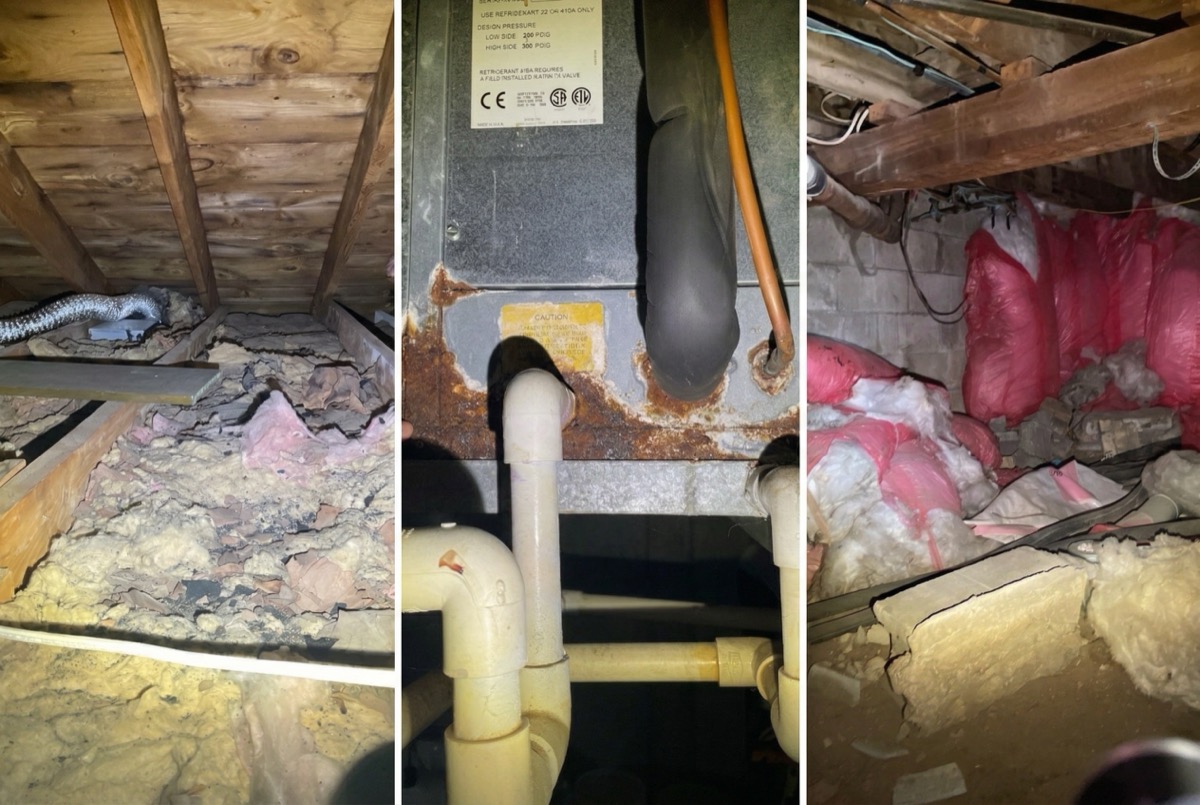
When we looked at the roof assembly from the outside and checked the accessible sections from the kneewall attic spaces, the answer was clear: there was zero insulation between the roof deck and that cathedral ceiling. Nothing. Just the roofing material, roof sheathing, a rafter cavity full of air, and the finished ceiling boards. Every BTU of heat that rose to the second floor went straight through the roof.
This is more common than you might think, especially in Maine Capes and A-frames built between the 1950's and the early 1980's. Cathedral ceilings - where the finished ceiling follows the slope of the roof rather than having a flat attic above - present a genuine insulation challenge. The space between the rafters is the only cavity available for insulation, and it is often too shallow to achieve adequate R-value with standard approaches.
Why Cathedral Ceilings Are Different
In a home with a flat ceiling and an attic above, insulating is relatively straightforward. You air seal the attic floor, blow in 14-16 inches of cellulose, and achieve R-49 or better. The attic space gives you all the depth you need and allows for proper ventilation above the insulation.
Cathedral ceilings do not give you that luxury. The rafter cavity - typically 2x6, 2x8, or 2x10 lumber - is all the space you have to work with. A 2x6 rafter provides only 5.5 inches of depth. A 2x8 gives you 7.25 inches. Even a 2x10 at 9.25 inches falls well short of what you would want for Maine's climate.
Here is how that translates to insulation values:
| Rafter Size | Cavity Depth | Max R-Value (Cellulose) | Target R-Value (Maine) |
|---|---|---|---|
| 2x6 | 5.5 inches | R-20 | R-49 |
| 2x8 | 7.25 inches | R-26 | R-49 |
| 2x10 | 9.25 inches | R-33 | R-49 |
| 2x12 | 11.25 inches | R-41 | R-49 |
Even with 2x12 rafters - which are uncommon in residential construction from this era - you are still short of the R-49 target. And most Maine Capes and A-frames have 2x6 or 2x8 rafters, which leaves you at less than half the recommended insulation level.
The Ventilation Question
Before discussing insulation options, we need to address ventilation. In a standard vented roof assembly, air flows from the soffit (the underside of the roof overhang) up through the rafter bays to a ridge vent at the peak. This airflow serves two purposes: it removes moisture that migrates from the living space into the roof cavity, and it keeps the roof deck cold in winter to prevent ice dams.
For a cathedral ceiling to have ventilation, you need an unobstructed air channel between the insulation and the roof deck in every rafter bay. Building codes typically require a minimum 1-inch ventilation channel. That means if you have a 2x8 rafter (7.25 inches of depth), you get 6.25 inches for insulation after leaving room for the vent channel. With cellulose at roughly R-3.6 per inch, that gives you about R-22 - significantly below the R-49 target.
This is the fundamental tension with cathedral ceilings: maintaining proper ventilation takes space away from insulation, and the cavity is already too shallow.
Option 1: Dense-Pack Cellulose (When Depth Allows)
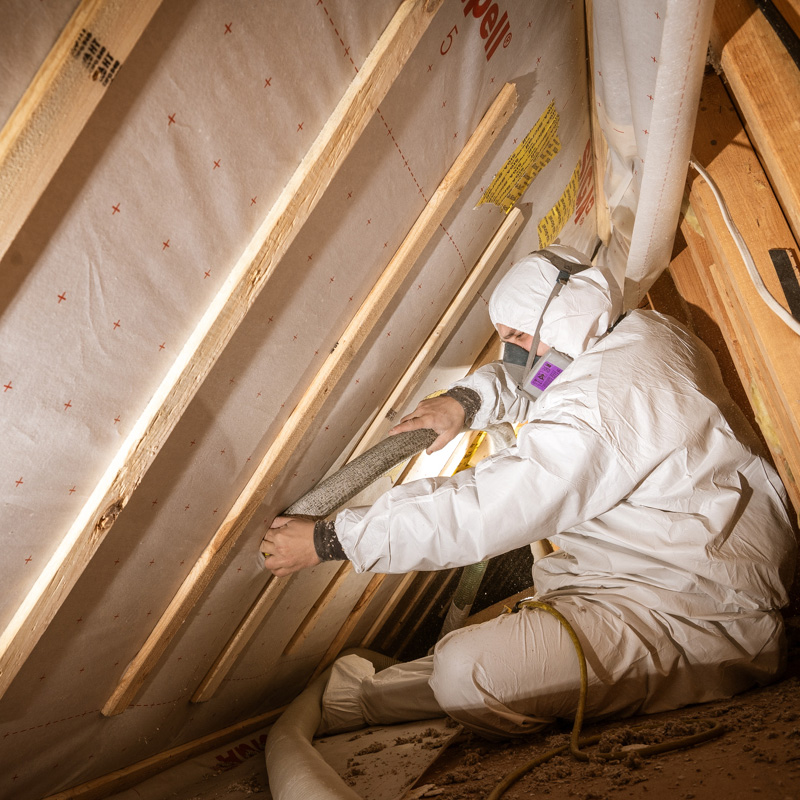
When the rafter depth is adequate - 2x10 or deeper - or when we can add depth by sistering additional lumber onto the rafters, dense-pack cellulose is our preferred approach for cathedral ceilings.
Dense-pack cellulose is different from the loose-fill cellulose used in attic floors. It is blown in at a higher density (approximately 3.5 pounds per cubic foot compared to about 1.5 for loose-fill) into enclosed cavities. At this density, it resists air movement through the insulation, provides good thermal performance, and handles moisture well.
For a vented cathedral ceiling assembly with dense-pack cellulose, the installation looks like this:
- Install ventilation baffles (rigid channels) against the roof deck in each rafter bay to maintain the air channel from soffit to ridge
- Drill access holes through the finished ceiling or through the roof sheathing from outside
- Blow dense-pack cellulose into each rafter bay until the cavity is completely filled up to the ventilation baffle
- Patch the access holes
This approach works well when you have enough depth to achieve a reasonable R-value after accounting for the ventilation channel. With 2x10 rafters and a 1-inch vent channel, you can get approximately R-30 with dense-pack cellulose. That is not R-49, but it is a massive improvement over the zero insulation we find in many cathedral ceilings, and the energy savings reflect that improvement.
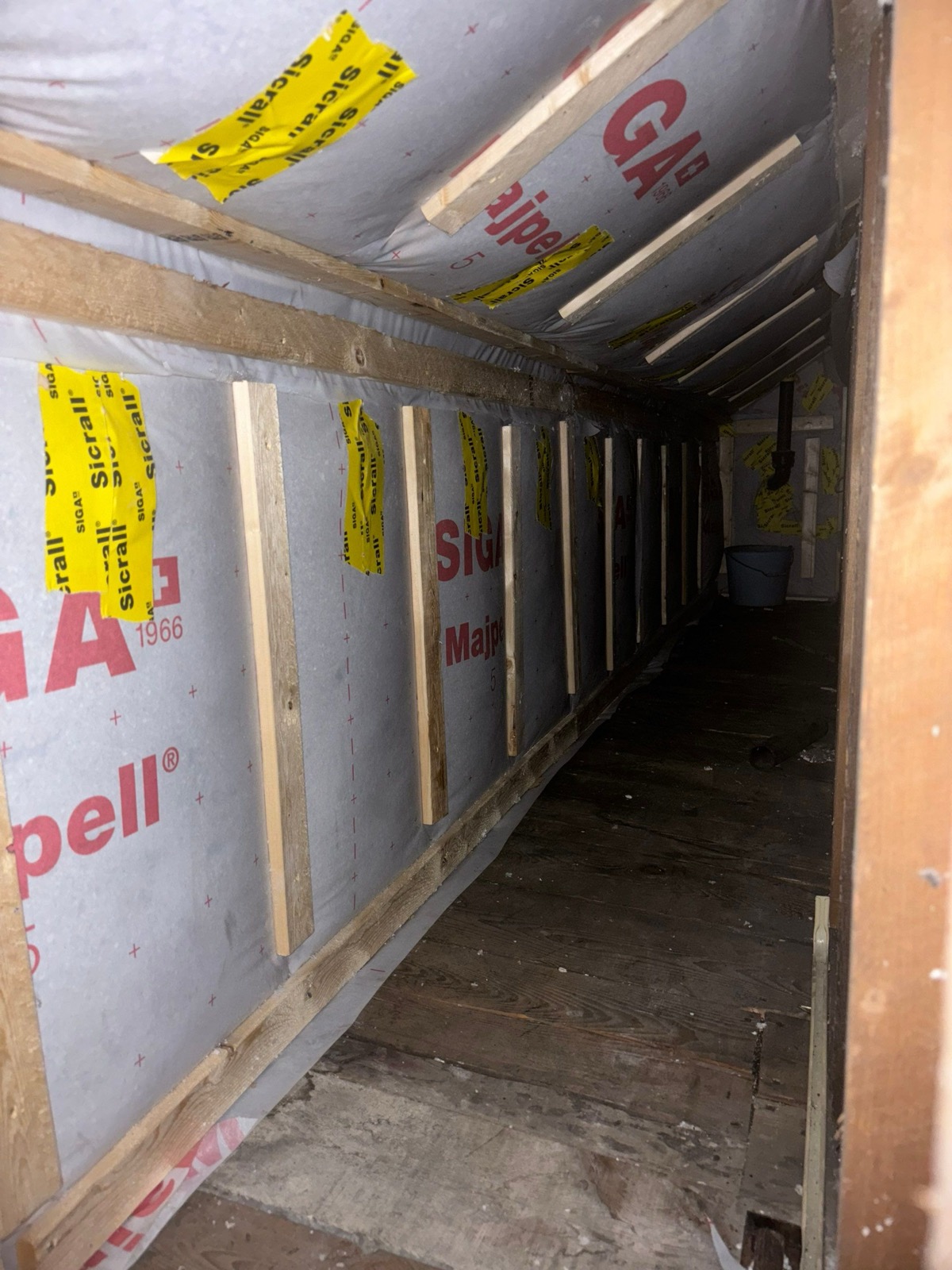
Where there is access from kneewall attic spaces on either side of the cathedral section - which is common in Cape Cod homes - the installation is more straightforward because we can reach the rafter bays from those accessible areas without penetrating the finished ceiling.
Option 2: Closed-Cell Spray Foam (For Thickness-Constrained Situations)
When the rafter depth is too shallow for cellulose to make a meaningful difference - 2x6 rafters being the most common example - closed-cell spray foam becomes the practical option.
Closed-cell spray foam provides approximately R-6.5 per inch, nearly twice the R-value per inch compared to cellulose. In a 2x6 rafter bay, spray foam can achieve roughly R-33 in the same space where cellulose would give you R-20. That is a significant difference when every inch counts.
Spray foam also acts as both an insulator and an air barrier, and it is a moisture barrier. This means it can be installed directly against the roof deck without a ventilation channel in what is called an unvented or "hot roof" assembly. Eliminating the ventilation channel gives you the full rafter depth for insulation.
We do not install spray foam ourselves - it is a different trade with specialized equipment and certifications. We subcontract this work to experienced spray foam applicators and coordinate the project so the homeowner deals with one company throughout the process. This is one of the specific situations where we recommend spray foam because the constraints of the application make it the right tool for the job.
Because this is one of the few assemblies where we do recommend spray foam, it is also worth knowing how spray foam fails when it is installed badly. Shrinkage, incomplete curing, and moisture trapped behind a vapor-impermeable layer are all real risks, and they are harder to correct here than almost anywhere else in the house. Our guide to spray foam problems and how to vet an installer covers what to insist on before anyone sprays your roof deck.
An unvented spray foam cathedral ceiling assembly requires careful design. The spray foam must be applied to the correct thickness and must fully adhere to the roof deck to prevent moisture from reaching the sheathing. Building codes in Maine require specific minimum thicknesses of closed-cell spray foam for unvented roof assemblies based on climate zone. In our area (Climate Zone 6), the code requires enough spray foam to keep the interior surface of the roof sheathing above the dew point during winter.
Option 3: Hybrid Approach
In some cases, the best solution combines both materials. A hybrid approach uses a layer of closed-cell spray foam against the roof deck (typically 2-3 inches) to provide the air barrier and vapor control, followed by dense-pack cellulose to fill the remaining cavity depth.
This approach is particularly useful with 2x8 or 2x10 rafters where:
- The cavity is too shallow for cellulose alone to achieve a good R-value with a vent channel
- Full-depth spray foam would be unnecessarily expensive
- The homeowner wants the performance benefits of spray foam at the roof deck with the cost efficiency of cellulose for the bulk of the cavity
For a 2x10 rafter bay, a hybrid assembly might look like: 3 inches of closed-cell spray foam (R-19.5) plus 6 inches of dense-pack cellulose (R-21.6), giving a combined R-41. That is still below R-49, but it is an excellent result for a thickness-constrained cavity and a dramatic improvement over an uninsulated ceiling.
What About Adding Insulation to the Interior?
One option we sometimes discuss with homeowners is adding rigid foam insulation to the interior side of the cathedral ceiling, below the existing rafters. This creates additional depth for insulation and can bring the total R-value much closer to the target.
The trade-off is obvious: it reduces ceiling height. In a room with a cathedral ceiling, losing 2-4 inches of height is less impactful than in a standard 8-foot ceiling room, but it does change the look and feel of the space. It also means new drywall, taping, and painting. For homeowners who value the aesthetics of their cathedral ceiling, this may not be acceptable. For those who prioritize performance, it can be the most cost-effective path to a well-insulated roof assembly.
What About Adding Insulation Above the Roof Deck?
The most thorough option - and also the most expensive - is adding rigid foam insulation above the roof deck during a re-roofing project. When the roof needs to be replaced anyway, this creates an opportunity to add 4-6 inches of polyiso rigid foam on top of the existing sheathing, followed by a new layer of sheathing and roofing.
This approach can achieve R-49 or better without sacrificing interior ceiling height or requiring any interior disruption. The challenge is cost - it adds significantly to an already expensive re-roofing project. But if you are already budgeting for a new roof, the incremental cost of adding insulation is much less than doing it as a separate project later.
Ice Dams and Cathedral Ceilings
If you have a cathedral ceiling in Maine and you are experiencing ice dams, the two issues are almost certainly connected. Heat passing through an uninsulated or under-insulated cathedral ceiling warms the roof deck, melts snow from below, and creates the conditions for ice dam formation.
Properly insulating the cathedral ceiling addresses the root cause. Whether through dense-pack cellulose with ventilation, spray foam in an unvented assembly, or a hybrid approach, reducing heat transfer through the roof assembly keeps the roof deck closer to the outdoor temperature and prevents the melt-refreeze cycle that creates ice dams.
This is why we always evaluate the roof assembly as part of our energy assessment. Ice dams are a symptom, not the problem.
How We Approach Cathedral Ceiling Projects
Every cathedral ceiling is different. The rafter size, the existing conditions, the presence or absence of ventilation, the interior finish, and the homeowner's priorities all influence the right approach. Here is our general process:
During the assessment: We identify the rafter size, check for existing insulation, evaluate the ventilation situation, and look for signs of moisture issues. We also look at how the cathedral ceiling connects to the rest of the building envelope - the kneewalls, flat attic sections, and wall-to-roof transitions that are common in Cape Cod and A-frame homes.
In the proposal: We present options with clear trade-offs. If dense-pack cellulose can achieve a reasonable R-value, we recommend that. If the situation calls for spray foam, we say so and explain why. We give you honest numbers on what each approach will achieve and what it will cost.
During installation: For spray foam work, we coordinate with our subcontractor and manage the project. For cellulose work, our crew handles the installation directly. Either way, you deal with one company and one point of contact.
If you have a Cape, A-frame, or any home with cathedral ceilings that are cold in winter or hot in summer, a free energy assessment is the place to start. We will look at your specific roof assembly and give you a clear recommendation. Call (207) 221-3221 or schedule online.
The Bigger Picture: Cathedral Ceilings as Part of the Whole Envelope
Cathedral ceilings rarely exist in isolation. In a typical Cape Cod home, the cathedral ceiling section connects to kneewall attic spaces on either side, flat attic sections at the peak, and the wall framing below. All of these areas need to be addressed together for the insulation to work as a system.
We commonly find that homeowners focus on the cathedral ceiling because it is the most obvious problem - the upstairs rooms are cold - but the kneewalls and the connections between the different sections of the building envelope are equally important. Air leaks at the junctions between cathedral ceilings, kneewalls, and flat attics can undermine even well-insulated rafter bays.
This is where the whole-home approach matters. Insulating the cathedral ceiling without addressing the kneewall attic spaces and the air sealing at the transitions between building assemblies gives you an incomplete result. We look at the entire envelope and address it as a connected system.
What It Costs
Cathedral ceiling insulation costs vary significantly based on the approach:
- Dense-pack cellulose (accessible rafter bays): Lower cost, typically part of a broader insulation project
- Closed-cell spray foam (subcontracted): Higher per-square-foot cost, but sometimes the only viable option for shallow cavities
- Hybrid approach: Mid-range, balances performance and cost
- Above-deck rigid foam (during re-roofing): Highest upfront cost, but best long-term performance
Efficiency Maine rebates apply to cathedral ceiling insulation as part of your overall insulation and air sealing project. Cathedral ceilings count as part of the attic zone. Efficiency Maine pays a fixed amount per zone by income tier, up to $8,600 per home, which can offset a significant portion of the cost.
We provide detailed, line-item estimates for every project so you know exactly what each component costs and can make informed decisions about phasing if needed.
Have a cathedral ceiling that is costing you money every winter? Schedule a free assessment or call (207) 221-3221. We have been insulating Maine homes since 2006 - including the challenging ones - and we will give you an honest recommendation for your specific situation.
Find our guides faster: add Horizon Homes as a preferred source on Google.
Free Home Energy Assessment
Wondering Where Your Home Is Losing Heat?
We walk through your home, identify insulation gaps and air leaks, and give you a prioritized plan with pricing and Efficiency Maine rebates.
- Free walkthrough, no equipment, no disruption
- Efficiency Maine rebates identified for you
- Written improvement plan with pricing
Schedule Your Free Assessment
We call within 1 business day.