Blown-In Cellulose vs. Fiberglass Batts: An Attic Insulation Comparison
Editor's note (October 2026): Efficiency Maine changed its insulation and air sealing rebates for work completed on or after October 1, 2026. They are now a fixed amount per zone of the house (attic, walls, basement) instead of a percentage of project cost, so the insulation rebate figures, combined totals, and cost examples below reflect the program when this article was published. See current Efficiency Maine rebates.
During almost every energy assessment we perform, the homeowner asks some version of the same question: should I add more fiberglass, or should I switch to blown in insulation?
We have insulated thousands of attics across Greater Portland over 20+ years. Our approach to home insulation in Maine uses blown-in cellulose as the primary material.
Here is the comparison in practical terms.
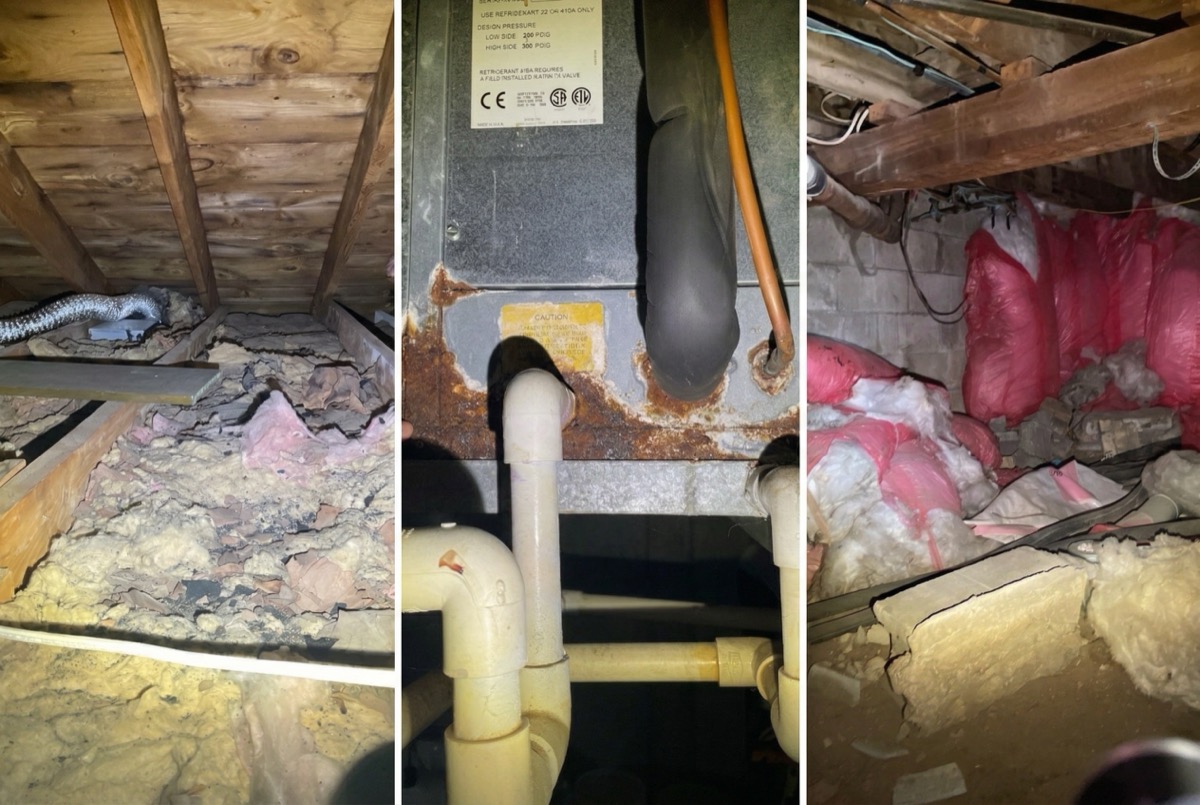
The Problem with Fiberglass Batts in Maine Attics
Fiberglass batts are the insulation most homeowners are familiar with. The pink or yellow rolls sold at hardware stores. They are inexpensive, widely available, and easy to handle. For new construction with clean, uniform stud bays, they can perform adequately.
Maine attic retrofits are not clean, uniform stud bays.
Gaps around obstructions
Attics are full of wiring, plumbing stacks, junction boxes, HVAC ducts, and irregularly spaced framing. Fiberglass batts are rigid rectangles. They do not conform to these obstructions. Every wire, pipe, and brace that a batt is laid over or cut around creates a gap where heat transfers directly through the ceiling.
In a typical older Maine home, we estimate that 10-20% of the attic floor is compromised by gaps in fiberglass batts. That is 10-20% of the ceiling acting as if it has no insulation at all.
Wind washing
Fiberglass is permeable to air movement. In an attic - especially one with soffit vents, ridge vents, or gable vents designed for ventilation - cold air moves through the fiberglass layer. This effect is called wind washing, and it degrades the real-world R-value well below the labeled value.
A fiberglass batt labeled R-38 may perform like R-25 or less when exposed to air movement in a ventilated Maine attic. The insulation is there. It is just not doing what the label says.
Settling and compression
Fiberglass batts lose effectiveness over time as they compress, shift, or get disturbed by homeowners, electricians, or HVAC technicians working in the attic. A batt that was R-30 when installed in 1990 may be performing at R-15 today.
Animals and moisture
Mice and squirrels nest in fiberglass. The tunnels they create are direct thermal bypasses. Fiberglass also retains moisture when wet, losing its insulating value and taking a long time to dry out. In Maine's freeze-thaw climate, this can lead to mold growth on the attic sheathing above.
Why Blown In Insulation Works Better in Maine
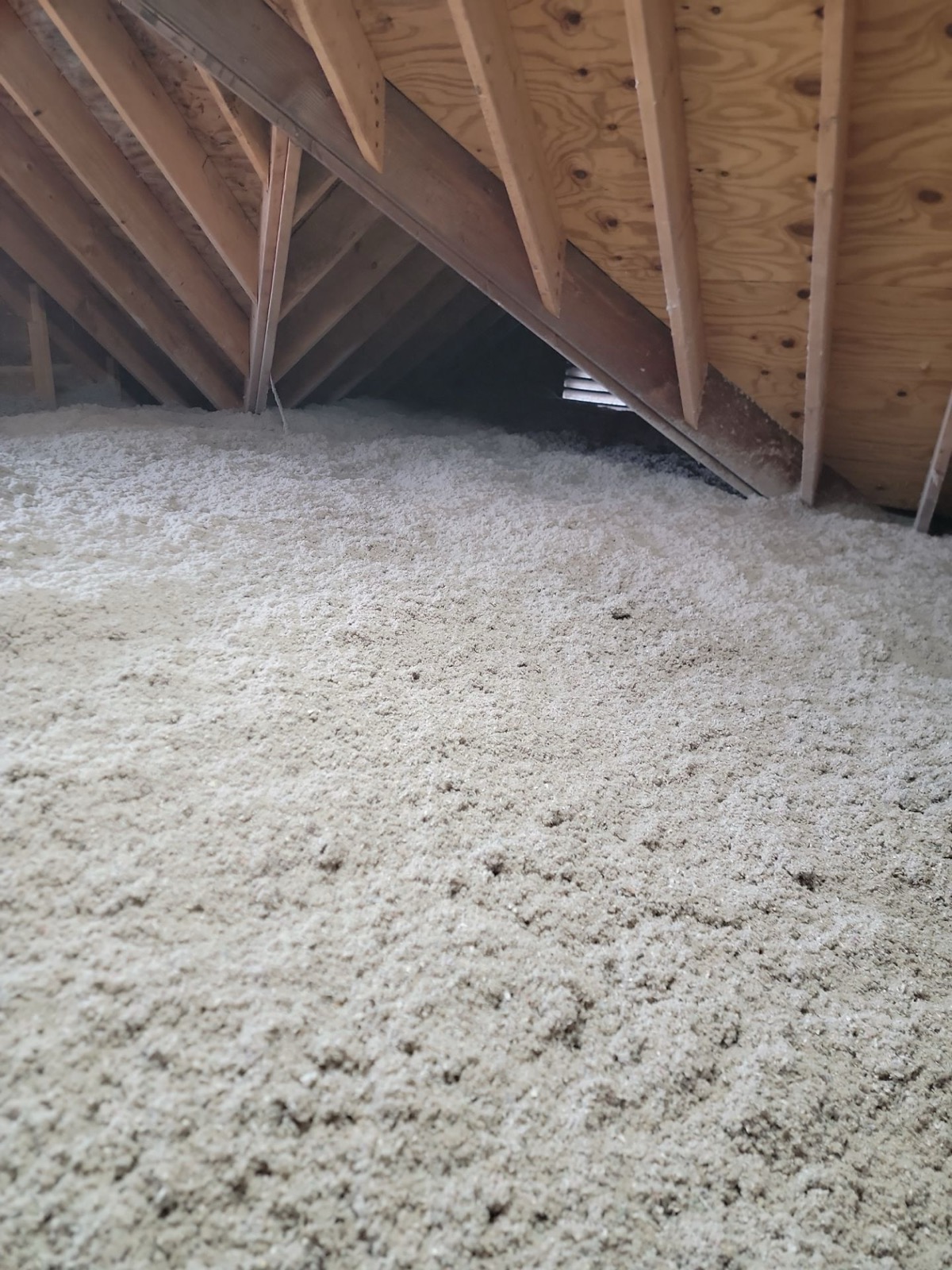
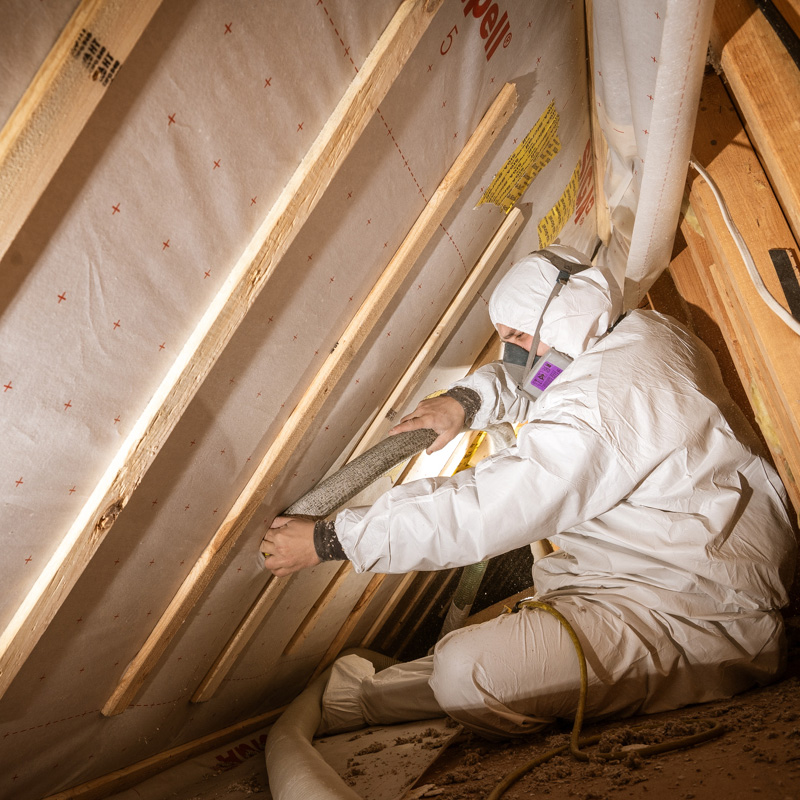
Blown in cellulose insulation is manufactured from 85% recycled newspaper treated with borate for fire resistance and pest deterrence. It is installed by blowing it through a hose into the attic cavity, where it settles into a continuous, gap-free layer.
Seamless coverage
This is the primary advantage. Blown in insulation fills around every joist, wire, pipe, duct, and irregular framing member in the attic. There are no gaps, no seams, and no areas where the ceiling is effectively uninsulated. The coverage is continuous.
When we install blown in insulation to R-50, every square inch of the attic floor reaches R-50. That is not true with batts, even when they are installed carefully.
Density resists air movement
Cellulose at its installed density (roughly 1.5 pounds per cubic foot for loose-fill in an attic) resists air movement through the insulation layer. Unlike fiberglass, wind washing does not degrade its performance. The real-world R-value stays close to the rated value even in a ventilated attic.
This matters in Maine, where attic ventilation is necessary to prevent ice dams and moisture accumulation. You need the attic to be ventilated. You also need the insulation to perform despite that ventilation. Blown in cellulose does both.
Pest and fire resistance
The borate treatment in cellulose insulation deters mice, ants, and other pests. Unlike fiberglass, cellulose is not a hospitable nesting material. This is a practical benefit in Maine, where mice entering attics through unsealed gaps is a persistent problem.
Cellulose carries a Class 1 fire rating. The borate treatment acts as a fire retardant. In fire tests, cellulose insulation chars in place rather than melting or contributing to flame spread.
Removal and air sealing before installation
We typically remove existing attic insulation before installing blown-in cellulose. This exposes the top plates, wiring holes, and plumbing penetrations so our crew can complete air sealing at the attic floor.
After air sealing, we install the cellulose to the specified depth. Blowing over old batts can bury air leaks that need to be sealed first.
The Numbers
Here is a direct comparison for a typical 1,200 square foot Maine attic being insulated to R-50:
| Factor | Fiberglass Batts | Blown In Cellulose |
|---|---|---|
| Labeled R-value (R-50) | 15-16 inches | 14-15 inches |
| Real-world R-value in ventilated attic | R-30 to R-40 (wind washing) | R-48 to R-50 |
| Coverage around obstructions | Gaps at every wire/pipe | Continuous, gap-free |
| Air permeability | High | Low |
| Pest resistance | Low (nesting material) | High (borate treatment) |
| Fire rating | Melts, non-combustible | Class 1, chars in place |
| Moisture behavior | Retains moisture, slow to dry | Absorbs and releases, vapor-permeable |
| Installation time | 1-2 days (careful fitting) | 4-6 hours (blown in) |
The cost difference is modest. For a 1,200 square foot attic, fiberglass batts to R-50 run roughly $3,500-$5,000 installed. Blown in cellulose to R-50 runs $4,000-$6,000 installed. The cellulose costs slightly more, but the performance difference is significant.
And both qualify equally for Efficiency Maine rebates that pay a fixed amount per zone of the house depending on household income.
What About Spray Foam?
Spray foam insulation has the highest R-value per inch and creates both an air barrier and a thermal barrier in one application. For specific areas - rim joists, rubble foundation walls, crawlspaces, and thickness-constrained cathedral ceilings - spray foam is the right material.
We subcontract spray foam for those specific situations. For open attics and wall cavities, blown in cellulose delivers excellent performance at a lower cost.
The Air Sealing Step
One important note: insulation of any type works best when air sealing is done first. Before we blow in cellulose, our crew seals every penetration in the attic floor - wiring holes, plumbing stacks, recessed light housings, the attic hatch, and chimney chases.
This step is critical. Insulation slows heat transfer through surfaces. Air sealing stops air movement through gaps. You need both, and the order matters. Seal first, then insulate.
See the Difference in Your Home
If your attic has old fiberglass batts, there is a good chance it is underperforming. Settled batts, gaps around obstructions, and wind washing can reduce your effective insulation to half its labeled value or less.
A free energy assessment takes about an hour. We check your current insulation levels, identify where the biggest heat loss is occurring, and give you a clear plan with costs and Efficiency Maine rebate estimates.
Schedule your free energy assessment or call us at (207) 221-3221. Horizon Homes has been insulating Maine homes with blown in cellulose since 2006. We install it because it performs.
Find our guides faster: add Horizon Homes as a preferred source on Google.
Free Home Energy Assessment
Wondering Where Your Home Is Losing Heat?
We walk through your home, identify insulation gaps and air leaks, and give you a prioritized plan with pricing and Efficiency Maine rebates.
- Free walkthrough, no equipment, no disruption
- Efficiency Maine rebates identified for you
- Written improvement plan with pricing
Schedule Your Free Assessment
We call within 1 business day.