How Long Does Attic Insulation Last in Maine
Editor's note (October 2026): Efficiency Maine changed its insulation and air sealing rebates for work completed on or after October 1, 2026. They are now a fixed amount per zone of the house (attic, walls, basement) instead of a percentage of project cost, so the insulation rebate figures, combined totals, and cost examples below reflect the program when this article was published. See current Efficiency Maine rebates.
There is a common belief among homeowners that insulation is a one-time installation - put it in the attic, forget about it, and it lasts as long as the house. We hear this regularly. "The previous owner said the attic was insulated." "We had insulation blown in when we bought the place 20 years ago." "There is insulation up there - I can see it."
The assumption is that if insulation exists, it is working. That is not always true.
Insulation degrades. It settles. It gets disturbed. In Maine, the freeze-thaw cycles, ice dams, moisture intrusion, and wildlife that come with our climate accelerate that degradation in ways that homeowners in milder climates do not experience. After 20+ years of checking attics across Greater Portland, we can tell you that the condition of existing insulation is one of the most common issues we identify during a free energy assessment.
Understanding how long attic insulation lasts - and what shortens that lifespan - helps you know when it is time to act.
Cellulose Insulation: The 30+ Year Material
When properly installed and undisturbed, blown-in cellulose insulation has a useful lifespan of 30 years or more. The material itself does not break down. The borate treatment that provides fire resistance and pest deterrence remains effective for the life of the product. The recycled newspaper fibers maintain their structure and thermal performance over decades.
That "properly installed and undisturbed" qualifier is doing a lot of work in that sentence.
In practice, attic insulation in Maine homes faces conditions that reduce its effective performance well before the material reaches its theoretical lifespan. Here are the factors we see most often.
Settlement: The Gradual Performance Loss
All loose-fill insulation settles over time. Gravity pulls the fibers downward, and the insulation layer gets thinner. For cellulose, settlement of 10-20% is expected within the first few years after installation. Reputable installers account for this by over-blowing to a depth that will still meet the target R-value after settlement.
The problem is that settlement does not stop after the initial period. Vibration from wind, foot traffic in the attic, and the simple weight of the material continue to compress the insulation over years and decades. A cellulose installation that was blown to 14 inches (R-49) might measure 11-12 inches after 15 years and 9-10 inches after 25 years.
That depth loss translates directly to R-value loss:
- 14 inches of cellulose: approximately R-49
- 12 inches: approximately R-42
- 10 inches: approximately R-35
- 8 inches: approximately R-28
- 6 inches: approximately R-21
The Energy Star recommendation for attic insulation in Maine (Climate Zone 6) is R-49 to R-60. If your cellulose has settled to 10 inches, you are 30% below the recommended level. At 8 inches, you are 43% below. You will feel it in your heating bills and in the comfort of the rooms below the attic.
The Fix: Topping Up
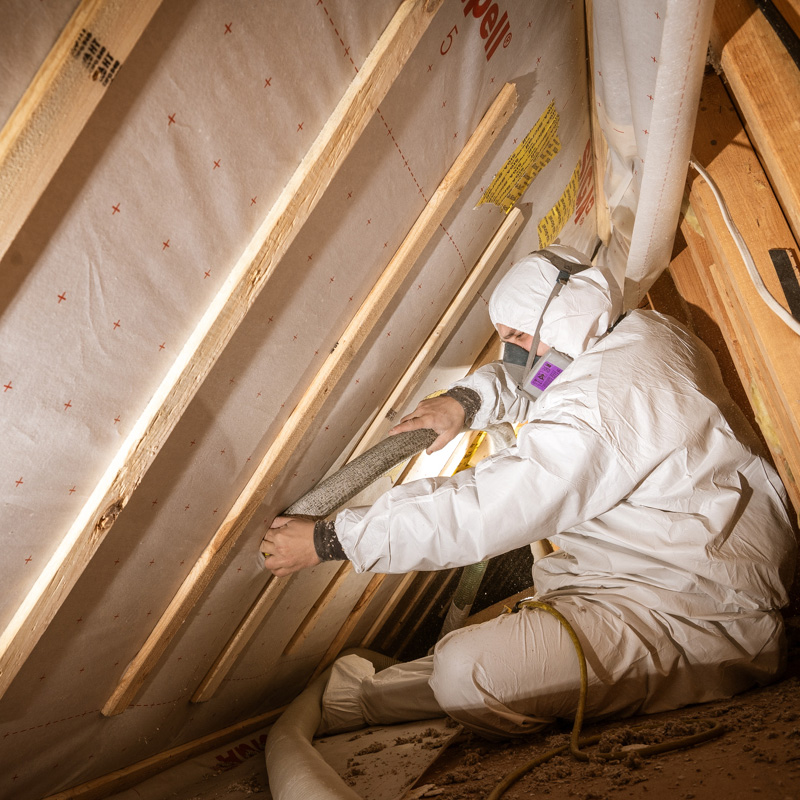
Settlement is the easiest insulation problem to address. We blow additional cellulose on top of the existing material to bring it back to the target depth. There is no need to remove what is there. The existing cellulose is still performing - there is just not enough of it.
A top-up typically costs significantly less than a full attic insulation job because we do not need to do the extensive air sealing work that accompanies a new installation (assuming the air sealing was done properly during the original job).
Moisture Damage: The Maine-Specific Problem
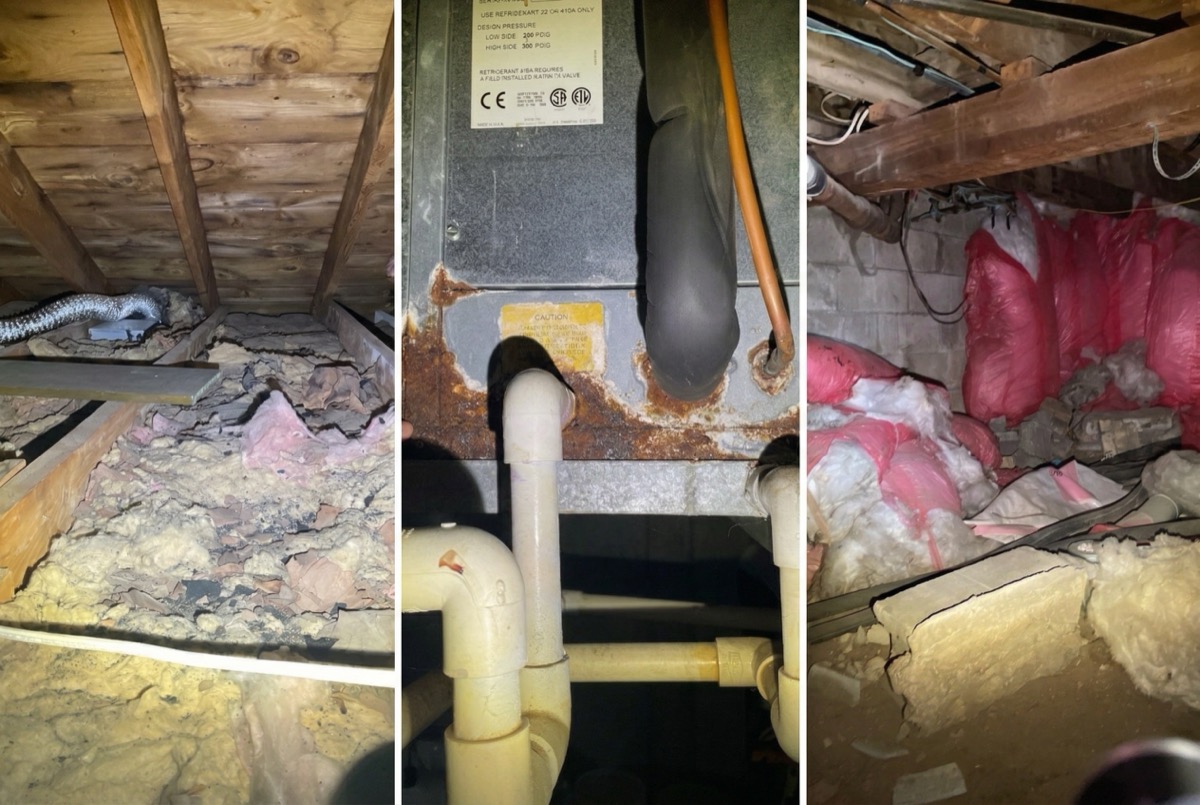
Moisture is the biggest threat to attic insulation in Maine. Wet cellulose clumps together, loses its loft, and can lose 30-50% of its insulating value. Severe or prolonged moisture exposure can also lead to mold growth on the insulation and the structural framing.
Where the Moisture Comes From
Ice dams. When heat escapes through the attic floor (because of air leaks or insufficient insulation), it warms the roof sheathing. Snow on the roof melts, runs down to the eave where the roof is cold, and refreezes as an ice dam. Water backs up behind the dam and can leak through the roof sheathing into the attic, soaking the insulation below.
Ice dams are the most common cause of attic moisture damage in Maine homes. They are also a symptom of the problem that insulation and air sealing are designed to solve. A properly insulated and air-sealed attic keeps heat inside the living space and out of the attic, which keeps the roof cold and prevents ice dams from forming.
Roof leaks. Missing shingles, failed flashing around chimneys and dormers, and deteriorated roof penetrations can all allow rain and snowmelt to enter the attic. A small roof leak can soak a large area of insulation before anyone notices.
Condensation. Warm, moist air from the living space rises into the attic through air leaks around light fixtures, plumbing stacks, attic hatches, and electrical penetrations. When that warm air hits the cold roof sheathing in winter, it condenses. Over a Maine winter, this can deposit a significant amount of moisture on the roof sheathing and the top surface of the insulation.
Proper attic ventilation (soffit vents, ridge vents, or gable vents) helps carry this moisture out of the attic. But ventilation alone cannot compensate for a high rate of air leakage from the living space. Air sealing the attic floor is the real fix.
How to Tell If Moisture Has Damaged Your Insulation
During our assessments, we look for these signs:
- Clumped or matted insulation. Cellulose that has gotten wet and dried clumps together into hard, flat sections that have significantly less insulating value than fluffy, loose material.
- Discoloration. Water-stained insulation, dark patches, or visible mold growth.
- Staining on the roof sheathing. Dark stains or visible mold on the underside of the roof boards, especially near the eaves or around penetrations.
- Damaged or rotting framing. Persistent moisture can rot the rafters, joists, and sheathing.
If moisture damage is limited to a small area (under a past roof leak that has been repaired, for example), we can remove the damaged insulation from that area and replace it with fresh cellulose. If the damage is widespread, a full removal and re-installation may be needed - along with fixing the moisture source.
Wildlife: The Uninvited Residents
Maine attics attract squirrels, mice, bats, and raccoons. These animals tunnel through insulation, compress it with nesting, and contaminate it with droppings and urine. A family of squirrels can ruin a significant section of attic insulation in a single winter.
The signs are usually obvious:
- Tunnels or compressed paths through the insulation
- Nesting material mixed into the cellulose
- Droppings, urine stains, or odor
- Chewed wiring or framing
If wildlife has been in your attic, the affected insulation typically needs to be removed and replaced. The entry points need to be sealed first - otherwise the new insulation gets the same treatment.
We do not do pest removal or entry-point sealing ourselves, but we work with local wildlife control companies regularly. They seal the entries, we replace the insulation. The two jobs need to be coordinated so the animals are out and the entries are sealed before we blow new material.
Previous Installation Problems
Not all attic insulation was installed correctly. We encounter these issues regularly in Maine homes:
Insufficient Depth
The most common problem by far. A homeowner had insulation installed 10 or 20 years ago, but the contractor blew it to 6-8 inches instead of the 12-14 inches needed for R-49. At the time, the energy code may have required less, or the contractor may have simply used less material. Either way, the home has been under-insulated from day one.
No Air Sealing
Insulation without air sealing is dramatically less effective. Warm air convects through the insulation and out through gaps in the attic floor. We estimate that in homes where insulation was added without air sealing, the effective R-value of the insulation is 30-50% lower than the rated value of the material.
This is why we always air seal before insulating. The air barrier is what makes the insulation work as designed.
Blocked Ventilation
Insulation blown too close to the eaves can block the soffit vents, preventing air from flowing into the attic. Without this ventilation, moisture accumulates in the attic, the roof sheathing stays damp, and the insulation at the eaves gets wet. We install baffles (rigid channels) at each rafter bay along the eaves to keep the ventilation path clear.
Vapor Barrier Problems
Some older installations include a vapor barrier (plastic sheeting) on top of the insulation or in the wrong location. In Maine's cold climate, the vapor barrier should be on the warm side (closest to the living space) - if one is used at all. A vapor barrier on the cold side can trap moisture in the insulation. Cellulose without any vapor barrier performs well in most Maine attic applications because it manages moisture through absorption and release.
How to Check Your Attic Insulation
You can do a basic check yourself if you have safe attic access:
1. Measure the depth. Use a ruler or tape measure in several locations. If you have cellulose, multiply the depth in inches by 3.5 to estimate the R-value. If it is below R-38, you are meaningfully under-insulated for Maine.
2. Look for evenness. The insulation should be relatively level across the entire attic floor. If you can see the tops of the ceiling joists, the insulation is too thin. If there are high spots and low spots, it has been disturbed or has settled unevenly.
3. Check for moisture. Look for clumping, discoloration, or staining on the roof sheathing above.
4. Look for animal activity. Tunnels, droppings, nesting material.
5. Check the eaves. Can you see daylight through the soffit vents? Are the vents blocked by insulation? Are there baffles in place?
If you are not comfortable climbing around in your attic - and plenty of Maine attics are not easy to navigate safely - a free energy assessment from Horizon Homes covers all of this. We check the depth, the condition, the air sealing, and the ventilation, and we give you a clear picture of where things stand.
When to Top Up vs. When to Replace
Top up when the insulation is in good condition but has settled below target depth. This is the most common scenario and the most cost-effective fix. We blow additional cellulose on top of what is there.
Replace when the insulation has been significantly damaged by moisture, contaminated by wildlife, or is a material that should not be in the attic (like fiberglass batts that have slumped off the rafter cavities and are bunched up in piles on the attic floor). In a replacement, we remove the old material, air seal the attic floor properly, and blow fresh cellulose to the target depth.
Do both when parts of the attic are in good shape and other parts are damaged. We remove the damaged sections, repair or seal as needed, and then blow cellulose over the entire attic to bring it up to a uniform depth.
The Bottom Line on Attic Insulation Lifespan in Maine
Cellulose insulation installed properly in a well-ventilated, properly air-sealed attic will perform for 30 years or more. But "installed properly" and "well-maintained attic" are the conditions that determine whether you reach that lifespan.
In the real world of Maine homes - with ice dams, roof leaks, condensation, squirrels, and installations that were not done to current standards - attic insulation often needs attention well before the 30-year mark. A check every 5-10 years is reasonable. If you have had ice dams, a roof leak, or evidence of animal activity, check sooner.
The free energy assessment from Horizon Homes includes a thorough attic evaluation. We have been doing this since 2006 across every type of home in Greater Portland, and we will tell you honestly whether your insulation is fine, needs a top-up, or needs to be replaced.
Frequently Asked Questions
How long does attic insulation last in Maine?
When properly installed and undisturbed, blown-in cellulose insulation lasts 30 years or more. Fiberglass batts have a similar theoretical lifespan but degrade faster in practice. In Maine, freeze-thaw cycles, ice dams, moisture intrusion, and wildlife accelerate degradation for all insulation types.
How do I know if my attic insulation needs to be replaced?
Four signs: visible compression or settling below rafter tops, moisture staining or a musty smell, pest disturbance, and declining comfort in the rooms below. A free assessment measures current depth and identifies the specific issue.
Can I add new insulation on top of the old?
We almost always remove first. Proper air sealing - attic bypasses, top plates, penetrations - requires access to surfaces you cannot reach under existing insulation. Most of what we find is also failing on its own: settled cellulose, pest or moisture damage, or the wrong material (fiberglass batts especially). Starting from a clean deck and doing the air sealing right is what separates a 20% improvement from a 35-40% one.
What shortens the life of attic insulation in Maine?
Ice dams, unsealed attic bypasses, poor roof ventilation, and wildlife disturbance. Addressing air sealing and ventilation when you re-insulate is what keeps the new material performing.
Does Efficiency Maine cover attic insulation replacement?
Yes. Efficiency Maine pays a fixed amount per zone of the house by income tier, up to $8,600 per home ($5,600 per mobile home), for insulation and air sealing combined. As a registered vendor, we handle all paperwork and deduct the rebate from your invoice upfront.
Call us at (207) 221-3221 or schedule your assessment online. Knowing the actual condition of your attic insulation is the first step toward either confirming you are in good shape or fixing a problem that is costing you money every month.
Find our guides faster: add Horizon Homes as a preferred source on Google.
Free Home Energy Assessment
Wondering Where Your Home Is Losing Heat?
We walk through your home, identify insulation gaps and air leaks, and give you a prioritized plan with pricing and Efficiency Maine rebates.
- Free walkthrough, no equipment, no disruption
- Efficiency Maine rebates identified for you
- Written improvement plan with pricing
Schedule Your Free Assessment
We call within 1 business day.