Best Insulation for Old Maine Homes
Editor's note (October 2026): Efficiency Maine changed its insulation and air sealing rebates for work completed on or after October 1, 2026. They are now a fixed amount per zone of the house (attic, walls, basement) instead of a percentage of project cost, so the insulation rebate figures, combined totals, and cost examples below reflect the program when this article was published. See current Efficiency Maine rebates.
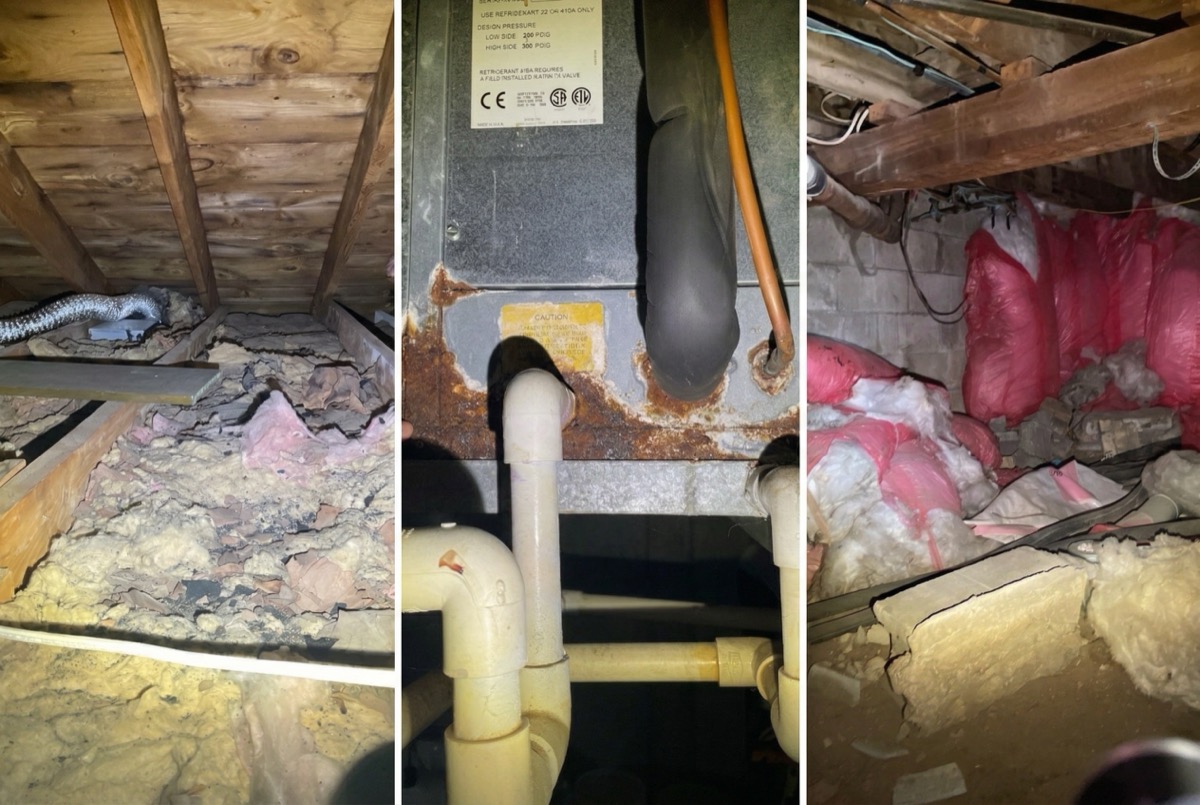
We were in a 1907 Colonial in Portland's West End last month. The homeowner had pulled off a section of baseboard to run a new cable, and behind the plaster wall there was nothing. No insulation. Just an open cavity with the original wood lath visible on the far side and a draft blowing through from somewhere below.
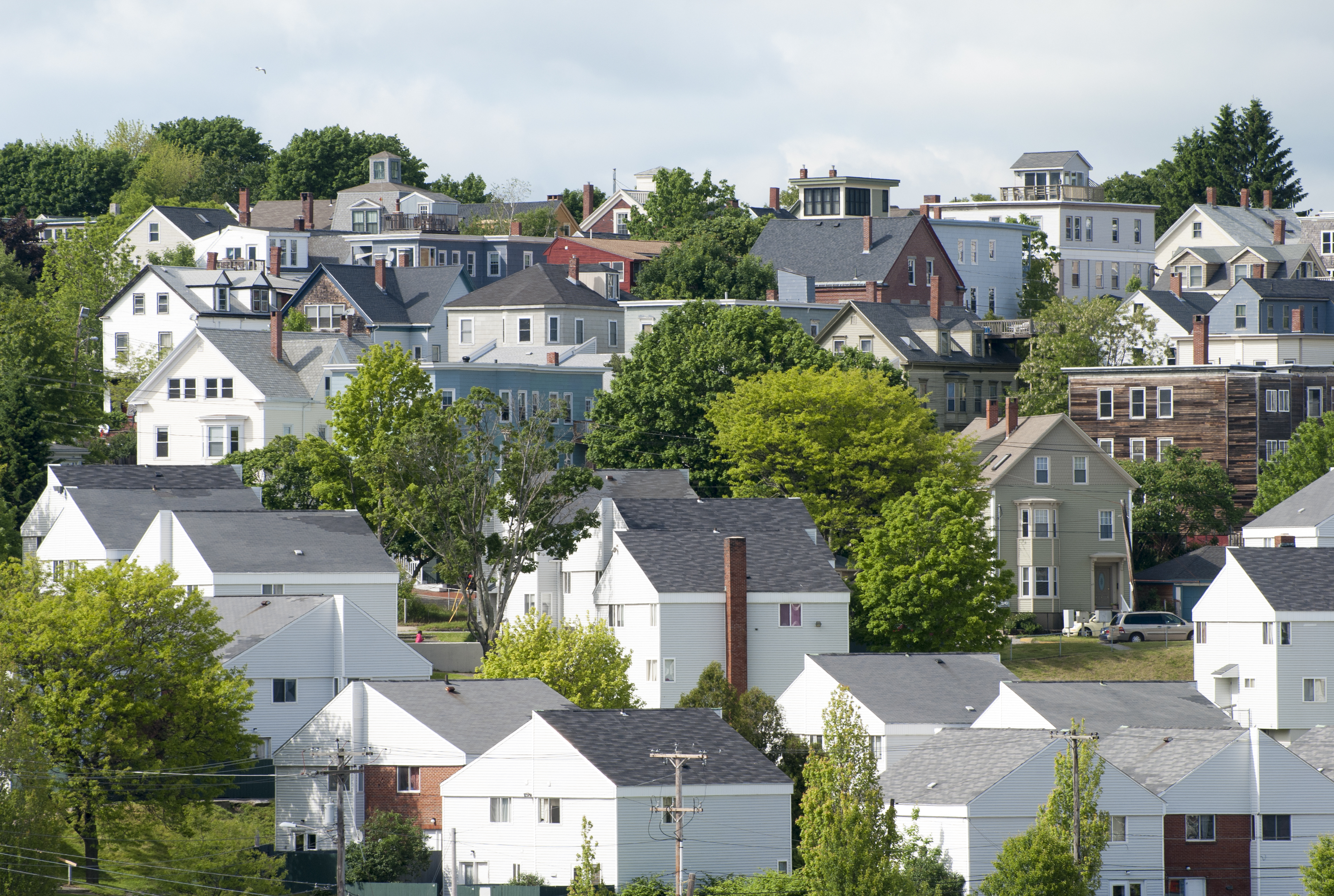
This is not unusual. In pre-1950's homes across Maine - the Colonials, Cape Cods, Victorians, four-squares, and farmhouses that make up so much of Greater Portland's housing stock - we find the same thing on a weekly basis. Open wall cavities. Thin or missing attic insulation. Original construction that was never designed for insulation because insulation was not standard practice when these homes were built.
The question we hear most often from owners of these homes is straightforward: what insulation should I use? The answer, for the vast majority of old Maine homes, is blown-in cellulose. Here is why - and how the specifics change depending on what era and style of home you own.
Why Cellulose for Old Homes
Cellulose insulation is made from 85% recycled newspaper, treated with borate for fire resistance and pest deterrence. It has a Class 1 fire rating and produces zero off-gassing. We have been installing it in homes across Greater Portland for 20+ years, and it remains our primary insulation material for good reasons.
It Fills Irregularly Shaped Cavities
Old homes are not precise. Wall cavities are not perfectly 14.5 inches wide like a modern 2x4 bay. They have fire stops in odd locations, diagonal bracing, dropped headers, and irregular stud spacing. Plaster keys (the mushroom-shaped blobs of plaster that pushed through the lath gaps) protrude into the cavity from the interior side.
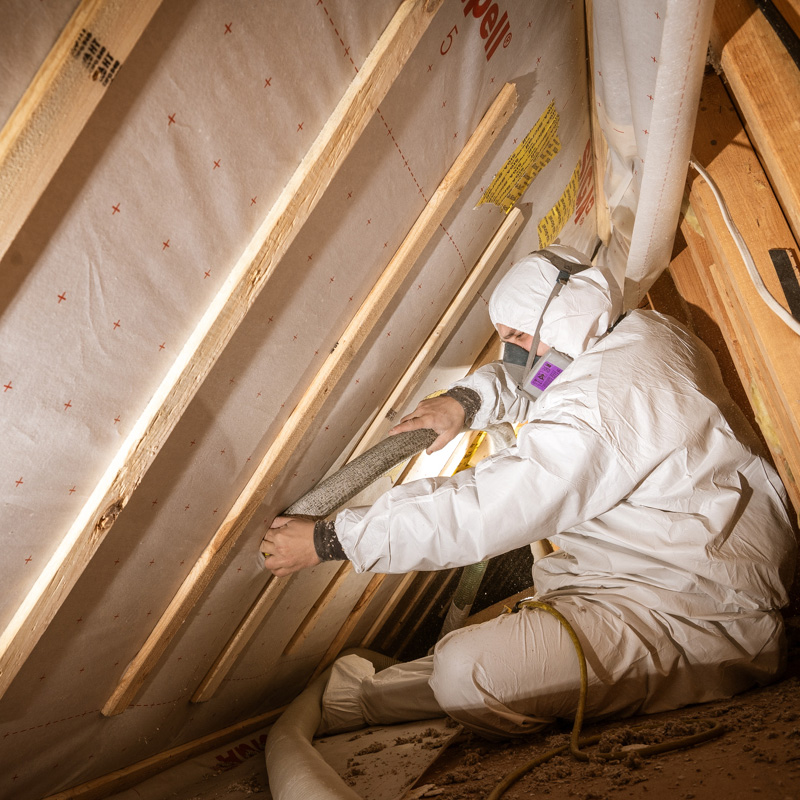
Blown-in cellulose flows around all of these obstructions. It fills the space completely, conforming to whatever shape the cavity happens to be. Batt insulation - whether fiberglass or mineral wool - cannot do this. It has to be cut and fitted, and in an old wall cavity with irregular dimensions and hidden obstructions, perfect fitting is impossible. Every gap is a path for air movement and heat loss.
Dense-Pack Stops Air Movement
When we blow cellulose into wall cavities, we install it at a density of 3.5 pounds per cubic foot - what the industry calls "dense-pack." At this density, the cellulose is compressed tightly enough that air cannot move through it. This matters enormously in balloon-frame homes (more on that below) because it effectively blocks the chimney-like air channels that run from the foundation to the attic through the wall cavities.
No other blown-in material achieves the same air-stopping performance at dense-pack density. This is the primary reason we choose cellulose over other options for wall cavities in old homes.
It Manages Moisture Safely
Old homes are not airtight. They breathe - moisture moves through the walls in both directions depending on the season and conditions. Cellulose handles this well. It can absorb and release moisture without losing its insulating properties or supporting mold growth (the borate treatment inhibits mold). It is vapor-permeable, meaning it allows moisture to pass through rather than trapping it.
This is a critical advantage in homes with plaster-and-lath walls. Plaster is also vapor-permeable. A wall assembly of plaster, cellulose, and wood sheathing allows moisture to move through the system without accumulating at any single point. Installing a material that traps moisture (like closed-cell spray foam on the interior side of a plaster wall) can create condensation problems that the wall assembly was not designed to handle.
Balloon-Frame Construction: The Biggest Challenge
If your home was built before 1950 in Maine, there is a high probability it has balloon framing. In balloon-frame construction, the wall studs run continuously from the sill plate at the foundation all the way to the roof line - sometimes 20 or 30 feet without interruption. The wall cavities are open vertical shafts.
This creates two problems:
Stack effect on steroids. Warm air rises through the wall cavities and exits into the attic. Cold air enters at the bottom through gaps at the sill plate. The walls act as chimneys, and no amount of attic insulation fully compensates because the air bypasses the attic floor through the wall cavities.
Fire spread risk. Open wall cavities allow fire to travel rapidly from one floor to the next. This is why building codes changed to platform framing, where each floor has a separate wall assembly with blocking between floors.
Dense-pack cellulose addresses both problems. At 3.5 pounds per cubic foot, it fills the cavity completely and blocks air movement. It also provides a fire-resistant material throughout the wall cavity. The borate treatment gives it a Class 1 fire rating, and at dense-pack density, it does not support combustion.
For balloon-frame homes, we also air seal the top of each wall cavity where it enters the attic (fire-stopping) and the bottom where the wall meets the foundation. Dense-pack cellulose in the cavity plus air sealing at the top and bottom effectively converts a balloon-frame wall into something that performs more like a modern platform-frame wall.
Knob-and-Tube Wiring: What You Need to Know
Many pre-1950's homes in Maine still have active knob-and-tube (K&T) electrical wiring in some or all of the house. This is the single most common complication we encounter in old-home insulation projects.
The concern is straightforward: knob-and-tube wiring was designed to dissipate heat in open air. The ceramic knobs and tubes held the wire away from the wood framing, and the air space around the wire allowed it to cool. Covering active K&T wiring with insulation eliminates that air space and creates a potential fire hazard.
Here is how we handle it:
Identify What Is Active
Not all K&T wiring in an old home is still connected. Many homes have had partial rewiring over the decades, with modern Romex cable replacing K&T on some circuits while K&T remains active on others. An electrician can identify which circuits are still live and which have been disconnected.
Insulate Around Active K&T
We can insulate areas of the attic and walls where K&T is not present. In most homes, this still represents a significant portion of the total area. The attic floor, for example, might have K&T running through one or two bays near the panel, while the remaining 80% of the attic is clear.
Recommend Rewiring for the Rest
For the areas where active K&T prevents insulation, we recommend hiring a licensed electrician to rewire those circuits. Once the K&T is disconnected and removed (or confirmed dead by an electrician), we can come back and fill in the remaining cavities.
The Cost Calculation
We hear homeowners say they are going to skip insulation because of K&T wiring. That decision costs more in the long run. Rewiring a typical old Maine home costs $8,000-$15,000 depending on the scope. The insulation work might cost $5,000-$10,000. The combined investment pays for itself through energy savings in 5-8 years, and you end up with a safer electrical system and a properly insulated home.
Doing the insulation without addressing the wiring (or worse, insulating over active K&T) is not an option we offer. Safety comes first.
Insulation by Home Style
Different architectural styles present different challenges. Here is what we see most often in Greater Portland:
Cape Cods
The Cape Cod is the most insulation-complex home style in Maine. The story-and-a-half design means the second floor is partially inside the roof structure, creating knee walls, sloped ceilings, and flat ceiling sections that all meet in a complicated geometry.
Attic (flat ceiling section): Blow cellulose over the flat portion of the attic floor to R-49 or higher. Air seal all penetrations first.
Knee walls: Insulate the knee wall itself (the short vertical wall) and - critically - the floor of the triangular attic space behind it. Many contractors insulate the knee wall but leave the floor behind it open, which allows cold air to circulate under the second-floor joists.
Sloped ceilings (rafter cavities): Dense-pack cellulose into the rafter cavities, with proper baffles to maintain a ventilation channel between the insulation and the roof sheathing. This prevents ice dams and moisture accumulation.
Colonials and Four-Squares
These two-story homes are more straightforward. The attic is above the second floor with a clear floor plane. Walls are tall (8-9 foot ceilings on each floor, sometimes higher), which means a lot of wall area to insulate.
Attic: Blow cellulose to R-49+. Air seal all penetrations, paying special attention to the interior wall top plates where balloon-frame cavities vent into the attic.
Walls: Dense-pack cellulose in all exterior wall cavities. With two full stories of balloon framing, the wall insulation is particularly important for stopping stack-effect air movement.
Third floor/attic conversion: Many Colonials have a finished third floor or attic that was converted to living space. These spaces often have minimal insulation in the roof structure. Rafter cavity insulation is typically needed.
Victorians
Victorians add architectural complexity - turrets, bay windows, multiple roof planes, decorative trim that creates hidden cavities. The insulation approach is the same (dense-pack cellulose in walls, blown cellulose in the attic), but the air sealing work is more detailed because there are more places for air to leak.
Bay windows are a consistent problem. The floor and ceiling of the bay are usually uninsulated and open to the wall cavities, creating cold spots and drafts. We insulate the bay window cavity as part of the wall insulation scope.
Farmhouses and Connected Buildings
Rural and semi-rural homes in Greater Portland often have the "big house, little house, back house, barn" connected layout. Each section was built at a different time, with different framing and different (or no) insulation. The connections between sections are major air leakage points.
We approach these homes section by section, prioritizing the heated living space and working outward. The connection points between sections get detailed air sealing.
The Assessment Is the Starting Point
Every old home is different. The era, the framing type, the foundation, the wiring, the existing insulation (if any), the condition of the plaster - all of these factors shape the insulation plan. There is no generic recommendation that applies to every pre-1950's house in Maine.
That is why every project starts with a free energy assessment. We walk through the home, check the attic, look at the walls and foundation, identify the framing type, note the wiring situation, and give you a clear picture of what your home needs and what it will cost.
We have provided home insulation in Maine since 2006 across Greater Portland. If your home was built before 1950 and the heating bills are painful, the insulation is almost certainly part of the problem.
Cost is usually the next question, and it is worth knowing before the assessment that insulating an old home rarely means paying full price. Weatherization rebates pay a fixed amount per zone of the house depending on household income, up to $8,600 per home. Our guide to Efficiency Maine rebates for insulation and air sealing lays out the current tiers, the deadlines, and what the program actually requires. We are a registered vendor, so the rebate comes off your invoice rather than arriving as a check months later.
Call us at (207) 221-3221 or schedule your free assessment online. We will tell you exactly what is going on in your walls and attic, and we will recommend the right approach for your specific home.
Find our guides faster: add Horizon Homes as a preferred source on Google.
Free Home Energy Assessment
Wondering Where Your Home Is Losing Heat?
We walk through your home, identify insulation gaps and air leaks, and give you a prioritized plan with pricing and Efficiency Maine rebates.
- Free walkthrough, no equipment, no disruption
- Efficiency Maine rebates identified for you
- Written improvement plan with pricing
Schedule Your Free Assessment
We call within 1 business day.