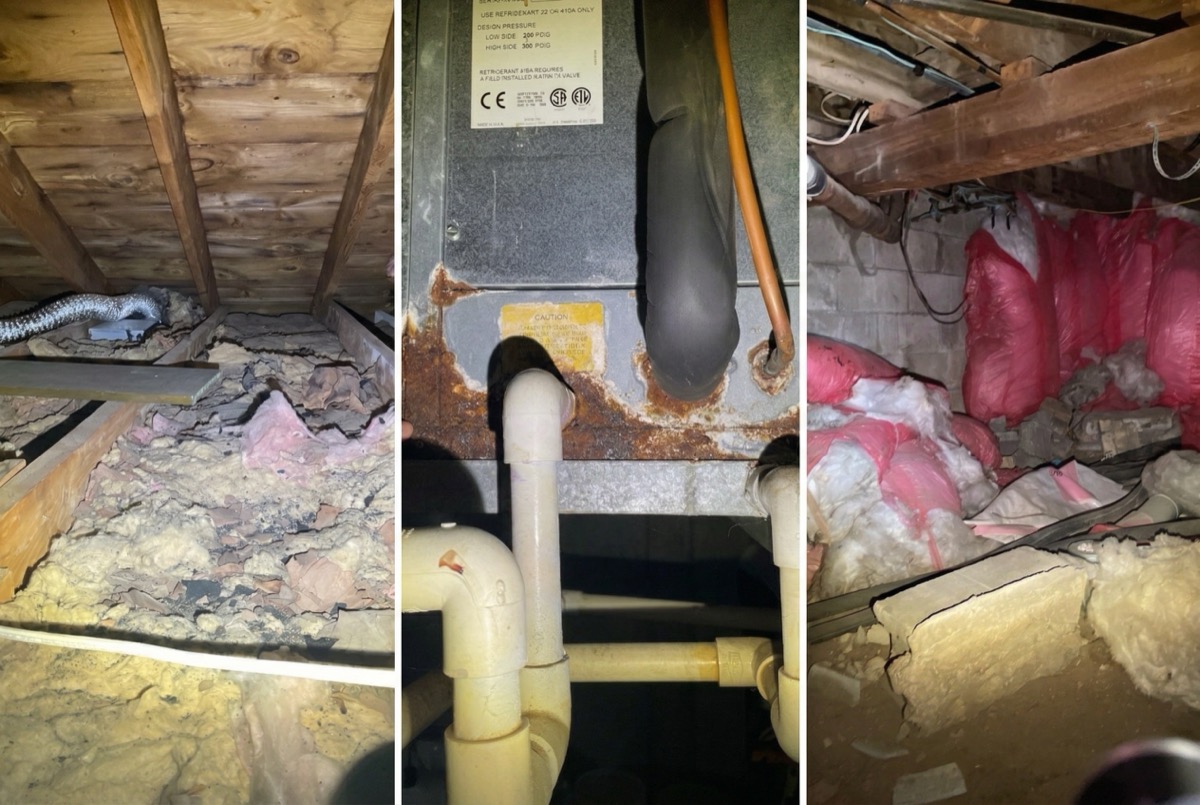
Blown-In Cellulose Insulation for Maine Homes
If you mention cellulose insulation to most people, the first thing they say is: "Isn't that shredded newspaper?"
Technically, yes. Blown-in cellulose insulation is made primarily from recycled newsprint and other paper fiber. About 85% recycled content by weight. And that fact alone is enough to make some homeowners skeptical. How can shredded paper keep a Maine home warm through a winter that regularly hits single digits?
The answer is that cellulose is one of the most tested, proven, and cost-effective insulation materials available for residential retrofit work. It has been installed in American homes since the 1950s. It meets or exceeds every modern building code requirement. And at Horizon Homes, we have installed it in hundreds of Maine homes over the past 20+ years - not because it is cheap, but because it performs.
Here is what you should know about it.
What Blown-In Cellulose Actually Is
Raw cellulose fiber - recycled newsprint - would be a poor insulator and a fire hazard on its own. That is not what goes into your walls or attic.
Manufacturing transforms the raw fiber into a finished product through several steps:
Fiberization. The paper is shredded and processed into fine, consistent fibers that trap air in millions of tiny pockets. Those trapped air pockets are what provides the insulation. All insulation works the same way - it slows heat transfer by trapping still air.
Borate treatment. The fibers are treated with borate compounds (sodium borate and boric acid) at roughly 15-20% of the finished product by weight. This treatment does three things:
- Fire resistance. Cellulose carries a Class 1 fire rating (the highest for residential insulation). In fire tests, cellulose chars but does not sustain flame. It can slow the spread of fire through wall and attic cavities - something fiberglass batts cannot do because they melt and the air gaps behind them act as chimneys.
- Pest resistance. Borates are toxic to insects and rodents. Cellulose-insulated cavities are inhospitable to ants, mice, and other pests that commonly nest in wall cavities and attics.
- Mold and mildew resistance. Borates inhibit mold growth, which matters in Maine where moisture management in walls and attics is a constant consideration.
Density calibration. The finished product is calibrated for two different installation methods: loose-fill for open attics and dense-pack for enclosed wall cavities. These are the same base material installed at different densities, and they serve different purposes.
Two Methods, Two Applications
Loose-Fill for Attics
In an open attic, cellulose is blown in as loose fill. The fibers settle into a fluffy layer that covers the entire attic floor, filling around framing, wiring, plumbing, and other obstructions.
This is the simplest and most cost-effective way to insulate an attic. For a typical Maine home, we blow cellulose to a depth of 14-16 inches to achieve R-50 to R-60 - the recommended level for our climate zone.
Loose-fill cellulose does settle over time. We account for this by installing to an initial depth that factors in the expected 10-15% settling. After settling, the insulation remains at or above the target R-value for the life of the material - 30+ years.
The attic is usually the highest-priority insulation upgrade for Maine homeowners. It is the largest single surface separating your heated living space from the outdoors (technically the unheated attic), and it is where heat loss concentrates because warm air rises. Adding cellulose to an under-insulated attic is often a one-day project that delivers noticeable comfort improvements within hours and measurable energy savings within the first heating season.
Dense-Pack for Walls
Enclosed wall cavities require a different approach. We cannot pour loose fill into walls - it would settle to the bottom and leave the top of the cavity empty. Instead, we install cellulose as dense-pack.
Dense-pack cellulose is the same material blown at higher pressure into an enclosed cavity. The result is a tightly packed insulation fill at 3.5 pounds per cubic foot density (compared to about 1.5 pounds per cubic foot for loose-fill attic work). At this density, the cellulose:
- Fills the entire cavity - No gaps, no voids, no settling over time
- Resists air movement - Dense-pack cellulose significantly reduces air infiltration through the wall cavity, providing both insulation and a degree of air sealing in one step
- Maintains R-value - At R-3.5 to R-3.8 per inch, a standard 2x4 wall cavity filled with dense-pack cellulose achieves R-12 to R-13. A 2x6 wall reaches R-19 to R-21.
For walls, we typically work from outside, temporarily removing a course of siding and drilling small access holes (about 2 inches in diameter), one per cavity. We blow in the cellulose under pressure, plug the holes, and replace the siding. We do not need to remove interior walls or disturb your living space.
Why We Chose Cellulose Over Other Materials
We get asked this question regularly, and it deserves an honest answer. There are multiple insulation materials on the market. Here is why cellulose is our primary choice for Maine retrofit work.
Performance Per Dollar
Cellulose costs 40-70% less than spray foam insulation for comparable thermal performance. That is a significant difference when you are insulating an entire home. For a typical attic upgrade from R-19 to R-50, the material and labor cost difference between cellulose and spray foam can be $3,000-6,000.
That cost difference matters because it frees up budget for other improvements - air sealing, additional wall insulation, or a cold-climate heat pump - that collectively deliver a larger total impact than spending the entire budget on one premium insulation type in one area.
Retrofit Suitability
Cellulose is purpose-built for retrofit work in existing homes. It flows around obstacles and fills irregular cavities without removing interior walls. For dense-pack wall installation, we typically access the cavities from outside by temporarily removing a course of siding and drilling small holes, then plug the holes and replace the siding. Spray foam requires exposed cavities to apply properly, which means opening up walls or working only in new construction.
For a Maine home built in the 1950's, 1960's, or 1970's - which describes most of the homes we work on - dense-pack cellulose is the most practical way to insulate walls without a major renovation.
Environmental Profile
85% recycled content. Low embodied energy in manufacturing. No off-gassing during or after installation. No petrochemical base. No ozone-depleting blowing agents.
For homeowners who care about the environmental impact of their home improvements - and many of our customers do - cellulose has the lowest environmental footprint of any mainstream insulation material.
Fire Performance
This is counterintuitive, but cellulose outperforms fiberglass in fire testing. Borate-treated cellulose chars in place and resists flame spread. Fiberglass melts at high temperatures and the air cavities behind it can channel fire through wall and attic spaces. In side-by-side fire tests, cellulose-insulated wall assemblies consistently maintain their structural integrity longer.
Moisture Behavior
Cellulose is hygroscopic - it can absorb and release moisture without losing its insulating properties. In Maine, where seasonal humidity swings are extreme, this is a practical advantage. A cellulose-insulated wall cavity can buffer small amounts of moisture that would damage other materials, then release that moisture as conditions change.
This does not mean cellulose is waterproof. Bulk water intrusion will damage it, as it will damage any insulation. Proper installation includes ensuring the building envelope manages water correctly before insulating.
When Cellulose Is Not the Right Choice
We are honest about this: cellulose is not the best material for every application. Here is where we use something different.
Rubble or stone basement walls. Cellulose cannot be dense-packed against an irregular stone surface. For these situations, we subcontract closed-cell spray foam, which adheres directly to the stone and creates both an insulation layer and a moisture barrier.
Damp crawlspaces. If a crawlspace has standing water or persistent dampness that cannot be resolved with drainage improvements, spray foam on the walls and rim joists is the better option. Cellulose in a wet environment will absorb water and lose effectiveness.
Rim joists. The band of framing where your foundation meets your first floor is a common area for both heat loss and moisture condensation. Spray foam's ability to seal and insulate simultaneously makes it the preferred choice for rim joists in many homes.
Thickness-constrained cathedral ceilings. When rafter depth is limited and you need maximum R-value per inch, closed-cell spray foam at R-6.5 per inch delivers more insulation in a tight space than cellulose at R-3.5 per inch.
We will always tell you when spray foam is the right call for a specific area of your home. We coordinate the work with our subcontractor so you get one project, one timeline, and one point of contact.
What a Cellulose Installation Looks Like
For homeowners who have not been through the process, here is what to expect. Our approach to home insulation in Maine typically starts attic work with removal of old insulation and air sealing before we install blown-in cellulose.
Before work starts: We assess your home and identify every area that needs insulation. We verify that the roof and walls are managing water properly and identify air sealing work that needs to happen before insulation goes in.
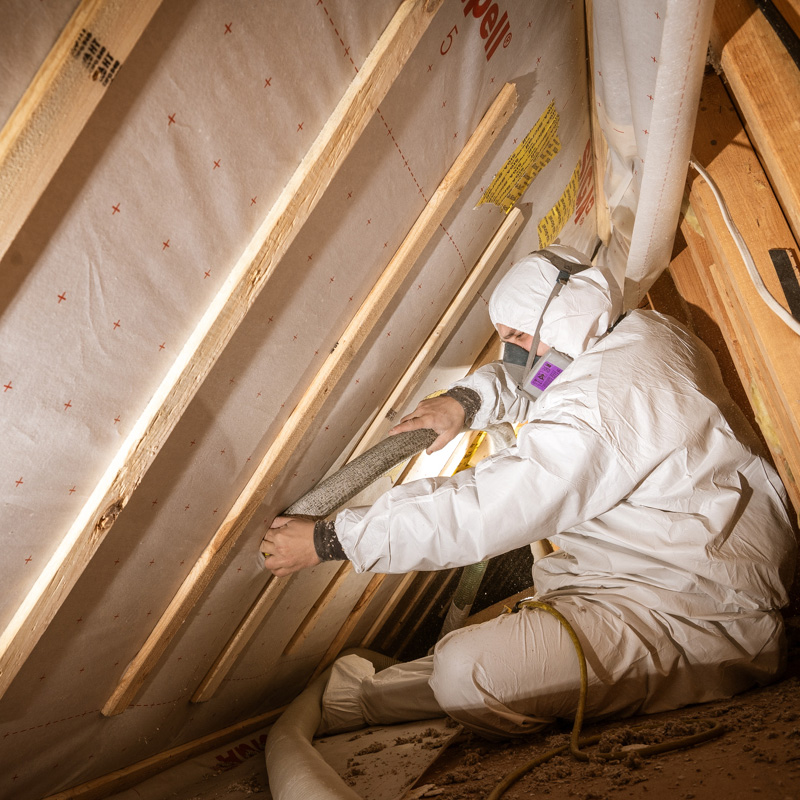
Day of installation (attic): Our crew sets up the blowing machine outside, runs a hose into the attic, and blows cellulose across the entire attic floor. Depth markers verify we have hit the target R-value. A typical attic takes 4-6 hours.
Day of installation (walls): We remove individual courses of siding at each cavity location, drill a 2-inch hole, insert the fill tube, and blow dense-pack cellulose until the cavity is full. We plug the holes, replace the siding, and move to the next cavity. A full wall insulation job takes 1-2 days.
After installation: Cellulose begins performing immediately. No curing time, no odor, no off-gassing. Most homeowners notice a difference in comfort within the first day.
The Bottom Line
Cellulose insulation is not glamorous. It does not have the high-tech appeal of spray foam or the marketing budget of fiberglass manufacturers. What it has is a 70-year track record of performance, the lowest cost per R-value of any insulation material, and an environmental profile that stands up to scrutiny.
We install it because it works. We recommend it because it gives our customers the best return on their investment. And we are upfront about the situations where something else is the better choice.
Want to know what your home needs? Schedule a free energy assessment - call (207) 221-3221 or book online. We will walk through your home, check your current insulation, and tell you what it would take to bring it up to the performance level your Maine home deserves.
Find our guides faster: add Horizon Homes as a preferred source on Google.
Free Home Energy Assessment
Wondering Where Your Home Is Losing Heat?
We walk through your home, identify insulation gaps and air leaks, and give you a prioritized plan with pricing and Efficiency Maine rebates.
- Free walkthrough, no equipment, no disruption
- Efficiency Maine rebates identified for you
- Written improvement plan with pricing
Schedule Your Free Assessment
We call within 1 business day.