Cellulose vs Fiberglass Insulation in Maine: An Honest Comparison
Editor's note (October 2026): Efficiency Maine changed its insulation and air sealing rebates for work completed on or after October 1, 2026. They are now a fixed amount per zone of the house (attic, walls, basement) instead of a percentage of project cost, so the insulation rebate figures, combined totals, and cost examples below reflect the program when this article was published. See current Efficiency Maine rebates.
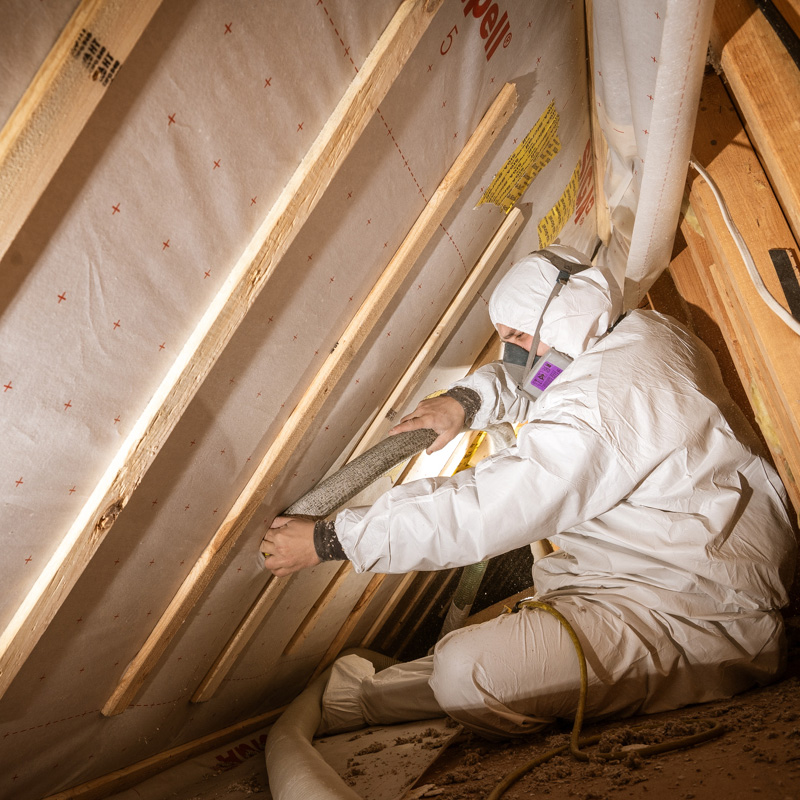
We were dense-packing the walls of a 1960s Cape in Yarmouth last fall when the homeowner came out to watch. She had spent the previous summer getting quotes, and one contractor had recommended fiberglass batts instead. "He said the R-values are basically the same," she told us. "Why are you using cellulose?"
It is a fair question, and we hear some version of it on most jobs. The labeled R-values are similar. The cost difference is narrower than people expect once you factor in labor and air sealing. And fiberglass has been the standard insulation material in American homes for 70 years, so the assumption that it performs is understandable.
The problem is that R-value labeled on the package is a dry, laboratory measurement. Maine is not a laboratory. Maine is cold winters, humid summers, freeze-thaw cycles from November through March, and heating seasons that run six months or more. In that environment, moisture physics determines which insulation actually performs - and cellulose and fiberglass behave very differently when conditions turn damp.
This is an honest comparison of both materials. We install cellulose, not because it is cheap, but because it performs in Maine cold-climate conditions. And we will tell you honestly where fiberglass still has a place.
What Is Blown-In Cellulose Insulation?
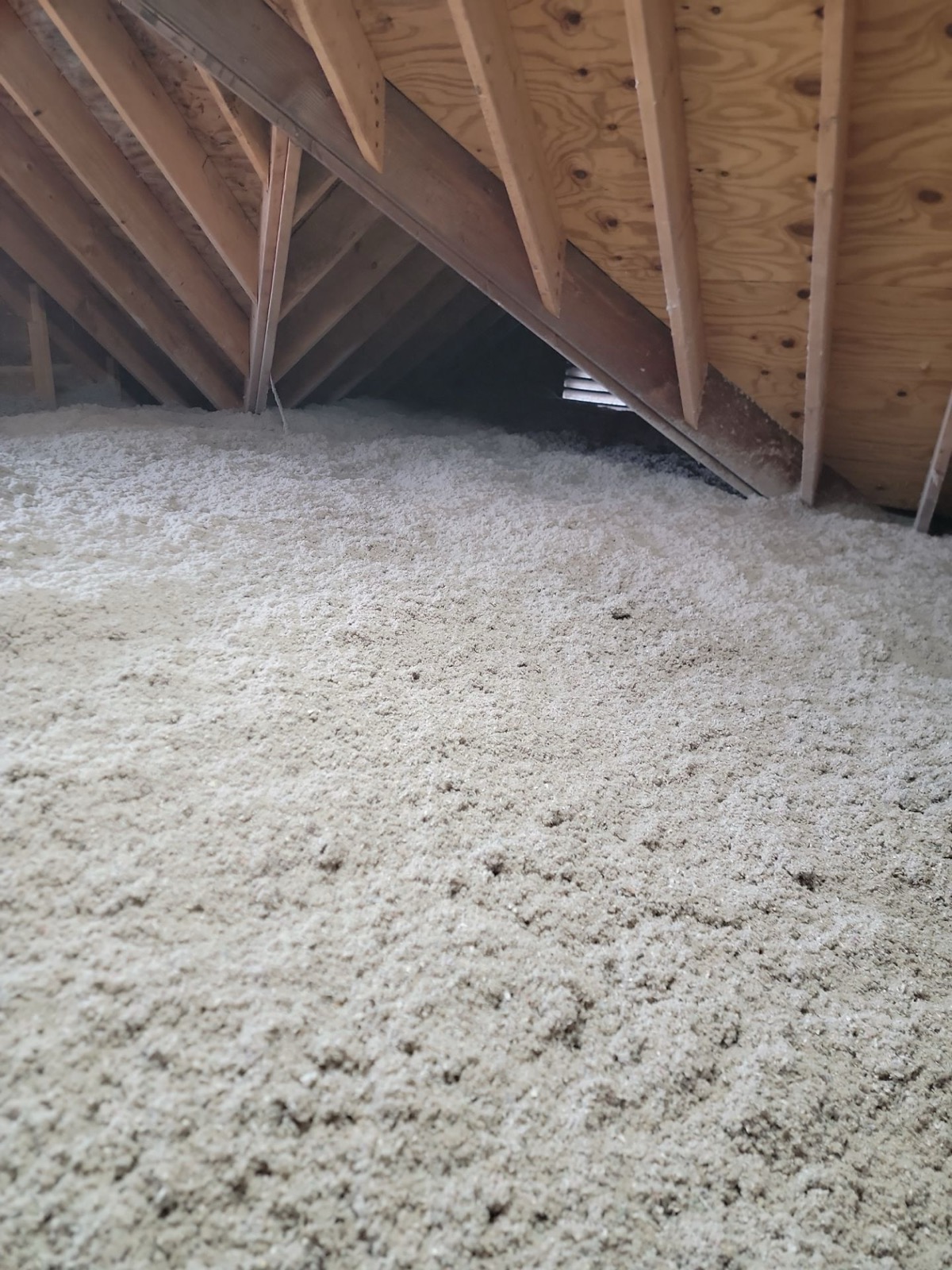
Cellulose insulation is made from approximately 85% recycled newspaper treated with borates for fire resistance and pest deterrence. It gets blown into place using specialized equipment - loose-fill in attics, or dense-packed under pressure into wall cavities and other enclosed spaces.
The borate treatment gives cellulose a Class 1 fire rating, the highest available. It contains no formaldehyde, produces no off-gassing, and has been used in residential construction since the 1950s. Dense-pack cellulose, which is what we install in wall cavities, goes in at roughly 3.5 pounds per cubic foot - dense enough to meaningfully resist air movement through the assembly.
R-value per inch: approximately R-3.5 to R-3.8.
For a fuller look at how cellulose fits into a whole-home approach, see our insulation services page.
What Is Fiberglass Insulation?
Fiberglass insulation comes in two forms:
Batts and rolls are pre-cut panels of spun glass fibers, available in standard widths for 2x4 and 2x6 stud bays. They are what most homeowners picture when they think of insulation - the pink or yellow rolls sold at hardware stores. They are designed for installation in open framing during new construction.
Blown-in fiberglass (also called loose-fill fiberglass) is a fine, fluffy product that gets blown into place similarly to cellulose. It is less common than batts in the retrofit market but does appear in some applications.
R-value per inch: approximately R-3.1 to R-4.3 for batts depending on type, R-2.2 to R-2.7 for loose-fill.
Where Cellulose Wins
Moisture Handling in Maine Winters
This is the differentiator in Maine's climate. Cellulose exhibits hygric buffering - it absorbs moisture when relative humidity rises and releases it again as conditions dry out, without losing its thermal resistance in the process. Building Science Corporation (BSC) research on hygric performance documents this: cellulose can absorb water by weight without the R-value dropping meaningfully, and it redistributes that moisture through vapor diffusion without accumulating it in one place.
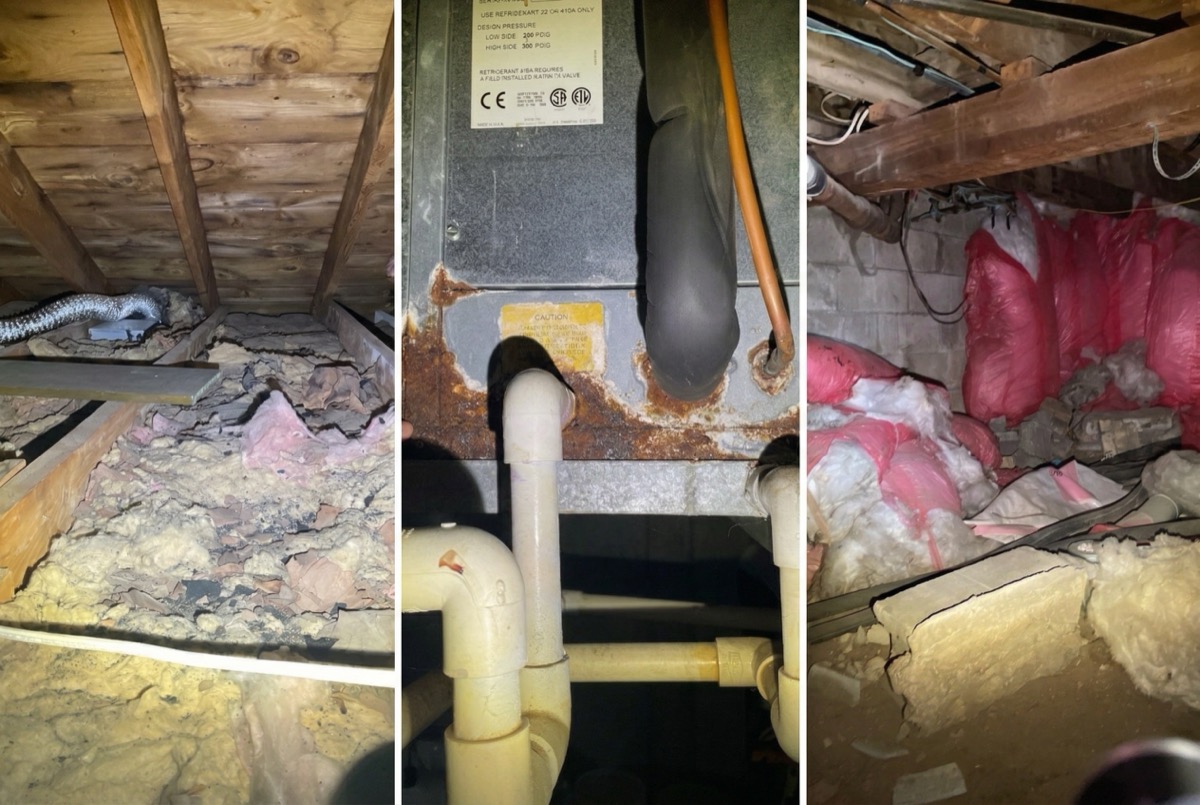
Fiberglass does not buffer moisture - it ignores it in the sense that water passes through without binding, but the catch is that wet fiberglass loses R-value. Research from BSC and others documents that fiberglass batt insulation can lose 20-40% of its effective R-value when moisture content rises, as water in the air gaps displaces the insulating air pockets. Worse, fiberglass recovers its R-value only partially after drying, particularly if it has compressed or slumped.
In Maine, wall assemblies in older homes see sustained high humidity during heating season because warm interior air migrates outward through walls and meets cold exterior surfaces. That moisture has to go somewhere. Cellulose manages it. Fiberglass does not.
Air Sealing Performance
Dense-pack cellulose, installed at 3.5 lb/cu ft, provides meaningful resistance to air movement through the wall cavity. According to NESEA and BSC field research, dense-packed cellulose reduces air leakage through the assembly - not to the level of spray foam, but significantly compared to a well-installed fiberglass batt. This matters because thermal resistance on a label assumes still air. An insulation layer that allows air circulation through it never reaches its labeled R-value under real conditions.
Fiberglass batts do not air seal. They are permeable to air movement, which is why careful fiberglass batt installation requires a separate, dedicated air sealing step - every penetration, seam, and gap addressed with caulk, foam, or tape before or after the batts go in. When that air sealing step is done carefully, fiberglass can perform adequately. When it is skipped or done partially, the real-world performance gap between fiberglass and cellulose grows considerably.
In retrofit work on existing Maine homes, that separate air sealing step is often not done, or it was not done 30 years ago when the insulation was installed. Dense-pack cellulose handles both insulation and partial air sealing in a single operation.
Coverage Around Obstructions
Old Maine homes are full of wiring, plumbing stacks, junction boxes, and framing that was built before anyone imagined routing it around insulation. Dense-pack cellulose fills around all of it - irregularly spaced studs, diagonal blocking, knob-and-tube wiring routes, doubled headers, the corners of knee walls. The material conforms to whatever it encounters.
Fiberglass batts are rigid rectangles. Around a pipe, a wire, or a junction box, a batt compresses on one side and leaves a gap on the other. That gap has effectively zero insulating value. In a typical older Maine home wall cavity, those gaps add up to a meaningful reduction in effective R-value below what the batt label shows.
Pest Deterrence
Mice, ants, and insects do not like borate-treated cellulose. It is not hospitable nesting material and the borates are toxic to soft-bodied insects at the concentrations used. In Maine, where rodent pressure in older homes is persistent - especially in attics and wall cavities that connect to foundation sills - this is a practical benefit that homeowners notice over time.
Fiberglass is an excellent nesting material. Mice will move it, tunnel through it, and compress it. Every tunnel through a fiberglass batt is a thermal bypass.
Fire Safety
Cellulose with borate treatment carries a Class 1 fire rating - the same rating as concrete and steel in the fire classification system. There is a common misconception that paper-based insulation is a fire hazard. It is the opposite. The borate treatment makes cellulose char in place rather than burn, and it does not produce toxic combustion gases.
In fire testing, cellulose-insulated wall assemblies have consistently outperformed fiberglass assemblies. A 2012 fire spread test at the National Institute of Standards and Technology found that rooms insulated with cellulose resisted fire spread significantly longer than those with fiberglass, in part because cellulose chars and holds position while fiberglass melts away from the framing.
Fiberglass itself is non-combustible, but it melts and loses structural position in a fire, which can accelerate flame spread along wall cavities. Drywall thermal barriers are still required on both materials, but the distinction matters.
Environmental Impact
Cellulose is made from recycled material - primarily post-consumer newspaper - and requires minimal energy to manufacture. Its embodied carbon footprint is among the lowest of any insulation product. Fiberglass production requires melting silica sand at high temperatures, a more energy-intensive process with a higher manufacturing carbon impact.
For homeowners weighing the environmental dimension of home improvements alongside energy performance, cellulose is the more sustainable choice.
Schedule a free energy assessment and we will identify which insulation materials make sense for each area of your home.
Where Fiberglass Is the Right Call
Being honest about where fiberglass wins is part of giving useful advice.
Rim Joists With Limited Access
Rim joists - where the floor framing meets the top of the foundation wall - are one of the most common sources of air leakage and heat loss in older Maine homes. For small, accessible rim joists where the preferred method is to cut rigid foam board to fit and seal the edges with spray foam, a fiberglass batt can fill the remaining depth adequately when access does not allow for dense-pack equipment.
We handle most rim joist work with rigid foam and spray foam, but in tight basement configurations where dense-pack equipment cannot maneuver, cut-and-cobble fiberglass with careful air sealing is a legitimate approach.
Batt-Friendly Cavities in New Construction
In new construction with clean, uniform, unobstructed 2x6 stud bays, carefully installed fiberglass batts can perform adequately when a dedicated air sealing step is completed before drywall. The cavities are regular, there are no existing obstructions, and the air sealing is part of the planned construction sequence.
We are primarily a retrofit insulation contractor. In new construction contexts where someone else is doing the framing and wants to use fiberglass, we do not have a strong objection if the air sealing is handled properly.
Replacing Damaged Batts in Partially Insulated Walls
If an older wall has fiberglass batts that are partially intact and a homeowner needs to replace a section - after plumbing or electrical work that required opening the wall, for example - replacing damaged batts with matching fiberglass material is practical and reasonable. It avoids the need for dense-pack equipment for a small patch area.
The caveat: if more than a section of the wall is involved, dense-pack cellulose is usually the better approach for a full wall.
Cost Comparison for Maine Homeowners
Material cost is where fiberglass has a clear upfront advantage. Fiberglass batts are among the least expensive insulation materials per square foot at the point of purchase.
Installed cost is closer than the material price difference suggests:
| Application | Fiberglass Batts (installed) | Blown-In Cellulose (installed) |
|---|---|---|
| Attic to R-49 (per sq ft) | $1.00 - $1.75 | $1.25 - $2.50 |
| Wall dense-pack retrofit (per sq ft) | $2.00 - $4.00* | $2.50 - $4.50 |
| 1,200 sq ft attic project (total) | $1,200 - $2,100 | $1,500 - $3,000 |
*Fiberglass batt retrofit into existing walls requires opening the wall - either from inside (drywall removal and replacement) or from outside (siding removal). That labor cost often exceeds the insulation material savings.
For attic work, the cost difference between cellulose and fiberglass is modest - typically a few hundred dollars on a standard Greater Portland home. For wall retrofits, cellulose via dense-pack drilling is usually less expensive total because it avoids the wall-opening labor.
Both materials qualify equally for Efficiency Maine rebates, which pay a fixed amount per zone of the house depending on household income. We apply rebates directly to invoices - homeowners do not wait for reimbursement.
Side-by-Side: Cellulose vs Fiberglass
| Factor | Blown-In Cellulose | Fiberglass Batts |
|---|---|---|
| R-value per inch | R-3.5 to R-3.8 | R-3.1 to R-4.3 |
| Moisture performance | Hygric buffering - absorbs and releases without R-value loss | Loses 20-40% of R-value when wet; recovers only partially |
| Air sealing (dense-pack) | Meaningful resistance to air movement | None - requires separate dedicated air sealing step |
| Coverage around obstructions | Fills completely, conforms to all surfaces | Gaps at wires, pipes, and framing - compressed areas have lower effective R-value |
| Pest resistance | High - borate treatment is hostile to rodents and insects | Low - excellent nesting material |
| Fire rating | Class 1 - chars in place | Non-combustible but melts; requires thermal barrier |
| Environmental impact | 85% recycled content, low embodied carbon | Energy-intensive silica manufacturing |
| Retrofit installation | Drill small holes, fill, patch - no wall opening required | Requires opening walls from inside or outside for retrofit |
| Cost per sq ft installed (attic) | $1.25 - $2.50 | $1.00 - $1.75 |
| Best applications | Attics, walls (new and retrofit), floors over unconditioned space | New construction with clean stud bays, rim joist supplements, damaged-batt replacements |
Making the Right Choice for Your Home
For most insulation work in existing Maine homes, blown-in cellulose is the better performing material. The moisture physics advantage is real, the coverage advantage is real, and the retrofit installation method - small drill holes rather than opening walls - makes cellulose practical in situations where fiberglass batts are not.
Fiberglass has a place in new construction and in specific limited-access applications. It is not a bad material in the right context. But the context of retrofitting insulation into a 1950s or 1960s Maine home - with its irregular framing, existing obstructions, and moisture exposure through long heating seasons - is where the performance difference between cellulose and fiberglass is most pronounced.
The right starting point is an assessment of what your home actually has and where it is losing heat. Every house is different.
Frequently Asked Questions
Does fiberglass insulation really lose R-value when wet?
Yes. Fiberglass insulation loses approximately 20-40% of its effective R-value when moisture content rises, because water displaces the air pockets that provide the thermal resistance. Building Science Corporation research documents this effect. Cellulose absorbs moisture and releases it through vapor diffusion without the same R-value loss, which makes it more appropriate for Maine's climate conditions.
Is cellulose insulation a fire hazard because it is made from paper?
No. This is one of the most persistent misconceptions about cellulose. The borate treatment used in manufacturing gives cellulose insulation a Class 1 fire rating - the same category as concrete and steel in fire classifications. In fire tests, cellulose chars in place rather than burning or spreading flame. It is one of the safest insulation materials available.
Can I install cellulose over existing fiberglass batts?
In attics, yes - in most cases we blow cellulose over existing fiberglass after completing air sealing at the attic floor. The cellulose fills gaps in the existing layer and brings total depth to target. In walls, existing batts need to stay in place or be removed; dense-pack cellulose can be installed through small drill holes without removing the batts in some configurations.
How does dense-pack cellulose compare to fiberglass in terms of air sealing?
Dense-pack cellulose at 3.5 lb/cu ft provides meaningful resistance to air movement through wall cavities. Fiberglass batts provide none - air sealing with fiberglass requires a separate dedicated step with caulk, foam, or tape at every penetration and seam. When that step is done carefully, fiberglass performs better than when it is skipped. Dense-pack cellulose handles both insulation and partial air sealing in one installation.
What does blown-in cellulose insulation cost compared to fiberglass in Maine?
For attic insulation to R-49, fiberglass batts installed run approximately $1.00 to $1.75 per square foot and blown-in cellulose runs approximately $1.25 to $2.50 per square foot. The cellulose costs moderately more on attic projects. For wall retrofits, cellulose is often comparable or less expensive total because fiberglass retrofits require opening walls from inside or outside - labor that eliminates the material cost advantage.
Does cellulose insulation keep mice out?
Cellulose's borate treatment makes it an inhospitable nesting environment for mice and other rodents. It is not an impenetrable barrier - sealing entry points around the foundation, sill plate, and rim joists is still essential - but cellulose is far less inviting than fiberglass, which is an excellent nesting material.
What insulation does Horizon Homes install?
We install blown-in cellulose as our primary insulation material for attics, walls, and floors. For specific applications - rubble foundation walls, damp crawlspaces, rim joists with access constraints, thickness-constrained cathedral ceilings - we coordinate with specialized subcontractors for spray foam. We recommend the right material for each area of the home rather than defaulting to one product everywhere.
Find Out What Your Home Needs
If your home has aging fiberglass insulation or you are not sure what you have, an assessment is the right starting point. We check current insulation levels, identify where air sealing is needed, measure attic depth, and assess wall insulation in accessible areas. You get a clear picture of your home's thermal envelope and a specific recommendation for each area - not a one-size-fits-all proposal.
Schedule your free energy assessment or call us at (207) 221-3221. We have been insulating Maine homes since 2006. We install cellulose because it performs.
Find our guides faster: add Horizon Homes as a preferred source on Google.
Free Home Energy Assessment
Wondering Where Your Home Is Losing Heat?
We walk through your home, identify insulation gaps and air leaks, and give you a prioritized plan with pricing and Efficiency Maine rebates.
- Free walkthrough, no equipment, no disruption
- Efficiency Maine rebates identified for you
- Written improvement plan with pricing
Schedule Your Free Assessment
We call within 1 business day.