Cellulose vs Spray Foam: Which Is Right for Your Maine Home
Editor's note (October 2026): Efficiency Maine changed its insulation and air sealing rebates for work completed on or after October 1, 2026. They are now a fixed amount per zone of the house (attic, walls, basement) instead of a percentage of project cost, so the insulation rebate figures, combined totals, and cost examples below reflect the program when this article was published. See current Efficiency Maine rebates.
We were insulating a 1940's bungalow in Westbrook last week when the homeowner asked us a question we hear on nearly every job: "Why are you using cellulose instead of spray foam? I thought spray foam was the best."
It is a fair question. Spray foam gets excellent marketing. And in certain applications, it genuinely is the best choice. But for the majority of insulation work in Maine homes, blown-in cellulose delivers equal or better performance at a fraction of the cost.
Here is an honest breakdown of both materials, where each one shines, and where it falls short.
What Is Blown-In Cellulose Insulation?
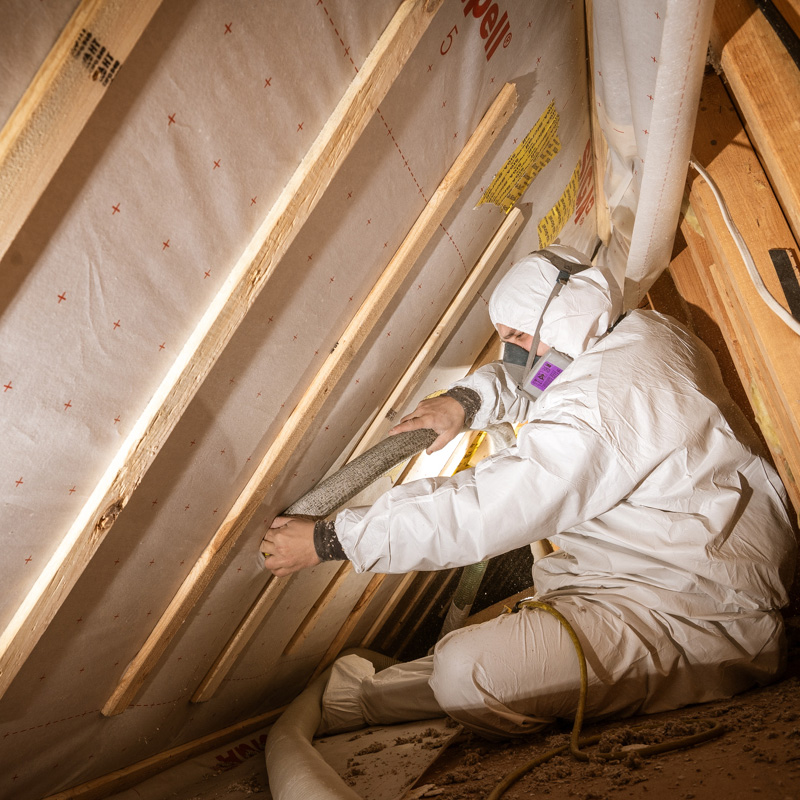
Cellulose insulation is made from approximately 85% recycled newspaper that has been treated with borates for fire resistance and pest deterrence. It is manufactured into a dense, fluffy material that gets blown into wall cavities, attics, and other spaces using specialized equipment.
It is not new technology. Cellulose has been used in homes since the 1950's and has a long track record of performance in cold climates like Maine. The borates give it a Class 1 fire rating, meaning it is one of the safest insulation materials available. It produces zero off-gassing and contains no formaldehyde.
For a deeper look at how insulation fits into your home's overall energy performance, see our guide to insulation services.
What Is Spray Foam Insulation?
Spray foam is a chemical insulation product that expands on contact to fill cavities and seal gaps. It comes in two types:
Open-cell spray foam is softer, less dense, and less expensive. It provides moderate insulation value (around R-3.7 per inch) and some air sealing. It is permeable to moisture, which can be either a benefit or a problem depending on the application.
Closed-cell spray foam is rigid, dense, and provides both high insulation value (around R-6.5 per inch) and a moisture barrier. It is the more expensive option but performs well in challenging environments like basements and crawlspaces.
Where Cellulose Wins
Attics
For attic insulation in Maine homes, cellulose is the clear choice. Most attics need 14-16 inches of insulation to reach the recommended R-49 level. Cellulose can be blown in quickly and evenly across the entire attic floor, filling around joists, wiring, and other obstacles.
Spray foam in an attic typically means spraying the underside of the roof deck, which is more expensive and creates a different type of building assembly. For most homes, loose-fill cellulose on the attic floor is simpler, cheaper, and equally effective.
There is also a resale angle worth knowing as of 2026. Because roof-deck spray foam covers the rafters and sheathing, more home inspectors and mortgage lenders now flag it: they cannot see the roof structure to judge its condition, and a poor install can hide moisture damage. Some sales stall until a buyer's lender gets a separate roof assessment. Cellulose on the attic floor leaves the roof deck open and inspectable, so it avoids that problem entirely. We cover this in more depth in our guide to spray foam problems and how to avoid them.
Exterior Walls
When insulating existing walls without opening them up, dense-pack cellulose is the standard approach. Small holes are drilled in the siding or interior drywall, and cellulose is blown in under pressure until the cavity is completely filled. The holes are patched, and the wall looks the same as before.
Dense-pack cellulose fills wall cavities thoroughly, conforming around wires, pipes, and framing irregularities. It also provides meaningful air sealing when packed to the correct density. A well-done dense-pack job reduces air leakage through the wall assembly while adding thermal resistance.
Spray foam in existing walls is possible but requires larger access points and is more invasive. It also costs more for this application.
Cost
This is where cellulose has a major advantage. On a typical Maine home, blown-in cellulose insulation costs 40-70% less than spray foam for comparable coverage.
For an average Greater Portland area home needing attic and wall insulation, the cost difference can be $5,000 to $10,000 or more. It matters even more in 2026 now that the federal 25C insulation tax credit has expired (it ended December 31, 2025): Efficiency Maine rebates are the main incentive left. They pay a fixed amount per zone of the house, set by income tier, up to $8,600 per home. Because the rebate is a fixed amount per zone, the lower-priced cellulose route leaves you less to pay out of pocket.
Fire Safety
Cellulose has a Class 1 fire rating, the highest available. The borate treatment makes it naturally fire-resistant. In fire testing, cellulose-insulated wall assemblies consistently perform well, with the material charring rather than melting or producing toxic fumes.
Spray foam is combustible and must be covered by a thermal barrier (typically 1/2-inch drywall) in any occupied space. In attics and crawlspaces, this requirement adds cost and complexity to spray foam installations.
Environmental Impact
Cellulose is made from recycled material and requires minimal energy to manufacture. It has one of the lowest embodied carbon footprints of any insulation product. Spray foam is a petroleum-based product with a higher manufacturing energy cost and environmental impact.
For homeowners who care about the environmental dimension of their home improvement decisions, cellulose is the more sustainable choice.
Schedule a free energy assessment and we will identify which insulation materials make sense for each area of your home.
Where Spray Foam Is the Right Call
Despite cellulose's advantages in most applications, there are specific situations where spray foam is the better tool for the job.
Before walking through them, it is worth being clear about what you are taking on. Spray foam is manufactured on site by a chemical reaction, and when the mix ratio, substrate temperature, or pass thickness is wrong, the result can be shrinkage, off-gassing, or trapped moisture that rots sheathing from behind. We cover those failure modes in detail in our guide to spray foam problems and why they happen. In the applications below, the tradeoff is worth it. Elsewhere, it usually is not.
Rubble and Stone Basements
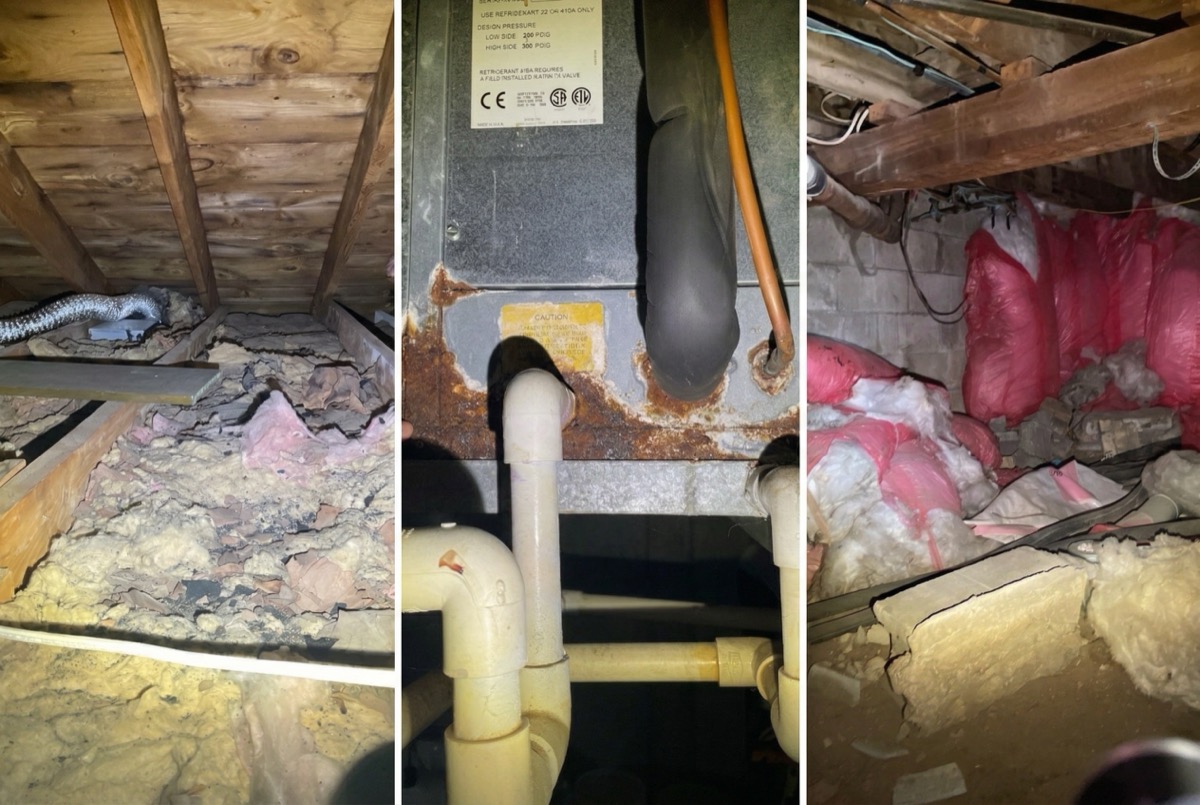
Older Maine homes, particularly those built before 1920, often have rubble stone or fieldstone basement walls. These irregular surfaces cannot be insulated effectively with cellulose or rigid foam board because there is no flat surface to work against.
Closed-cell spray foam conforms to the irregular stone surface, creating both an insulation layer and a moisture barrier. For rubble basements, it is often the only practical option.
Crawlspaces
Damp crawlspaces with irregular surfaces and moisture concerns are another application where closed-cell spray foam excels. Its moisture-blocking properties prevent water vapor from migrating into the floor assembly above, and it adheres directly to the surfaces without requiring a separate framing system.
Rim Joists
The rim joist is where your floor framing meets the top of your foundation wall. It is a common source of air leakage and is difficult to insulate thoroughly with other materials. Spray foam applied directly to the rim joist seals air gaps and insulates the area in one step.
Thickness-Constrained Areas
Some spaces simply do not have room for enough cellulose to reach the desired R-value. Cathedral ceilings with shallow rafter bays are a common example. Spray foam's higher R-value per inch (R-6.5 vs. R-3.5 for cellulose) makes it the right choice when depth is limited.
How We Handle Projects That Need Both
At Horizon Homes, we install cellulose because it performs - not because it is cheap. We have seen it outperform spray foam in application after application across hundreds of Maine homes over 20+ years.
But we also know when spray foam is the right call. When a project includes areas that genuinely need spray foam - rim joists, a rubble basement, a damp crawlspace - we coordinate with specialized spray foam subcontractors to handle those portions of the work.
The homeowner gets a single point of contact, one project plan, and one invoice. We manage the full scope so you do not have to coordinate between multiple contractors.
This approach means we recommend the right insulation for each area of the home, rather than defaulting to one material everywhere.
The Numbers: A Side-by-Side Comparison
Here is how the two materials compare across the metrics that matter most:
| Factor | Blown-In Cellulose | Closed-Cell Spray Foam |
|---|---|---|
| R-Value per inch | R-3.5 to R-3.8 | R-6.0 to R-6.5 |
| Typical cost per sq ft | $1.00 - $2.50 | $3.50 - $7.00 |
| Fire rating | Class 1 | Combustible (needs barrier) |
| Moisture barrier | No (vapor permeable) | Yes |
| Off-gassing | None | During and shortly after install |
| Recycled content | 85% | 0% |
| Best applications | Attics, walls, floors | Basements, crawlspaces, rim joists |
| Air sealing | Good (at dense-pack density) | Excellent |
What About Fiberglass?
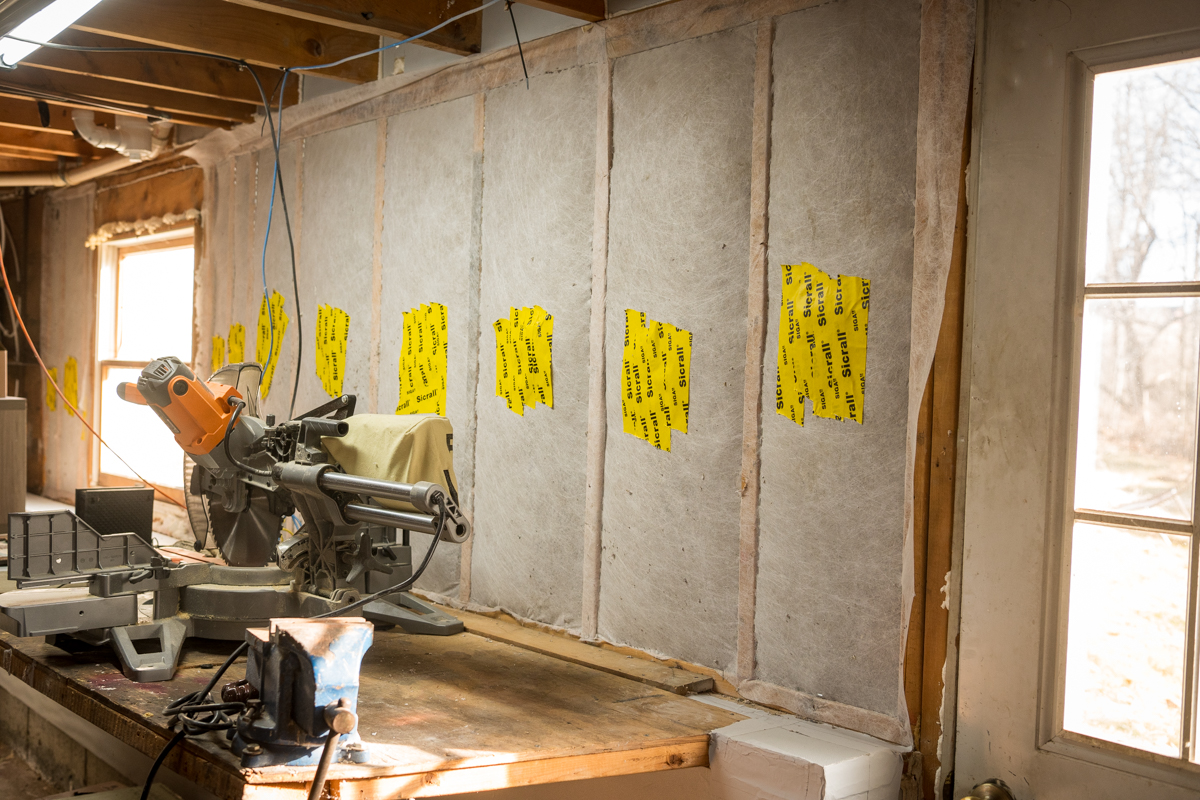
Fiberglass batt insulation is still common in new construction, but it is not what we install in existing homes. Batts are designed for open-wall framing during construction. Retrofitting batts into an existing home requires opening walls, and even in new construction, batts leave gaps around wires, pipes, and framing that reduce their real-world performance.
Blown-in cellulose fills those gaps completely. For retrofit insulation work in Maine homes, cellulose is the superior material.
Making the Right Choice for Your Home
The best insulation material depends on the specific conditions in your home. Your attic likely needs cellulose. Your rim joists may benefit from spray foam. Your basement walls might need rigid foam board or spray foam depending on their construction.
A one-size-fits-all recommendation usually means the contractor is selling what they install, not what your home needs.
Find Out What Your Home Needs
The right starting point is an assessment of your home's current insulation levels, air leakage patterns, and specific construction details. Every house is different, and the best insulation plan accounts for those differences.
Schedule your free energy assessment or call us at (207) 221-3221. We will walk through your home, identify the biggest opportunities for improvement, and give you a clear recommendation for each area - no pressure, no obligation.
Find our guides faster: add Horizon Homes as a preferred source on Google.
Free Home Energy Assessment
Wondering Where Your Home Is Losing Heat?
We walk through your home, identify insulation gaps and air leaks, and give you a prioritized plan with pricing and Efficiency Maine rebates.
- Free walkthrough, no equipment, no disruption
- Efficiency Maine rebates identified for you
- Written improvement plan with pricing
Schedule Your Free Assessment
We call within 1 business day.