Why Your Home Feels Drafty Even with New Windows
Spend $15,000 on replacement windows and the drafts often do not stop. We see this pattern on a regular basis. Double-pane, low-E, argon-filled, professionally installed windows make a modest dent in heating bills - maybe 8-10% - but leave the underlying comfort problem untouched.
The reason becomes clear within ten minutes of walking the home. Three inches of insulation in the attic where there should be fifteen. An attic hatch with no weatherstripping and a visible gap around the frame. Plumbing stacks and electrical wires punched through the attic floor with no air sealing around them. Rim joists in the basement completely exposed.
The windows are fine. The building envelope is not.
The $15,000 Mistake We See Every Month
This is not an unusual story. We hear some version of it almost weekly at Horizon Homes. A homeowner feels drafts, assumes the windows are the problem, and spends $10,000-$20,000 on replacements. The drafts continue, maybe slightly less, and the homeowner assumes that is how old houses work in Maine.
It is not. The real culprit in the vast majority of drafty houses is air leakage through the attic and basement, not the windows.
Understanding why requires a quick look at how air moves through a house.
Stack Effect: The Real Reason Your House Feels Drafty
Your home works like a chimney. Warm air rises. In a typical Maine home during winter, heated air pushes upward and escapes through every gap it can find in the upper levels of the house, the attic being the biggest offender.
This upward movement of warm air creates negative pressure at the lower levels. Cold outside air gets pulled in through gaps in the basement, crawlspace, and first floor to replace the warm air leaving at the top. This cycle is called the stack effect, and it runs continuously all winter long.
Here is the critical point: the stack effect does not care about your windows.
When warm air escapes through a poorly sealed attic hatch, through gaps around recessed lights, around plumbing vents, or through the open tops of interior wall cavities, that air needs to be replaced. Cold air rushes in at the lower levels through whatever openings are available, including rim joists, sill plates, foundation cracks, and window and door frames.
You feel the cold near the windows because they sit on the exterior wall, right in the path of that incoming air. But the windows are not generating the draft. They are standing in the way of it.
New windows, even good ones, cannot fix this. You can install the most expensive, highest-rated windows on the market, and if your attic is leaking heated air out the top of the house, cold air will still find a way in at the bottom. The air will route around the new windows through wall cavities, floor framing gaps, and electrical outlets instead.
Why Windows Get All the Blame
There are several reasons homeowners (and even some contractors) default to blaming the windows.
You can feel the cold at the window. This is the most obvious one. You sit near a window, you feel cold, and the connection seems obvious. But what you are feeling might be radiant cold loss from the glass surface, not actual air infiltration. Single-pane and even some older double-pane windows will feel cold to stand near because the glass temperature drops, pulling heat from your body. That is a different problem than air leaking through gaps.
Window companies market aggressively. Replacement window companies spend millions on advertising promising to solve comfort problems. They run the same pitch: "your old windows are drafty, let us replace them." This plants the idea that windows are the primary source of discomfort in older homes. For most houses, they are not even in the top three.
The attic and basement are out of sight. Nobody sits in their attic feeling for drafts. The gaps around plumbing stacks and wire penetrations in the attic floor are invisible from inside the living space. Rim joist air leaks in the basement are hidden behind shelving or buried in a dark corner. You cannot feel these leaks directly, so you do not think about them.
Old windows look like a problem. Peeling paint, fogged glass, and visible gaps in old window frames look like they should be the issue. And sometimes they are part of the issue. But addressing the attic and basement first often reduces drafts by 50-70% before you touch a single window.
Where the Air Is Actually Leaking
After 20+ years of air sealing work in Greater Portland homes, here are the most common sources of air leakage we find, ranked roughly by how much air they typically move:
The Attic (40-50% of total air leakage in many homes)
- Open tops of interior wall cavities where walls meet the attic floor
- Gaps around plumbing stacks, electrical wires, and chimney chases
- Poorly sealed or uninsulated attic hatches and pull-down stairs
- Recessed light housings that penetrate the ceiling
- Gaps at the junction of interior partition walls and the ceiling plane
The Basement and Crawlspace (20-30%)
- Rim joist areas (the perimeter where the first floor framing sits on the foundation)
- Sill plate gaps between the wood framing and the top of the foundation
- Gaps around pipes, wires, and ducts that pass through the floor
- Foundation cracks and openings
- Basement windows that are loose or broken
Walls and Living Space (15-25%)
- Electrical outlets and switch plates on exterior walls
- Gaps where plumbing or wiring penetrates interior walls
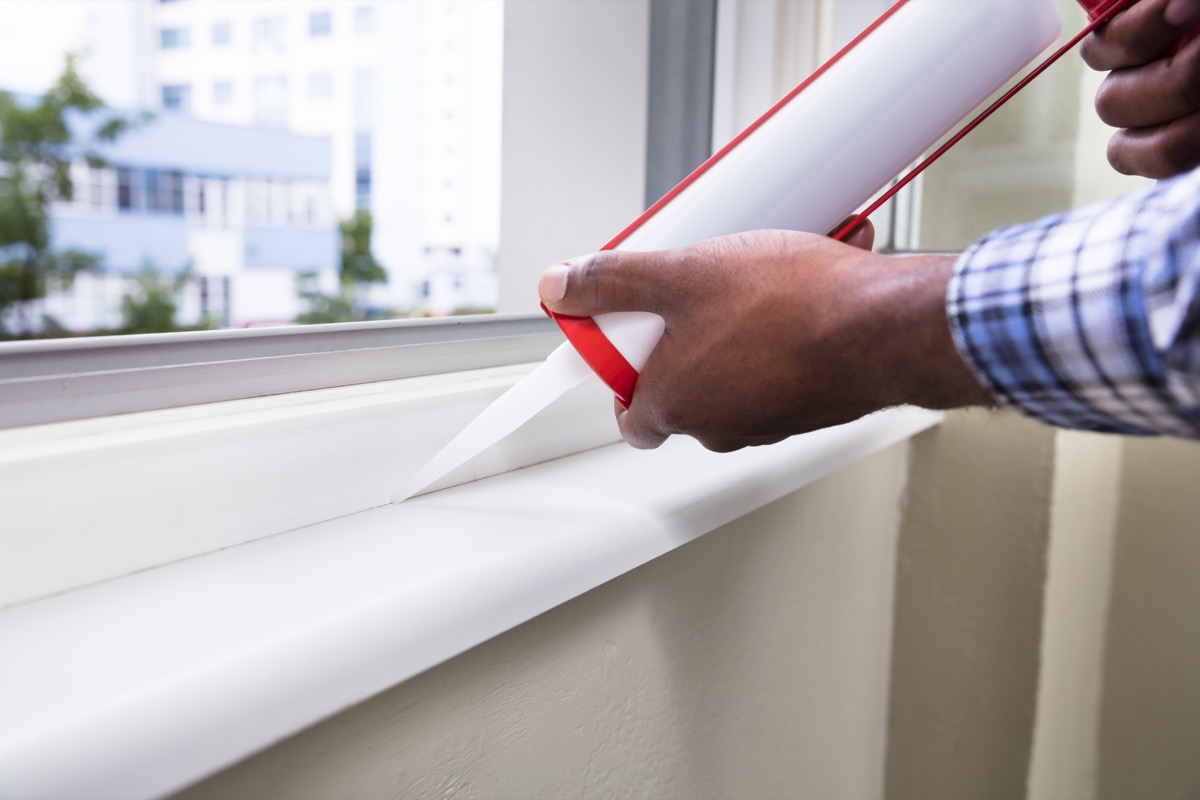
- Around window and door frames (yes, this is real, but it is a smaller piece of the puzzle than most people think)
- Where different building materials meet, for example where an addition connects to the original house
Notice that the window frames themselves account for only a portion of that last category. In a typical pre-1980s Maine home, sealing the attic and basement will address 60-80% of the air leakage in the building. Windows might contribute 5-15%.
The Fix That Actually Works
Air sealing targets the real sources of leakage. The work focuses on the attic and basement first, because that is where the biggest gaps are and where the stack effect is most active.
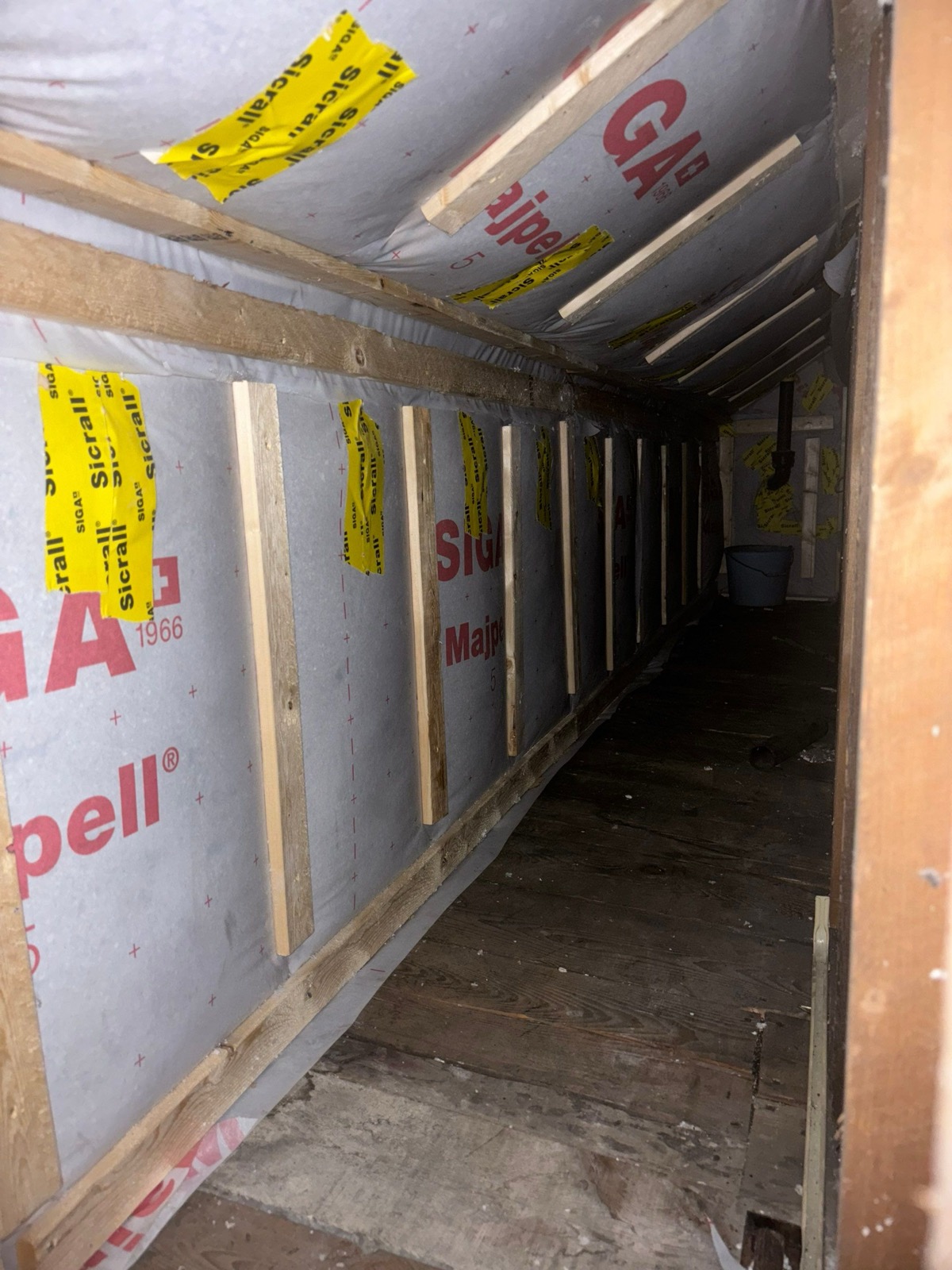
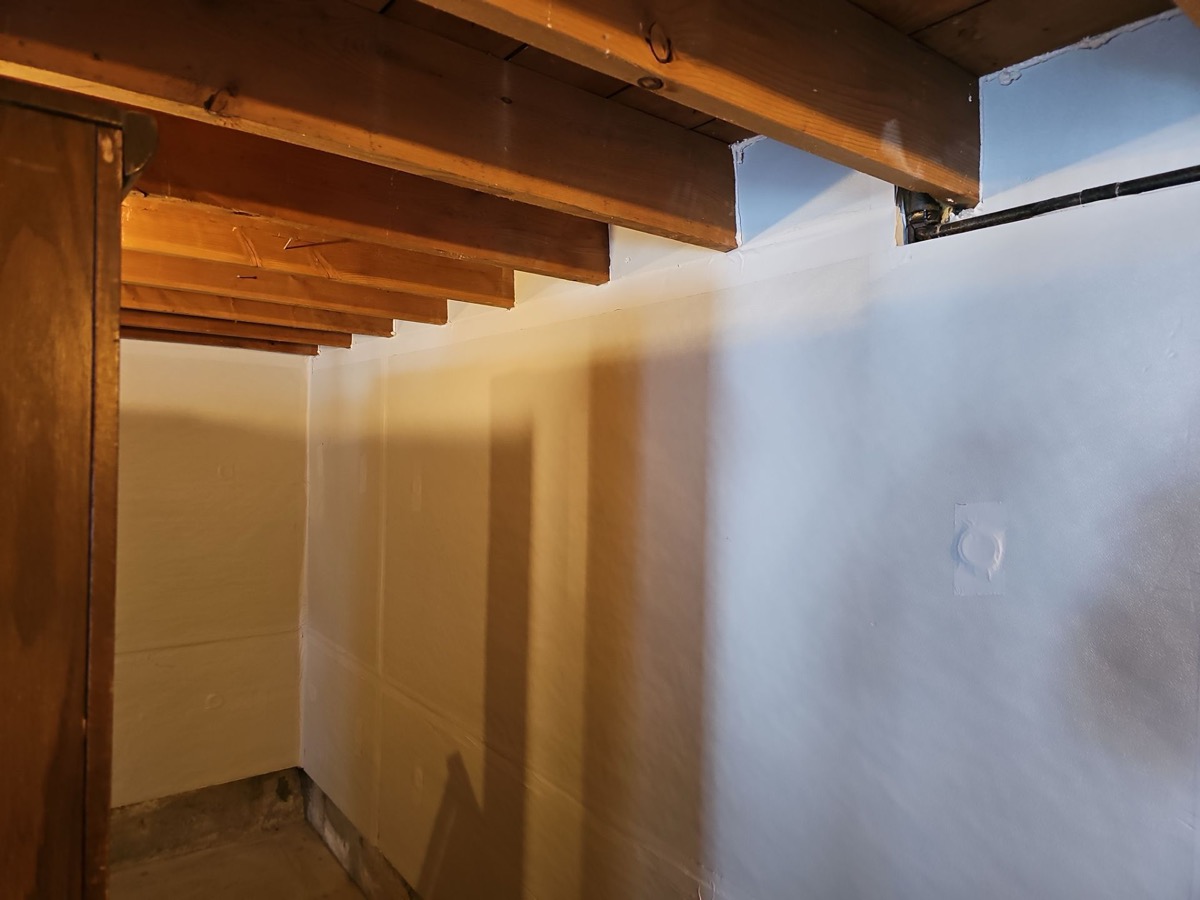
In the attic, the process involves sealing every penetration through the attic floor, around wires, pipes, duct chases, light fixtures, and the attic hatch. In the basement, the focus is on rim joists, sill plates, and penetrations through the first-floor framing.
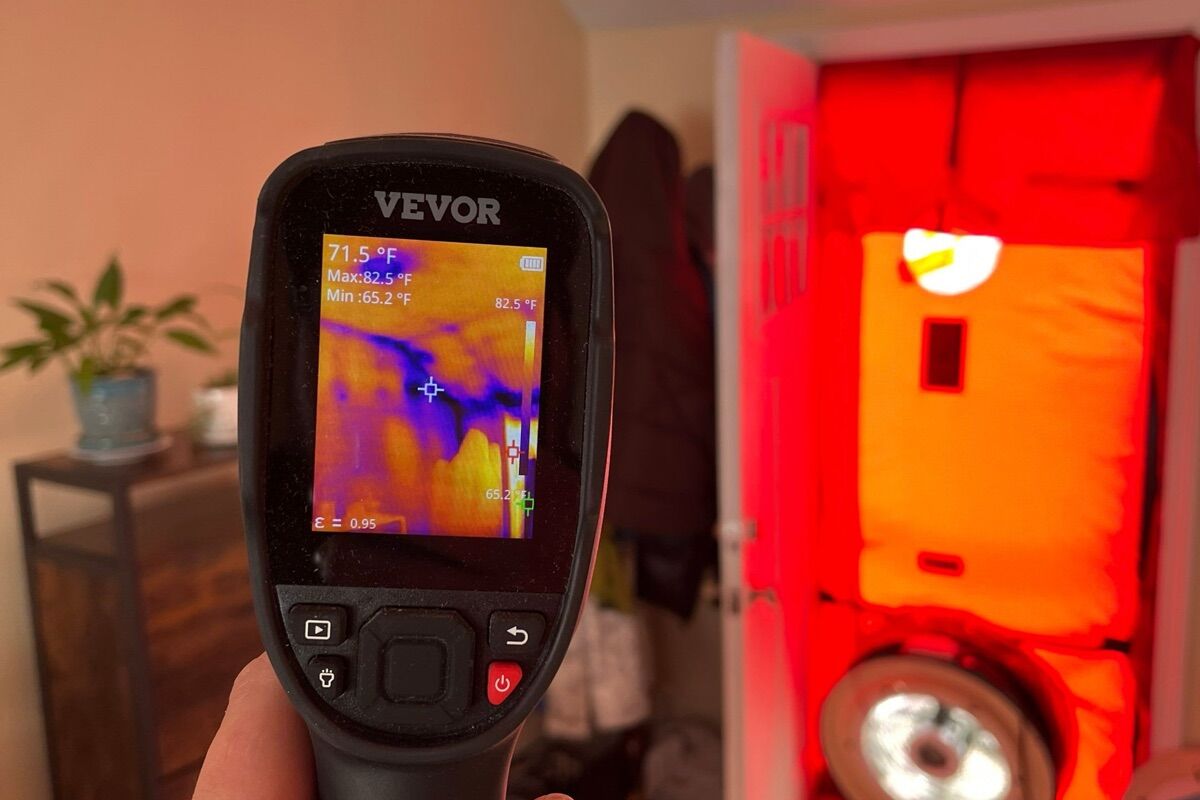
The results are measurable. We verify our work with blower door testing, which measures the total air leakage in the building before and after the work. A typical air sealing project in a pre-1950's Greater Portland home reduces total air leakage by 20-40%.
Combined with proper insulation in the attic and basement, the overall impact on comfort and energy bills is significant. Homeowners who complete comprehensive air sealing and insulation work typically see a 20-40% reduction in heating costs.
Compare that to the 5-15% savings that a window replacement typically delivers, at a fraction of the cost.
What About the Windows?
We are not saying windows never matter. There are situations where window replacement makes sense:
- Single-pane windows with failed glazing or broken seals
- Windows that do not close or lock properly
- Windows with visible rot in the frames or sashes
- Situations where condensation between panes indicates seal failure
But even in these cases, we recommend addressing air sealing and insulation first. The building envelope work delivers faster payback, and once the stack effect is reduced, the remaining window drafts often become much less noticeable.
Before You Call a Window Company
If your home feels drafty, here is what we recommend as a first step.
Schedule a free energy assessment with Horizon Homes. We will walk through your home, check your attic, basement, and walls, and show you exactly where air is getting in and where heat is getting out. No equipment, no obligation, and it takes 30-60 minutes.
If your windows truly are the problem, we will tell you that. But in most of the homes we visit in Greater Portland, the answer is air sealing and insulation, not new windows.
Horizon Homes has been helping Maine homeowners solve comfort and energy problems since 2006. We are an Efficiency Maine Top Contractor for 10+ years, and we install both weatherization and cold-climate heat pumps, because the building works as one system.
Call (207) 221-3221 or book your free assessment online. Let us find where the air is actually getting in before you spend thousands on a fix that might not solve the problem.
Find our guides faster: add Horizon Homes as a preferred source on Google.
Free Home Energy Assessment
Dealing With This in Your Home?
Most comfort problems trace back to insulation, air sealing, or heating system issues. A free walkthrough identifies the root cause.
- Free walkthrough, no equipment, no disruption
- Efficiency Maine rebates identified for you
- Written improvement plan with pricing
Schedule Your Free Assessment
We call within 1 business day.