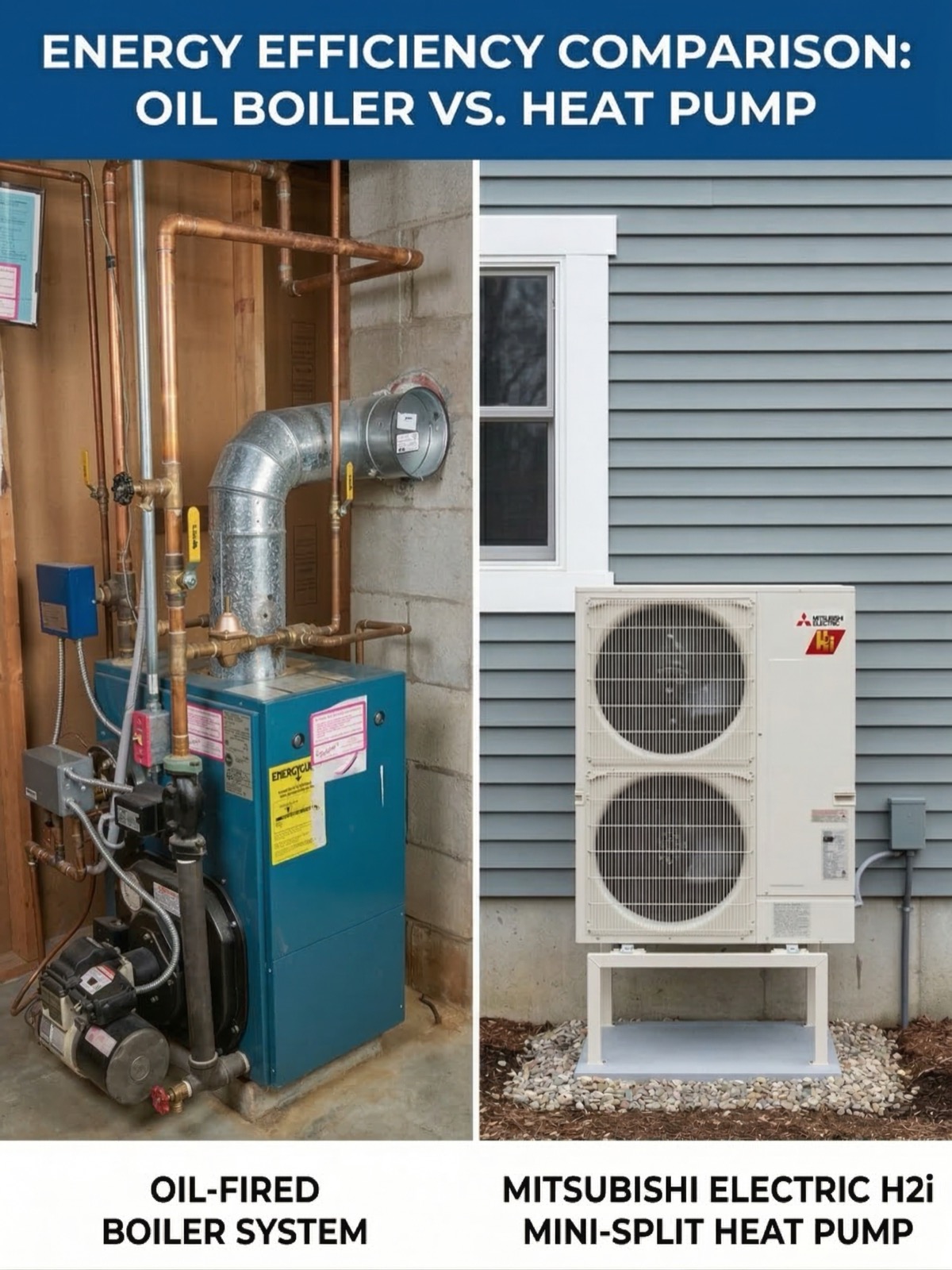
Is Your Heating System the Right Size for Your Home?

We see this on nearly every job where someone replaced their heating system in the last five to ten years: the equipment was sized by square footage guess, not by load calculation. A heat pump that runs nonstop but never quite warms the living room. A boiler that short-cycles every few minutes. The system was matched to a number on a tape measure, not to what the home actually needs on the coldest day of the year.
The previous installer used a rough rule of thumb to pick the equipment size. No load calculation. No accounting for the home's insulation, window area, orientation, or air leakage. The result: a system undersized or oversized by 20 to 40 percent.
This is one of the most common and most expensive mistakes in residential heating and cooling.
Why Size Matters
A heating or cooling system that is too small cannot keep up on the coldest days. One that is too large costs more upfront, cycles on and off too frequently, and creates uneven temperatures throughout the house.
Undersized systems:
- Run constantly without reaching the thermostat setpoint
- Leave some rooms cold while others are warm
- Wear out faster due to continuous operation
- Cost more in electricity or fuel than a properly matched system
Oversized systems:
- Heat the space too quickly, then shut off before the air circulates evenly
- Create hot and cold spots as the system cycles
- Produce temperature swings that feel uncomfortable
- In heat pump systems, oversizing leads to excessive defrost cycles and reduced efficiency
- In boiler systems, oversizing causes short cycling that wastes fuel and stresses components
The sweet spot is a system that matches your home's actual heating and cooling needs. Not bigger for safety margin. Not smaller to save money. Matched.
What Is a Manual J Calculation?
Manual J is the industry standard method for calculating a home's heating and cooling loads. It was developed by the Air Conditioning Contractors of America (ACCA) and is the basis for proper equipment sizing in residential construction.
A Manual J calculation accounts for:
- Square footage and room dimensions
- Insulation levels in walls, attic, basement, and floors
- Window area, type, and orientation (south-facing windows gain solar heat; north-facing ones lose it)
- Air leakage rate (how tight or leaky the building envelope is)
- Local climate data (Maine's design temperature is around -5 to -10 degrees depending on location)
- Number of occupants and heat-generating appliances
- Ductwork layout and losses (for ducted systems)
The result is a specific number: how many BTUs per hour your home needs on the coldest expected day. That number drives equipment selection.
Schedule a free energy assessment and we will evaluate your current system and your home's actual heating needs.
The Rule-of-Thumb Problem
Many installers skip Manual J. Instead, they use rough estimates like "one ton of cooling per 500 square feet" or "match the old system." These shortcuts lead to problems:
Matching the old system assumes the old system was sized correctly. In most Maine homes built before 1990, the original boiler or furnace was oversized from day one. Builders routinely installed equipment 50 to 100 percent larger than necessary as a safety margin. Replacing an oversized system with an identical one just continues the waste.
Square footage rules ignore everything that makes your home unique. A 2,000-square-foot Colonial with original single-pane windows and no attic insulation has a completely different heating load than a 2,000-square-foot Colonial with new windows and R-50 in the attic. Same size house, completely different equipment needs.
This is especially important when sizing cold-climate heat pumps. Heat pump efficiency varies with outdoor temperature, so the calculation must account for performance at Maine's design temperatures. A system sized for average winter conditions will struggle on the coldest nights.
How Insulation Changes the Equation
Here is where it gets interesting for homeowners planning energy upgrades. The amount of insulation and air sealing in your home directly determines what size heating system you need.
Before insulation and air sealing: A 2,200-square-foot 1970's Colonial in Westbrook might have a heating load of 65,000 to 80,000 BTU/hr. That is a big heating system.
After a full insulation and air sealing project: That same home's heating load might drop to 35,000 to 45,000 BTU/hr. Now a much smaller (and less expensive) heating system does the job.
This is one of the core reasons we recommend insulating before installing a heat pump. A smaller, properly matched heat pump costs less to buy, costs less to operate, and runs more efficiently than an oversized unit fighting a leaky house.
If your contractor suggests a heating system without knowing your insulation levels and air leakage rate, they are guessing. And that guess is costing you money.
Signs Your Current System Is Mis-Sized
You do not need a load calculation to suspect a sizing problem. Here are the clues:
Your system runs all day on cold days but the house stays cold. The system is undersized for your home's current heat loss rate. Either the equipment is too small or (more likely) the home is losing heat faster than the system can produce it because of poor insulation and air leakage.
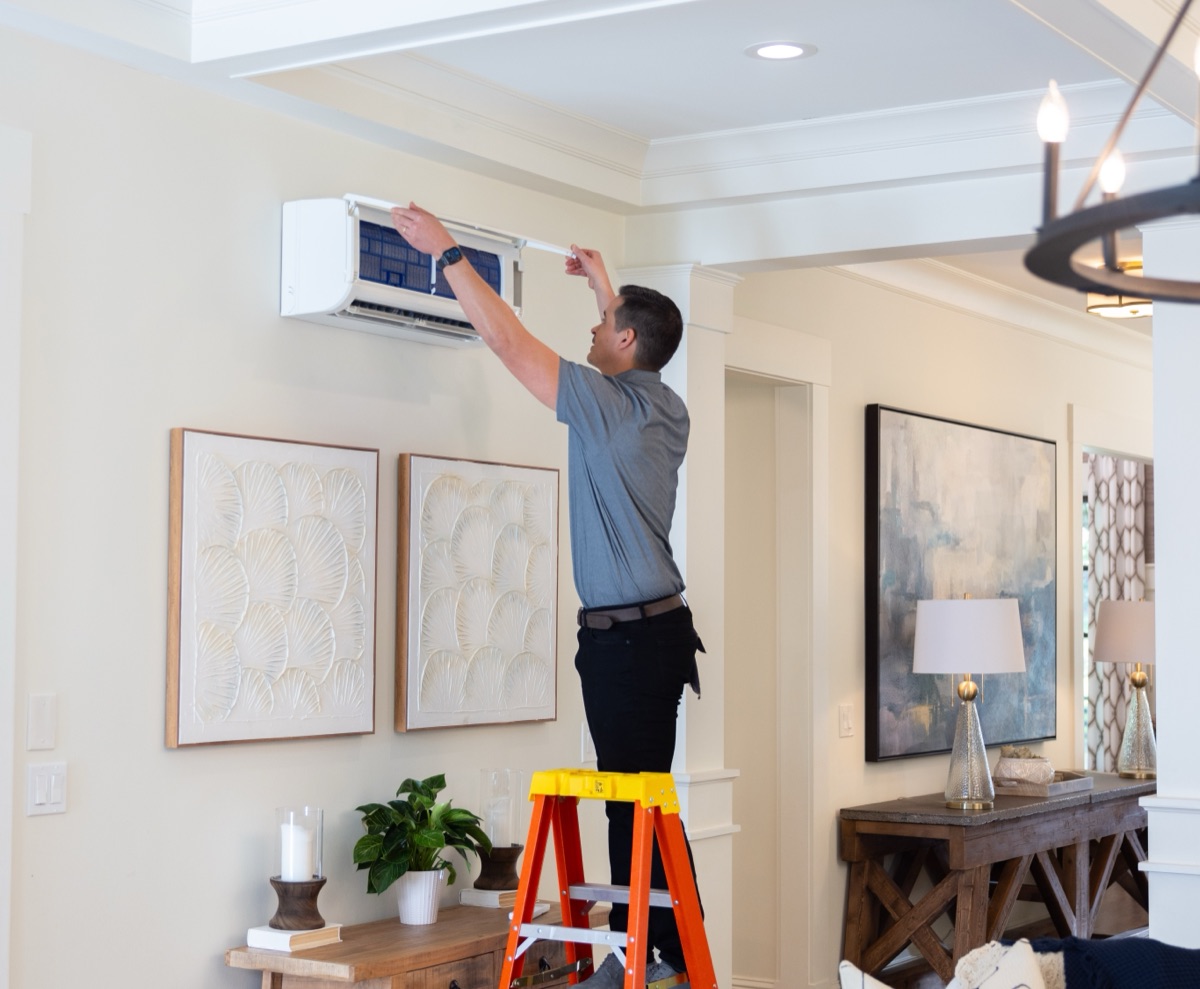
Some rooms are always too warm while others are cold. This can indicate oversizing (the system heats quickly then shuts off before air distributes evenly) or poor distribution design. In a ductless heat pump setup, it may also mean the wrong number of indoor heads or poor placement.
Your boiler or furnace cycles on and off every few minutes. Short cycling is a classic sign of oversizing. The system reaches temperature too quickly, shuts off, the space cools, and the cycle repeats. Each startup wastes energy and stresses components.
Your energy bills seem high for the amount of comfort you get. A mis-sized system burns more fuel or electricity than a matched one. If your bills feel out of proportion to your comfort level, sizing may be part of the problem.
Getting It Right
When we plan a heating system installation, we start with the home, not the equipment catalog.
- Assess the envelope. What insulation exists? Where are the air leaks? What is the realistic tightness of the home after planned improvements?
- Run the load calculation. We use Manual J software with Maine-specific climate data to determine the actual BTU requirement.
- Select equipment to match. The right cold-climate heat pump or high-efficiency boiler for the calculated load, not the square footage.
- Plan the distribution. For heat pumps, this means choosing the right number and placement of indoor units. For boilers, it means confirming the existing distribution (radiators, baseboard) can deliver the heat effectively.
This process takes more time than a rule-of-thumb guess. It also produces a system that costs less to operate, lasts longer, and keeps your home comfortable on the coldest day of the year.
Start with Your Home, Not the Equipment
Whether you are replacing an aging boiler, adding a cold-climate heat pump, or planning a full energy upgrade, the right first step is understanding what your home actually needs.
Schedule your free energy assessment and we will look at your home as a whole, identify what is driving your heating costs, and help you choose equipment that fits. Or call us at (207) 221-3221.
Find our guides faster: add Horizon Homes as a preferred source on Google.
Free Home Energy Assessment
Considering Heat Pumps for Your Home?
We evaluate your home's insulation, heating system, and electrical capacity, then give you a clear recommendation with pricing and rebate estimates.
- Free walkthrough, no equipment, no disruption
- Efficiency Maine rebates identified for you
- Written improvement plan with pricing
Schedule Your Free Assessment
We call within 1 business day.