Mold Prevention in Maine Basements
You know the smell. You open the basement door and that damp, musty wave hits you. Maybe you have lived with it for years. Maybe you have tried a dehumidifier, some bleach spray, even a coat of waterproof paint on the walls. The smell keeps coming back.
That musty basement smell is not just unpleasant. It is telling you something about your home's moisture balance, and in many cases, about conditions that lead directly to mold growth. After 20+ years of working in basements across Greater Portland, we can say with confidence: most basement mold problems in Maine are not plumbing leaks or catastrophic water events. They are the slow, persistent result of moisture dynamics that the original builders never accounted for.
Understanding those dynamics is the first step toward fixing them for good.
Why Maine Basements Are Prone to Mold
Mold needs three things to grow: moisture, organic material, and moderate temperatures. Maine basements supply all three in abundance.
The Moisture Sources
There are four main ways moisture gets into a Maine basement:
1. Bulk water intrusion. This is the obvious one - water coming through cracks in the foundation, through the floor-wall joint, or through window wells. If you see standing water or wet streaks after rain, you have a bulk water problem. This needs to be addressed through exterior grading, downspout management, or interior drainage before any insulation work makes sense.
2. Vapor diffusion through concrete. Even when your basement looks dry, moisture is moving through the concrete foundation walls and floor. Concrete is porous. Ground moisture migrates through it constantly, driven by the difference in humidity between the damp soil outside and the drier air inside. This is not a defect - it is how concrete works. But it means your basement walls are a continuous source of moisture unless they are managed.
3. Condensation. This is the most misunderstood moisture source in Maine basements, and it is the one most directly connected to insulation and air sealing. In summer, warm humid outdoor air enters the basement through gaps, cracks, and open windows. When that warm air contacts the cool concrete walls and floor (which stay around 55 degrees year-round), it condenses. Water droplets form on the walls, the floor, the cold water pipes - anywhere the surface temperature is below the dew point of the air.
This summer condensation cycle is the primary mold driver in many Maine basements. Homeowners open their basement windows in summer thinking fresh air will help. It makes the problem worse.
4. Stack effect air movement. Your home works like a chimney. Warm air rises and exits through the upper floors and attic. That escaping air creates negative pressure at the lower levels, pulling outdoor air into the basement through every crack and gap. In summer, this pulls in warm, humid air. In winter, it pulls in cold, dry air - which then picks up moisture from the concrete and carries it upward through the house.
The stack effect means your basement's moisture problem affects your entire home's air quality, not just the basement itself.
The Organic Material
Mold cannot grow on concrete alone. It feeds on organic material. In Maine basements, that material is everywhere:
- Cardboard boxes stored on the floor
- Wood framing (sill plates, floor joists, furring strips)
- Drywall and its paper facing
- Carpet and carpet pad
- Dust accumulation on surfaces
The sill plate - the wood framing that sits directly on top of the foundation wall - is the most vulnerable component. It is in direct contact with concrete (moisture source below) and exposed to basement air (moisture source from condensation). We see mold on sill plates in the majority of pre-1980's Maine homes we assess.
How Insulation and Air Sealing Reduce Mold Risk
There is a misconception that insulating a basement traps moisture and makes mold worse. Done wrong, that is true. Done right, insulation and air sealing are the most effective long-term mold prevention strategies available.
Stopping Condensation at the Source
The goal is to prevent warm, humid air from reaching cold surfaces. There are two approaches, and we use both depending on the situation.
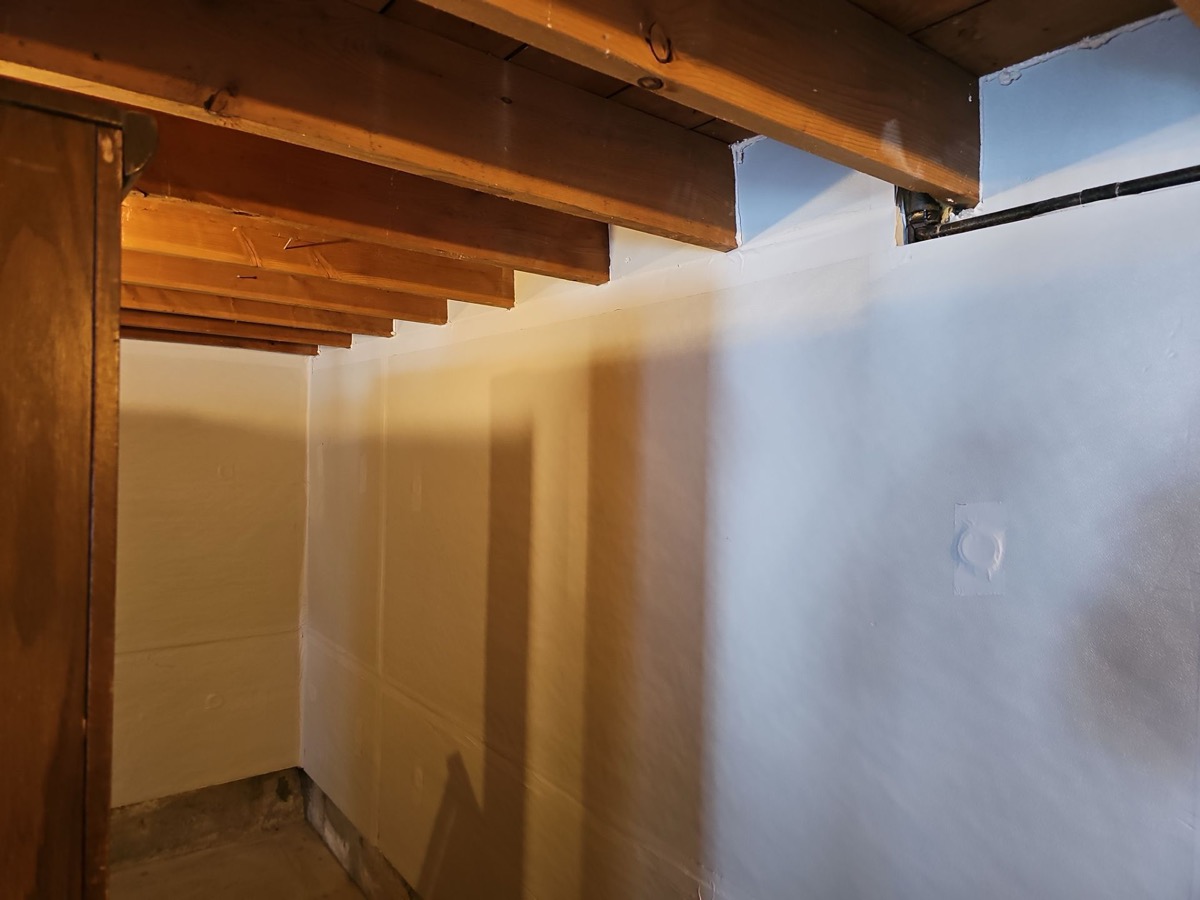
Insulating the foundation walls with the right material puts a thermal barrier between the cold concrete and the indoor air. When the interior surface of the insulation stays above the dew point, condensation does not form. The key is using a material that can handle moisture without absorbing it.
For flat, poured concrete walls, we install rigid polyiso foam board directly against the concrete. This provides both insulation value (R-6.5 per inch) and a vapor barrier that prevents moisture from reaching the interior framing and air.
For rubble stone foundations - common in pre-1900 homes across Portland, South Portland, and Westbrook - rigid board does not work because the walls are irregular. In these situations, we subcontract closed-cell spray foam, which conforms to the uneven surface, insulates, and creates a continuous air and vapor barrier. This is one of the specific cases where spray foam is the right tool for the job.
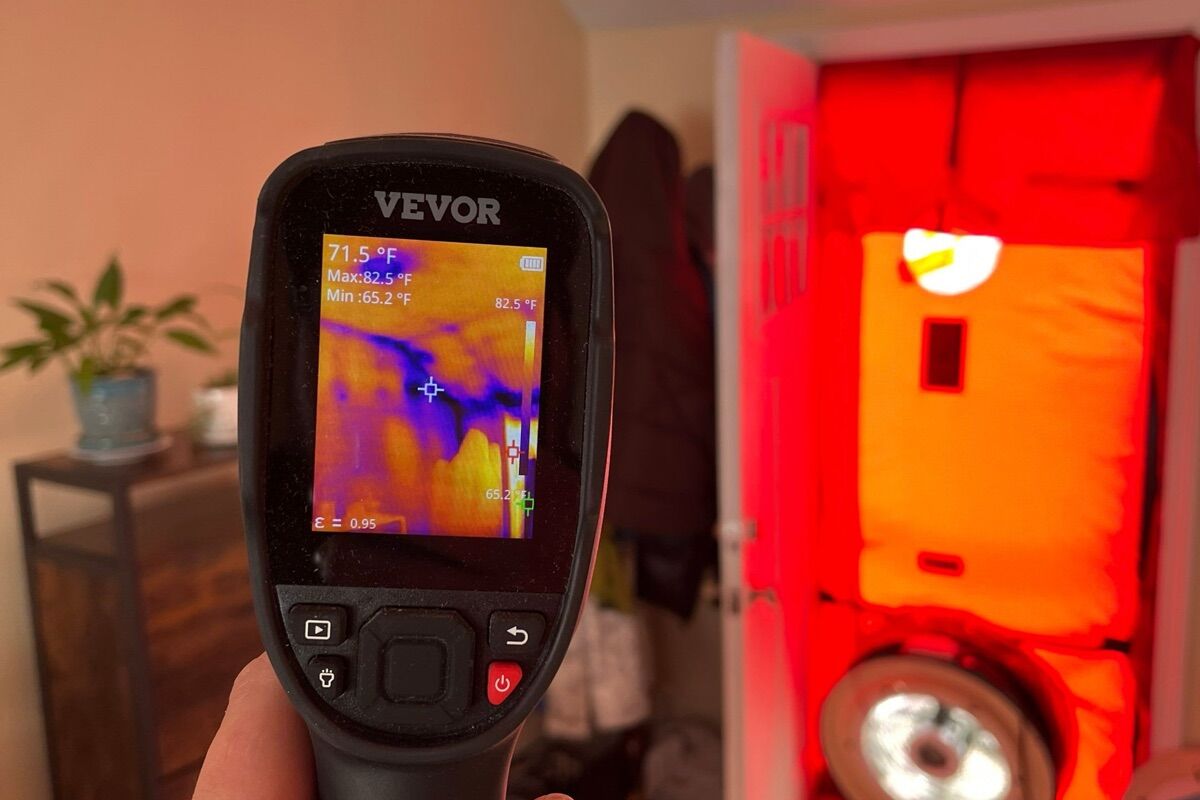
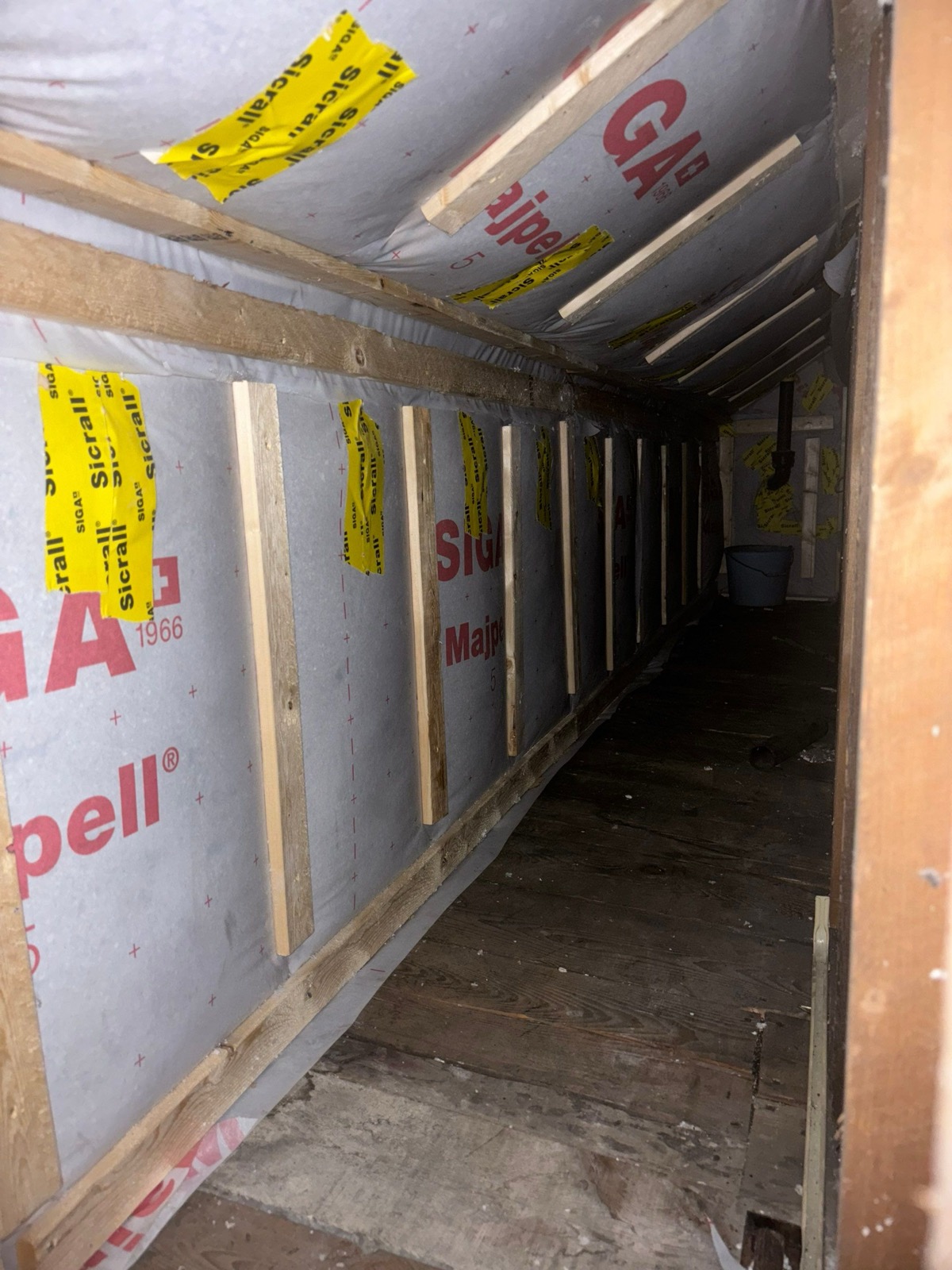
Air sealing the rim joist and sill plate area stops the stack effect from pulling humid outdoor air into the basement. The rim joist - the framing that sits on top of the foundation wall around the perimeter - is one of the leakiest spots in any Maine home. Sealing it with foam and insulating it reduces both air infiltration and condensation risk at the sill plate, where mold is most common.
Controlling Moisture from Below
Basement floors are a moisture source that gets overlooked. Moisture vapor passes through the concrete slab continuously. In homes with dirt floors (still common in older Maine homes), the moisture contribution is even higher.
For finished basements or basements where mold has been a recurring problem, we recommend:
- A vapor barrier on the floor - 6-mil poly sheeting under any flooring material
- Keeping storage off the floor - shelving instead of cardboard boxes on concrete
- Dehumidification - a properly sized dehumidifier set to keep relative humidity below 50%
We do not install flooring systems, but we make sure the insulation and air sealing work we do addresses the conditions that lead to mold. The dehumidifier handles the residual moisture that cannot be eliminated through building science alone.
Signs Your Basement Has a Moisture Problem
Not every damp basement has visible mold. Here are the indicators we look for during a free energy assessment:
- Musty odor - the classic sign, even without visible mold
- White crystalline deposits on concrete walls (efflorescence) - mineral salts left behind when water evaporates from the concrete surface
- Peeling paint on concrete - indicates moisture pushing through from behind
- Rusting on metal surfaces - indicates sustained high humidity
- Condensation on cold water pipes in summer - confirms the dew point problem
- Mold on the sill plate or rim joist - often hidden behind insulation or stored items
- Buckled or soft spots in basement drywall - moisture has gotten behind the wall
If you are seeing two or more of these signs, the basement's moisture dynamics need to be addressed before any finishing or renovation work.
The Wrong Approaches (and Why They Fail)
We see homeowners try several approaches that either do not work or make the problem worse:
Opening basement windows in summer. This feels logical - "let the basement breathe." But you are introducing warm, humid air into a cool space. Condensation increases. Mold risk goes up.
Painting concrete walls with waterproof paint. This addresses symptoms, not causes. The moisture is still moving through the concrete. The paint traps it at the surface, eventually blistering and peeling. Meanwhile, any organic material on the interior side of the wall still gets exposed to moisture from condensation and air movement.
Installing fiberglass batt insulation against concrete walls. This is one of the worst things you can do. Fiberglass absorbs moisture, holds it against the concrete, and provides both the moisture and organic material (the paper facing) that mold needs to thrive. If your basement has fiberglass insulation against the foundation walls, check behind it. We find mold there in the majority of cases.
Running a dehumidifier without addressing air leakage. A dehumidifier helps, but if the basement is pulling in humid outdoor air through gaps and cracks, the dehumidifier is fighting a losing battle. It runs constantly, your electric bill climbs, and the humidity never quite gets to where it needs to be.
When Professional Remediation Is Needed
Insulation and air sealing prevent mold. They do not remediate existing mold. If you have visible mold covering more than about 10 square feet, or if the mold is in the HVAC system or behind walls, you need a professional mold remediation company before we do insulation work.
For smaller areas of surface mold on concrete or wood framing, cleanup is straightforward and can often be handled by the homeowner before our crew arrives. We can advise on the approach during the assessment.
The important thing is to fix the conditions that caused the mold before and during any cleanup. Otherwise the mold comes back. That is where insulation, air sealing, and moisture management fit in - they change the environment so mold cannot re-establish.
Indoor Air Quality: The Bigger Picture
Basement mold does not stay in the basement. The stack effect carries air from the lowest level of your home upward through every floor. Studies have shown that 40-60% of the air on your first floor originated in the basement or crawlspace. If there is mold in the basement, those spores are circulating through the entire house.
This is why we approach basement work as part of the whole-home system, not in isolation. Air sealing the attic reduces the stack effect. Sealing the basement reduces moisture-laden air entry. Insulating the foundation walls eliminates condensation surfaces. Together, these measures improve indoor air quality throughout the home - not just in the basement.
For homeowners with allergies, asthma, or chemical sensitivity, addressing basement moisture and air quality is often the single most impactful home improvement they can make.
Getting Started
If your basement smells musty, has visible moisture, or has had mold problems in the past, the starting point is a free energy assessment from Horizon Homes. We will look at the foundation type, the current insulation (if any), the air sealing situation, and the moisture sources. Then we will give you a clear picture of what needs to happen and in what order.
We have been doing this work in Greater Portland since 2006. We know Maine basements - the poured concrete, the rubble stone, the fieldstone, the dirt floors - and we know which insulation approach works for each type.
Call us at (207) 221-3221 or schedule your free assessment online. No pressure, no obligation. Just a clear explanation of what is going on in your basement and how to fix it.
Find our guides faster: add Horizon Homes as a preferred source on Google.
Free Home Energy Assessment
Dealing With This in Your Home?
Most comfort problems trace back to insulation, air sealing, or heating system issues. A free walkthrough identifies the root cause.
- Free walkthrough, no equipment, no disruption
- Efficiency Maine rebates identified for you
- Written improvement plan with pricing
Schedule Your Free Assessment
We call within 1 business day.