Wall Insulation Options for Maine Homes
Editor's note (October 2026): Efficiency Maine changed its insulation and air sealing rebates for work completed on or after October 1, 2026. They are now a fixed amount per zone of the house (attic, walls, basement) instead of a percentage of project cost, so the insulation rebate figures, combined totals, and cost examples below reflect the program when this article was published. See current Efficiency Maine rebates.
Editor's note (August 2026): The federal 25C tax credits referenced in this article expired December 31, 2025 and are only available for qualifying work completed before that date. Efficiency Maine rebates remain available and are now the primary incentive for wall insulation projects.
We pulled a piece of siding off a 1950's Cape in Portland last week. There was nothing behind it.
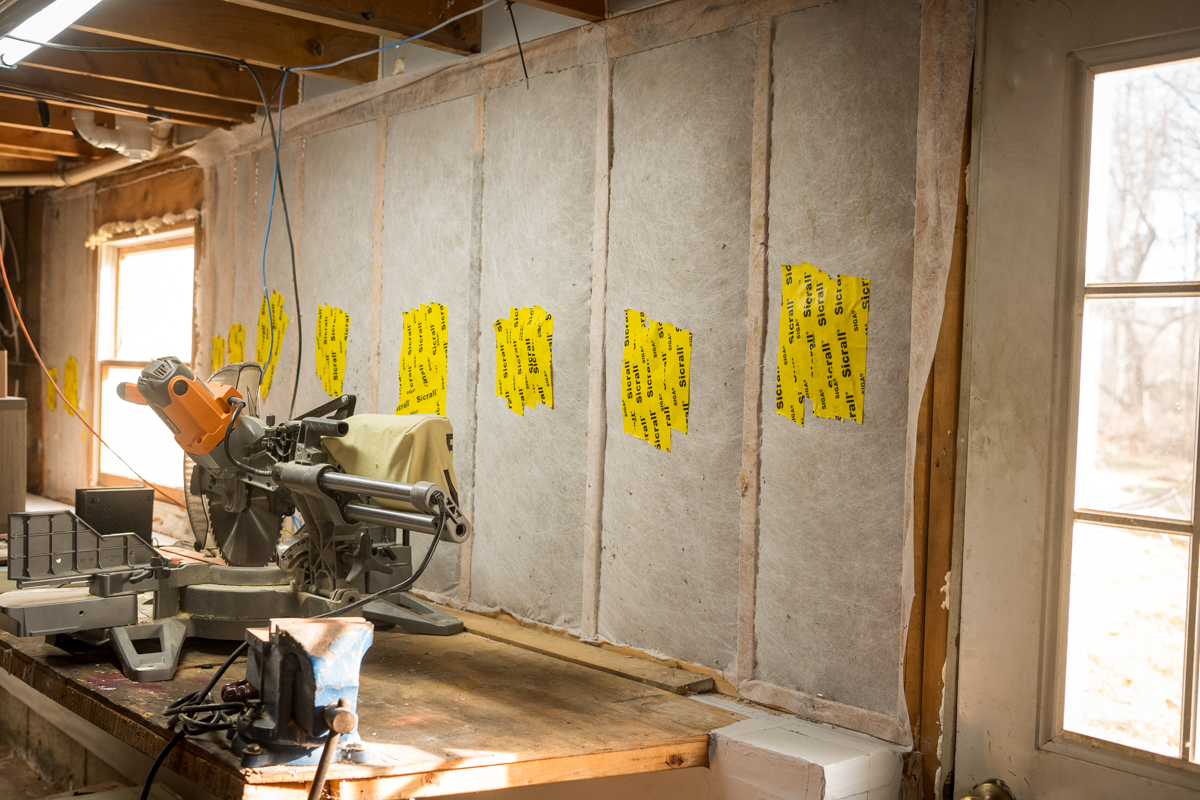
Not "old insulation." Not "degraded batts." Nothing. The wall cavity between the exterior sheathing and the interior plaster was completely empty. Three and a half inches of dead air space separating this family from Maine winters.
This homeowner had been paying $4,200 a year in heating oil. She had replaced her boiler twice in twenty years, thinking the equipment was the problem. The boiler was fine. The walls were the problem.
Empty or under-insulated wall cavities are one of the most common issues we find in Greater Portland homes built before 1980. The walls represent the largest surface area of your building envelope. When they have little or no insulation, heat pours out of your home in every direction, all winter long.
The good news: you can insulate existing walls without tearing them apart.
Dense-Pack Cellulose: The Right Material for Maine Walls
When we insulate existing wall cavities, we use dense-pack cellulose installed at 3.5 pounds per cubic foot. This is the standard recommended by the Building Performance Institute (BPI) for retrofit wall insulation, and there are good reasons why it has earned that position.
What Is Dense-Pack Cellulose?
Cellulose insulation is made from recycled newspaper treated with borate for fire resistance and pest deterrence. It carries a Class 1 fire rating, the same as fiberglass. It produces zero off-gassing and contains no formaldehyde.
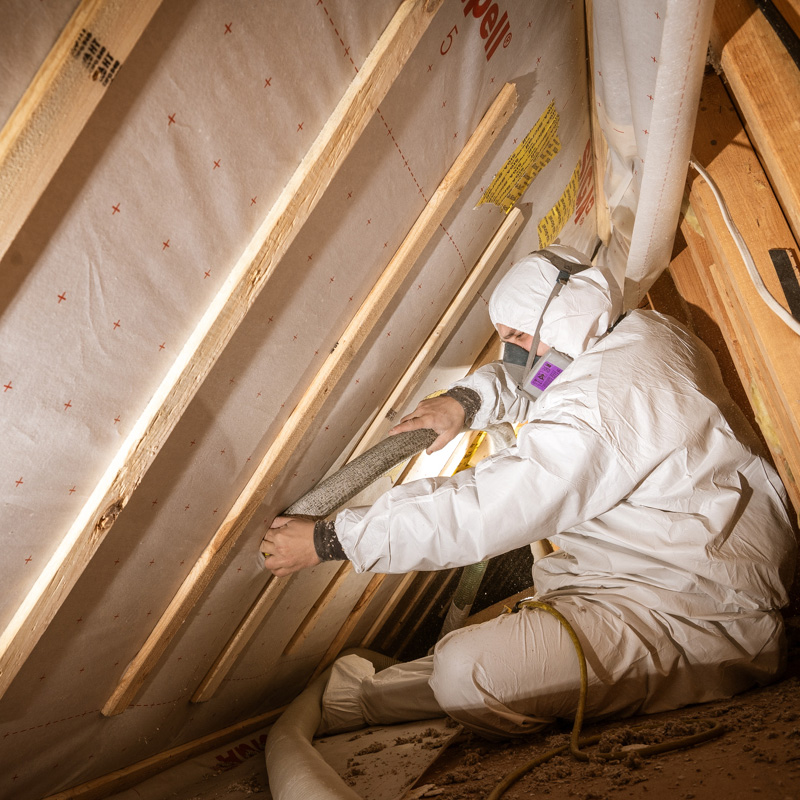
"Dense-pack" refers to the installation density. At 3.5 pounds per cubic foot, the cellulose is packed tightly enough to resist settling and to slow air movement through the wall cavity. This is different from the loose-fill cellulose used in attics, which sits at about 1.5 pounds per cubic foot. The higher density is what makes it work in vertical wall cavities where loose material would settle over time and leave gaps at the top.
Why Not Fiberglass?
Fiberglass batt insulation is what most people picture when they think of wall insulation - those pink or yellow rolls you see at the hardware store. For new construction where wall cavities are open and accessible, batts can be installed properly. But for retrofitting existing walls, fiberglass has real problems.
You can't install batts without opening the wall. Batt insulation comes in pre-cut pieces that need to be fitted between studs, cut around wires and pipes, and stapled in place. That means removing the drywall or plaster on one side of the wall. For a whole-house retrofit, you're looking at gutting and refinishing every exterior wall. The drywall and painting costs alone can exceed the insulation itself.
Fiberglass doesn't stop air movement. Even when installed perfectly, fiberglass batts allow air to pass through the material. In a wall cavity with any air leakage at all, convective loops form inside the fiberglass, reducing its real-world performance well below its rated R-value. Dense-pack cellulose, by contrast, packs tightly enough to resist air movement through the cavity.
Batts don't fill irregular cavities. Older Maine homes have walls full of irregular framing, blocking, wiring, plumbing, and cross-bracing. Batt insulation leaves gaps around every obstruction. Dense-pack cellulose flows around these obstacles and fills the cavity completely.
R-Value: What to Expect
A standard 2x4 wall cavity is 3.5 inches deep. Dense-pack cellulose delivers approximately R-3.7 per inch, giving you roughly R-13 in a 2x4 wall. For 2x6 walls (5.5 inches deep), you get approximately R-20.
Is R-13 enough for Maine's Zone 6 climate? Current building code calls for R-20 in walls for new construction. R-13 falls short of that standard. But here is the practical reality: going from zero insulation to R-13 is a massive improvement. You capture the majority of the energy savings with that first layer of insulation. Going from R-0 to R-13 saves far more energy than going from R-13 to R-20.
For homeowners who want to push beyond R-13, exterior rigid foam board can be added during a siding replacement project. Two inches of polyiso rigid foam adds approximately R-12 to the outside of the wall, bringing the total assembly to R-25 or higher. This is the approach we recommend when siding is already due for replacement.
How We Install Dense-Pack Cellulose in Existing Walls
The installation process is straightforward and doesn't require removing your interior walls.
Step 1: Access the cavity. For homes with wood clapboard or vinyl siding, we remove a course of siding and drill a two-inch hole through the sheathing into each stud bay. For homes with plaster interiors and no removable siding, we drill from the inside and patch afterward.
Step 2: Fill the cavity. A fill tube connected to the blowing machine is inserted through the hole and pushed to the far end of the cavity. As cellulose is blown in, the tube is slowly withdrawn. The material packs to 3.5 pounds per cubic foot, filling around wires, pipes, and blocking.
Step 3: Seal and restore. The holes are plugged, sealed, and the siding is replaced. From the outside, you can't tell the work was done.
A typical single-story home takes one to two days to complete. Two-story homes with more wall area take two to three days. There is no demolition, no dust inside the home, and no refinishing required when we access through the exterior.
Wondering what your walls look like inside? Schedule a free energy assessment and we will check your insulation levels, identify problem areas, and give you a clear plan. Or call (207) 221-3221.
Vapor Barriers and Moisture in Maine Walls
Moisture management in walls is a topic that generates a lot of debate, and the wrong approach can create serious problems. Here is what matters for Maine homes.
The Cold Climate Challenge
Maine is in Climate Zone 6, which means our winters create a large temperature difference between the inside and outside of your walls. Warm, moist indoor air migrates outward through the wall assembly. When that moisture hits a cold surface, it can condense, and condensation inside wall cavities leads to rot, mold, and structural damage.
The Role of the Vapor Retarder
Most Maine homes built before 1970 have no vapor retarder in the walls. Many homes built from the 1970's through the 1990's have a polyethylene sheet (6-mil poly) stapled to the interior face of the studs before the drywall was installed.
When we add dense-pack cellulose to a wall that has no vapor retarder, the cellulose itself provides a level of moisture buffering. Cellulose can absorb and release moisture without losing its insulating properties. This hygric buffering capacity is one of cellulose's advantages over fiberglass, which loses R-value when damp.
For walls that already have interior poly, the dense-pack cellulose works well with that existing vapor retarder. The poly slows moisture migration inward, and the cellulose manages any incidental moisture that does enter the cavity.
What About Spray Foam?
For most wall cavities, dense-pack cellulose is the right choice. There are specific situations where closed-cell spray foam is appropriate - rubble-stone basement walls, crawlspaces, and rim joist areas where cellulose can't achieve the necessary density. In those cases, we coordinate with spray foam subcontractors as part of the overall project. We recommend the right insulation for each area of the home, not one material for everything.
What About the Rest of the Envelope?
Walls are important, but they are one piece of a larger system. Your home's building envelope includes the attic floor, basement or crawlspace, and all the air sealing details that connect these areas.
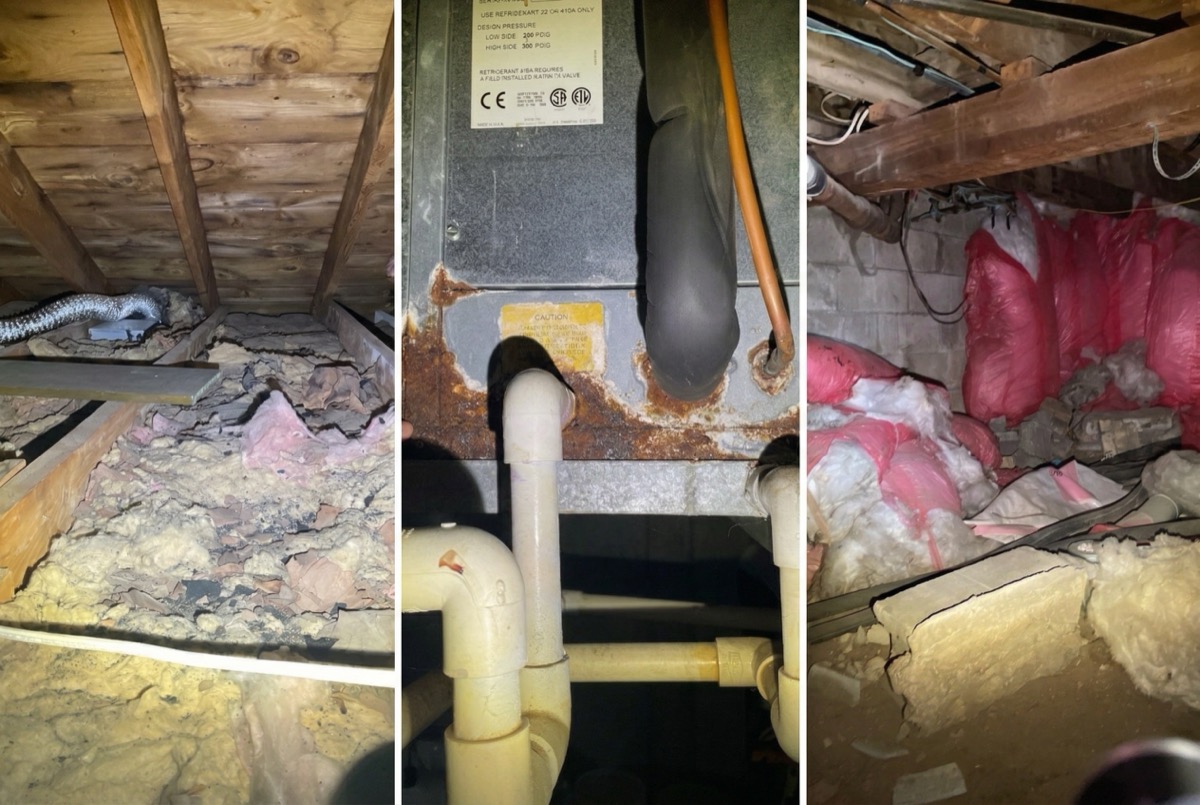
In most homes, the attic is where we find the biggest opportunity. Heat rises, and an under-insulated attic lets that heat escape through the roof. We typically recommend R-50 or higher in attic spaces - Maine's code minimum for new construction in Zone 6. An attic insulation project is often the single highest-impact improvement you can make.
The basement or crawlspace is the other critical boundary. Cold air entering through basement walls and the rim joist area creates cold floors on the level above and allows unconditioned air into the home. Insulating and air sealing the basement is often the second priority after the attic.
When walls, attic, and basement are all addressed together, the combined effect is greater than the sum of the parts. A tight, well-insulated envelope means your heating system works less, your rooms stay at consistent temperatures, and your energy bills drop.
How Wall Insulation Affects Your Heating System
This is something most homeowners don't consider, but it matters. When you insulate your walls, your home's heat loss drops. That means your heating system doesn't need to work as hard to maintain temperature.
If you're considering a cold-climate heat pump installation, insulating first allows us to right-size the equipment to your improved envelope. A smaller heat pump costs less, runs more efficiently, and lasts longer. This is the whole-home approach we take at Horizon Homes - address the envelope first, then size the heating system to match.
Rebates for Wall Insulation in Maine
Wall insulation qualifies for Efficiency Maine rebates as part of a weatherization project. Rebate amounts are income-dependent, but all homeowners qualify for some level of support. Efficiency Maine pays a fixed amount per zone of the house, set by income tier, up to $8,600 per home. Our full breakdown of current Efficiency Maine rebates for heat pumps, insulation, and air sealing shows the amounts by tier and what the program requires.
We handle the Efficiency Maine rebate paperwork and apply the amounts directly to your invoice. You pay the net cost after rebates, not the full price with reimbursement later.
As an Efficiency Maine Top Contractor for 10+ years, Horizon Homes has managed thousands of rebate applications. We know the program requirements and can walk you through what you qualify for during your assessment.
Federal tax credits (25C) also apply to insulation projects - 30% of costs up to $1,200 per year. Between state rebates and federal credits, the out-of-pocket cost for wall insulation is often a fraction of the full project price.
What to Do Next
If your home was built before 1980, there is a good chance your wall cavities are empty or under-insulated. Even homes built in the 1980's and 1990's may have insufficient insulation by today's standards.
A free home energy assessment is the best way to find out. We walk through your home, check insulation levels in accessible areas, identify air leakage patterns, and give you a prioritized plan for improvements. No cost, no obligation.
Horizon Homes has been insulating Maine homes since 2006. We have completed thousands of wall insulation projects across Greater Portland. Schedule your free energy assessment or call (207) 221-3221 to get started.
Find our guides faster: add Horizon Homes as a preferred source on Google.
Free Home Energy Assessment
Wondering Where Your Home Is Losing Heat?
We walk through your home, identify insulation gaps and air leaks, and give you a prioritized plan with pricing and Efficiency Maine rebates.
- Free walkthrough, no equipment, no disruption
- Efficiency Maine rebates identified for you
- Written improvement plan with pricing
Schedule Your Free Assessment
We call within 1 business day.