Bathroom Exhaust Fans and Insulation: Maine Guide
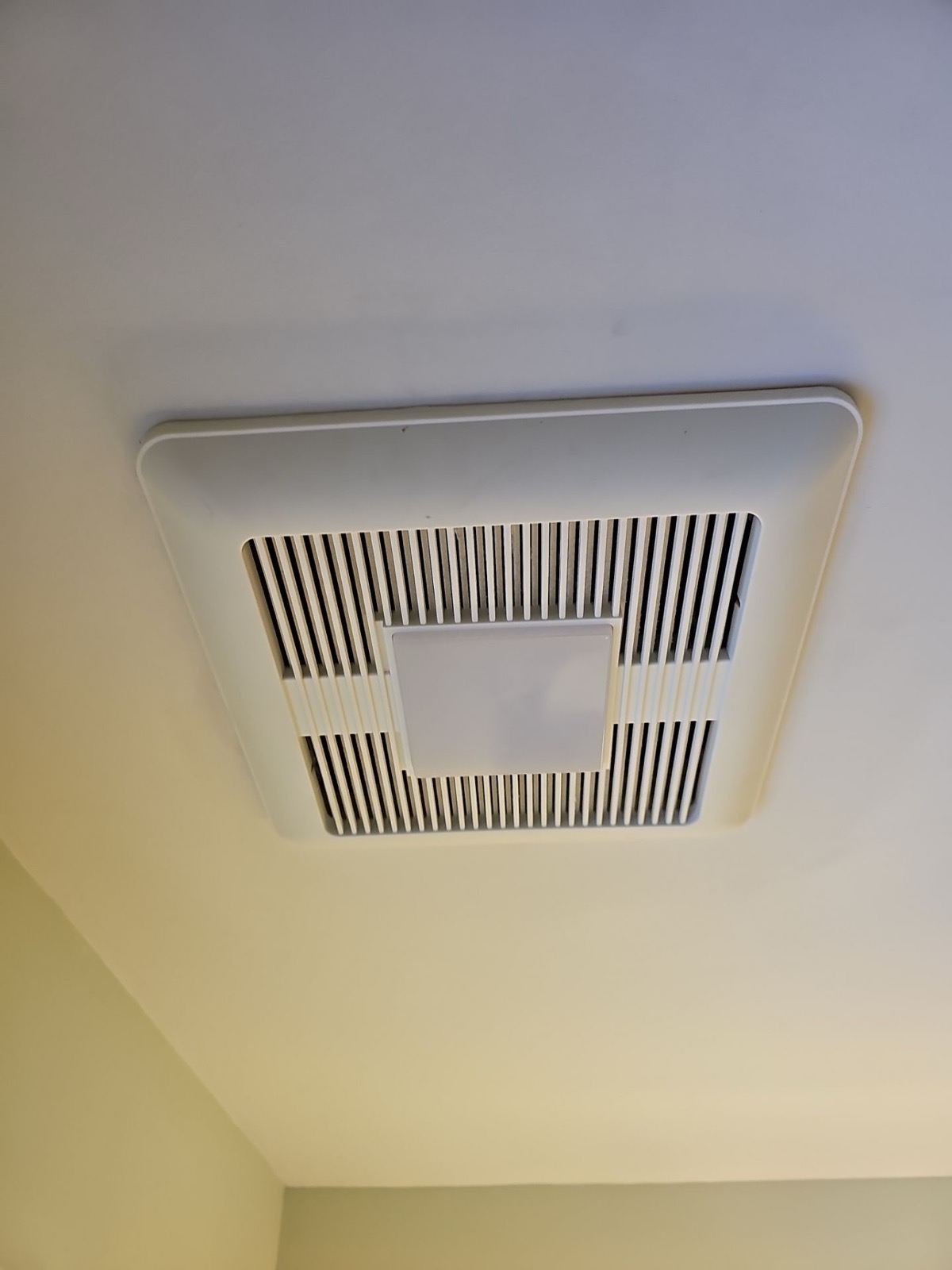
Most bathroom exhaust fans in Maine attics are installed wrong, vented wrong, or missing entirely. We see it on nearly every attic insulation project we do in the Greater Portland area. The fan vents into the attic instead of outside. The duct is crushed under old insulation. The damper flap is stuck open, letting cold air pour back in all winter. Or there is no fan at all, and twenty years of shower moisture has been migrating into the attic framing.
Here is what homeowners rarely hear: when you are already in the attic for an insulation and air sealing project, installing or upgrading a bathroom exhaust fan is one of the easiest, most cost-effective additions to the scope of work. And when you are tightening the building envelope, it is not optional. It is a necessary part of making the home perform correctly.
Why Bathroom Exhaust Fan Insulation Matters in Maine
In a Portland or Westbrook home during January, the temperature difference between your warm, humid bathroom and your cold attic can be 80 degrees or more. That gap creates two problems that compound each other.
First, moisture. Every shower sends warm, humid air upward. Without a properly functioning exhaust fan, that moisture migrates into the attic through ceiling penetrations, around light fixtures, and through gaps in the drywall. Once it reaches the cold attic sheathing, it condenses. Over time, this leads to mold growth on roof decking, stained ceilings, and deteriorating framing. We have seen attics in Scarborough and South Portland where the roof sheathing was black with mold, all traceable to a bathroom with no exhaust fan or a fan that vented into the attic space.
Second, energy loss. A bathroom exhaust fan housing is a penetration through your ceiling plane, your primary air barrier. If that penetration is not air sealed, it becomes a pathway for heated air to escape into the attic around the clock, not only when the fan runs. The Building America Solution Center identifies exhaust fan penetrations as a priority air sealing target in retrofit projects.
The Attic Insulation Opportunity
This is the practical point that makes the biggest difference for homeowners planning an insulation project: the cost of adding or upgrading a bathroom exhaust fan while the crew is already in your attic is a fraction of what it would cost as a standalone job.
Here is why. An attic insulation project already involves:
- Access to the attic space. The crew is up there, moving around, with tools and materials staged.
- Air sealing every ceiling penetration. We seal around wires, pipes, recessed lights, and duct chases before blowing cellulose. Adding the exhaust fan housing to that list is straightforward.
- Running new duct if needed. If the existing fan duct is crushed, disconnected, or venting into the attic, we can replace it with insulated rigid duct and terminate it properly at a roof cap or gable vent.
- Insulating around the fan housing. After air sealing, we build a dam or box around the fan unit so the blown cellulose does not block the fan but does provide a continuous insulation layer across the attic floor.
A standalone bathroom exhaust fan installation means cutting ceiling drywall, accessing the attic, running duct, cutting a hole in the roof or soffit, flashing the exterior penetration, and cleanup. That project might cost $500 to $1,200. When it is rolled into an attic insulation project, the incremental cost drops because the labor, access, and cleanup are already happening.
Air Sealing and the Need for Mechanical Ventilation
This is the part too many contractors skip. When we air seal a home, we close the gaps and cracks that allowed uncontrolled air movement through the building envelope. That reduces drafts, stops heat loss, and typically cuts heating costs by 20-40%.
But those gaps were also providing accidental ventilation. Once sealed, the home needs controlled ventilation to maintain healthy indoor air quality. Moisture from cooking, showers, and breathing needs a way out. Without it, humidity rises, condensation forms on cold surfaces, and indoor air quality suffers.
A properly installed bathroom exhaust fan is the first line of defense, removing moisture at the source. For homes that reach significant tightness after air sealing, a dedicated ERV or HRV system may be warranted. But even in those homes, a good bathroom exhaust fan handles the high-moisture events (showers, baths) that an ERV is not designed to manage alone.
The principle is straightforward: build tight, ventilate right. Seal the envelope to stop wasting energy. Then make sure the home has the mechanical ventilation it needs to stay healthy and dry.
What We Look for in a Bathroom Exhaust Fan
Not all exhaust fans are equal. The cheap, loud fan that came with your 1970's ranch is not the same as a modern unit designed for continuous or intermittent use in a tight home. Here is what matters.
Airflow (CFM)
For a standard bathroom, 50 CFM is the minimum. Larger bathrooms or those with a jetted tub need 80 to 110 CFM. Modern fans offer selectable airflow so you can match the setting to your space.
Sound Level (Sones)
This is where cheap fans fail. A budget fan runs at 3.0 to 4.0 sones, loud enough that people avoid turning it on. A quality fan runs at 0.3 to 1.0 sones, nearly silent. If you cannot hear it, you are more likely to use it (or leave it on a timer, which is even better).
Energy Efficiency
Look for ENERGY STAR certification and a DC motor. DC motors use less electricity and last longer than AC motors. A quality DC-motor fan draws as little as 4 to 10 watts, compared to 30 or more watts for a conventional unit.
Durability
Standard exhaust fans last 5 to 10 years. Better units last 20 years or more. In a Maine attic where temperatures swing from below zero to over 100 degrees in summer, durability matters.
Our Recommendation: Panasonic WhisperCeiling
We install Panasonic WhisperCeiling DC fans on most of our projects. They are the standard in the weatherization and building performance industry for good reason:
- Ultra-quiet operation at 0.3 to 0.9 sones. You will not hear it running.
- ENERGY STAR certified with a DC motor that draws minimal power.
- SmartFlow technology that automatically adjusts fan speed to maintain rated airflow even with long or complex duct runs. This matters in Maine homes where the duct route from a first-floor bathroom to a roof cap can be 15 feet or more through a cold attic.
- Pick-A-Flow selector (50, 80, or 110 CFM) so one model covers most residential bathrooms.
- Long lifespan. These fans are rated for continuous operation and hold up well in the temperature extremes of Maine attics.
We recommend them because they perform, they last, and they solve the noise problem that keeps homeowners from running their fans long enough to clear moisture.
Common Problems We Find in Maine Attics
Here are the bathroom exhaust fan issues we encounter most often during attic insulation projects.
Fan Venting into the Attic
This is the single most common problem. The duct terminates inside the attic space instead of passing through the roof or gable wall to the outside. Every shower dumps warm, humid air directly onto cold attic framing and roof sheathing. In a Maine winter, that moisture condenses immediately and feeds mold growth. We find this in homes of all ages, from 1950's Capes in Gorham to 1990's Colonials in Falmouth.
Crushed or Disconnected Duct
Flexible duct is common in existing installations and does not hold up well in attics. Insulation gets piled on top, crushing the duct flat. Connections pull loose over time. The fan runs, the homeowner hears it, but little or no air reaches the outside.
No Damper or a Stuck Damper
The damper flap at the exterior termination is supposed to open when the fan runs and close when it stops. In practice, dampers corrode, warp, or get stuck open. A stuck-open damper in a Maine winter is a direct pathway for cold air into the bathroom and warm air out when the fan is off.
No Fan at All
Older Maine homes, particularly those built before the 1960's, often have no bathroom exhaust fan. The assumption was that an operable window provided sufficient ventilation. In January in Brunswick, nobody is opening a bathroom window after a shower.
How This Fits the Whole-Home Approach
At Horizon Homes, we think about every project as a system. The whole-home approach means that each improvement works with the others instead of in isolation. Bathroom exhaust fan work during an insulation project is a clear example.
The sequence:
- Air seal the attic floor. This includes sealing around the exhaust fan housing and duct penetration.
- Install or upgrade the exhaust fan. Replace the old fan with a Panasonic WhisperCeiling, run insulated rigid duct to a proper exterior termination, and install a functioning damper.
- Insulate to R-50 with blown cellulose. Build a dam around the fan housing so insulation covers the full attic floor without blocking the fan.
- Verify the system works. Confirm the fan exhausts to the exterior, the damper closes when the fan is off, and the air seal around the housing is intact.
This addresses moisture management, energy efficiency, and indoor air quality in a single visit. Skipping the exhaust fan during insulation means coming back later, disturbing the new cellulose, and paying separately for work that could have been done at the same time.
When an Exhaust Fan Is Not Enough
For homes that achieve significant air tightness after a full air sealing project, a bathroom exhaust fan alone may not provide adequate whole-house ventilation. This is where ERV and HRV systems enter the conversation. These balanced ventilation systems provide continuous, filtered fresh air exchange while recovering heat from the outgoing exhaust stream.
We discuss ventilation during every free energy assessment. Not every home needs an ERV or HRV. Some retain enough natural air infiltration after air sealing that a quality exhaust fan on a timer provides sufficient ventilation. But for homes that get tight, the conversation matters, and it is better to have it before the insulation crew arrives than after.
Getting Started
If you are thinking about attic insulation, air sealing, or both, the bathroom exhaust fan conversation should be part of the planning. The cost to address it during the project is minimal compared to a standalone retrofit, and the benefit to your home's moisture management and air quality is significant.
Schedule a free energy assessment with Horizon Homes. We will walk through your home, check your attic, evaluate your existing ventilation, and give you a clear plan that covers insulation, air sealing, and exhaust fan upgrades together.
Call us at (207) 221-3221 or book online. We have been helping Greater Portland homeowners get their homes right since 2006. One contractor, one plan, everything working as a system.
Find our guides faster: add Horizon Homes as a preferred source on Google.
Free Home Energy Assessment
Dealing With This in Your Home?
Most comfort problems trace back to insulation, air sealing, or heating system issues. A free walkthrough identifies the root cause.
- Free walkthrough, no equipment, no disruption
- Efficiency Maine rebates identified for you
- Written improvement plan with pricing
Schedule Your Free Assessment
We call within 1 business day.