Insulating Floors Over Crawlspace & Basement
Editor's note (October 2026): Efficiency Maine changed its insulation and air sealing rebates for work completed on or after October 1, 2026. They are now a fixed amount per zone of the house (attic, walls, basement) instead of a percentage of project cost, so the insulation rebate figures, combined totals, and cost examples below reflect the program when this article was published. See current Efficiency Maine rebates.
Editor's note (August 2026): The federal 25C tax credits referenced in this article expired December 31, 2025 and are only available for qualifying work completed before that date. Efficiency Maine rebates remain available and are now the primary incentive for floor insulation projects.
Cold feet are not just uncomfortable - they are a signal. When the floor of your living room, kitchen, or bedroom feels noticeably cold underfoot even when the thermostat reads 68, the problem is almost always beneath you. Somewhere below that floor is an unconditioned space - a basement, a crawlspace, a porch overhang, or a cantilevered section - that is pulling heat downward out of the room and sending cold upward through the floor structure.
In Maine, where outdoor temperatures spend five months below freezing and many homes sit on unheated basements or crawlspaces, cold floors are one of the most common comfort complaints we encounter. The floor surface temperature in an under-insulated room above an unconditioned space can run 10-15 degrees below the ambient air temperature of the room. Your thermostat says 68, but your feet feel 53.
This guide covers the full range of floor-over-unconditioned-space situations found in Maine homes - from basement ceilings to porch overhangs to cantilevers - with the right insulation approach for each.
Understanding the Problem
Heat moves from warm to cold. When the space below your floor is significantly colder than the room above, heat flows downward through the floor assembly. The rate of that heat flow depends on the R-value of the floor assembly and the temperature differential across it.
An uninsulated floor assembly (hardwood or tile over plywood over joist cavity full of air) has an R-value of roughly 4-5. With a 30-40 degree temperature differential (common when an unheated Maine basement is at 40 degrees and the room above is at 68), the heat loss through the floor is constant and substantial.
The solution seems straightforward - insulate the floor - but the right method varies significantly depending on what is below the floor, how accessible it is, and whether the space below should be brought inside or left outside the thermal envelope.
Situation 1: Basement Ceiling (Full-Height Basement)
This is the most common scenario in Maine homes. A full-height basement (walkable, with 7-8 feet of headroom) sits below the first floor. The basement is unheated and used primarily for storage, mechanical equipment, and laundry.
Decision: Insulate the Ceiling or the Walls
The first question is whether to insulate the floor above (the basement ceiling) or the basement walls. These are two different strategies with different implications:
Insulate the basement walls (bring the basement inside the envelope). This is our preferred approach for most Maine homes, because it also protects plumbing, reduces foundation moisture problems, and improves the overall building envelope. See our Basement Wall Insulation Guide for the full process.
Insulate the basement ceiling (keep the basement outside the envelope). This approach makes sense when the basement has significant moisture problems that have not been resolved, when the homeowner specifically does not want to condition the basement, or when the budget does not allow for wall insulation.
How to Insulate the Basement Ceiling
If the decision is to insulate the ceiling (keeping the basement cold):
Step 1: Air seal the floor. From the basement side, seal all penetrations through the subfloor - plumbing pipes, electrical wires, HVAC ducts, and the gaps between the subfloor and the sill plate at the exterior walls. Use canned spray foam for small gaps and rigid foam with sealant for larger openings.
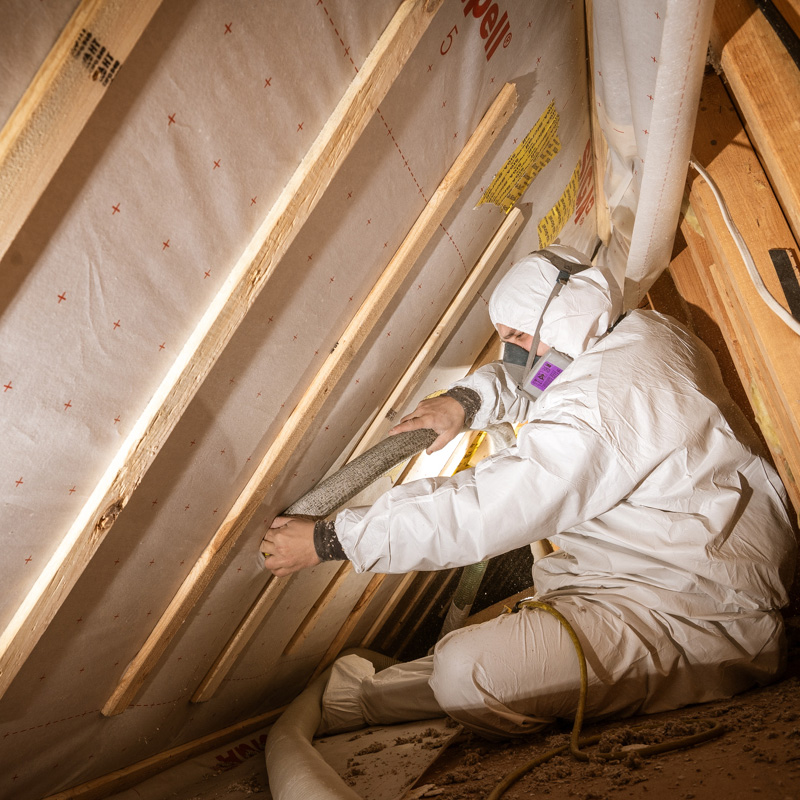
Step 2: Install insulation between the joists. We blow cellulose into the joist bays, supported from below. There are two methods:
Netting method. Fabric netting is stapled to the bottom of the joists, creating a pocket in each joist bay. Cellulose is blown into these pockets to the full joist depth. This is effective and relatively quick for a crew of two.
Dense-pack method. The joist bays are enclosed (using netting or rigid foam on the bottom) and cellulose is dense-packed to 3.5-4.0 pounds per cubic foot. This provides air sealing within the cavity and eliminates settling concerns.
Step 3: Address the rim joist. The rim joist area at the perimeter of the basement is a critical air leak point that connects directly to the floor above. See our Rim Joist Insulation Guide for the full approach.
R-value achieved:
| Joist Size | Cavity Depth | R-Value (Cellulose) |
|---|---|---|
| 2x8 | 7.25 inches | R-26 |
| 2x10 | 9.25 inches | R-33 |
| 2x12 | 11.25 inches | R-41 |
Vapor Barrier Considerations
When insulating a basement ceiling, moisture management requires thought. The basement side of the insulation is the cold side. Warm, moist air from the room above can condense when it meets the cold insulation surface.
Dense-pack cellulose helps here because it limits air movement through the cavity, reducing the amount of moist air that can reach the cold side. We generally do not add a separate vapor barrier on the basement side of the insulation for ceiling applications, because doing so can trap moisture rather than allowing seasonal drying.
If the basement runs consistently high humidity (above 60%), a dehumidifier is a better solution than a vapor barrier for managing moisture in the insulated floor assembly.
Situation 2: Insulating Floor Above Crawlspace
Insulating the floor above a crawlspace is covered in detail in our Crawlspace Insulation and Encapsulation Guide. The decision is similar to the basement - insulate the crawlspace walls (encapsulation, our preferred approach) or insulate the floor above (keep the crawlspace outside the envelope).
When insulating the floor above a crawlspace:
Access is the challenge. Crawlspaces with less than 24 inches of clearance make traditional insulation installation extremely difficult. For tight crawlspaces, spray foam applied to the subfloor (subcontracted) is often the most practical option because it can be sprayed from a distance without requiring the installer to be directly underneath each joist bay.
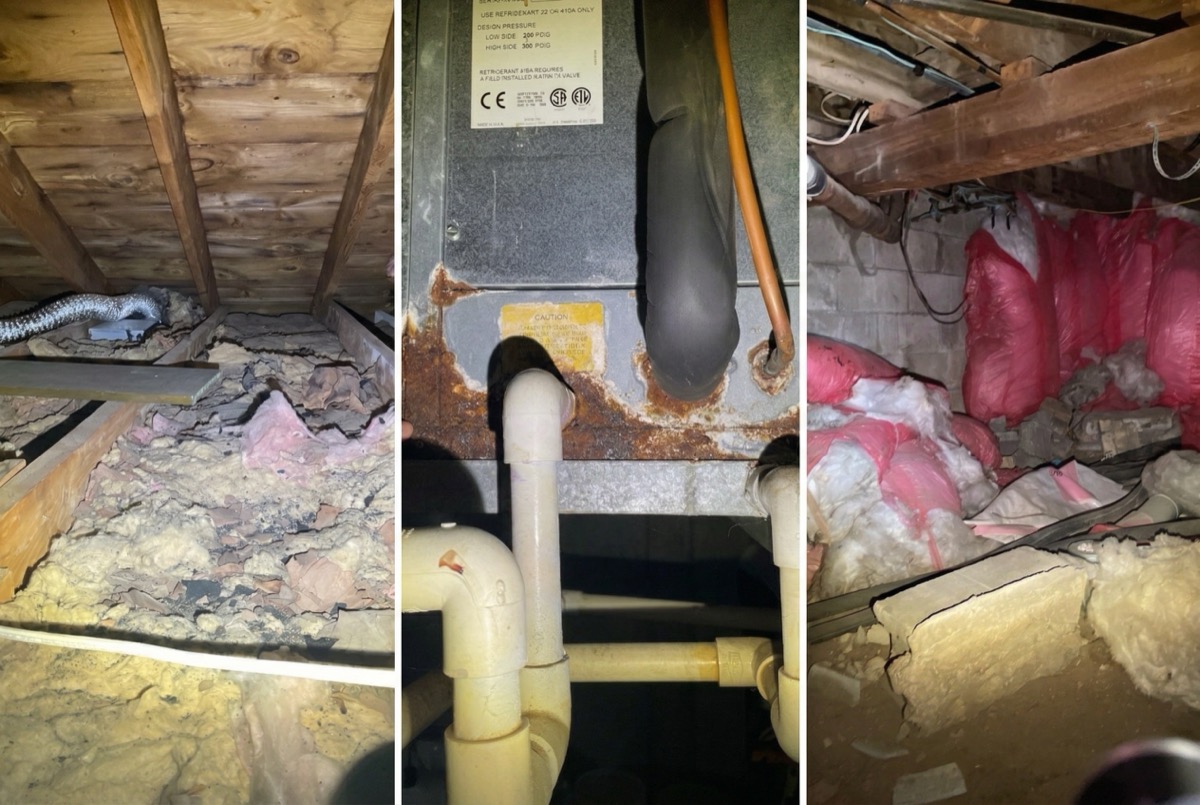
Fiberglass batts fail here. If your crawlspace currently has fiberglass batts stapled between the floor joists, they are almost certainly sagging, falling, or holding moisture. This is the most common failed insulation detail we see in Maine crawlspaces. Fiberglass batts rely on friction fit and gravity is not their friend when installed overhead.
Spray foam alternative. For crawlspaces where access makes cellulose installation impractical, 2-3 inches of closed-cell spray foam applied directly to the subfloor and rim joist (subcontracted) provides R-12 to R-20, seals air leaks, and creates a moisture barrier - all in one application. It adheres to the wood and will not fall down.
Situation 3: Porch Overhang
Some Maine homes have a floor section that extends beyond the foundation - over an open porch, a breezeway, or a covered entry. This cantilevered or supported section has cold air on all sides (above, below, and at the end) and is one of the coldest floor areas in any home.
The Process
Step 1: Access the cavity. Porch overhangs may be accessible from below (if the porch ceiling is removable) or from inside (if an adjacent basement or crawlspace connects to the joist bays). If neither is accessible, holes may need to be drilled from below or from the room above to reach the joist cavities.
Step 2: Air seal the end. The outboard end of the overhang - where the joists terminate - is a direct air entry point. Cold air flows into the joist bays from the end and travels along the full length of the joist back toward the heated space. Sealing this end with rigid foam and spray foam is essential.
Step 3: Insulate the full depth. Blow or dense-pack cellulose into the joist cavities for the entire length of the overhang, plus several feet back into the main house to ensure no cold spots at the transition.
Step 4: Insulate underneath. If the underside of the porch overhang is exposed to weather (no porch ceiling), adding rigid foam beneath the joists before enclosing provides an additional thermal layer and wind barrier.
Why Porch Overhangs Are So Cold
The floor area over a porch is exposed to cold on three sides - cold air below, cold air at the end of the joists, and often cold air above if the porch roof is unheated. Wind blowing across the underside dramatically increases heat loss through wind washing (cold air moving through the insulation). This is why even insulated porch overhangs sometimes feel cold - the insulation is there but air movement is defeating it.
The air sealing at the end of the joists and at the underside is what makes the insulation effective. Without it, you are trying to stay warm under a blanket in a wind tunnel.
Situation 4: Cantilever
A cantilever is a floor section that extends beyond the wall below without any support from below - it hangs in free air. Bay windows, bump-outs, and second floors that extend beyond the first floor footprint are common examples.
Cantilevers are insulated and sealed using the same principles as porch overhangs:
- Air seal the outboard end of the cavity (rigid foam and spray foam)
- Dense-pack or blow cellulose into the joist bays for the full length of the cantilever plus several feet back into the main structure
- Air seal and insulate the underside if accessible
Cantilevers are often small (1-3 feet of extension) but they concentrate cold floors in specific locations - typically right where someone wants to stand (at the kitchen sink in a bump-out, or at the window seat in a bay window).
Situation 5: Slab-Adjacent Floor Sections
Some Maine homes have floor sections that sit at or near grade level over a concrete slab - often in additions, sunrooms, or converted garages. These floors are cold because the slab conducts heat directly to the ground.
Insulating slab floors from above (rigid foam under a new subfloor) is possible but raises the floor height. Insulating at the slab perimeter (rigid foam at the edge of the slab, extending down the foundation wall) is more practical and targets the area of highest heat loss - the edge where the slab meets the outdoor air.
How Much Does Floor Insulation Cost in Maine?
Floor insulation costs vary by situation:
- Basement ceiling (cellulose, netting method): $2,500-$5,500 for a typical Maine home
- Crawlspace subfloor (spray foam, subcontracted): $3,000-$6,000
- Porch overhang or cantilever: $500-$2,000 per section (small areas, but labor-intensive due to access)
- Slab perimeter insulation: $1,000-$3,000
Efficiency Maine pays a fixed amount per zone of the house for insulation and air sealing, set by income tier, up to $8,600 per home ($5,600 per mobile home). Rebate amounts are income-dependent. We handle the full rebate process and deduct the amount from your invoice. See our Efficiency Maine rebate guide for the current amounts and income tiers.
The federal 25C tax credit that used to add 30% of costs, up to $1,200 per year, expired December 31, 2025 and no longer applies to work completed in 2026. Efficiency Maine rebates are now the incentive to plan around.
The comfort improvement from floor insulation is felt immediately. Floor surface temperatures can rise 8-12 degrees after insulation, turning a floor you needed slippers for into one that feels normal underfoot.
Frequently Asked Questions
What is the best way of insulating floor above crawlspace?
In most Maine homes the better move is to encapsulate and insulate the crawlspace walls, which brings the space inside the thermal envelope and protects the plumbing. If the crawlspace has to stay cold, insulate the subfloor above it. Where clearance allows, dense-packed cellulose behind netting fills the joist bays. Under about 24 inches of clearance, 2 to 3 inches of closed-cell spray foam on the subfloor and rim joist is usually the only practical option.
Should I insulate the basement ceiling or the basement walls?
Walls, for most Maine homes. Wall insulation brings the basement inside the envelope, protects plumbing from freezing, and reduces foundation moisture problems. Insulate the ceiling instead when the basement has unresolved moisture problems, when you want the basement to stay cold, or when the budget does not cover wall work.
Why do fiberglass batts fail overhead?
Batts installed between floor joists rely on friction fit, and gravity works against them. We routinely find batts in Maine crawlspaces sagging, fallen, or holding moisture, which means the floor above has effectively been uninsulated for years. Cellulose and spray foam stay put because they fill or adhere to the cavity.
How much warmer will the floor actually feel?
Floor surface temperatures typically rise 8 to 12 degrees after the cavity is insulated and the perimeter is air sealed. That is the difference between a floor you need slippers for and one that feels normal underfoot. The air sealing matters as much as the insulation, especially over porches and cantilevers where wind moves through the assembly.
Schedule a Free Energy Assessment
Horizon Homes has been solving cold floor problems in Maine homes since 2006. With 20+ years of experience across Greater Portland, we have worked with every type of floor-over-unconditioned-space situation - from accessible basements to 12-inch crawlspaces to second-story cantilevers that no one has looked at since the house was built.
A free home energy assessment is where we start. We will evaluate what is below your cold floors, assess accessibility and moisture conditions, and recommend the right approach for each area.
Call (207) 221-3221 or schedule your free energy assessment online.
Related Guides
- Basement Wall Insulation Guide for Maine - Often a better approach than ceiling insulation
- Crawlspace Insulation and Encapsulation in Maine - The encapsulation alternative
- Insulating the Garage Ceiling in Maine Homes - A specific type of floor-over-unconditioned
- Rim Joist Insulation Guide for Maine Homes - The perimeter connection that affects every floor
Find our guides faster: add Horizon Homes as a preferred source on Google.
Free Home Energy Assessment
Wondering Where Your Home Is Losing Heat?
We walk through your home, identify insulation gaps and air leaks, and give you a prioritized plan with pricing and Efficiency Maine rebates.
- Free walkthrough, no equipment, no disruption
- Efficiency Maine rebates identified for you
- Written improvement plan with pricing
Schedule Your Free Assessment
We call within 1 business day.